The second order is a new decision
Reorder From a Wholesale Luxury Furniture Supplier Without Losing the Approved Version
A successful first delivery does not fully specify the next order. Retailers and distributors buying again from a wholesale luxury furniture supplier should identify the exact design, material selection and configuration they want repeated, then confirm what is currently offered. HEZEN CASA’s sofas, dining chairs and leather storage pieces make this especially relevant when a familiar appearance can conceal several different ordering decisions.
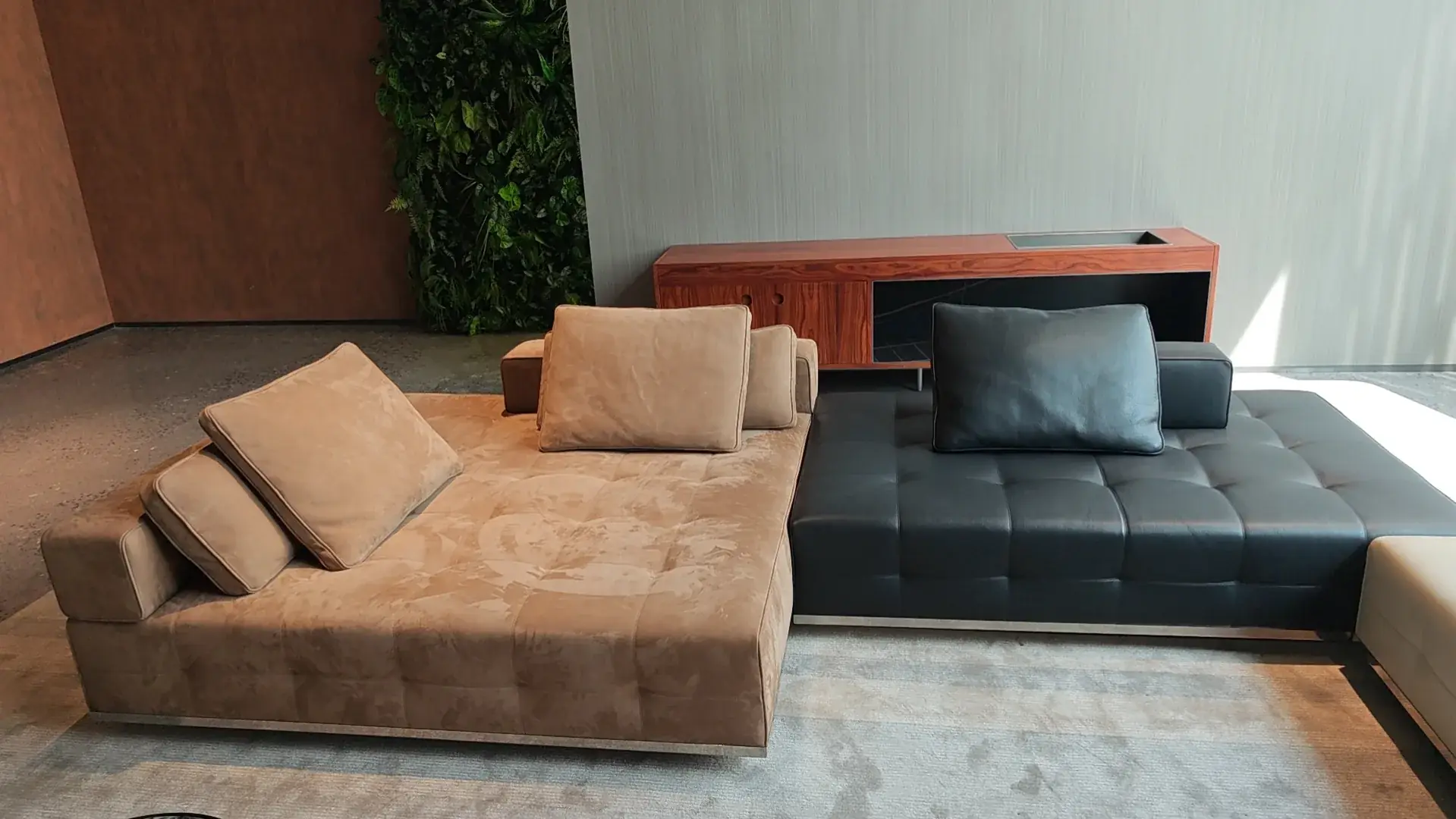
Use the burgundy-and-white Nappa sectional, tufted suede-and-leather modular sofa, contoured dining chair and wide leather dresser as distinct examples. HEZEN’s custom development and supply services provide a route for discussing revisions. A repeat request should still distinguish an unchanged version from a new option that needs review.
A wholesale luxury furniture supplier needs more than the previous invoice total
Start with the original product identity and the accepted specification, not simply a commercial total or an informal showroom name. A previous invoice may describe quantity and value without preserving every covering choice, orientation or included component. Bring the relevant approval records into the new discussion so the supplier can answer against a clear reference.
For a retailer replenishing a popular display, the aim may be to reproduce the version customers have inspected. For a distributor completing a project in stages, the new pieces may stand beside an earlier delivery. These situations deserve different visual and version checks. State which relationship the repeat order must achieve before describing it as the same furniture.
The two-tone sectional needs its upholstery map carried forward
The Nappa sectional is listed at 320 × 180 × 85 cm with a solid-wood structure. Its burgundy-and-white arrangement makes material placement part of the order. Retain the approved references for both colors and the relevant configuration view. A repeat line that says Nappa sofa does not preserve that complete selection.
If a new customer wants the chaise on another side, treat that as a configuration question rather than a routine repeat. Ask what option the supplier supports and obtain an agreed view. Keep the material positions attached to the revised arrangement. Reusing the original image while changing a short note can leave the receiving team uncertain about which version was intended.
The tufted sofa’s two materials should not collapse into one repeat code
The modular sofa is listed at 300 × 180 × 85 cm with suede, top-grain leather and solid wood. Preserve the selected references for its different surfaces. If one covering is no longer offered or a substitution is proposed, review that specific change. Do not assume the whole design remains equivalent merely because the overall color impression is similar.
A distributor may be comfortable accepting a revised combination for a new project while requiring closer correspondence for an addition to an existing room. Explain that distinction. The supplier can then respond to the actual use relationship instead of receiving a demand for sameness whose meaning changes between orders.
Compare current samples with the approved reference, not only the used showroom piece
A showroom sample is valuable, but it may have been used, cleaned, moved or exposed to different light since the original order. Keep the original approved material references where possible. When reviewing a proposed repeat, distinguish the intended original selection from changes in the display’s current condition.
For a retailer replacing the display itself, a new piece may appear different beside a heavily used example even if the supplier has followed the confirmed selection. For a project addition, the buyer may need to assess that visible relationship deliberately. Do not promise an exact match to a used surface from an uncontrolled photograph.
The contoured dining chair needs its form identified as well as its fabric
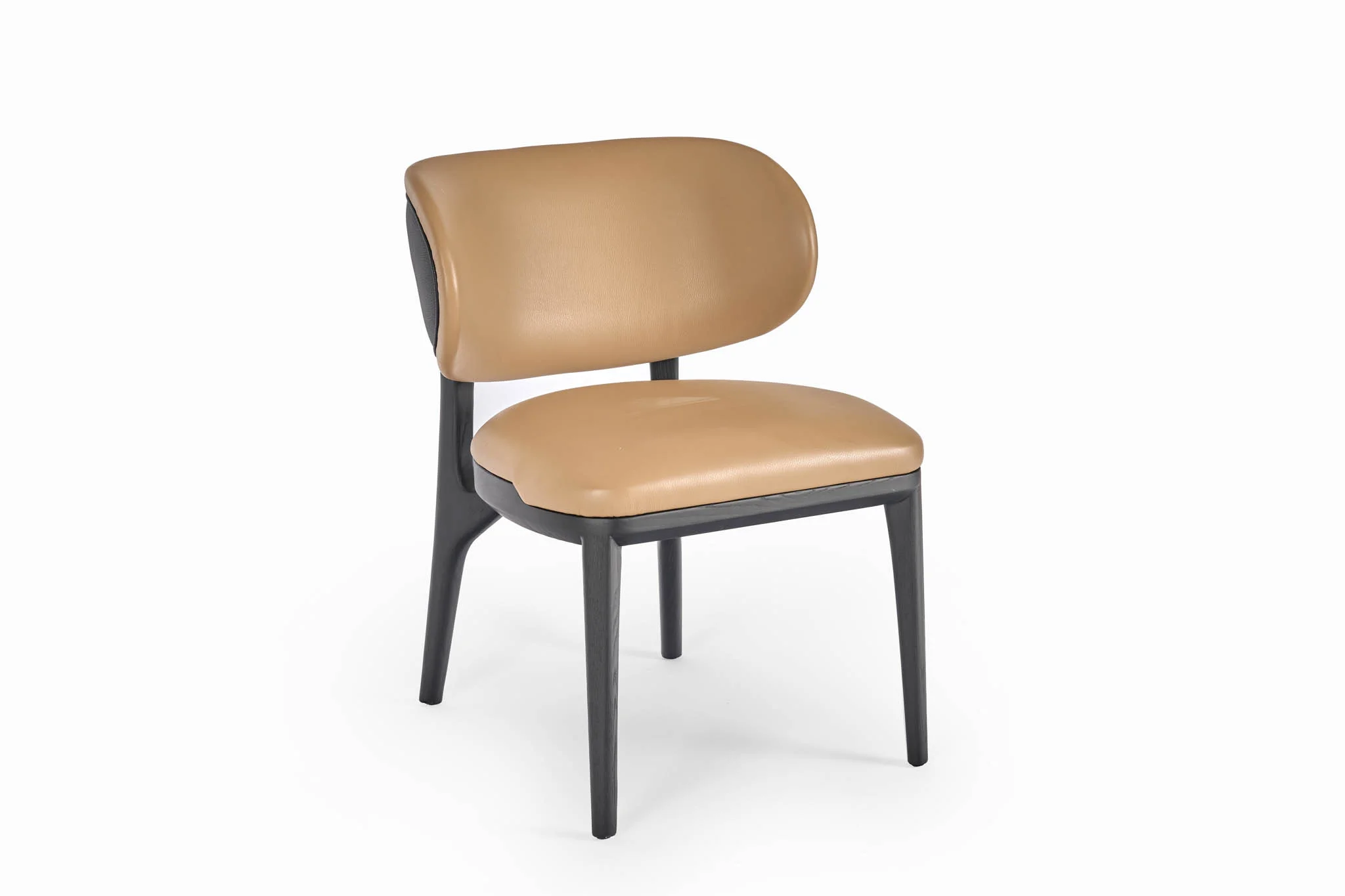
The contoured chair is listed at 52 × 55 × 92 cm with fabric and solid wood. Preserve the actual chair identity and approved covering. A supplier’s range can contain other chairs with similar material descriptions and close overall dimensions. The repeat order should not rely on the word upholstered or on a width alone to identify the intended form.
If a buyer is adding chairs to a dining group, confirm the table and existing arrangement as part of the request. The new quantity may change the occupied spacing even if the chair itself is unchanged. A successful order of four chairs does not automatically validate every later increase around the same table.
The wholesale furniture reorder should identify every proposed difference
Ask the supplier to distinguish what remains the same from what is proposed to change. The answer might concern a covering, a finish, a component, a dimension or the supplied scope. Review the relevant evidence for each actual difference. A statement that the new order is similar leaves too much uncertainty when the buyer expects a specific repeat version.
This review does not require assuming that a change is a defect. A revised option may serve the new buyer better. The commercial task is to recognize it, assess it and describe the accepted result accurately. Do not allow an intentional update to remain hidden inside a repeat order whose paperwork still describes the earlier version.
The wide leather dresser needs its drawer and frame appearance preserved
The dresser is listed at 160 × 45 × 85 cm with six drawers, leather and solid wood, and a contrasting black side frame in its description. A repeat request should identify the approved covering and frame appearance. If the furniture will stand beside an earlier piece, review the relationship with suitable references rather than relying on the broad word leather.
The actual drawer operation and supplied hardware information also belong to the offered version. Do not assume a particular mechanism from the earlier dresser or from a general product photograph. If the buyer requires correspondence in operation, state that requirement and ask for confirmation. A visually close front does not prove an identical internal arrangement.
Material behavior and component design are separate questions. The US Forest Service’s Wood Handbook provides general background on wood properties and dimensional behavior. It does not establish a tolerance or performance promise for this dresser. Any specific requirement for the repeat order must be supported by the actual supplier proposal.
Keep customer orders separate from showroom refresh decisions
A retailer may decide to update a showroom sofa covering while customer orders based on the earlier display remain open. Preserve both versions clearly. The display change should not silently alter an already approved customer selection, and staff should be able to explain which sample corresponds to which order.
For the two-tone sectional, retain the earlier color map while preparing the revised display proposal. For the contoured chair, keep the previous fabric reference attached to the relevant customer order. Version control becomes a practical sales responsibility when several visually related selections are active at the same time.
A new showroom photograph should not overwrite the old order reference
Photographs of a refreshed display can be useful for new inquiries. Label them accurately and preserve the images that supported earlier approvals. A customer reviewing an existing order should not be shown a newly styled version without an explanation. The objective is a clear correspondence between the furniture promised and the reference used to discuss it.
If the modular sofa is rearranged for a new display, confirm the supported configuration and identify it separately. A customer who saw the previous arrangement may expect different parts or material positions. A photograph can communicate the difference efficiently, but only when its version is clear.
A reorder sheet should separate a changed sofa side from a changed covering
Consider a retailer repeating the two-tone sectional for two different homes. One buyer accepts the displayed orientation and asks for another approved color combination. The other wants the original colors but needs the chaise on a different side. These are separate requests, and the supplier should be able to distinguish them without interpreting a single crowded note.
Keep each proposed change beside the relevant configuration image or material reference. The first order needs a clear surface map; the second needs a confirmed orientation drawing. If both requests are described only as a custom version of the display, the commercial record loses the specific question that must be answered before approval.
The same distinction helps with the dresser. A buyer who changes the leather color but retains the listed 160 × 45 × 85 cm form has made a different request from one seeking a revised width. Ask the supplier to identify the effects of the actual request. Do not assume a finish change and a dimensional development share the same approval or delivery conditions.
For the contoured chair, separate an additional quantity of the approved version from a different upholstery proposal. Keep the quantity decision visible without allowing it to conceal a material change. The buyer can then review the current offer product by product, preserving the useful history of the first order while recognizing what is different now.
Plan repeat deliveries around the actual current shipment
A previous delivery can inform questions, but it should not replace current packing and component information. Confirm the actual supplied form, packed dimensions and applicable assembly instructions for the reorder. The public 320 or 300 cm sofa spans do not establish the largest packed component, and the dresser’s exterior dimensions do not define its shipment.
For a distributor adding furniture to an occupied project, discuss where the new pieces will be received and compared with the existing group. The receiving team may need the earlier approved references as well as the new order information. Keep those records accessible so a material or configuration question can be assessed before packaging identities are lost.
An extra chair should arrive under its own confirmed product reference
Small additions are easy to describe informally because the buyer already knows the room. Give the supplier the same clarity used for a larger order: the contoured chair identity, selected covering, quantity and intended relationship to the existing set. Do not rely on the recipient remembering a showroom visit or a photograph shared without a clear reference.
If current availability requires a different proposal, review it as a new decision. It may be preferable to create an intentional mixed-chair arrangement or to wait for a confirmed option, depending on the buyer’s needs and the actual offer. Do not present an unverified substitute as identical simply to keep the reorder administratively simple.
Release the repeat order after the changed and unchanged parts are clear
Bring the accepted current version into one coherent order record. For the sectional, preserve the configuration and color zones; for the tufted sofa, the material combination and supported arrangement; for the chair, the actual form and fabric; for the dresser, the selected surfaces and supplied details. Each product needs the information relevant to its identity.
The sofa showroom range guide explains how a physical display connects to customer choices. Repeat purchasing extends that responsibility over time. Use the first order as an informed reference, confirm the present offer and make any accepted change visible before the new furniture is produced or dispatched.