Retail floor planning
Choosing a Luxury Sofa Supplier for a Showroom With Limited Display Space
A furniture retailer rarely has room to display every sofa option. The useful question is which physical examples will help buyers understand the range and which choices can be explained accurately through samples and drawings. Start with HEZEN CASA’s two-tone Nappa sectional, off-white bouclé curve and mixed suede-and-leather modular sofa, then define the exact configurations your staff can present.
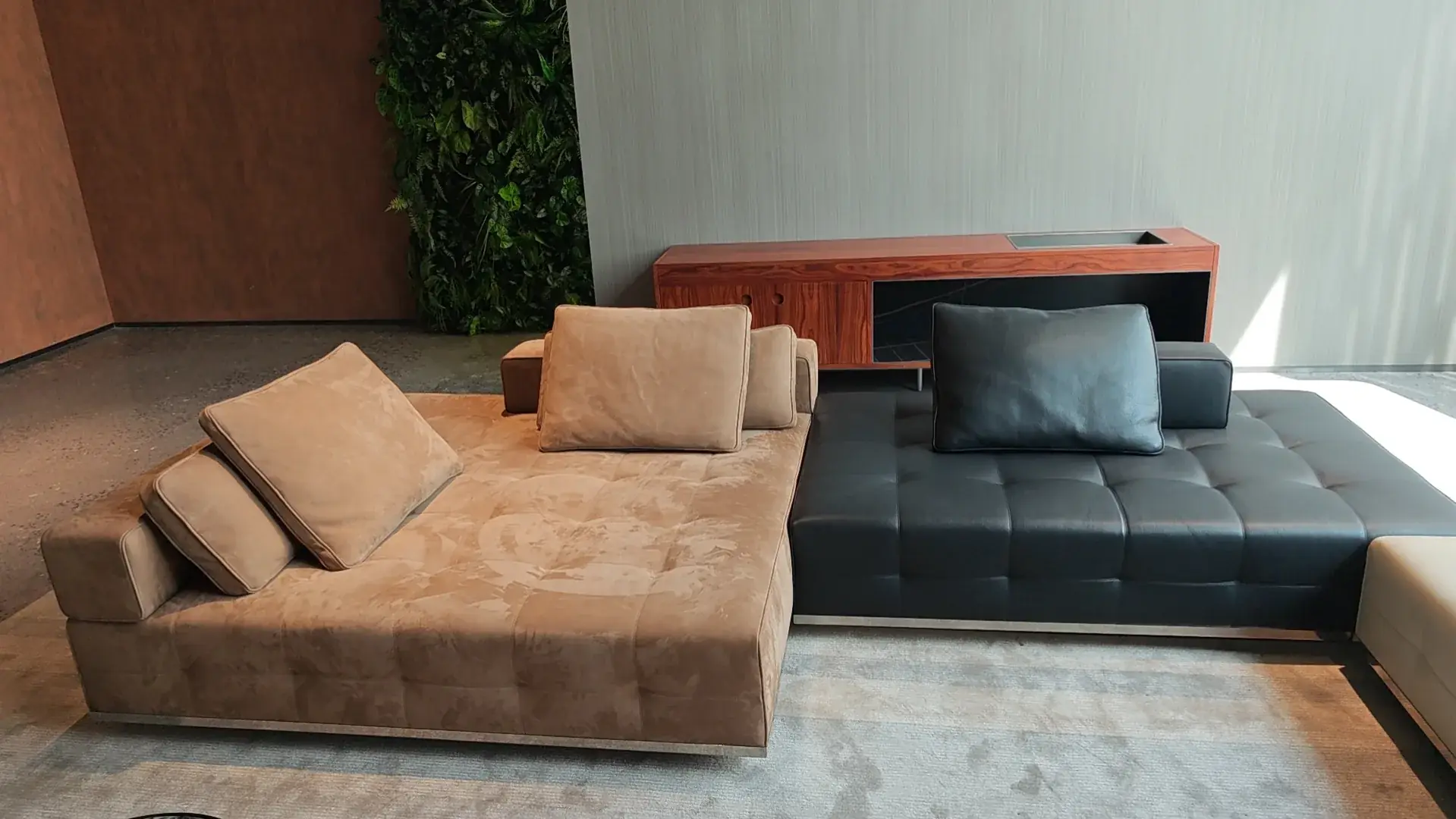
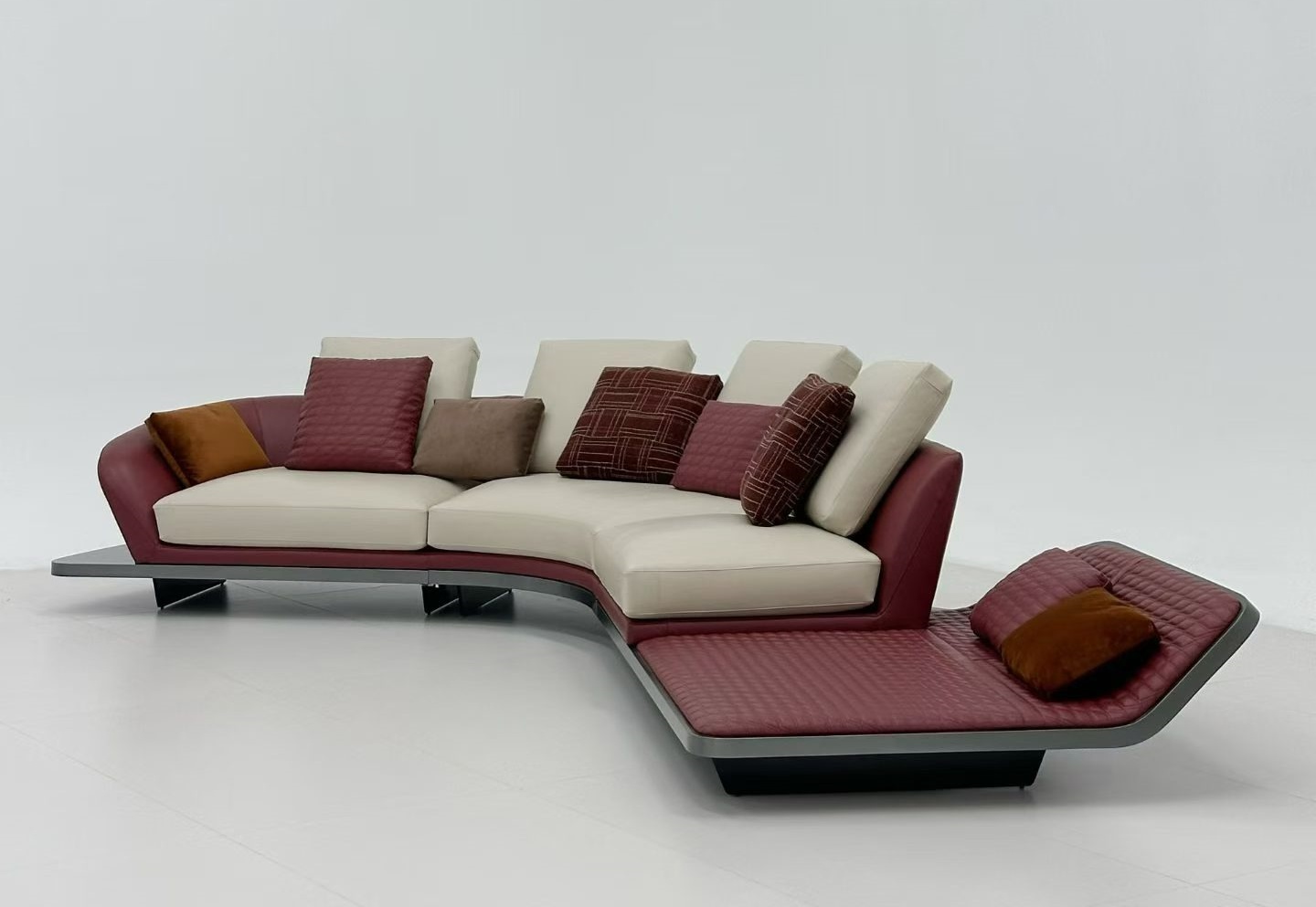
The burgundy-and-white Nappa sectional, off-white curved bouclé sectional and camel suede and black leather tufted modular sofa provide distinct starting points. The sculptural bouclé accent chair can help present a coordinated seating idea. HEZEN’s custom development service provides a route for discussing changes, but an available discussion is not the same as an already approved alternative.
A luxury sofa supplier should help define what the display proves
A physical sofa can demonstrate the supplied form, selected covering and sitting experience of that particular example. It cannot automatically demonstrate every possible configuration or material option. Keep that boundary clear when planning the showroom. The display should make the range understandable without encouraging staff to promise details that have not been confirmed.
A retailer with one generous floor position might choose the design most important to its customer base and explain the other families separately. A larger showroom might display two contrasting forms. The decision should follow the buying questions staff actually need to answer, rather than an attempt to represent the entire range through one ambiguous sample.
The two-tone sectional demonstrates a deliberate material layout
The Nappa sectional is listed at 320 × 180 × 85 cm with a solid-wood structure. Its burgundy-and-white arrangement makes the placement of colors part of the design. If selected for display, retain a clear covering map and the approved sample references. Staff should be able to explain which areas belong to each selected material and color.
A buyer asking for another combination needs a precise response. Record the requested surface changes and obtain confirmation rather than describing every color arrangement as interchangeable. If the chaise orientation changes as well, review the complete proposal. The display remains useful, but it should be identified as a reference for a defined version.
The bouclé curve demonstrates shape as much as upholstery
The off-white bouclé sectional is listed at 300 × 180 × 80 cm with a solid-wood structure. Its continuous curved appearance creates a different room-planning conversation from the two-tone sectional. Leave enough viewing space for customers to understand the outline and approach. A tightly crowded display can conceal the very feature the retailer intends to explain.
Provide an accurate dimension record and obtain a more detailed outline when needed for a customer’s room. Do not let staff estimate fit from the display alone. A sofa that looks comfortable in the showroom may meet a doorway or circulation constraint in an apartment. The physical example should begin that discussion, not end it.
Keep the luxury sofa range distinct when floor space is scarce
The tufted modular sofa is listed at 300 × 180 × 85 cm with suede, top-grain leather and solid wood. Its mixed surfaces and defined sections offer another reason for a physical display. Compare that role with the bouclé curve before deciding which furniture earns the floor position. Showing both may be valuable, but only if the room can present their differences clearly.
Show customers which covering belongs on each tufted sofa section
A single swatch cannot describe a design that intentionally combines materials. Keep the relevant samples together with a labeled image of their positions. Explain which material the customer is touching on the display. This makes a later selection more specific than an order note that simply says the sofa should be supplied in the same finish.
For a retailer receiving the display first and customer orders later, retain the approved sample identities and version details. Do not assume future availability, exact material matching or unchanged construction. Confirm the actual proposal for subsequent orders. The showroom sample is a reference point, but it should not become an unsupported promise about every later delivery.
The bouclé chair can show a seating relationship without becoming a matching set
The sculptural bouclé chair is listed at 80 × 90 × 95 cm with a metal structure. It can be considered beside a sofa to show a possible conversation arrangement, but its material and color need their own approval. Repeating the word bouclé does not establish that the chair and sectional use identical coverings.
Present the pairing as an intentional composition unless the supplier confirms a defined matching offer. For a customer interested in the chair alone, keep its dimensions and material information available separately. The display should make it easy to understand both the individual products and the relationship proposed between them.
Write the customer’s sofa request as a version, not a showroom nickname
Retail staff often develop convenient informal names for displays. Those names may help conversation but should not replace the product identity in an order. Record the chosen design, configuration, dimensions, covering references and any requested changes. A phrase such as the cream sofa near the window becomes unreliable when the showroom is rearranged.
Consider a buyer who likes the bouclé curve but needs a different overall span. The next step is a defined custom discussion, including the room constraint and the proposed revised outline. It is not enough to subtract a length from the public dimension. The supplier should explain how the shape, seating arrangement and construction would respond.
Another buyer may want the two-tone sectional with a mirrored chaise. Record the orientation from an agreed viewpoint and ask for confirmation of the supported option. Keep the drawing with the material map. A sales conversation can be clear to both people at the time and still become ambiguous when translated into a short order note.
Separate sofa options that are confirmed from options awaiting development
A useful range record distinguishes the displayed version, confirmed alternatives and requests requiring further review. This helps staff answer accurately without making the presentation cumbersome. The custom service can support a discussion, but it should not be used as a blanket assurance that every proposed dimension, covering or configuration is feasible.
Manufacturer range information, such as Poliform’s component-based sofa presentation, illustrates the value of identifying a configuration explicitly. It does not establish HEZEN’s available components. Use the principle to organize the retailer’s questions, then obtain the actual information from the supplier for the selected design.
Assess the display sofa before treating it as the standard for orders
When the showroom furniture arrives, compare it with the approved version. Review the actual upholstery zones, dimensions, visible seams and supplied component information. If a question remains unresolved, do not quietly turn that uncertainty into the explanation given to customers. Resolve it with the supplier and update the range record.
Invite staff to use the different sitting positions and understand the limits of their observations. A person’s experience of the chaise may differ from the central seat. Staff can describe the actual example and help customers assess it, but should avoid universal comfort claims. Missing seat dimensions or construction details require an answer rather than a confident guess.
A showroom move can change which sofa surfaces customers see
Moving the sectional away from a wall may expose its rear and side surfaces more prominently. Review those views before changing the display arrangement. If modules are separated, confirm that independent use and the exposed faces are supported. A new showroom layout should not imply a configuration the supplier has never approved.
Protect and handle the display according to the actual supplied instructions. Ask for component and packing information before planning delivery or later relocation. The published overall sofa size does not reveal the largest packed part. A retailer moving furniture through a service corridor needs the real delivery dimensions, not a guess based on the assembled display.
The display label should distinguish the sofa from the complete room scene
A showroom scene may include cushions, a rug, a chair and decorative objects, while the quoted line concerns only the sectional. Identify the supplied scope clearly. A customer should understand which visible pieces belong to the sofa order and which are separate selections. This prevents an attractive complete-room presentation from creating an accidental expectation about included accessories.
The same distinction applies to the bouclé chair beside the sectional. Keep its product identity and selected covering separate even if the two pieces are sold together. If the customer later removes the chair from the order, the sofa specification should remain understandable. If the chair is added later, its approval should not depend on an informal memory of the original display.
For the tufted modular sofa, identify the displayed configuration rather than using a photograph of another arrangement as the principal order reference. The customer may focus on the material combination and overlook a changed end section. Ask staff to review both the configuration drawing and upholstery selection with the buyer before the request goes to the supplier.
A retailer serving remote clients can use comparable views of the actual display to explain the shape. Include the relevant sides and configuration information, not just the most dramatic angle. Those images support a conversation, but should not replace the dimensional and material records. Keep their version clear if the display is reupholstered or rearranged.
When a customer brings a room drawing, identify the constraint that makes the decision difficult. It may be the curve beside an entrance, the chaise orientation or the relationship to an existing chair. Attach that question to the supplier discussion. A precise room problem is more useful than asking whether the displayed sofa can be made to fit somehow.
Before replacing a display sofa with another family, preserve the information staff still need for open orders. The physical sample may leave the floor while an approved customer version remains in progress. Keep its material references and configuration record accessible so the change in presentation does not interrupt the meaning of an existing order.
Keep replenishment decisions tied to the sofa family customers choose
After the range is established, record the configurations and materials customers actually request. Distinguish interest in the sculptural curve from interest in the two-tone covering or modular arrangement. Those are different reasons for a purchase and may lead to different display decisions. Do not replace one family merely because another has a similar nominal width.
A retailer supplying interior designers may need especially clear drawings and sample references, while one serving individual homeowners may spend more time on sitting experience and room fit. Use those needs to decide which physical examples remain on the floor. The range should become easier to explain as experience grows, rather than accumulating unverified options.
The wholesale furniture assortment guide considers the broader mix of products. Within the sofa category, be more selective. Keep each display’s purpose clear, preserve the information that connects it to an order and verify requested changes before presenting them as available. A smaller, well-understood sofa range is more useful than a crowded floor whose alternatives cannot be specified accurately.