Keep the mattress, change the bed
Brief an Upholstered Bed Manufacturer Before Replacing a Bed Around an Existing Mattress
Replacing a bed while retaining the mattress starts with the mattress you own, not the size name on the new bed. A designer refreshing an apartment or a villa buyer changing the bedroom should give the upholstered bed manufacturer the actual mattress dimensions, its required support and the room’s fixed features. HEZEN CASA’s low platforms, pillow headboards and wingback beds provide different replacement routes once those constraints are clear.
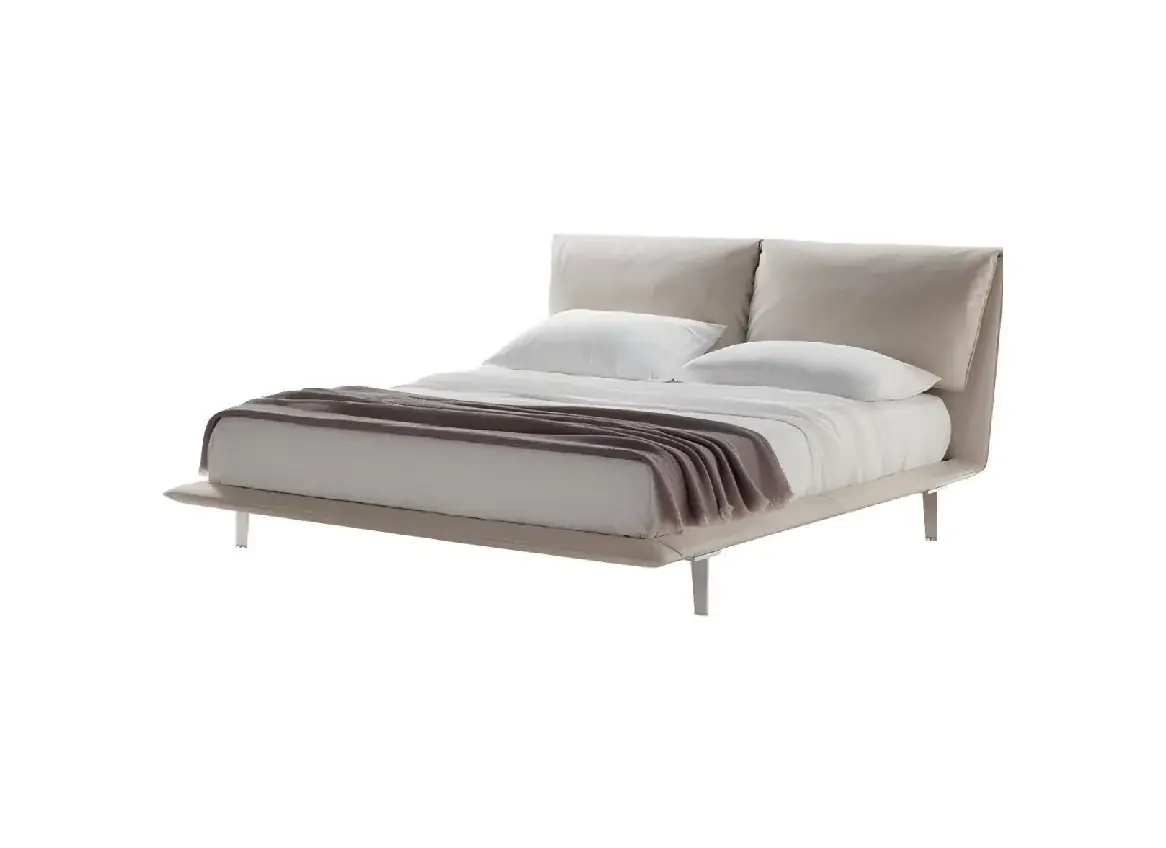
Begin with the cream tufted bouclé platform bed, dark grey velvet bed, dual-pillow Nappa bed, wingback linen bed with lamps and smooth Nappa low platform bed. Compare the physical relationships each creates. None should be approved solely because the listing and the existing mattress both use the word King.
Give the upholstered bed manufacturer a measured mattress rather than a familiar label
Record the mattress’s actual length, width and thickness, together with its manufacturer and relevant support instructions. Include any topper that will remain in use. A size label can be helpful shorthand, but it does not define the entire replacement problem. The new frame must accommodate the actual sleeping assembly and the way it will be supported.
Measure the item itself and keep the measurement points understandable. If the mattress has rounded or upholstered edges, ask the bed supplier how its required internal opening will be assessed. Do not prescribe a clearance by guessing. The supplier should provide the opening and fit information for the version being offered, including any agreed allowance.
The 210 × 180 cm bouclé bed dimensions are an exterior envelope
The cream tufted bouclé platform bed is listed at 210 × 180 × 100 cm with a solid-wood structure. Those measurements help reserve space in the room. They should not be interpreted as a mattress opening, a support-panel size or the thickness of the surrounding upholstery. Obtain the selected version’s internal and support information before comparing it with the retained mattress.
A homeowner replacing a bed of similar outside width may expect the existing mattress to drop straight in. That expectation can fail if the new bed allocates its width differently between the opening and upholstered sides. The relevant comparison is the actual supported mattress space, followed by the outside footprint. Both matter, but they answer different questions.
A retained mattress can change the apparent height of a low platform
The smooth beige Nappa platform is listed at 220 × 180 × 85 cm with a solid-wood structure. Its low visual form is part of its appeal, yet the final sleeping height also depends on the support position and retained mattress. The 85 cm overall bed height does not establish where the mattress surface will finish.
Request the support elevation and compare it with the actual mattress thickness. A buyer should understand the resulting relationship to the headboard and the floor before choosing this route. If the existing mattress is unusually deep for the intended appearance, consider whether a different bed form serves the room more naturally instead of forcing a low-profile design to recreate a photograph.
Resolve the new bed’s support arrangement before discussing upholstery color
Ask what support system is included with the proposed bed and whether it meets the retained mattress manufacturer’s requirements. The public product descriptions do not supply every support detail. Do not assume a slat arrangement, panel spacing or additional foundation is included. The actual proposal should identify what carries the mattress and what, if anything, the buyer must supply.
Mattress manufacturers can specify particular support conditions. For example, Tempur-Pedic’s foundation information describes its own support products. That is a reason to consult the retained mattress’s applicable instructions, not evidence that any HEZEN bed is automatically compatible with that brand or with every mattress type.
An existing adjustable base requires a separate fit discussion
If the buyer intends to retain an adjustable base as well as the mattress, identify it explicitly. Provide the base dimensions and its relevant operating requirements. Ask whether the proposed upholstered surround can be supplied in a compatible arrangement. Do not assume that a bed designed around one support system can simply have that system removed.
The base’s movement may introduce a different question from static mattress fit. The supplier needs to understand the actual equipment and intended use before responding. If compatibility cannot be confirmed, keep that option unresolved rather than promising that the upholstery will conceal the existing base. Appearance should follow a supported assembly decision.
Compare headboards against the room that will remain after replacement
A replacement project often retains wall finishes, outlets, bedside furniture and lighting. Draw those fixed elements with the proposed bed elevation. The new headboard may cover or visually compete with items that worked beside the old bed. Checking the floor footprint alone will not reveal this conflict.
The 120 cm velvet headboard changes the wall composition
The dark grey button-tufted velvet bed is listed at 220 × 180 × 120 cm with a metal structure. Compare that height with the existing wall arrangement and the retained mattress surface. Its taller presentation differs from the 85 cm low Nappa bed. A previous artwork position or wall feature may need a separate design decision.
The velvet bed is shown with a matching bench, but the bench’s dimensions and inclusion must be confirmed. For a replacement order, do not let the room image expand the purchase scope accidentally. If the buyer wants to retain the existing bench instead, review its height, position and appearance with the new bed as an independent pairing.
The dual-pillow Nappa headboard should be reviewed with the actual bedding
The light grey dual-pillow Nappa bed is listed at 220 × 180 × 105 cm with a metal structure. Its padded headboard form can create a different visual relationship with pillows and bedding from the button-tufted velvet design. Review the intended sleeping assembly rather than copying the quantity and arrangement of pillows in a product photograph.
For a designer refreshing several apartments, retain the actual mattress and bedding information for each room type. Two rooms that look alike may have different retained sleeping assemblies. The same new bed appearance should not conceal that difference in the order. Identify which version has been checked for which existing mattress.
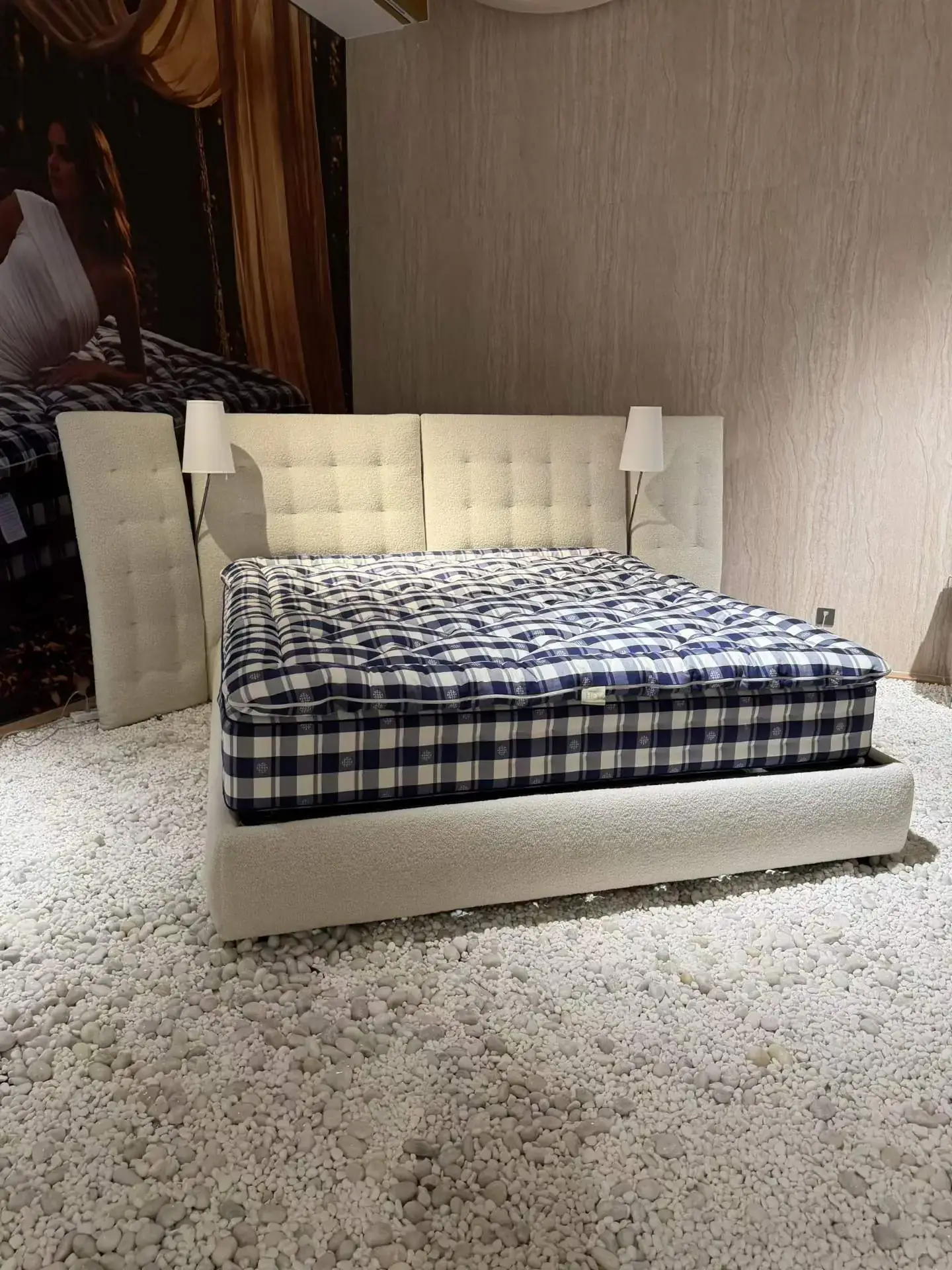
Retained bedside furniture can expose a change in sleeping height
A buyer may keep the bedside furniture because its size and finish already suit the room. Compare its usable surface with the proposed mattress surface, using the actual support elevation and retained mattress thickness. The new bed’s overall height cannot establish that relationship. A low Nappa platform and a taller velvet headboard can both produce an unexpected pairing if this question is ignored.
For an apartment refresh, mark the existing bedside furniture on the same drawing used to approve the replacement frame. If the new upholstered sides occupy more space, review the approach to the bedside surface and any nearby drawer. A mattress that fits within the frame does not prove that the retained surrounding furniture still works comfortably.
If the buyer wants to preserve every fixed item in the room, state that constraint before requesting changes to the bed. The supplier can then respond to a defined problem. Avoid approving a frame first and asking later for an unspecified adjustment to recover the old bedside relationship. A revision should show the changed dimensions and the effect on the sleeping assembly.
Keep this comparison separate from the headboard color decision. Upholstery may coordinate perfectly with the retained room while the daily reach remains unresolved. The useful replacement proposal addresses both appearance and the measured relationship between the bed, mattress and furniture beside it.
A wingback replacement bed can reopen the lighting decision
The off-white wingback linen bed is listed at 230 × 190 × 130 cm with a solid-wood structure and built-in lamps. It is wider and taller than several other beds in this comparison. If the buyer is retaining bedside furniture, review the complete arrangement so the headboard wings and lamps do not become an unexpected interface problem.
Confirm the supplied lighting scope, connection arrangement and applicable product documentation. The public listing does not establish voltage, certification or how the installation should connect to the room. Those questions need an actual answer for the destination and proposed version. A photograph showing lamps does not complete the electrical decision.
Existing sockets should remain usable in the approved bed position
Mark the relevant outlets and switches on the wall drawing. Ask how the proposed bed and supplied lamp arrangement will relate to them. If the existing positions do not work, decide whether the furniture proposal or the room installation must change. Do not release the order on the assumption that an installer will find an unspecified solution after arrival.
For a buyer who wants a straightforward furniture replacement without electrical work, one of the beds without integrated lamps may be a more suitable direction to examine. That is a scope decision, not a judgment that the wingback design is unsuitable generally. Select it when its additional interfaces can be resolved as part of the project.
Plan the mattress changeover before the old frame leaves the room
A retained mattress needs a practical temporary location while the old frame is removed and the new bed is assembled. Coordinate that sequence with the receiving team and the supplier’s actual instructions. Do not assume the mattress can remain on the old bed until the last moment if the new components need the same floor area for assembly.
Obtain the new bed’s packed component dimensions and assembly information. The overall bed dimensions do not reveal the largest component passing through the doorway. A tall wingback headboard and a low platform can create different handling questions even when both fit in the finished room. Confirm the actual supplied form before delivery is arranged.
If the buyer occupies the room throughout the refurbishment, agree when the new sleeping arrangement will be usable. A delivered bed is not necessarily an assembled and compatible bed. Keep the retained mattress, support approval, relevant hardware and installation instructions connected to the same room assignment so the changeover does not depend on missing information.
Accept the replacement bed with the retained mattress in position
Check the supplied bed against the approved version, then review the actual sleeping assembly according to the applicable instructions. Confirm the fit, the relationship to the headboard and the space beside the bed. If the mattress does not sit as agreed, document the specific dimensions and supplied parts instead of treating the issue as a vague difference in bed size.
The bedroom furniture composition guide considers how storage and dressing movements share the room. Revisit those movements after replacement, particularly when the new frame has a wider envelope or a bench has been added. A successful mattress fit should not leave the surrounding bedroom harder to use.
Keep the mattress only when its condition and requirements suit the intended new arrangement, and choose the upholstered frame around verified interfaces. The bouclé platform, low Nappa form, velvet headboard, pillow design and lamp-equipped wingback each offer a different route. Approve the one that works with the retained sleeping assembly and the room’s fixed features, then make that exact combination the basis of the order.