Bedroom composition
Working With a Luxury Bedroom Furniture Supplier From Sleeping Space to Dressing Space
A bedroom can look coordinated and still be awkward to use. For a villa owner, interior designer or furnished-apartment buyer, the first decision is how the bed, storage and dressing movements share the room. Start with HEZEN CASA’s upholstered beds and leather storage pieces, then confirm the actual mattress arrangement, drawer operation and material selections before treating them as a finished suite.
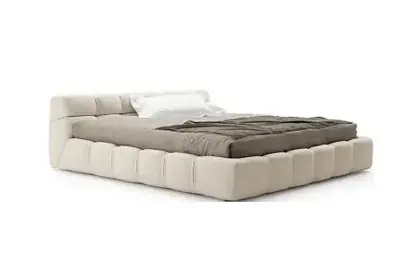
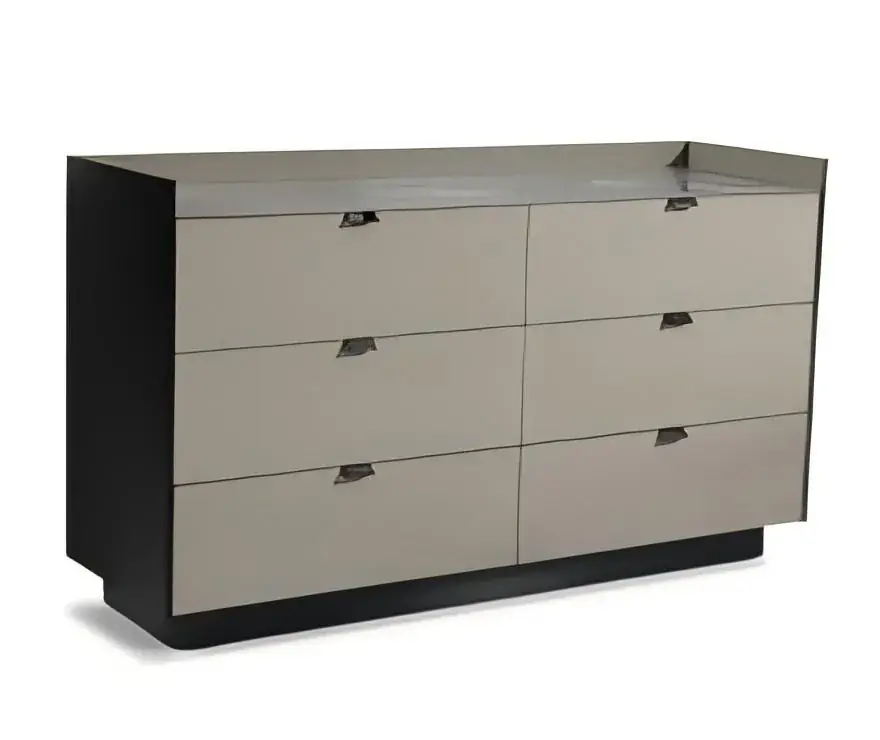
The cream tufted bouclé platform bed, dark grey velvet bed with a matching bench in its presentation and light grey dual-pillow Nappa bed create different starting points. The curved six-drawer tall chest and wide six-drawer leather dresser offer two distinct storage footprints. Their shared setting does not make every combination equally suitable.
A luxury bedroom furniture supplier should see the morning routine
Imagine two people using the room at the same time: one remains near the bed while the other opens a drawer and prepares to leave. Draw that movement, including doors and any existing wardrobe. A dresser that fits a blank wall may still obstruct the route once its drawers are open. The useful room is the one that works during these overlapping actions.
For a furnished apartment, the buyer may need a more restrained arrangement because luggage also occupies temporary floor space. For a large villa bedroom, the temptation may be to add furniture simply because there is room. In both cases, assign each item a role. A bench, chest and dresser should solve different needs rather than duplicate surfaces without improving daily use.
The 60 cm chest saves wall length but changes the storage reach
HEZEN’s curved tall leather chest is listed at 60 × 45 × 130 cm with six drawers and a leather-and-solid-wood construction. Its narrow width can help where wall length is limited, but the 130 cm overall height creates a different reach and visual presence from a broad dresser. Overall dimensions do not reveal the interior drawer capacity or extension.
Ask for the usable drawer information and the operating space required in front. A narrow exterior is not proof that the piece suits every user or stores the intended items. If the buyer expects folded garments, accessories or larger objects, compare those needs with the actual interiors. Avoid estimating usable volume by multiplying the outer dimensions.
The 160 cm leather dresser needs an uninterrupted dressing zone
The wide leather dresser is listed at 160 × 45 × 85 cm, also with six drawers and a leather-and-solid-wood construction. Its lower, wider form changes how the wall can be used. Check nearby switches, door swings and other fixed features before approval. A wider top may suit the composition, but its permitted use and any proposed objects should be considered separately.
A buyer furnishing several bedrooms should not automatically order the same storage piece for each. One room may have a short return wall suitable for the tall chest; another may offer a longer dressing wall. Keep the product assignment on the room schedule. Similar finishes can preserve a relationship while the footprints respond to different layouts.
Choose the upholstered bed before fixing the bedroom palette
The bed occupies a substantial visual area, so its form and covering should guide the material discussion. Choosing only a color name can hide important differences between bouclé, velvet and Nappa upholstery. Review the actual proposed samples and the way each covering sits on the selected bed. A palette becomes useful when it describes specific surfaces.
The cream bouclé platform bed creates a low, textured center
The cream tufted bouclé bed is listed at 210 × 180 × 100 cm with a solid-wood structure. Queen and King options are named, but the overall measurements are not a mattress specification. Obtain the selected version’s mattress opening and support information. The low platform appearance should be evaluated with the intended mattress in place, because the finished sleeping height affects use.
Its textured covering can establish a quieter visual center than a stronger color contrast. That is an aesthetic interpretation, not a performance claim. A buyer who wants easy day-to-day care should request guidance for the selected upholstery rather than assuming that a light color or visible texture predicts cleanability. Keep the care decision tied to the actual material.
The velvet bed and bench need two separate space decisions
The dark grey button-tufted velvet bed is listed at 220 × 180 × 120 cm with a metal structure. Its presentation includes a matching bench, but the buyer should confirm the supplied scope and obtain the bench’s own dimensions. The bed’s overall measurements do not describe the combined arrangement. Do not reserve space for the bed alone and assume the bench will fit afterward.
For a dressing routine that uses a bench, test the path between the bed, bench and drawers. If the bench is mostly decorative and interrupts access, omit it from the proposed layout or discuss another arrangement. Its visual relationship with the headboard is only one part of the decision. The separate item needs a clear purpose and an agreed supply line.
The dual-pillow Nappa bed should be assessed from the room entrance
The light grey Nappa bed is listed at 220 × 180 × 105 cm with a metal structure and a dual-pillow headboard form. Compare its silhouette with the taller velvet headboard and the bouclé platform. The choice may depend on what is visible from the doorway and how the bed relates to the storage furniture, rather than on a small difference in nominal length.
For a designer balancing soft forms with a wide dresser, the pillow-like headboard may provide one visual direction. Confirm the selected covering and support arrangement separately. The word Nappa does not establish every finish, care characteristic or material relationship with the dresser’s leather. Coordinating products requires an explicit sample decision, not an assumption that repeated material words mean identical surfaces.
Make the bedroom supplier’s proposal specific about what belongs together
A room proposal should distinguish a coordinated selection from a factory-defined matching set. These beds and storage pieces can be considered together, but the order should identify each actual product and version. If the designer intends a close color relationship, present the samples together. If contrast is intentional, describe that relationship so it is not later treated as a mismatch.
| Room decision | Selection to examine | Information still needed |
|---|---|---|
| Short dressing wall | 60 cm wide tall leather chest | Drawer interiors, extension and supplied stability instructions |
| Longer dressing wall | 160 cm wide leather dresser | Operating clearance and nearby door or wardrobe movement |
| Bench beside the sleeping area | Velvet bed presentation | Bench dimensions, inclusion and its actual position |
A project with several room types benefits from a small number of deliberate relationships. For example, the same selected storage finish might accompany different beds if the supplier confirms the options. Record that choice accurately. Do not describe it as a standard set unless it is supplied that way, and do not assume one sample approval covers an unreviewed material on another product.
During review, put the upholstery samples beside the proposed wall and floor finishes where practical. Assess their relationship in the room’s intended lighting. This is a visual coordination exercise, not a laboratory test. Questions about material performance, maintenance or durability still require information for the actual proposed coverings and furniture construction.
A dark velvet headboard and a leather dresser should not compete by accident
Consider a room where the velvet bed already provides a strong visual center. A buyer may prefer the dresser to remain quieter, or may intentionally introduce another material emphasis. Review that decision with the actual samples and room views. The goal is to establish a relationship that survives beyond the carefully lit image used during selection.
The tall chest can also change what is seen beside the bed. At 130 cm overall height, it may enter the same visual field as a headboard, depending on its position. Draw the elevations as well as the floor plan if this relationship matters. Two pieces that fit comfortably on the floor can still create an unintended composition when viewed from the doorway.
For a bedroom used by a couple, discuss whether storage should be shared in one wide dresser or distributed differently. The public drawer count does not answer that question by itself. Obtain the actual usable interiors, consider the items to be stored and review the movement needed to access them. A balanced photograph cannot establish equal practical usefulness for two users.
If a later color change affects only the bed, revisit the storage samples beside it. Keep the earlier approval available so the change can be understood accurately. There is no need to redesign the entire room automatically, but the original coordinated relationship should not be assumed to remain unchanged.
Keep bedroom storage stability and sleeping support on separate records
The dresser and bed raise different questions. Storage furniture needs its applicable installation and stability instructions, while the bed needs an agreed mattress and support arrangement. General furniture anchoring guidance explains why tip-over prevention matters; the supplied chest’s instructions and the actual wall conditions must determine the installation approach.
Do not improvise a fixing specification from the chest’s height or from a photograph. Ask what the supplier provides and what the installer must confirm for the site. If a wall cannot accept the proposed arrangement, resolve that before final placement. The same room plan used for appearance should leave the installation team access to the relevant locations.
For the beds, the upholstered bed sizing guide explains why nominal size names need a matching support discussion. Carry the agreed mattress dimensions and bed version into the purchase record. The bedroom can look complete in a rendering while that essential fit remains unresolved.
A procurement team receiving the room in separate deliveries should identify which pieces can be placed and which must wait for assembly or installation. Ask for the actual packing and component information for the bed, chest and dresser. Published furniture weights or outer dimensions, where available, should not be substituted for the dimensions and handling requirements of packed items.
Review the bedroom once with drawers open and the bed prepared
The final room review should include the ordinary conditions hidden by a presentation photograph. Open the drawers, position the bench if it is included and consider the bed with its intended mattress and bedding. Confirm that the route still serves the room. A visually balanced wall does not compensate for a dressing area that cannot be used comfortably.
For a villa owner, preserve the selected material references so a later additional piece can be discussed accurately. For an apartment operator, preserve the room assignment and the applicable care instructions so furniture is not moved between units without checking fit. Neither record guarantees future availability or exact color matching; both make a later decision better informed.
Release the bedroom order when each piece has an identifiable job, an agreed version and a place that supports daily movement. The bouclé, velvet and Nappa beds offer different directions; the tall chest and wide dresser answer different storage conditions. Choose the combination that makes sleeping and dressing work together, then keep that arrangement clear through delivery and installation.