Upholstered Bed Fabric Comparison: Boucle, Velvet, Linen and Woven Covers
The fabric you stroke on a sample board is only part of the bed you will live with. At the headboard, it sits behind pillows and meets hair or skin. Along the side rail, it appears beside sheets, slippers and the route through the room. A useful upholstered bed fabric comparison considers those different jobs. HEZEN CASA's boucle, velvet, linen-blend and woven beds offer distinct starting points, with a leather option for buyers who prefer a smoother surface.
Choose the frame and cover together. A fabric that looks restrained on a flat sample may become much more noticeable across a tall, tufted headboard. Conversely, an attractive low frame may sit mostly behind bedding. Before choosing a colour, establish the actual bed outline, the finished mattress arrangement and how much upholstery will remain visible.
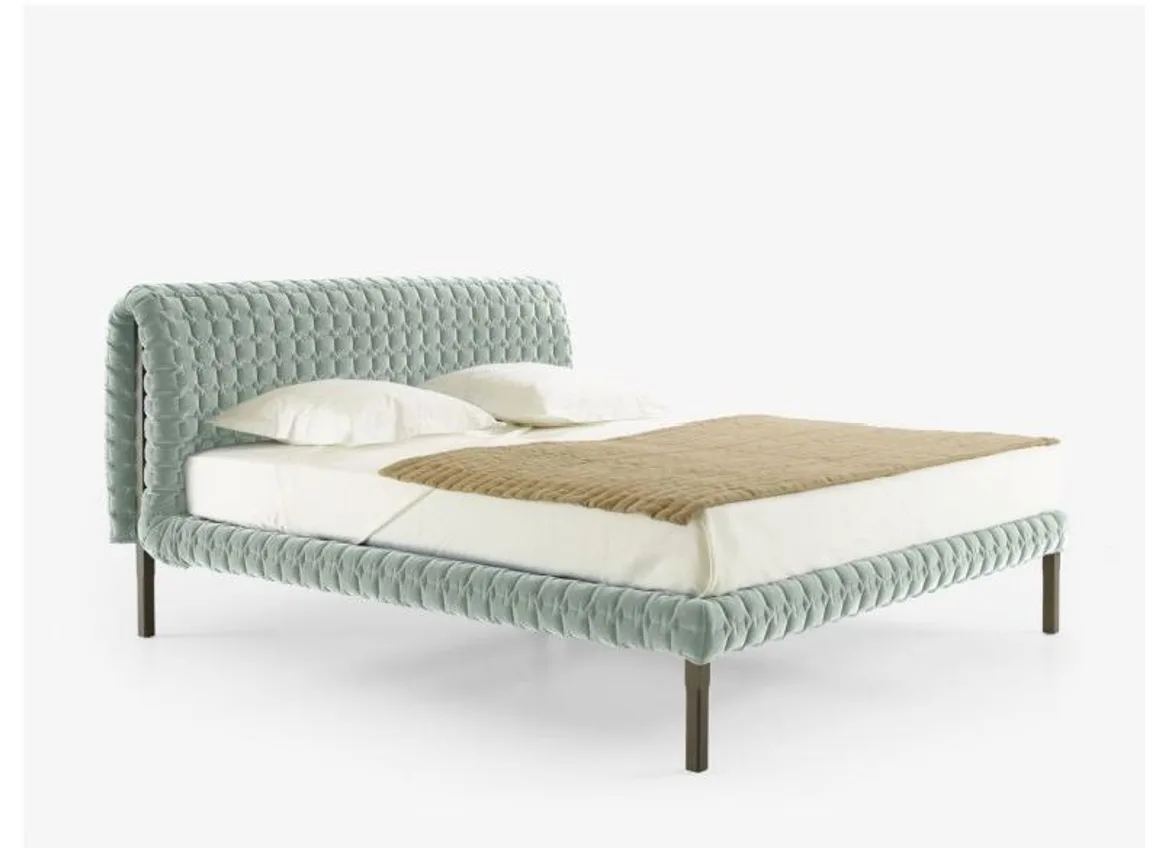
Begin the upholstered bed fabric comparison at the headboard
The Cream Tufted Boucle Fabric Low Profile Platform Bed is described with boucle over a solid wood structure, segmented tufting and a low profile. Its listed overall dimensions are 210 × 180 × 100 cm. That 100 cm overall height does not tell you how much upholstered headboard will show above your chosen mattress and pillows.
For a main bedroom where someone reads in bed, review the surface at the place they will actually lean. If pillows always separate the person from the headboard, the feel still matters during making and cleaning the bed, but it plays a different role. Do not select a cover on the assumption that everyone sits against the upholstery in the same way.
See the boucle tufting with the bed made up
On the cream boucle option, the segmented form adds its own pattern. Put the proposed bedding colours and textures beside the sample so the frame does not compete unexpectedly with a heavily patterned duvet or a thick knitted throw. A quiet bedroom can still have visible texture; it simply helps to decide which surface should receive the attention.
The fabric name does not establish its fibre blend, washability or resistance to snagging. Knoll's Classic Boucle material information shows how an individual textile has its own composition and sample guidance. Those specifications belong to that material, not to this HEZEN bed. Obtain the information for the actual proposed upholstery.
Look at the side rail of the low-profile boucle bed as well as its headboard. Bedding may hide part of it during the day and leave more visible when folded back at night. Check the texture against the actual duvet drop and the floor finish. This avoids approving a large upholstered frame from a headboard sample while overlooking the band of fabric around the mattress.
Velvet brings the headboard and bench into one decision
The Dark Grey Button Tufted Velvet Bed with Matching Bench is listed at 220 × 180 × 120 cm, with velvet upholstery and a metal structure. Its button-tufted headboard and matching bench make the cover visible in two different orientations. Look at both rather than approving the headboard and treating the bench as a small accessory.
Compare the velvet pile upright and across a seat
Ask to see the selected velvet sample in the orientations proposed for the headboard and bench. Look from the doorway, from the side of the bed and under the bedside lamps. Any directional change in the sample's appearance belongs in the approval discussion; it should not be discovered only when several upholstered surfaces are placed together.
For a household where the bench will be used for dressing, consider the actual contact with clothing and shoes. If it will mostly hold a folded throw, its daily use is different. Neither purpose establishes a load rating or a cleaning method. Keep the intended use clear and use the instructions supplied for the selected bench and cover.
Allow for the bench in the bedroom route before settling the set. The bed's 220 cm overall length does not include an unspecified space for a separate bench and the person moving around it. Ask for that piece's own dimensions. If the room becomes awkward with the bench in place, reconsider the arrangement rather than choosing another velvet colour and leaving the underlying space problem unresolved.
The 120 cm listed bed height is 20 cm more than the cream boucle bed's 100 cm listing, but that is an overall comparison. It does not prove 20 cm more visible upholstery above the finished mattress. The headboard-height guide explains which measurements to separate before judging the bedroom elevation.
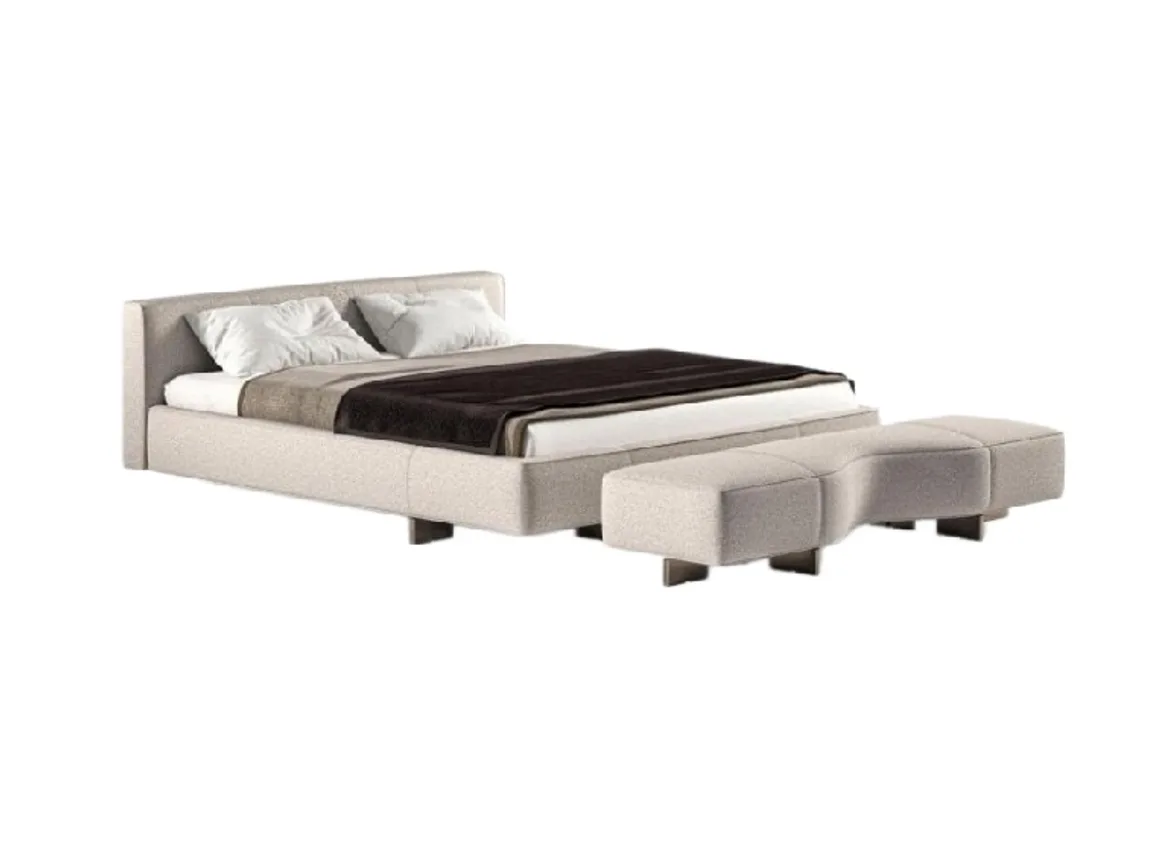
A linen-blend bed should be judged beside the room's other textiles
The Mustard Yellow Curved Linen Fabric Platform Bed has a wrap-around curved headboard and a listed 215 × 180 × 110 cm outline. The description identifies a linen blend and metal legs. It does not give a fibre percentage, so the linen name should not be expanded into a claim that the cover is pure linen.
Its strong colour and curved outline make it a useful candidate when the bed is meant to lead the room. Try the upholstery sample with curtains, sheets and the proposed rug. If all of those surfaces are chosen independently, the bed may arrive looking much stronger or flatter than expected within the full palette.
Check the curved linen headboard from the bedroom entrance
A wrap-around headboard can expose side surfaces that a straight-on photograph hides. Stand where someone enters the room and consider how the curve meets the bedside pieces. The fabric needs to look right on that return as well as behind the pillows. Confirm the ordered frame outline before deciding where the bedside furniture can sit.
For a guest room, the mustard bed may provide enough colour without adding several other patterned pieces. That is a design choice, not a rule about linen. Keep a straightforward care note with the selected upholstery so a person changing the bedding does not assume that the frame cover can be treated like the removable bed linen.
A woven bed cover offers another kind of visible texture
The Grey Textured Woven Fabric Bed with Irregular Metal Legs is described with a textured woven cover, a two-tone headboard and metal supports. Its listed dimensions are 220 × 180 × 100 cm. Here, the weave and the division between the headboard surfaces both belong in the comparison.
Examine the actual material at close range, then step back to normal room distance. Some textures are most apparent within reach; others remain prominent across a whole headboard. Do not infer fibre content or wear performance from that visual impression. If two covers or colours are proposed for the headboard, identify each one and where it belongs.
A project buyer ordering several guest bedrooms may prefer a woven option for one room and a quieter cover for another. Keep the material references attached to the specific beds, especially if both are described loosely as grey fabric. The 220 cm overall length also needs checking against the room route; a familiar colour is not a reason to overlook the frame size.
For the two-tone woven headboard, review the junction where the colours or surfaces meet. Decide whether that division belongs behind the pillows or remains visible above them in the intended bedding arrangement. This is a question about the particular bed, not a rule that woven fabric should always be combined with another tone. Keep the approved allocation clear if the proposed version differs from the reference view.
| Bed direction | Listed outer size | Where to focus the sample review |
|---|---|---|
| Cream tufted boucle | 210 × 180 × 100 cm | Texture across the segmented headboard and visible low frame |
| Dark grey tufted velvet with bench | 220 × 180 × 120 cm | Headboard and bench viewed together under the room lighting |
| Mustard curved linen blend | 215 × 180 × 110 cm | Colour with bedding and fabric around the headboard returns |
| Grey textured woven cover | 220 × 180 × 100 cm | Weave, two-tone allocation and the room view from a distance |
These dimensions describe the listed furniture, not the internal mattress opening. The same listed 180 cm width across several beds does not establish identical mattress compatibility, side-rail thickness or assembly detail. Approve the intended mattress arrangement with the selected frame rather than using an upholstery comparison to settle fit.
Use a leather bed as a genuine alternative, not a fabric benchmark
The Light Grey Dual Pillow Nappa Leather Floating Bed is listed at 220 × 180 × 105 cm, with Nappa leather and metal. It offers another surface direction if the fabric candidates feel too textured for the room. The dual-pillow headboard also has a different visual rhythm from the boucle grid or deep velvet tufting.
Compare the actual leather sample with the shortlisted fabrics beside the chosen sheets. Decide whether the smoother-looking surface is what you want to see and touch every day. It still needs material-specific care. Do not assume a leather headboard is suitable for every wipe or that it removes all concerns about marks around the pillows.
For a whole-home buyer, this leather option may sit comfortably with other leather furniture while a fabric bed softens another room. Consistency does not require identical material everywhere. It requires enough sample review to know why each surface belongs with its room's light, bedding and use.
Ask for evidence that matches the bed's intended use
If a project requires documented textile performance, identify that requirement before approving a cover. The Association for Contract Textiles' abrasion guidance cautions against treating an abrasion result as a prediction of fabric lifespan. A test value, where available, also needs its test method and material identity.
Do not turn a boucle, velvet or linen label into a fire-performance or commercial-use claim. Establish the actual project requirement and the evidence for the proposed material separately. For a private bedroom with no special documented requirement, the practical conversation can remain focused on touch, appearance, care and the exact frame being ordered.
Before making the final choice, compare a manageable shortlist on equal terms: the proposed bed size, its actual cover reference and the same set of bedroom materials. An unidentified velvet sample beside a fully specified linen bed is not a fair comparison. Eliminate the combinations that fail on room fit or upkeep first, then decide which remaining surface you would enjoy living with.
Bring the chosen bed, cover reference and room materials together through HEZEN CASA's furnishing service. Leave the sample visible beside the bedding for long enough to see it in the room's changing light. If it still feels comfortable and looks right on the headboard, rails and any bench, you have a much firmer basis for approval than a fabric name alone.