Specifying a Two-Tone Leather and Fabric Sofa One Panel at a Time
A two-tone leather and fabric sofa can look mostly like fabric from the front and mostly like leather as you walk in behind it. Check both views before approving a sample. For interior designers, project buyers and furniture dealers, the first useful document is a picture or drawing that shows where each material begins and ends. Look at the mixed-upholstery modular and straight sectionals in HEZEN CASA's sofa collection. Find a model that gives the material worth showing the right amount of space. Give each selected upholstery its own identity before discussing exact colors with the maker.
The point is to approve a whole surface arrangement. Knowing that the seat sample is cream and the contrasting sample is dark won't tell a supplier how much of either color should be visible from the open doorway. Different parts of the room show different sides. A line drawn at the arm can be attractive precisely because the adjacent back stays quiet. Leave the furniture maker a clear view of that relationship. It can be difficult to recover from a phrase such as “same as sample” when the sample had no panels at all.
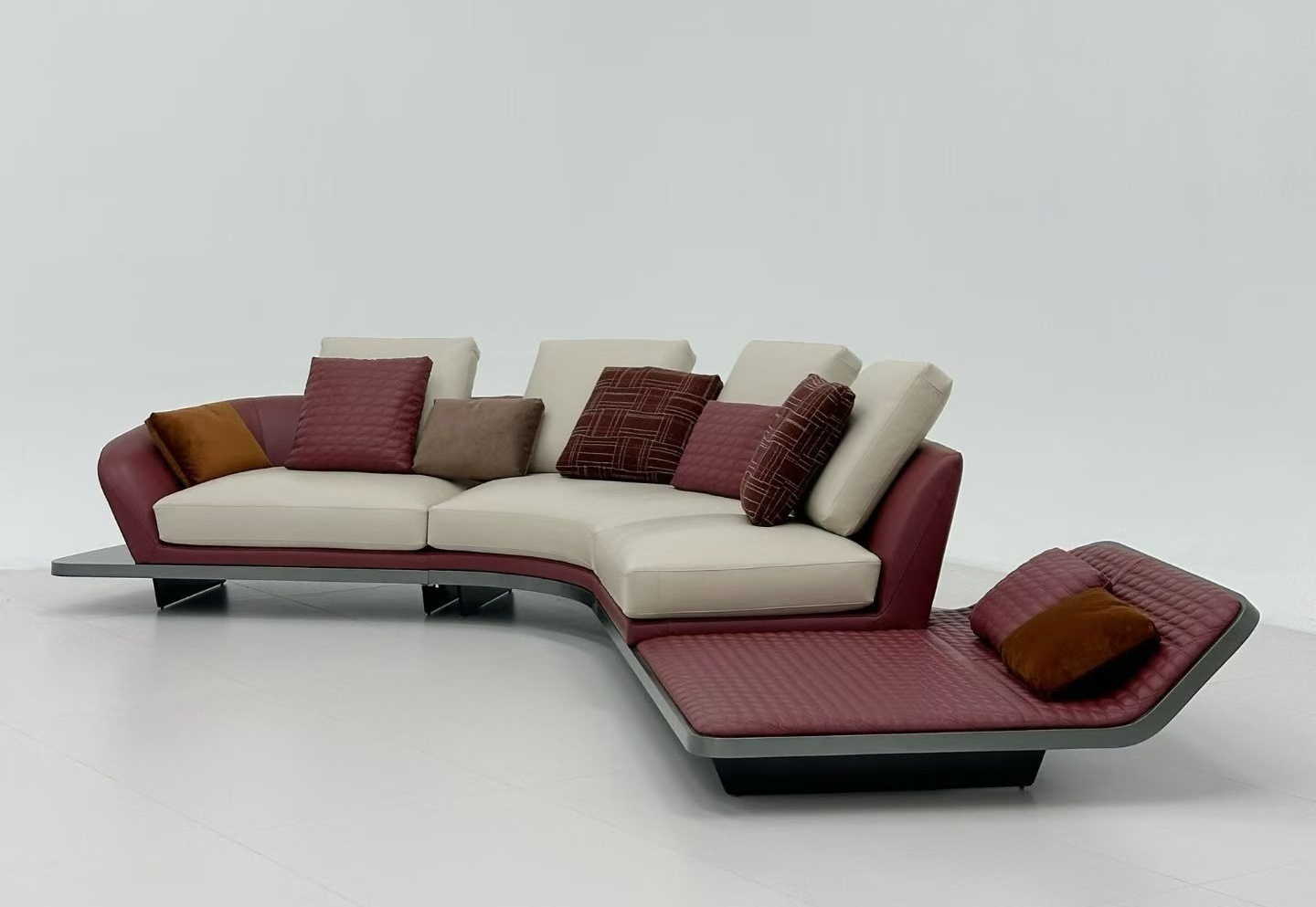
Map the leather and fabric sections as you see them from the door
Turn the sofa on the floor plan in its intended position. Work from at least two views: the one first seen when entering and the one most often seen across the living room. Treat the end, the reverse and the seats as different parts of the material description. Keep the materials on a sample board in about the same relationship as the product faces. Turn the larger samples upright against the selected floor before making a visual judgment.
Find where the camel suede meets the black leather on the modular sofa
The Camel Suede & Black Leather Tufted Modular Sofa provides a clearly contrasting example. HEZEN CASA lists it at 300 × 180 × 85 cm and specifies suede, top-grain leather and solid wood. In the illustrated arrangement, people can see the camel and black colors on different sections. Ask exactly which module and visible faces carry each surface in the proposed order. The product photo shows one arrangement. It is the one to use when discussing what drew you to the design, before confirming how that idea carries over to your actual configuration.
Imagine the furniture team furnishing a sitting room where the main approach crosses behind the sofa. From the presentation angle, a large camel panel makes sense to the owner. Once the arrangement is turned on the floor plan, the owner could see much more black than expected on the outside and ends. Show the proposed purchase from the actual doorway direction. If the owner prefers the lighter area to stay visible, the seating position may need to change or the supplier may need to review the layout with a different module sequence. Neither option can be assumed to be available for the selected order. Agree on the intended arrangement and upholstery placement together.
One helpful way to talk about a seam is to show the full side and a closer detail on the same board. Identify where the seam sits relative to the arm or seat. If the seam looks higher in one image, check whether the photos simply show a different angle. In a multi-piece arrangement, also look across from the next seat so you can see where that upholstery ends. The useful evidence names the unit that is about to be ordered and distinguishes the inner and outer faces.
The Burgundy & White Nappa Leather Curved Sectional Sofa gives another way to study visible contrast. Its listing names a leather upholstery example. Look at how the burgundy reads where it continues around the open end before using it as a composition reference for a fabric and leather project. The strong color change helps you identify which face has the most visual weight. Use the approval for your specific materials to draw that line on the project sofa.
Work out the end panels of the 320 cm combination before asking for colors
HEZEN CASA's Two-tone Fabric & Leather Spliced Modular Combination Sofa is listed at 320 × 180 × 85 cm, with fabric, leather and solid wood. Compared with the camel-and-black model, the 320 cm listing gives you a longer stated width and another example of how mixed finishes appear in a combination. Outline the outer ends and identify which parts are exposed in the intended layout. Work out how the color and surface will be read by someone looking from the side of the sofa rather than relying on size alone to choose the mix.
At a town house with a narrow living area, a buyer might want a textile surface in the middle of the group and the greater visual presence of leather on the end that faces the dining room. On the proposed arrangement, ask which surface actually runs across that outer end and whether the requested treatment can be supplied. A board with a strip of leather beside the fabric still cannot answer whether the mixture looks calm in a small room. Try the material near the dining-room finish at the height where it will be seen and check how much space there is to pass.
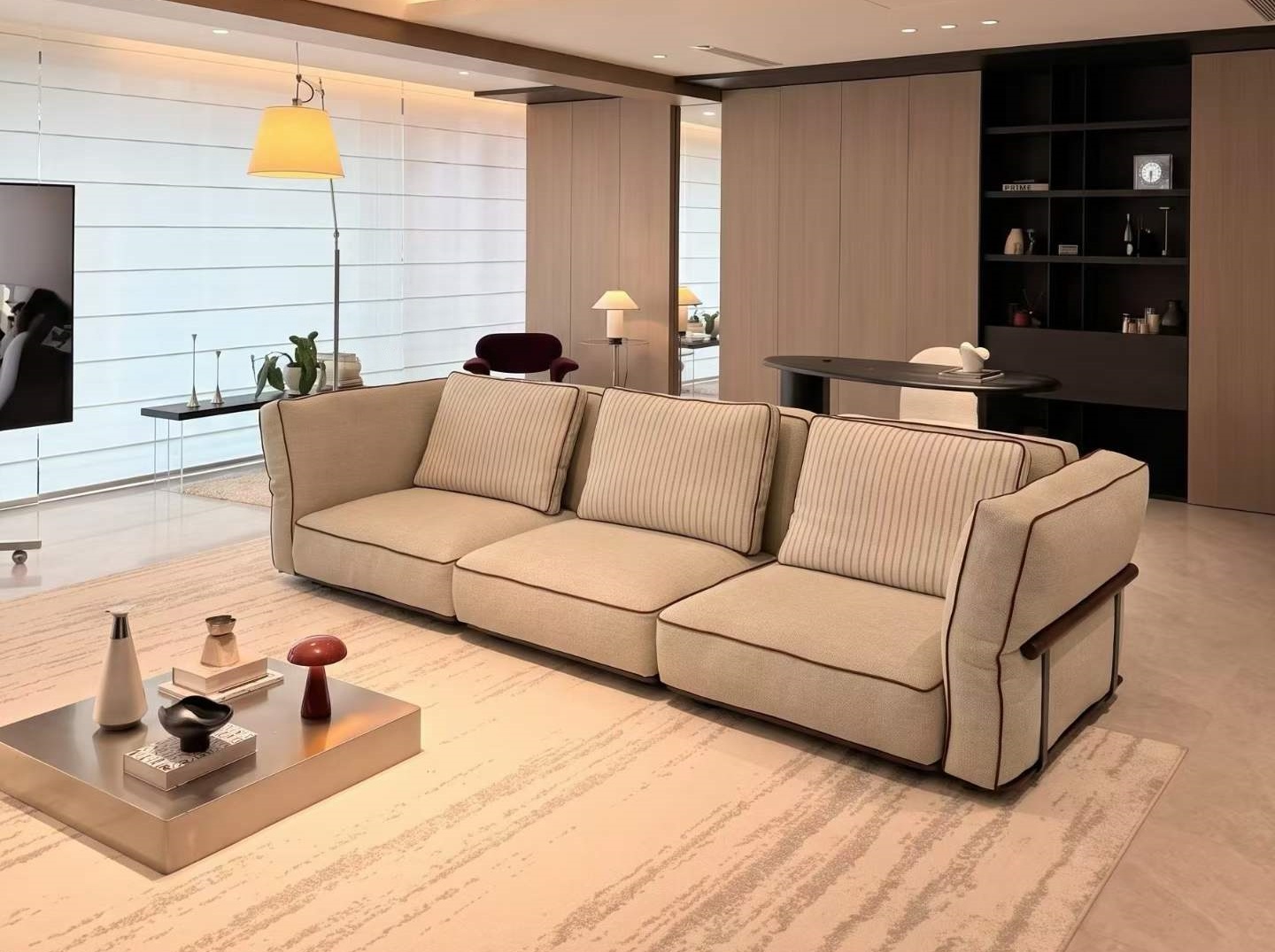
Compare a wrapped two-tone sectional with a single dominant leather surface
The number of surface materials across a sofa changes more than its look. It changes the decisions to approve, and the questions someone will ask when maintaining the piece later. When room finishes are already doing most of the work, one visually dominant surface may be enough to carry the seating group. If different panels are a deliberate part of the design, spell out where you want that difference to be most visible and why.
Read the linen and leather straight sectional along its full face
The Off-white Fabric & Leather Spliced Straight Sectional lists linen, leather and solid wood at 340 × 180 × 85 cm. At that length the upholstered run is often visible for several steps as a person crosses a room. In a design with a quiet fabric and a similarly calm leather, check the joining area carefully. Ask for a sample or image that shows both surfaces on the same part of the form. A finish board laid flat is the beginning of that check. Holding samples over a curved test edge can show why two surfaces that seem to match on the board separate when light changes across a seat.
Consider a second decision for the drawing. Does the owner's eye follow the seam along the full sofa or mainly notice a short panel beside the window? During the finish meeting, mark the length of the proposed piece as accurately as possible. Pick which segment of that length you want to carry the visual distinction. If the room already has prominent breaks in the wall panels, a high contrast across the full 340 cm may create another line that competes with those joints. The width of the selected example becomes part of the visual judgment.
Use the leather-and-metal model to see how much contrast you really need
The Italian Minimalist Leather Sofa with Metal Accents is listed at 260 × 150 × 78 cm with leather and metal. As an alternative to products with both textile and leather upholstery, it shows how much difference can already come from the way a material meets the visible base. A shorter sofa can make sense when the designer wants to keep a corner open and leave the adjoining space to show another textile. The alternative is a useful reference even if a two-tone arrangement is ultimately right for the first room.
A retail designer may need both a strong contrast example and a more restrained piece in separate rooms. The look of the camel suede beside black leather might explain the material change in a single visit. The shorter model with a more uninterrupted surface can give customers a different comparison. Photograph and identify the two selections separately for the floor schedule. From the second room, someone should be able to identify the two finishes they can see on the relevant display without using a photo of the other sofa.
Approve the individual materials on the mixed-upholstery sofa order
Write each proof next to the exact face or module it covers. Include sample reference, date of approval as needed in the buyer's records, and the drawing revision. Keep the order documents precise about which options were confirmed and which parts of the product photographs are only a reference. A buyer ordering for a private commission may only need a few annotated images. A broader furniture program may need a separate panel map for every version, so the maker can tell exactly what changed.
Keep care decisions attached to the textile and leather actually supplied
The place where two materials meet is the first place to check before deciding how to care for the sofa. If the selected fabric has one set of instructions and the leather has another, record both with the approved samples. Find out from the manufacturer how to deal with the join. Muuto's product information illustrates why a maker puts different materials under different care guidance. Use that as a reminder to ask a specific question. Follow the instructions for the HEZEN CASA upholstery and finish ordered for the actual room.
Keep the same distinction when photographing pieces for the handover. The 320 cm combination has enough upholstered area that one overview cannot capture how different faces meet. Take a photo of the contact area on the actual module received and one longer view so a future owner can identify the location. Take the same two views of any panel that looks as if it has a marked change. Compare them with the approved references before accepting a proposed remedy. The buyer might simply be seeing a difference in how fabric and leather reflect the same light. A clear picture and the final drawing give the manufacturer something concrete to check.
Expect the questions to get more specific if the sofa will see frequent daytime use in a showroom. A dark surface can be touched far more often than its appearance would suggest. It may cover the part someone holds as they stand or the outside end people pass on the way to another display. Before selecting finishes, ask what information is established for that exact leather, suede or textile. The supplier may be able to identify a finish without providing the same maintenance documents on every available option. Keep those boundaries clear when you present the scheme to the owner.
Give the Foshan maker a reference for every exposed face that matters
HEZEN CASA manufactures and supplies furniture from Foshan. Bring the supplier the two representative views and the product reference rather than treating your colour board as an order by itself. Name the upholstery on the outer arm, seat, and back where those parts are important to what the owner sees. After any change, check the drawing beside the samples again. Moving one upholstered module to the opposite end can bring a different outside face into view. Repeat the confirmation on that face rather than transferring an old check mark to a different arrangement.
For a second order intended to replace a single damaged piece, identify the unit that would need replacing. Keep pictures of the joins and the original finish approval in the project file. Ask how the maker wants to check a replacement against the supplied piece, especially where one of the older materials has spent time near a bright window. The purpose is to describe the real comparison the recipient will make. HEZEN CASA's furniture finish sample approval guide covers the broader sign-off process when the order extends to other rooms or materials.
A specifier can adapt the same approach when buying two 340 cm straight sectionals for different rooms. Give each room its own reference even if the listed catalog model stays the same. Keep any alternate material adjacent to the particular location where it would appear. Confirm whether only the fabric changes or the contrast material also needs a different color. The drawing may say the sofa is seen from its right end in one room and its left in the other. Show both views so a subtle mix still looks intentional when the two layouts are installed.
Take one final look from the side the owner will see first. If the lighter or darker section has the emphasis you intended and the join goes where you want it, mark that view as part of approval. Keep the fabric, suede or leather identities on distinct lines wherever you are actually using them. The next person with the order can then follow a visible decision on the sofa instead of interpreting a color description from memory.