Furniture Finish Sample Approval: Agree on the Surface You Will Receive
Two people can approve the same photograph and still expect different furniture. One notices a warm wood tone; the other notices a nearly matte surface. Furniture finish sample approval should make those expectations specific. Identify the actual material, the piece it belongs to and the appearance being accepted, then review a suitable physical reference where available. For a HEZEN CASA furnishing order, keep wood, stone and upholstery decisions separate even when they appear on one item.
A sample also needs a purpose. It may establish a colour direction, show a proposed upholstery or represent a particular finished surface. Ask what it is intended to demonstrate before treating it as approval of an entire cabinet, sofa or room. Size, construction and order terms still need their own agreement.
Connect furniture finish sample approval to the exact furniture
The Rounded Marble Top Light Oak Storage Sideboard combines light oak and natural marble, with listed dimensions of 180 × 45 × 80 cm. A single approval reading “light sideboard” leaves two important surfaces unidentified. Specify which reference applies to the oak body and which applies to the stone top.
For a dining room with an existing oak floor, take the proposed wood reference into the room rather than relying on a photograph of the floor. View it beside the stone reference and the nearby furnishings. The purpose is to judge the relationship between them, not to promise an exact match between different materials.
Review the oak body and marble top as two related surfaces
Look at the wood tone, visible grain and intended sheen, then consider the stone's colour and pattern. Ask which features a supplied sample represents and which may vary in the ordered piece. A small stone sample cannot show the complete distribution of veining across a larger tabletop, so clarify the available approval reference for the proposed version.
The sideboard's curved sides make the finished object different from a flat material tile. Consider where the wood grain or surface direction will be visible around those curves, without assuming a particular construction technique. If that appearance matters to the room, raise it while the material and item are being coordinated.
Keep the 180 × 45 × 80 cm furniture reference alongside the material decisions. It stops an attractive sample from being attached later to a different cabinet with a similar name. The finish approval should describe the selected sideboard, not a general preference for pale wood and white stone.
If the marble reference is photographed separately from the oak, bring them back together for the final review. A top that looks warm against one background can appear different beside the cabinet body and floor. The buyer is approving their relationship on this sideboard, so keep the comparison close to the combination that will actually be seen.
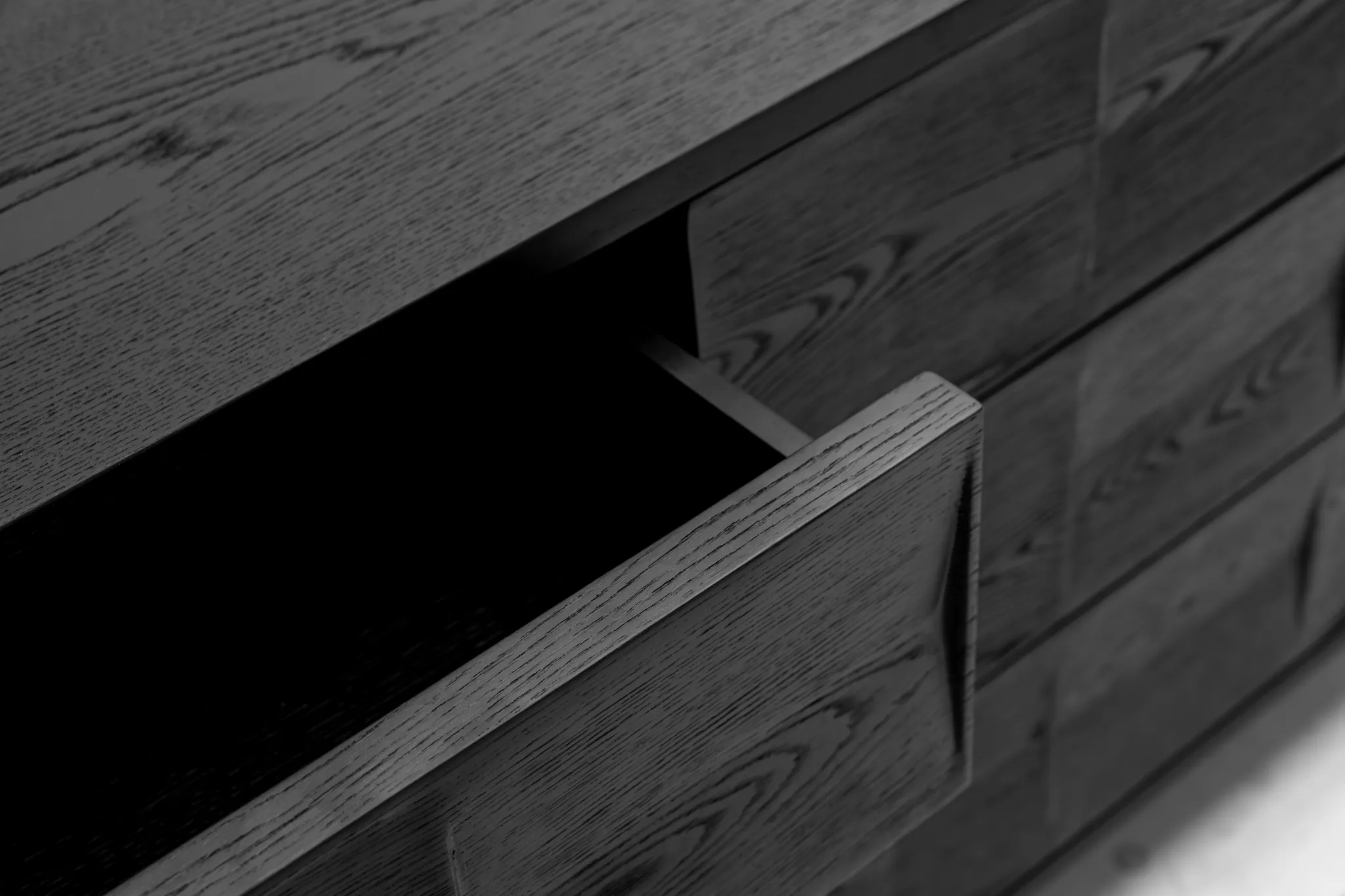
Dark wood veneer is a different approval from light oak
The Asymmetrical Dark Wood Minimal Sideboard Credenza is also listed at 180 × 45 × 80 cm, but its description identifies dark wood veneer, a solid wood structure and an asymmetrical design. The matching outside size does not make it a finish variant of the oak-and-marble sideboard. They are different furniture selections.
If a buyer changes from the light oak option to this dark credenza, approve the item change and the new surface reference explicitly. Do not write “use the darker finish” when the intention is to replace one design with another. The top, cabinet form and storage arrangement may also change.
Judge veneer grain and sheen from more than one angle
Review the proposed dark wood reference upright, as it may appear on a cabinet front, and in the orientation relevant to any visible top. Look for the relationship between grain, tone and reflected light. Ask how the intended appearance will be applied to the actual asymmetrical cabinet; a loose reference does not explain the direction on each component.
For a whole-home buyer coordinating this credenza with wood flooring, a dark finish can provide deliberate contrast rather than an unsuccessful near-match. Set the references together and decide whether that contrast is wanted. A photograph sent from another room may not show the warmth or sheen you are trying to compare.
If a reference is intended only to establish colour, ask what will establish the finished sheen and grain appearance. That distinction matters on a broad dark cabinet front, where reflected light can be conspicuous. Avoid approving a finish name while different people are silently picturing a glossy surface, a nearly matte one or a different grain direction.

A sofa with two leather colours needs two identifiable approvals
The Burgundy & White Nappa Leather Curved Sectional Sofa is listed at 320 × 180 × 85 cm, with Nappa leather and a curved solid wood frame. Its contrast is central to the furniture's appearance. An approval that identifies only the white or only the burgundy material is incomplete for the intended two-colour version.
Show where each leather belongs on the curved sectional
Keep the two proposed leather references identifiable and mark their allocation on the selected arrangement. Review the chaise, main seating areas and visible back where relevant to the order. A label such as “leather A” is useful only if the actual material reference and its intended location remain clear.
Consider a villa lounge where the sofa is visible from the entrance and an adjoining dining area. One view may emphasise the light upholstery while another reveals more of the darker back. Check those intended views before approving the colour relationship. Approval from one front photograph can leave an important part of the room unresolved.
The Nappa description does not identify a cleaning product, surface treatment or resistance rating. Obtain the care information for the selected upholstery alongside its appearance reference. A material can be visually approved while its care requirements remain an unanswered question; make that distinction explicit rather than silently accepting both.
If several of these sectionals are being ordered for different rooms, keep each room's selected combination separate. Do not let a later material substitution become a change across the entire order merely because the sofas share a design name. State which pieces the approval covers.
Retain a clear record of both accepted leather references where the agreed process allows it. If one physical reference is returned or replaced, identify what now represents the accepted selection. This is more reliable than assuming that everyone remembers which of several very similar light-coloured samples was discussed beside the burgundy material.
The linen sofa needs a fabric reference as well as a colour name
The Off-white Linen Fabric Modular Sofa With Side Storage Table is described with a linen blend and solid wood, at 280 × 160 × 75 cm. “Off-white” is a useful broad colour description, but it is not enough to identify the actual upholstery. Record the proposed material reference and review its visible texture.
Put that sample beside the selected leather references if the sofas will be seen in connected rooms. Decide whether the off-white linen and the white leather are intended to match closely or to remain distinct surfaces. Different textures can look different under the same light even when their colour names sound similar.
The side-storage element creates another material relationship on this sofa. Establish which finish applies to it in the selected arrangement and whether it is meant to coordinate with the sideboard. Do not assume a wood description guarantees the same species, colour or surface treatment across separate products.
For a project buyer working remotely, a sample review can still be organised clearly. Agree which physical references can be supplied or retained and who will review them. Do not assume that sample delivery, fees or a specific matching service are included; establish the available process for the actual order through HEZEN CASA's furnishing service.
Keep screens useful without making them the colour authority
Photographs are helpful for identifying an item, showing the placement of materials and recording a discussion. They are less reliable as the final authority on colour. Herman Miller's material-reference guidance notes that screen and print representations can differ from the actual surface and directs specifiers to physical references.
Apply that principle to the selected oak sideboard, dark credenza and two sofas without borrowing another manufacturer's material specifications. Use photographs to connect the references to the right pieces. Keep any colour correction, filter or lighting difference in mind when several images are being compared.
When the physical references are available, review them with the room's actual finishes in daylight and under the planned lamps. Hold upholstery in the orientation relevant to the sofa and wood in the orientation relevant to the cabinet. This makes the comparison more useful than spreading everything flat on a desk in unrelated lighting.
Record a disagreement clearly. “Too warm beside the floor” gives the next review a specific issue to address; “not quite right” may lead to another sample with the same problem. Keep the rejected reference identifiable so it cannot be mistaken later for the approved one.
Record what the finish approval covers and what is still open
A short approval record can identify the furniture, the material reference, its location and the decision date. If it covers appearance only, say so. If another sample, a larger stone view or a different leather reference is still needed, keep that item pending rather than placing a general approval across the whole piece.
The Architectural Woodwork Institute's submittal guidance treats samples and product information as communication tools for turning design intent into a coordinated result. That is useful background for organising the review; it is not a claim that HEZEN furniture is certified to an architectural-woodwork standard.
Use the furniture sample request guide when the needed reference has not yet been identified. Once it has, keep the approved version with the actual furniture selection. The oak sideboard, dark credenza, two-colour leather sectional and linen modular sofa should each have an understandable answer to the same practical question: which surface are we expecting on this piece?
Before releasing the final decision, put the references back beside the room materials one more time. If the appearance is right and the allocation is clear, record that specific combination. Leave unresolved details visible so they can be answered, rather than asking the finished furniture to reveal what everyone meant.