How to Approve a Travertine Coffee Table Finish
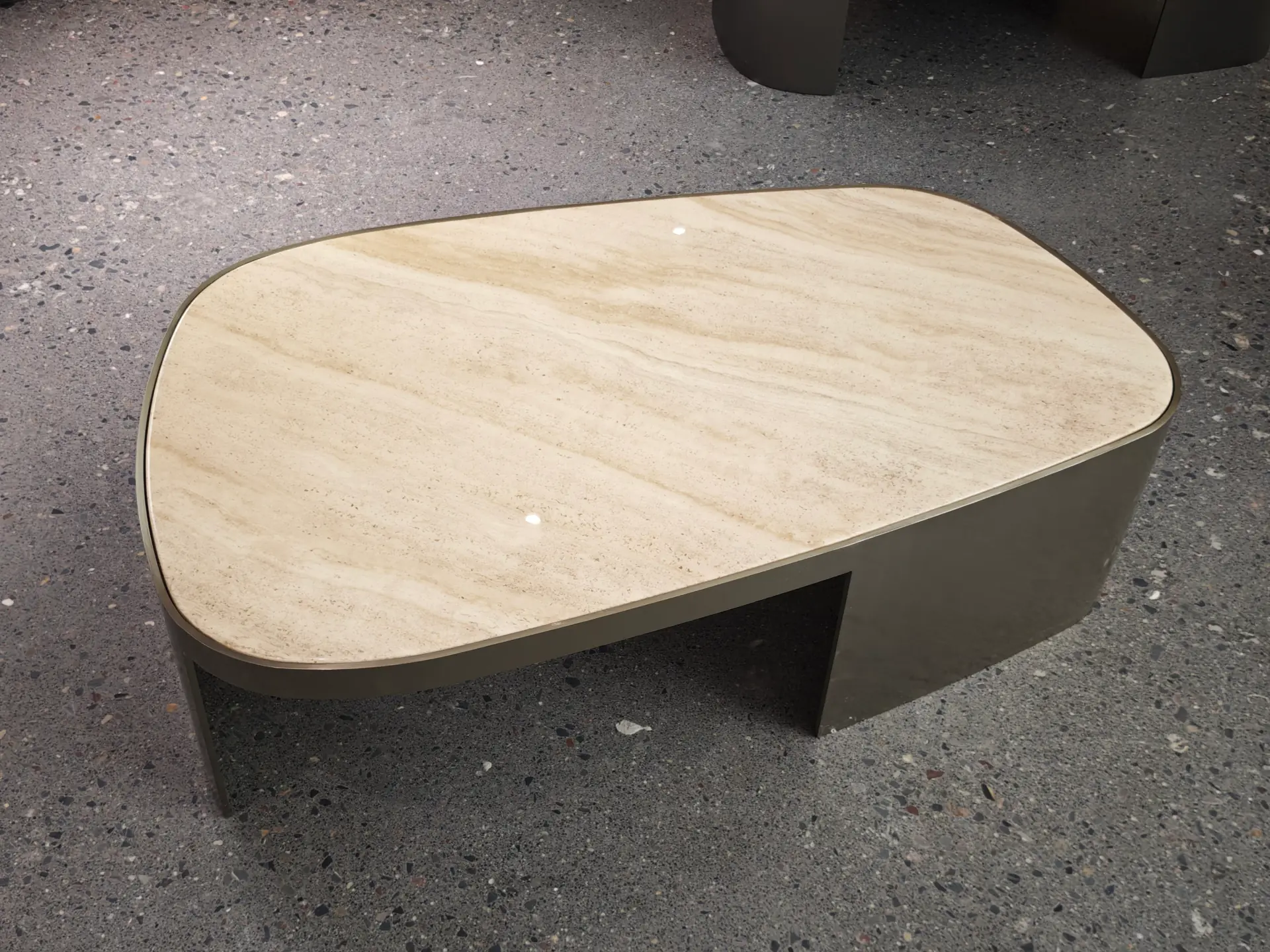
Ask to see the finished face and the edge of the travertine before approving the table. For a villa living room, private club or furnished residence, those two views tell you how the stone will look under a window and what guests will see from the sofa. Start with HEZEN CASA’s irregular travertine coffee table and its curved metal frame. The Foshan furniture manufacturer and supplier identifies the stone and the table’s overall size. Confirm the expected sheen, how visible pores will be treated and what variation the approved piece can show.
Read a travertine coffee table finish under light that travels across it
Lay a sample flat and let the light cross it from the side. That is closer to the view of a low table near glazing than holding the stone upright in a showroom. Move back to where you would sit, then approach from where you would normally enter the room. The first position can make reflections across the face easier to see. The second can show variation in the stone and the outline of the edge. Compare the samples in the same light before choosing which one looks right. A close photo taken directly overhead records different things.
View the irregular stone edge from the sofa first
The Irregular Travertine Stone Metal Coffee Table is listed at 120 × 60 × 40 cm and 55 kg, with a natural travertine top and curved metal frame. Its photograph shows a pale surface with visible linear bands and a rounded, irregular outline over a dark base. From a low seat in a room, the edge can be the first part of that top you see. Ask for a side section and close photographs of the curve, with an indication of which way the grain will run on the proposed piece.
For a villa with broad glazing, imagine evening light coming along the 120 cm direction. A mark that barely shows under overhead lights could become easier to see when the sun is low. Set a finished-edge sample at the height of the table and put your intended rug and upholstery near it. Look for places where the frame, edge and top finish read well together. Then decide which differences you could accept across the entire stone if the sample is just one small section. Share the direction of the window so the supplier understands the circumstance that matters in the room.
A small chip sample can confirm a hue or give you a feel for the surface. It cannot convey how a darker band or unusually wide change in pattern might run along the irregular outline. Request a larger view showing enough stone to understand that range. On the drawing, mark the first part of the tabletop that enters the room's view. Use it as an orientation reference when discussing a particular slab or suitable examples with the manufacturer. If the factory can confirm the direction on a specific top, record that confirmation with the accepted material.
Ask to see the thickness at the edge. A photograph angled toward the top can make the visible stone look thicker or slimmer depending on its distance from the lens. An edge detail with a scale offers a better reference. If the type of edge matters, describe the shape you want at the inside of the curve and along the broad side. Those areas may catch the light differently; a selected sample gives the project team a concrete way to discuss what they are seeing. For the #11 table, keep the proposed metal frame finish in the shot so everyone can also see the contrast at the junction.
Separate the sheen of the travertine from the way the pores are treated
Use a word such as honed or polished to discuss how the face reflects light, then ask separately about filling. Use Natural Stone’s finish guide presents honed faces as more subdued and polished faces as more reflective. Ask the supplier to show the actual offered finish in a comparable light. Different stone and finishing choices can make the labels look different from what a buyer saw on a past installation.
The Natural Stone Institute’s notes on travertine voids explain that natural cavities at an exposed face may be filled or left open during fabrication. Look at the proposed stone to see how that decision appears at eye level and in close view. If a filler is proposed, ask what its color looks like beside the lightest and darkest parts of the sample. Ask whether the visible edge will receive the same treatment as the face. No listed specification for the HEZEN model on its own answers that question.
For a lounge where staff routinely set down drinks and remove a service tray, review the texture with that task in mind. A tactile feature that you like across the wide part of the table may feel different at the corner where a glass lands. Confirm which areas of the sample show the actual tabletop surface. Ask for the proposed cleaning guidance, while recognizing that travertine itself is sensitive to acids even when it has been finished. The institute’s guide to limestone and travertine identifies that material property. Establish how the table will be used before assuming an attractive sample also meets a heavy service requirement.
On a representative sample, a small side light makes it easier to see whether an apparent mark is a change in height or a color difference. Ask the supplier to explain anything the buyer plans to treat as a defect during delivery inspection. An expected porous surface and a mark damaged during handling are different things, and a photo alone can be ambiguous. Agree an example of the expected face and edge, then confirm the inspection method with the supplier. It helps both ends of the order to have the same reference for what belongs in the stone.
Use adjacent marble and wood samples to check the travertine finish
Give a buyer two meaningful points of comparison. A stone with busier veining lets them see how much pattern they want at the center of the room. A wood sample tells them whether the warm tones can come from grain with a different texture. Place both beside the representative travertine, and keep all three away from the reflective case they may have been displayed in. Match the light and orientation so you are judging the material differences rather than a change in the setup.
Compare the pale travertine with green and darker marble candidates
The Round Green Vein Marble Coffee Table is a more visually active stone comparison. Its listed 90 cm diameter and 40 cm height mean the top sits at the same stated height as the travertine example, while the shape and material impression are different. At sofa level, consider how much of the green pattern you would actually see behind the usual objects. In the same position, the light travertine may connect more quietly with a sand-colored rug. Get the proposed finish sample if the stone tone is part of the order approval.
The Italian Minimalist Marble Top Coffee Table is listed at 115 × 68 × 36 cm in marble and metal. Its gallery shows a different dark outline. A photo of a dark surface alone does not establish the marble selected for a new order. Use this form as another comparison if the designer is considering a dark, low table and ask to see the stone and frame finishes for the intended configuration. The usual position of the observer will be lower relative to the frame and top if the sofa sits close and low.
Compare wood grain where the client wants warmth with less stone variation
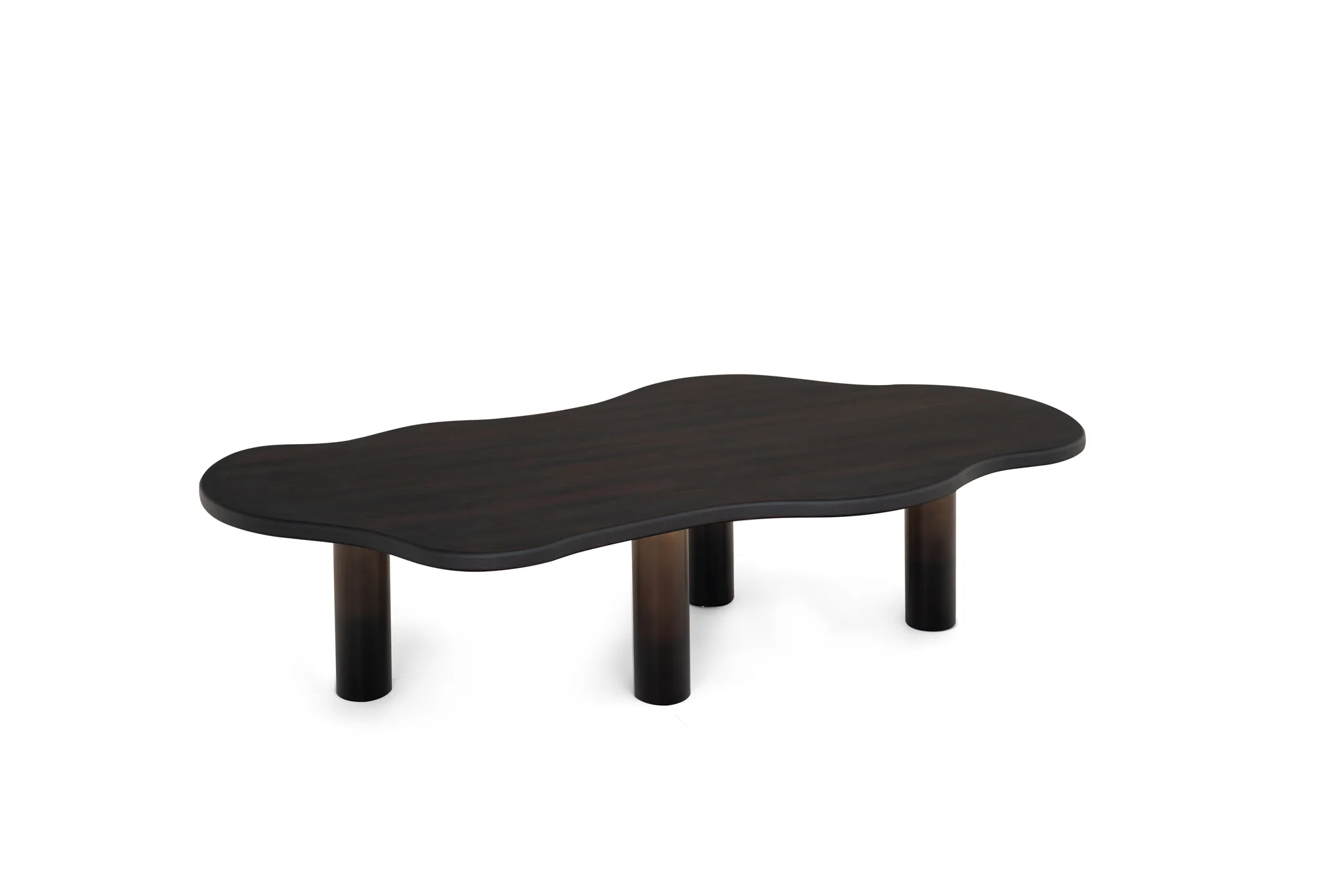
Consider the Italian Minimalist Solid Wood Coffee Table, listed as solid wood at 120 × 70 × 38 cm. It offers another surface material at a comparable overall length. The Italian Minimalist Designer Low Coffee Table, listed in solid wood and metal at 110 × 65 × 32 cm, adds a lower option if much of the table will be seen from above. Place the proposed wood and travertine samples against the floor. Check whether the wood repeats the floor tone too closely, or whether the travertine introduces the gentler color change the room needs. Natural wood has a range of appearance too, so agree what variation the buyer would accept.
When an overseas buyer needs to choose before a site visit, the color of stone in a series of images can be especially misleading. Ask for the same light source, exposure and plain background in each shot. Include the stone face and edge at a shallow angle. If possible, compare physical samples under the intended lighting before making a final decision. For an architect reviewing a model room remotely, note whether the color difference is visible from across the room or only in the close-up. The first concern can change the material choice. The second can often be resolved with a clear drawing or accepted sample.
One way to organize a remote comparison is to label which sample changed in each photo. Show the travertine beside the actual upholstery and frame finish in one scene. Then keep the same rug, fabric and metal with the wood or marble in the next view. If the design changes several things at once, the review may end with a preference for the whole photograph and no clear material decision. A small sample sheet with the table model and the proposed surfaces gives the buyer something they can approve before the final living room installation.
Record the approved travertine surface and edge on the order
Identify the stone sample by reference and date. Put the agreed surface finish, edge look, treatment of visible pores and frame finish on the same sheet. HEZEN CASA’s furniture finish sample approval guide explains how to keep a material decision tied to an order. Add the actual viewing conditions that mattered to this coffee table. An overhead review may be most useful for showing the stone’s variation. A seated view in light from across the face may be the one that decides whether the edge suits the room.
The actual top can have areas that look different from the selected small sample. Ask what information the supplier can give about that range before making approval conditional on a single photographed area. If the intended piece includes a visible fill, use an edge or face sample that represents the proposed finish instead of a raw material chip. A photograph of the accepted edge should show the direction and light used, so it is easier to compare the supplied table during the receiving check.
Request care instructions specific to the finish and the intended furniture setting. Ask how the top and frame are handled on delivery so the team can protect both at the site. The stated 55 kg product weight is useful when discussing handling and route. It does not give the shipping dimensions, the packaged weight or the safest way to move the stone. Use the maker’s response for those final arrangements and keep it with the approved model reference.
If the project is releasing several low tables together, identify which spaces use the same stone and which use a different finish. Each decision can point to one agreed sample with a written description of what range you accept. A small difference in veining might disappear once tables are on different floors, yet stand out when two sit near each other. If clear matching matters, put that condition in the request and find out what the supplier can reliably provide for the proposed order.
On the order, put a small arrow at the position from which the stone will first be seen. A good approval photograph shows why this material was chosen for that room. Attach the photo of the surface, the edge and the sample references behind it. The finished table should feel familiar when it comes into that light, even when a particular pale line in the natural stone takes a slightly different path.