Swivel Lounge Chairs for Conversation Areas That Face More Than One Way
Choose swivel lounge chairs for conversation areas when a person really needs to turn between two useful views. They might arrive facing the fireplace and then turn to talk to someone on a sofa. Start by placing both positions on the drawing. Leave room for the person’s knees, the moving chair arms and a safe step away from the table. Designers and furniture buyers can start with HEZEN CASA’s Carved Hollow Wood Woven Fabric Swivel Chair, then compare one of the company’s lounge chairs with a conventional frame. A turning seat can make a group more sociable if there is somewhere useful to turn.
When someone walks in, watch the angle they take to sit down. The chair may already point directly into the group. If it faces a second zone during the day, it can be useful for the guest to turn themselves rather than ask someone to move the piece. Start at that point of arrival, then put the guest’s usual conversation position on your plan. A fixed chair placed at an angle can do the job when the conversation happens in one direction the whole time.
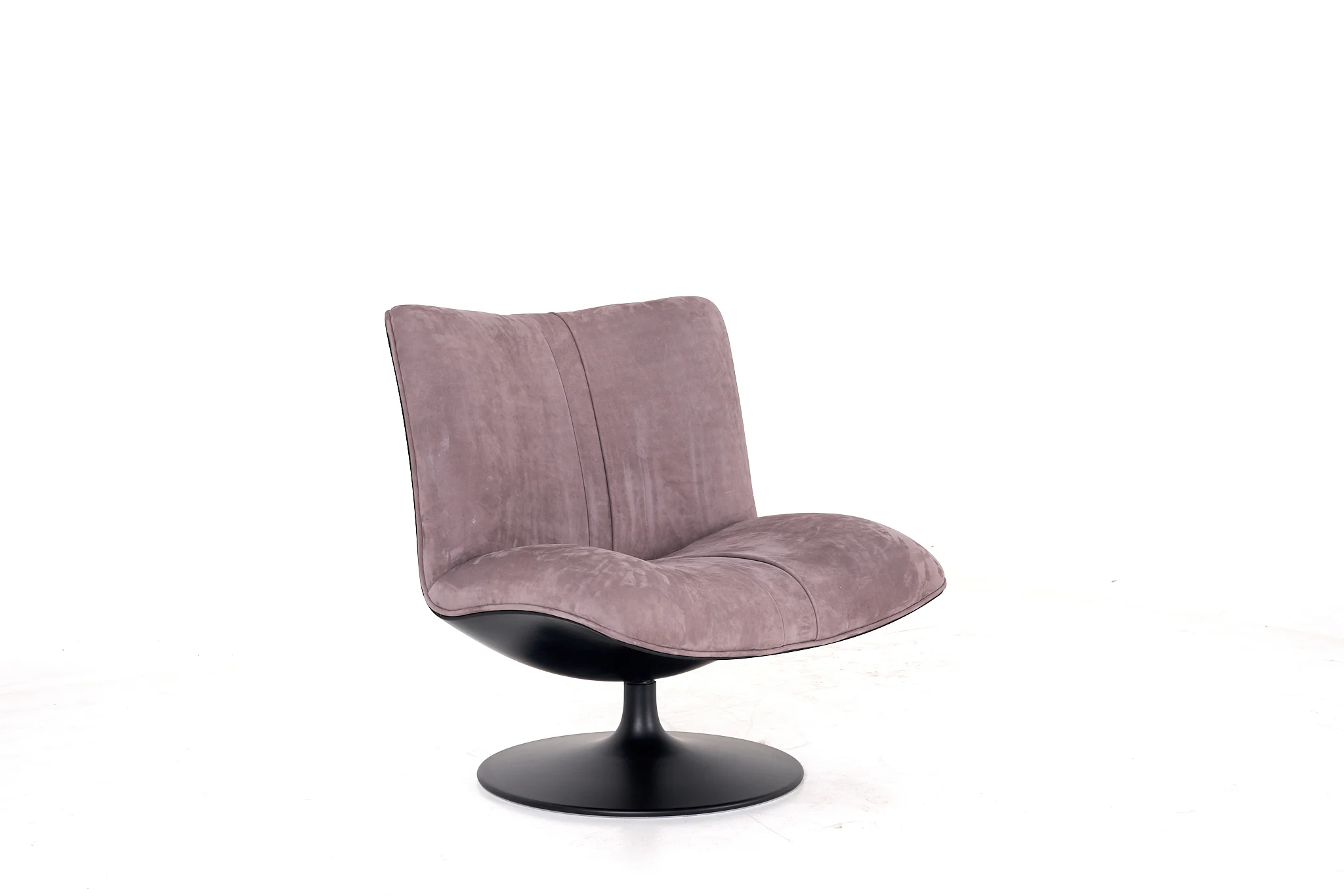
Give the swivel lounge chair two places to face
Drawing two sightlines first will tell you whether rotation is worth accommodating in the room. Mark the chair's proposed location and draw a line toward each person or object it should face. For each line, mark where the inside arm and the feet land. Then trace what happens between those endpoints. A line from a fixed point to a fireplace might sit nicely on the plan while the movement across it brings the guest's shoes into a walkway.
Read the 65 cm swivel chair footprint before drawing the turning path
The Carved Hollow Wood Woven Fabric Swivel Chair is listed at 65 × 65 × 85 cm with wood, linen and metal. The HEZEN CASA listing specifies a swivel function. It does not publish a movement envelope or establish whether a particular version returns to its starting point. Ask for the pivot location and confirmed range of motion for the model being ordered. A square drawn from the 65 cm listing describes a basic outline. An arm could reach outside that square as the seat moves, depending on the chair's actual shape and pivot position.
For a private lounge with a long sofa facing a fireplace, imagine a guest arriving midway through a conversation. The designer puts a swivel chair near the end of the sofa, pointed toward the fire when the room is empty. Show where a seated guest can turn toward the center of the sofa without touching the outer sofa arm. Mark the floor where their far foot travels. If you must put the chair farther from the sofa to make space, sit with someone there to decide whether the speakers can still talk naturally. That checks the real purpose of moving the seat.
Check both extremes while the chair is occupied, using the product supplier's instructions for the proposed base and finish. Take particular care if a low table hides the guest’s feet from the view of someone walking up. The HAY Dorso collection is an example of a manufacturer identifying the movement separately and giving product details for each variant. For the HEZEN CASA chair, ask for the actual swivel characteristics and dimensions of the version you are specifying.
Use the four-leg lounge chair when the conversation has one focus
The Italian Minimalist Curved Lounge Chair is listed at 65 × 72 × 80 cm with fabric and solid wood. Its gallery shows a chair with four legs. It provides a useful comparison when the swivel would only turn toward one person and then stay there. Rotate the static outline on the drawing to the angle the guest needs. The outside widths in the catalog are equal, yet the extra depth on this option will occupy a different strip of floor. Check that it has a simple approach and that the person's seated position remains a useful distance from the sofa.
Real chairs sometimes offer fewer choices than a sketch implies. A guest who wants to settle near the hearth might also want a place to put a drink without turning every time. With the four-leg option, try placing the table beside the most useful arm and letting the person's body face the group comfortably. If a clear front view still matters, give that to a different position on the sofa. The furniture group benefits from one chair that makes sense whenever it is occupied.
Try another version with a four-leg chair directly adjacent to the sofa and a turning chair at the group’s open end. A person in the inner chair can take part without having a moving furniture piece between them and the sofa. The guest in the outer chair has the better chance of looking out or facing an arriving person. It is a reasonable compromise unless the open end is also the room's main route. Use the two proposed catalog outlines of 65 × 72 cm and 65 × 65 cm, with the confirmed skeleton of the rotating chair overlaid. That makes it easier to check which position should get the moving piece rather than just giving both seats the same label.
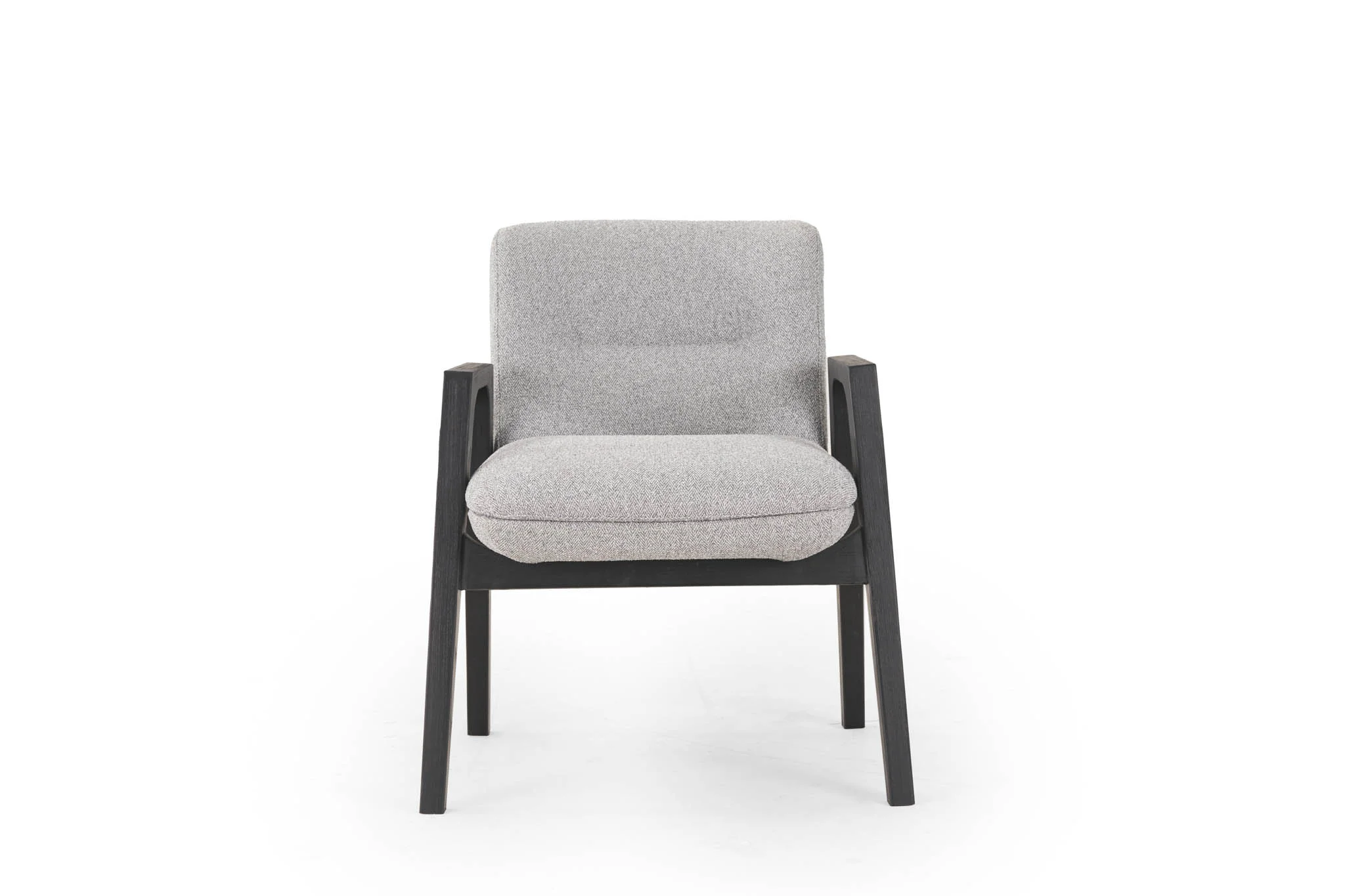
Leave the table and walkway clear throughout the swivel
A hotel suite lounge can read as inviting with one chair aimed toward the group and another with a view out. The area still has to accommodate the guest carrying tea or walking to the window. Draw that person's route over the two sitting positions and the turn between them. If the gap feels generous only when the chair is pointed at the window, reconsider how the chair and table relate. A placement that requires everybody to hold the chair in an agreed position loses the practical point of the swivel.
Set the round coffee table where it serves both positions without catching knees
The Italian Minimalist Round Coffee Table is listed at 90 × 90 × 45 cm in solid wood. A round outline is useful because the location of its edge is straightforward to plot from two directions. Put its proposed center close enough to the seated guest’s hand and then check it against the knee path. Most of the time those are different arcs. If the table encroaches on the foot path when the chair turns, shift it toward the sofa before assuming the solution is to make it smaller.
In that suite, picture a guest turning away from the window while a companion arrives with two cups. If they meet at the inside of the chair's turn, move the position for setting down cups to the sofa side. A small furniture change can open a safe line through the room while still putting a drink within reach of the chair. Put both proposed positions on a taped or paper mock-up. Have the seated person try to reach and get up when someone is approaching. The purchased dimensions matter more once there are people in the drawing.
Keep a lane open beside the olive chenille sofa's curved end
The Olive Green Chenille Curved Modular Sofa is listed at 280 × 160 × 80 cm with chenille and solid wood. A turning chair near its open end gives the guest a route to face more of the seating group. The curve can also change what part of the chair comes nearest to the sofa. Draw the real outside and front of the sofa as selected and put the chair's target turn at the point people actually join the group. Avoid cutting off access to the last useful seat just to bring the two pieces close enough for symmetry.
If the two upholstered pieces are shown close together, ask where their visible edges are soft and where the base or trim projects. A drawing of the seat cushion is a poor substitute for the lowest hard part of a chair when the two objects pass one another. The mock-up should show the furniture as it will be assembled, including upholstery and base dimensions. Keep a separate area for the person’s feet. A buyer who marks both can move the chair without losing the approach to the sofa.
Use the same sofa and table positions when you compare chair approaches. Looking at both chairs while the table is being repositioned can hide which change opened up the main route. Tape the 90 cm circle and the 280 cm sofa run down first. Start with the seat facing the long side of the sofa and mark what the room feels like with a person in the chair. Then take the guest through the turn. If it crowds the shared table, try moving the pivot along the edge of the sofa group a little before turning the whole configuration.
| What people do | Where the extra room matters |
|---|---|
| Watch the fireplace, then turn to someone on the chenille sofa. | Check the far elbow and outside knee when halfway through the turn. They can pass closer to the curve than either endpoint suggests. |
| Finish a drink and stand up beside the round table. | Keep a place for both of the person's feet in the direction they will put their weight down. Test how naturally the hands leave the chair arms. |
| Walk past a guest carrying a small tray. | Check the complete route while the guest rotates normally. Reposition the turning chair or use the fixed lounge form if the passage and seat need the same space. |
Approve a swivel chair layout in the same order as the furniture
Put the chair model and the two usual directions on the plan. Mark the table and the place someone will walk past it. If the rotation is limited to protect somebody's route, get the confirmed mechanism and operating instructions for the exact order. Avoid assuming that a round base shows how it will behave. Case notes for a sample can be useful if they identify the base, flooring and the position the chair occupied during the check.
Read the base as a separate choice from the upholstered shell
HEZEN CASA’s Italian Minimalist Lounge Chair is listed in fabric and solid wood at 70 × 75 × 76 cm. One of its catalog photos shows a pedestal profile. Treat this listing as a dimensional comparison unless the supplier confirms movement for the selected version. A pedestal can fit the room visually even when you want a conventional fixed facing point. A design that needs movement should use a chair with a verified mechanism. Use the visible profile, catalog details and product documentation for different checks.
Share the intended flooring and any rug placement with HEZEN CASA, a furniture manufacturer and supplier in Foshan. Ask what the actual base requires, when the floor installation should be complete, and what the chair feels like to move while sitting. Test for unwanted motion as a person takes a seat or stands. A face that ends up turning slightly after someone gets up may need to be reset from time to time. Ask whether the finished chair has a repeatable return position only when that matters to the layout. For more about comparing finishes and chair choices with a maker, see HEZEN CASA's accent chair sourcing guide.
At an approval meeting, bring a floor sample if the exact base will be used on a sensitive finish. Discuss any approved pads or glides with the furniture maker as part of the ordered version, and photograph their placement on the sample installation. If the arrangement will cross a rug edge, compare the finished location with the accepted chair instructions before agreeing to rely on that route. Put one reference for the flooring and chair base on the room drawing. When the furniture is installed, you can check the real movement with the same information that the design team used.
Before signing the room order, put a guest in the chair and let them choose where to face during a short conversation. Ask another person to walk past and set down a cup. The best position is the one those two people can use without giving each other instructions. Mark the natural facing point and the useful arc in the approved drawing while the people who tested it can still show you what felt right.