A seat with a purpose
Choosing an Accent Chair Supplier for Reading Corners, Conversation and Open Rooms
An accent chair is often selected for the photograph and judged later by the person sitting in it. Designers, furniture retailers and project buyers should reverse that sequence: define who will use the chair, what they will face and how they will approach it. HEZEN CASA offers several distinct forms; compare the actual dimensions, covering and movement before approving a chair for a particular position.
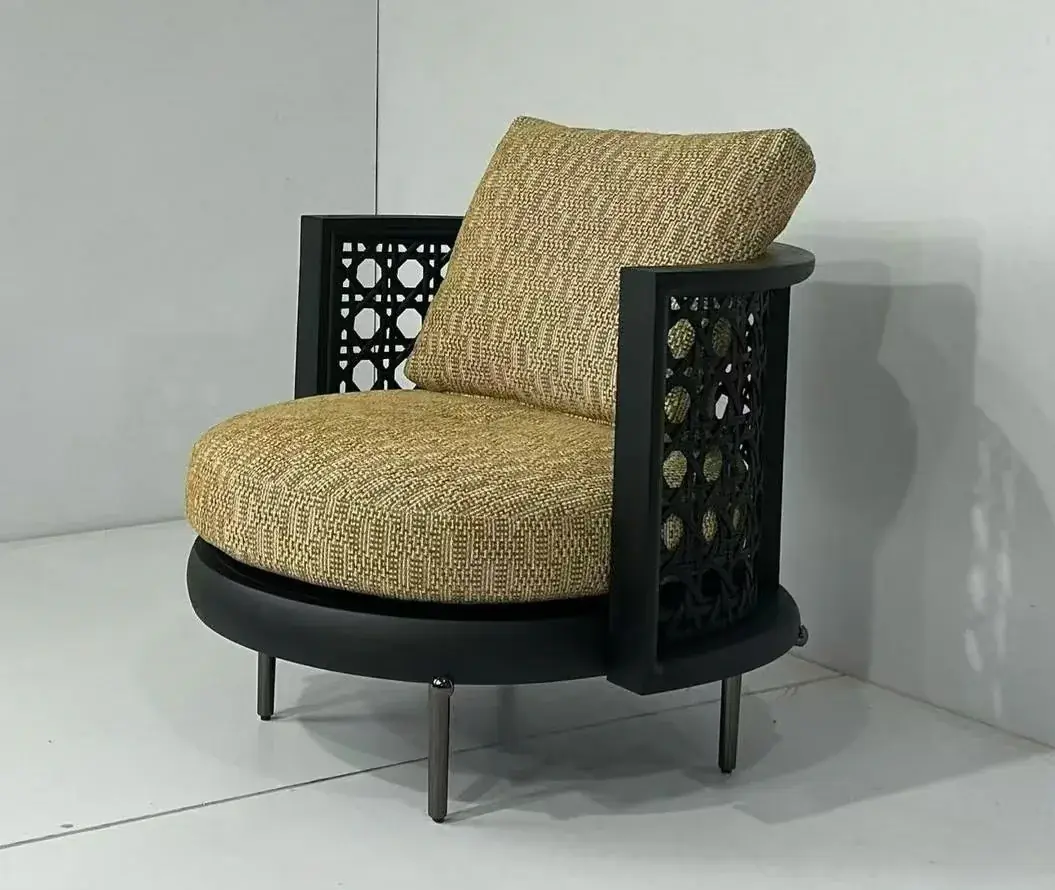
The selection considered here includes the metal-frame rope-weave and sheepskin lounge chair, sculptural bouclé chair, caramel leather armchair, carved wood and woven-fabric swivel chair and curved fabric-and-wood lounge chair. They should be compared as different seating proposals, not as interchangeable decorations.
An accent chair supplier needs to know which direction the user will face
A chair beside a window might serve reading, conversation or simply a view outside. Those are different orientations. Mark the intended direction on the room plan before selecting the form. If the user must repeatedly turn to join a conversation, decide whether the chair will move, whether a swivel function is required or whether its position should change.
For an open-plan villa, the chair may connect a sofa group with another part of the room. For an apartment reading corner, it may need to work within a more defined boundary. The attractive view from the entrance matters, but it should not force the user to sit at an awkward angle to the activity the chair is meant to support.
The carved wood swivel chair needs an operating envelope
The carved wood and woven-fabric chair is listed at 65 × 65 × 85 cm and 25 kg, with wood, linen and metal in its material description. Its swivel function is listed, but the actual operation and limits should be confirmed for the supplied version. A static photograph cannot demonstrate how it turns or what space that movement requires.
Ask for the relevant demonstration or instructions and review the chair with nearby furniture included. The 65 cm width is an overall measure, not a guarantee that the chair can rotate inside an equally narrow opening. Avoid assuming a particular mechanism, rotation range or return behavior. Those details belong to the actual offer.
A designer using the chair between a sofa and a window should consider both intended orientations. Keep the path clear in each position and check whether the user can turn without moving a nearby table. If the swivel function does not support the proposed arrangement, choose a different position or seating solution rather than treating movement as a decorative claim.
Compare accent chair dimensions without confusing them with sitting dimensions
Published overall measurements tell the buyer how much space to reserve, but they do not establish seat width, seat depth, seat height or back angle. Those missing details matter when comfort is a central reason for buying. Obtain the relevant information and, where possible, assess a representative sample with the intended type of user.
The bouclé chair occupies more floor space than its soft outline suggests
The sculptural bouclé chair is listed at 80 × 90 × 95 cm and 35 kg, with bouclé and metal in its construction. Its rounded appearance should not distract from that substantial envelope. Draw it accurately beside the sofa and table. A small-looking image can be misleading when the chair is shown without a reliable scale reference.
In a broad conversation area, that presence may be useful. In a compact reading corner, the same chair may leave too little space to approach or stand. Compare the room with the chair in its expected position rather than relying on a diagonal placement that only works for the presentation photograph. Any angled layout still needs usable access.
The curved fabric chair offers a different 65 × 72 cm footprint
The curved lounge chair is listed at 65 × 72 × 80 cm with fabric and solid wood. It provides a smaller overall footprint to examine against the bouclé chair, but that does not establish a smaller or less comfortable seat. The buyer should request the sitting dimensions and review the actual form instead of drawing comfort conclusions from the outer measurements.
For a furnished apartment, this option may deserve attention where the room cannot accommodate the larger bouclé envelope. For a villa, it may serve a quieter secondary position. These are planning possibilities, not a claim that either chair suits every person. The final decision depends on the proposed use and the actual supplied version.
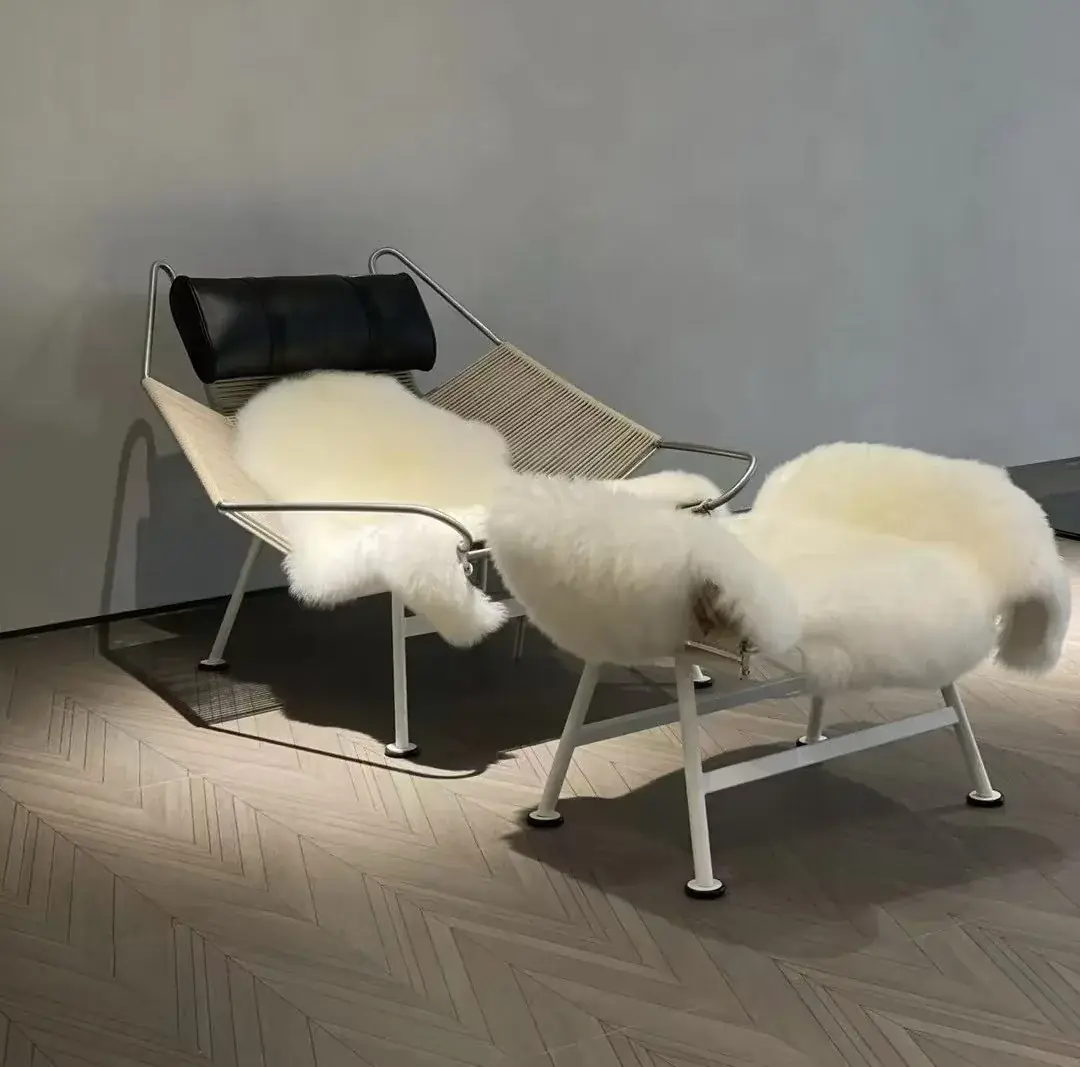
The sheepskin chair and leather armchair tell different material stories
The rope-weave and sheepskin chair is listed at 75 × 80 × 90 cm and 22 kg, with metal, sheepskin and rattan described in the listing. Its combination of exposed structure and soft covering differs from the caramel leather armchair, listed at 75 × 85 × 90 cm and 32 kg with leather and metal. Similar overall widths do not make the experience or care requirements equivalent.
Review the woven sides and soft covering as separate parts of the chair
For the sheepskin design, ask which material is supplied in each visible area and obtain care information for those surfaces. The buyer should understand what can be removed, replaced or adjusted only where the supplier confirms it. Do not infer removable covers or replaceable components from the way a photograph is styled.
A retailer displaying this chair should give staff an accurate account of its materials. It is more useful to identify the actual surfaces than to describe the entire piece with one broad upholstery word. If a customer requests a different covering, treat that as a specific option to verify rather than assuming the distinctive appearance can be reproduced with any material.
Keep the caramel leather chair’s selected covering explicit
The caramel armchair has differing leather-grade wording in the available site material, so the order should resolve the actual covering with the supplier. Use the agreed material specification and sample reference. Do not choose one grade label simply because it sounds more desirable. The buyer needs a clear description of the product being supplied.
Its exposed metal structure also affects the visual relationship with nearby furniture. Review the relevant views and the proposed metal finish along with the leather sample. A coordinated room may use deliberate contrast; it does not require every chair and sofa to have identical materials. Record the intended relationship so later substitutions can be assessed against it.
Review reading and conversation chairs during the activities they serve
For a reading corner, consider where the user holds a book or device, where light comes from and how they enter or leave the seat. Assess the actual chair in that activity where practical. A brief upright sit may not reveal the issue that matters during longer use. Avoid promising ergonomic suitability from the product name or outline.
A conversation chair creates another test. The user may turn toward different people, lean forward to join the discussion or stand frequently. Compare the chair’s form with those actions. If the intended room includes users with different needs, review their requirements explicitly rather than assuming one attractive shape provides the same experience for everyone.
Where a commercial project requires a particular seating performance standard, ask for evidence tied to the actual proposed product. BIFMA’s lounge seating standard information describes a relevant testing category; it is not evidence that these chairs have been tested or certified. A residential-style appearance should not be treated as proof of commercial suitability.
For a hotel reading lounge, the operator’s maintenance routine also matters. Ask for care instructions for the selected bouclé, woven fabric, leather or sheepskin surfaces and review them with the team responsible for the room. Do not infer cleanability or resistance to a particular treatment from an attractive sample.
A pair of accent chairs should be assessed as two occupied seats
Two identical chairs can create an appealing symmetrical arrangement, but the room still needs to work when both are occupied. Consider their approach routes and the direction each person faces. If a table sits between them, review access from both positions. Symmetry on the plan does not automatically provide an equally convenient experience for both users.
The larger bouclé chairs may create a more substantial group than the narrower curved fabric chairs. Compare the complete pair using the published envelopes, then obtain the sitting information that the decision requires. Do not reduce the choice to which two outlines fit inside the available rectangle. The space around the pair remains part of its function.
A designer might instead pair two different forms to serve different activities. A swivel chair could address a changing orientation while another chair remains directed toward conversation, provided the actual functions are confirmed. Explain that intention in the furniture schedule. Otherwise, a later substitution may preserve the color palette while removing the reason the mixed arrangement was selected.
For an operator replacing one damaged chair in an established group, identify the original version and the remaining chair’s condition before seeking a match. The supplier can then explain available options. Do not promise an exact material match from a photograph of a used piece; compare the proposed replacement with a suitable reference and decide whether the pair should remain identical or become a deliberate contrast.
Record the intended pairing so a later chair substitution preserves the purpose of each seat.
Approve the rear view before placing an accent chair in an open room
An accent chair often stands away from a wall, making its back and sides prominent. Obtain the relevant views of the selected version. The carved wood chair, metal-frame armchair and sculptural bouclé chair offer different visual effects from these angles. A front-only approval leaves part of the composition undecided.
For a retailer, arrange the display so visitors can inspect the chair without moving it in a way the supplier has not approved. For a project buyer, show the installed orientation on the room plan. This prevents an installation team from turning the chair toward the most obvious wall when the design intended a relationship with another seating area.
The chair’s arrival route should follow its actual supplied form
Ask for packed dimensions and whether the chair arrives assembled or in components. The product weights listed for several models are not shipping weights or lifting instructions. A receiving team needs the applicable handling information, particularly where exposed frames, woven surfaces or upholstered curves require care during movement.
If several different chairs are delivered together, identify the room and product version on the receiving schedule. Similar upholstery colors can make a quick visual assignment unreliable. Retain the sample references and the supplier’s instructions until the actual chairs are checked and placed. The goal is to connect each approved form with its intended position.
The sofa comfort discussion explains why furniture should be evaluated through actual sitting positions. Apply that principle to the accent chair without letting it become an afterthought to the sofa. Select the chair for the direction, movement and activity it serves, then confirm the materials and delivered version that make that role possible.