Round vs Rectangular Dining Table: Which Shape Fits Your Room?
A round table can look compact until the chairs are pulled out. A rectangular one can fit neatly along a room's length yet put an end chair directly in the route to the kitchen. When comparing a round vs rectangular dining table, draw the people and their movements as well as the top. Choose the shape that supports everyday seating without making the rest of the room awkward to use.
HEZEN CASA's documented round dining options include 140 cm, 150 cm and 160 cm diameters, which offer useful starting points for a real room plan. Compare those with the confirmed dimensions of any rectangular proposal and the actual chairs being considered. A shape preference is helpful; a complete seating arrangement is what makes the decision dependable.
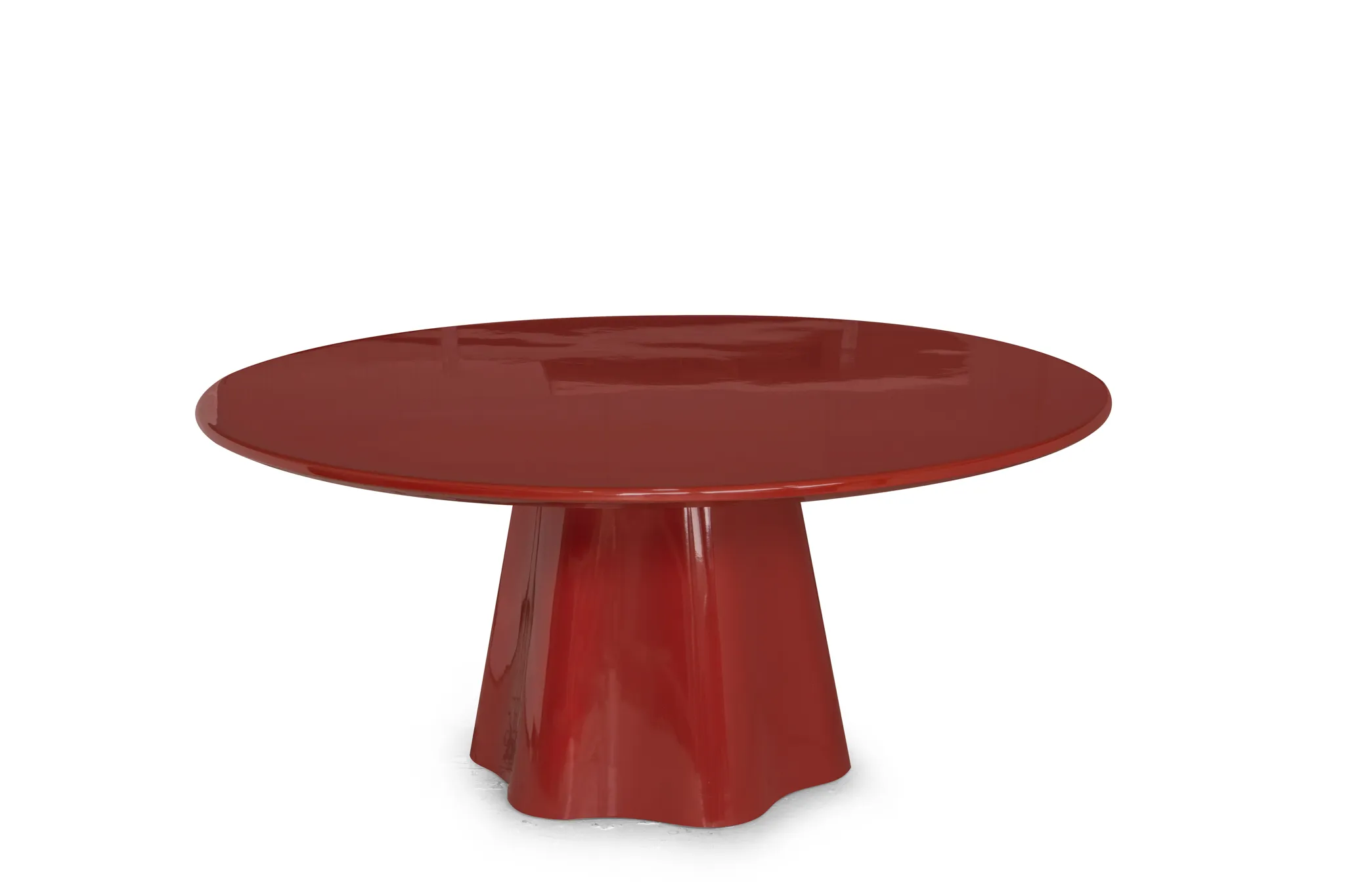
Compare round vs rectangular dining table layouts with the chairs occupied
Begin with the room's fixed features: doors, storage fronts, windows that need access and the route between the kitchen and seating. Draw each proposed table in the same plan. Place the chairs where people would sit, then show how they move backwards for someone to enter or leave.
A circle has no projecting tabletop corners, but its maximum diameter still occupies space in every direction. A rectangle can align with a long room and concentrate some of its seating along the sides. Neither outline automatically produces more usable circulation; that depends on its size, chair positions and the room around it.
For illustration, a 140 cm circular top reaches 140 cm across both principal directions. A hypothetical 180 × 90 cm rectangular top is longer but narrower. Those figures do not identify two equivalent seating capacities or a specific HEZEN rectangular model. They simply explain why comparing tabletop area alone misses the way each shape occupies a room.
Run the comparison at the same intended everyday seat count. Otherwise, a small round arrangement for a few people may appear more efficient than a much larger rectangular proposal simply because it serves a different brief. Add occasional hosting separately instead of letting it silently determine every daily furniture choice.
Mark any place that is used differently from the others. A chair beside the kitchen route may be moved more often, while a position near a wall may have less room to pull back. For the HEZEN round options, rotating the whole seating arrangement around the circle can sometimes improve one awkward position. That adjustment must still respect the confirmed base and the space between neighbouring diners.
The 140 cm marble table belongs in the first room sketch
The Light Crystal Marble Round Dining Table with Lazy Susan is listed at 140 cm in diameter and 75 cm high. Its description includes a marble top, metal base and rotating tray. Use the 140 cm diameter as the initial tabletop outline, then confirm the base footprint and the offered tray arrangement.
For a dining area near a kitchen doorway, place the proposed chairs around that circle and inspect the route with them occupied. The curved edge may help soften a turn past the table, but a chair back can still narrow the same route. Moving the circle slightly may be more useful than choosing it solely because it has no corners.
Let the room's proportions challenge your preferred table shape
A long, narrow dining area often deserves an early rectangular trial because the top can follow the room's length. A more balanced area may accommodate a circular arrangement comfortably. These are starting hypotheses, not rules that override doors, storage or the actual furniture dimensions.
Imagine a buyer furnishing a long open-plan room with the kitchen at one end and the lounge at the other. A large circular arrangement might push seated diners into the main route along the room. A narrower rectangular proposal could preserve that route, provided its end positions do not obstruct access between the two zones.
Now consider a separate dining room with doors on adjacent walls. A rectangular end may project into a turning route, while a circular arrangement could distribute seating more evenly around the centre. The useful test is to draw both occupied layouts and follow the actual route between those doors.
Test the 150 cm round table without assuming the extra diameter is free
The Round Natural Marble Dining Table with Lazy Susan is listed at 150 cm in diameter and 75 cm high. Its metal base and rotating central feature introduce questions about foot space and usable tabletop area as well as the outer diameter.
If centred in the same position as the 140 cm option, the 150 cm top extends 5 cm further towards each opposite side of the room. That is a straightforward geometric comparison, not a comfort judgement. Check what happens at the tightest chair position before accepting the larger circle.
For a family dining room, the larger top may be worth considering where serving space is a priority. Confirm how the actual tray and place settings share that surface. A rotating centre can help with serving, but its presence does not prove that every proposed chair position remains comfortable.
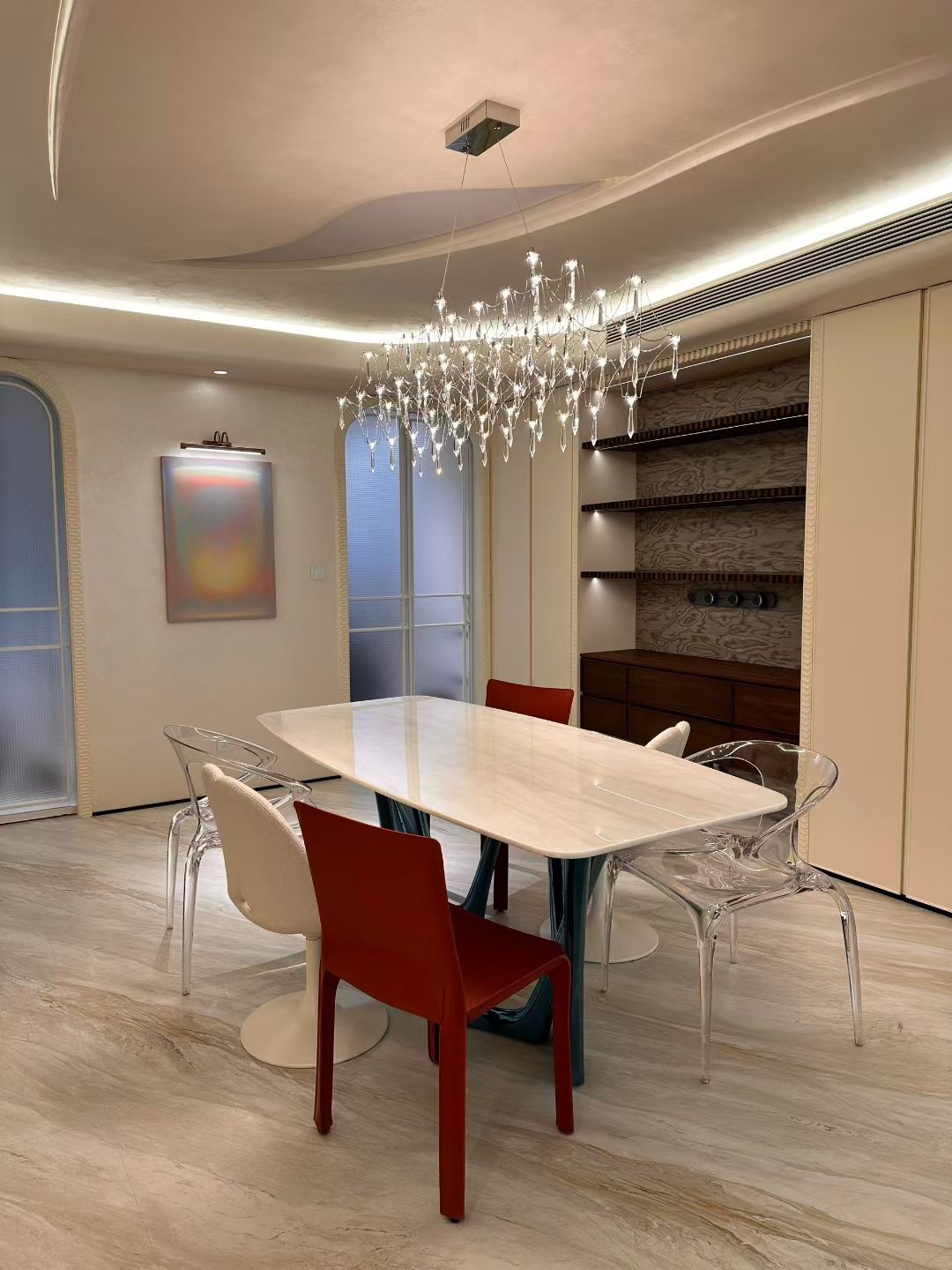
Match the dining chairs before accepting a seating count
The chair is part of the space calculation, not a finishing detail. Its widest point, depth, back shape and arm arrangement affect how closely it can sit beside another chair and how far it projects into the room. The usable seat width may also differ from the overall width.
HEZEN's Italian Minimalist Solid Wood Dining Chair is listed at 50 × 55 × 90 cm. The Italian Minimalist Lounge Dining Chair is listed at 55 × 58 × 94 cm. These are overall dimensions; the last figure describes overall chair height, not seat height.
Those two chairs should not be drawn as identical markers around a table. The lounge chair's listed envelope is both wider and deeper. It may suit the intended feel of a generous dining arrangement, but its effect on chair-to-chair space and the route behind it must be checked.
Round table seating converges towards the base
Around a circular table, chairs point inward. The room between neighbouring chair backs can differ from the room available for knees and feet closer to the centre. Dividing the circumference by chair width does not capture that geometry or the base's position.
Use the 50 cm and 55 cm chair outlines in the plan, with their intended directions shown. Then ask for the relevant base dimensions for the chosen 140 cm or 150 cm table. A pedestal may remove corner legs, but its lower footprint can still influence where feet are comfortable.
Rectangular end chairs need their own support check
For a rectangular alternative, inspect the end positions separately from the long sides. A support, stretcher or recessed base may affect one position more than another. A table that comfortably accommodates the side chairs can still make an end seat inconvenient.
Confirm the rectangular configuration actually being offered before comparing it with the HEZEN round options. Keep its length, width, height and support drawing together. Do not assume that a photograph establishes a standard dining height or that every long tabletop is supplied for the same use.
Choose a larger round table only when the whole arrangement improves
The Round Dark Wood Frame Marble Dining Table is listed at 160 cm in diameter and 75 cm high, with a dark wood frame and marble centre in its description. Its two-tier design makes the central arrangement an important part of the selection, not just an extra visual detail.
Relative to the 140 cm round option, a centred 160 cm top reaches 10 cm further towards each side. The chairs then occupy space outside that larger circle. Review the room with the chosen chairs in place rather than assuming the additional diameter will be absorbed by an apparently generous floor area.
A buyer planning regular shared meals may value the larger central serving area. Another buyer may find that the larger circle makes conversation across the table or access to particular items less convenient. Test the proposed place settings and serving method where possible; the material and diameter do not settle those preferences.
The published seating description is a starting point for discussion, not a guarantee for every chair combination. Establish the intended seat count using the actual chair widths, base arrangement and diners' needs. Avoid ordering extra chairs merely because they can be placed around the perimeter in an empty-room image.
Review serving, storage and occasional guests as separate uses
Set out the items used during an ordinary meal: plates, glasses, serving dishes and any centrepiece. On the 140 cm or 150 cm lazy-Susan design, confirm the tray diameter and its relationship to the place settings. On the 160 cm two-tier design, understand how the different surfaces are intended to be used.
A rectangular proposal creates a different serving pattern, with dishes distributed along its length. That may suit the household's routine, or it may require people to pass items more often. Neither pattern is inherently better; choose the one that makes the intended meals comfortable.
Next, open the nearby sideboard or storage furniture in the plan. Check access while people remain seated. A table arrangement that works only when everyone gets up before storage can be opened may be unsuitable for the way the room will operate.
For occasional extra guests, draw the temporary seats explicitly. Do not assume an extension mechanism or removable section exists unless it is confirmed for the offered table. If extra seating compromises the daily layout, discuss whether a different arrangement for larger gatherings is more sensible than permanently oversizing the main table.
Make the table-shape decision with one agreed seating drawing
Room & Board's dining-room guidance connects table shape with chair fit and base placement. That is useful general context. The final dimensions and construction for a HEZEN order must come from the selected items and the confirmed proposal.
Use the dining table size guide for the wider measurement task, then discuss the selected shape through HEZEN CASA's whole-home furnishing service. Keep the same chair references in the comparison so that the decision does not change unnoticed when seating is substituted.
Approve the arrangement that works with diners seated, storage operating and the main route still usable. If the round option meets those tests, its shared orientation may be exactly right for the room. If a confirmed rectangular proposal handles the room better, let that practical result outweigh the shape you preferred before drawing the furniture.