Will a Round Dining Table with Lazy Susan Fit the Way You Serve?
A round dining table with Lazy Susan works well when several diners will share dishes and each person can reach the tray without leaning across someone else’s place setting. Start by measuring the serving dishes, the width of the stationary area around the tray and the reach from your chosen chair. HEZEN CASA makes and supplies Italian-style furniture in Foshan. Its 140 and 150 cm marble tables are two options with rotating trays, and the different overall diameters let villa and furnishing buyers compare designs before committing to a full set of chairs.
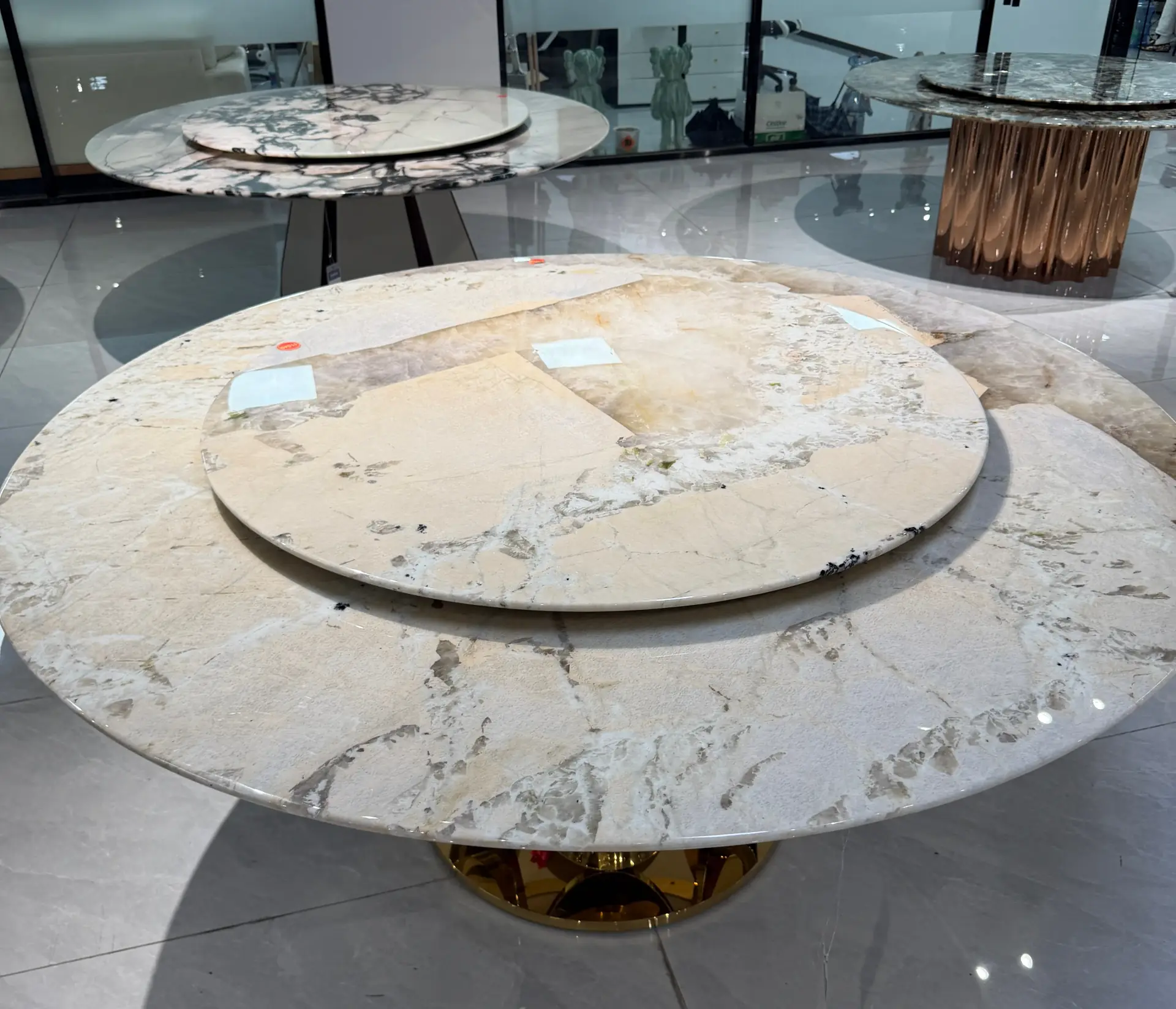
Put the Lazy Susan through a meal before ordering the table
Think through the last dinner you served family style. What would have been on the table before the food arrived? Usually there would have been glasses and plates, maybe a small dish or two, and something in the middle you could lift out of the way. A rotating tray makes it easier to share a few dishes. It also divides the top into two working areas. The dishes that move occupy the center. The glasses, plates and other things that must stay in place need enough room outside them.
The key measurement is the usable radius after the tray has been installed. Ask for the overall diameter of the top and the effective diameter and height of the raised serving surface. If the top and tray are concentric, halve the difference in their diameters to find the depth of the stationary area. As an illustration, a 150 cm top and a hypothetical 80 cm tray would leave 35 cm from the tray edge to the tabletop edge. That example does not describe either of the HEZEN tray diameters. For a real order, request a dimensioned view of the proposed tray and compare it with the dishes you own.
Watch where a serving dish goes when the tray comes around
Draw the inner and outer circles on paper or masking tape in full size. Put down the deepest everyday place setting, including a glass and anything you keep beside the plate. Then take a platter with handles and let it trace the path it would take on the rotating surface. It may be possible to sit the platter on the tray with both handles hanging a little over the edge, but those handles will swing through space people might expect to use. Take account of projecting serving spoons too. A lazy Susan works smoothly for diners when that moving area can stay clear during the entire meal.
For a villa family that brings one large platter and several small bowls to the table, test whether the platter has somewhere better to go. It might stay on a nearby sideboard while the bowls travel. Try the same exercise with a shallow tray or a smaller platter. Sometimes a different serving vessel gives you the intended routine without changing the table or the chair count. This matters if you already know the room cannot take a bigger top and want to keep a marble finish that is right for the interior.
At a residence where a cook or attendant serves several courses, the rotating tray may be used for one part of the meal only. A sideboard can support that quick transition between dishes. HEZEN CASA’s Rounded Marble Top Light Oak Storage Sideboard is listed at 180 × 45 × 80 cm overall. Assess where it will sit, who will stand at it and how dishes move from the cabinet to the table. A staging surface close at hand can make the center feel less crowded, especially when people use the table for a long evening.
Check the Lazy Susan from the chair you will actually use
Seat two people beside each other and look at how they approach the outer edge. A chair may fit easily under the top but still put the seated diner too far from the turntable or too close to a neighbor. The Italian Minimalist Dining Chair in our range is listed at 52 × 55 × 92 cm overall in fabric and solid wood. Its overall height measures to the top of the chair, not the seat or any arm. When you check it against a table, use the actual seat height, shape and position and make sure it can be placed close enough without hitting a support below the top.
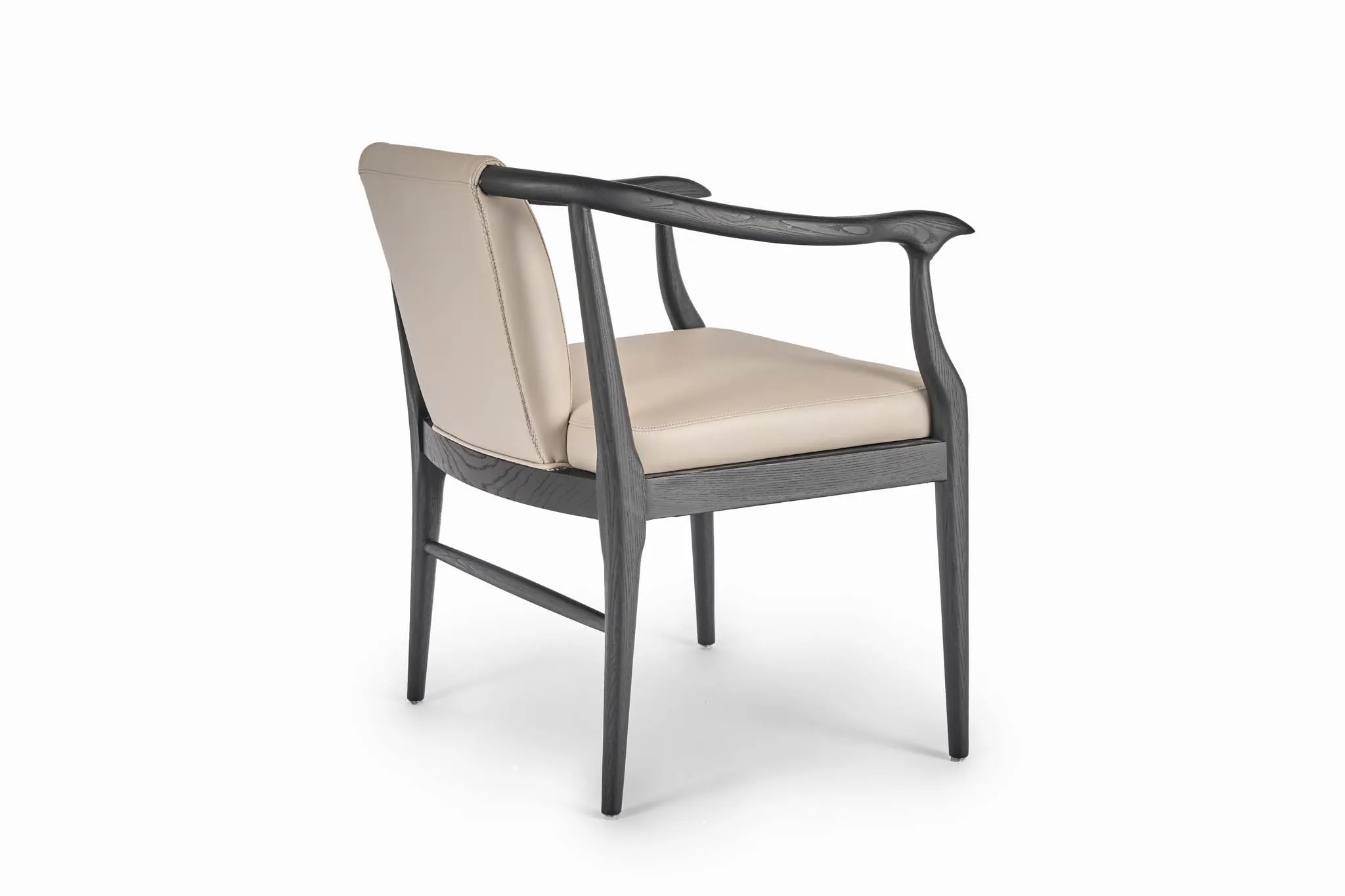
Ask one person to pass a small dish across the table and ask another to turn the tray. Watch whether people can do it with their glasses where they would naturally leave them. If the diners include someone with limited reach, test that place first. The best setting for two adults at opposite sides may be awkward for a child or for someone who sits back for comfort. With the actual chair in place, it is easier to distinguish a reach problem from a simple issue of where the serving dish starts on the tray.
Allow for the difference between arriving at a chair and serving from it. On the 150 cm table, a taller table setting with a handle on one side can be within reach once you sit, while a person placing that dish from between two chairs may have a different angle. Use a lightweight stand-in for the platter in your mock-up. Start with the tray empty and see whether someone can put the dish down without turning the furniture or shifting a seat. Repeat from the place you expect to use when clearing the table. The easiest seat for reaching the tray may be a poor place to leave open for service.
Compare the 140 and 150 cm round dining tables with rotating trays
The Light Crystal Marble Round Dining Table with Lazy Susan is listed at 140 cm in diameter and 75 cm in overall height. HEZEN describes it with glossy natural marble, gold-colored metal and a matching rotating tray. Its listed seating is six. It is a reasonable candidate for a room where keeping space by the chairs matters and a bright tabletop is part of the design. The tray and place settings still need to be checked together, especially if the dinnerware has an unusually broad rim or the buyers like to leave several bottles on the table.
The Round Natural Marble Dining Table with Lazy Susan is listed at 150 cm in diameter and 75 cm high. HEZEN lists natural marble, a textured metal base and a built-in turntable, with seating for six to eight in the specification. Its outer edge is 5 cm farther from the center than the 140 cm table’s. That extra overall radius helps you plan the effect on the room. To see whether it also increases the available depth for a place setting, you still need the size of the tray on both configurations.
Bring the precise chair reference back into that comparison if you are buying both pieces. A model with a generous back or upholstery profile may change the way a diner sits and turns, even if its legs clear the support easily. Try two settings using the same chair position, one at the everyday seat count and one at the occasional maximum. In the denser setting a tray may still make each dish accessible, but the space on either side of a plate becomes tighter. Check that separately before treating the dining table’s seating range as a commitment for a particular chair order.
| Meal detail to test | What to compare on the two sizes | What to record before ordering |
|---|---|---|
| Full place setting with a glass | Usable depth between the moving tray and the outer edge | Exact tray geometry and actual dinnerware footprint |
| Platter with handles or a serving spoon | Maximum extent of anything going around the top | A view of the tray with the expected dish sizes drawn in |
| Person reaching from the widest chair | Where the chair sits with the actual base below the top | Chair position and the agreed usable seat count |
| Serving path from a nearby cabinet | Space for another person behind a seated diner | Which side is for service and what can be left there |
Our dining table size guide takes the room-clearance comparison farther, and Room & Board’s dining table finder offers general context for comparing round tables with the dining room and the number of seats. Use those references to narrow the overall table size. The test above answers the separate question of how much room each diner will have to eat when the middle of the table is in use.
Decide whether you want the marble center to serve or to draw the eye
The Round Dark Wood Frame Marble Dining Table is listed at 160 cm across and 75 cm high, with a dark wood outer portion and a marble center plate. Its photos show a different material relationship from either of the two lighter tray designs. Treat it as a separate option and ask exactly how its center operates if rotation matters to you. For a room where guests are usually served individually, the contrast between the wood and marble may matter more than the reach to a shared tray. For the family that shares six dishes at once, handling those dishes comfortably should lead the decision.
Try an ordinary dinner setting on a drawing of the dark wood frame as well. See whether the dividing line between the two materials is right for what you usually set out. A host with small place mats may like the visible strip of wood around a central arrangement. Someone who regularly lays a large table covering may prefer to see more of the center in a candid setup. Those are different preferences. Both are easiest to understand when the furniture is shown as it will actually be used.
A room used for drinks between meals is a useful second check. If it is pleasant to leave one item in the middle of the Light Crystal table, sketch where it stands and where it goes when dinner arrives. A move to the 180 cm sideboard may solve that problem if there is a clear route from the chosen serving point. If the sideboard is too far away, decide where the item can safely be set when the tray has to turn. This rehearsal can expose a small inconvenience that changing the tray diameter would do nothing to fix.
Approve the round table and turntable as one furnishing decision
Before an order goes ahead, put the selected table, chair and tray arrangement on the same sheet. Ask for details of how the tray is supported and how it should be operated and cleaned. If the order involves heavy dishes or a tray that may be moved, request handling instructions for the proposed configuration. A product image is a good way to understand the form, but it cannot show the instructions for assembly or whether parts are supplied separately. For your delivery arrangements, ask for the proposed packed component dimensions and who will handle assembly on site.
A project buyer may also need consistency across two rooms that use related marble tables. Give each room its own chair arrangement rather than assuming all seating and serving conditions will repeat. Tell the supplier which room sees long family meals, which has the constrained doorway and which finish should be matched to each space. HEZEN CASA’s catalogue offers several ways to build a coordinated project. The useful comparison is between the actual furniture in each room, with the selected tray, material and route identified together.
Run one last test with the tray carrying a dish and the table fully set. Reach from the chair that gives you the least comfortable angle. If you can turn the platter past the adjoining glass and serve without shifting your own plate, the size and shape are doing what you want. Keep a picture or drawing of that test with the chosen table. It will make the order easier to review than a note that simply says you want a round marble table for six.