Will a Premium Upholstered Bed with Storage Open Comfortably in Your Room?
Choose a storage bed only after you can show where its drawers open and where someone stands to use them. This matters in a guest suite with a thick rug, a compact bedroom with nearby nightstands, or a villa where a full bedding set will live under the bed. HEZEN CASA, a Foshan furniture manufacturer and supplier, lists a fabric panel bed with under-bed drawers. Compare it with the supplier’s fabric platform bed and separate dressers if the bedroom has less room for a drawer to extend. Ask for the operating drawing and test it with the largest thing you plan to store.
Map the drawer travel of a premium upholstered bed with storage
Start with two outlines. The first is the bed on the floor with every drawer closed. The second adds the reach of a drawer when it is fully open. Mark the space your feet and knees need beyond that second line to reach into the back. The intended storage can be easy to overlook on a floor plan, especially when the rug and bedside cabinet were selected after the bed. If the open drawer will be next to one of those items, keep the open outline on the working plan throughout the furnishing order.
Get an open view of the Beige Fabric Panel Bed before sizing the storage
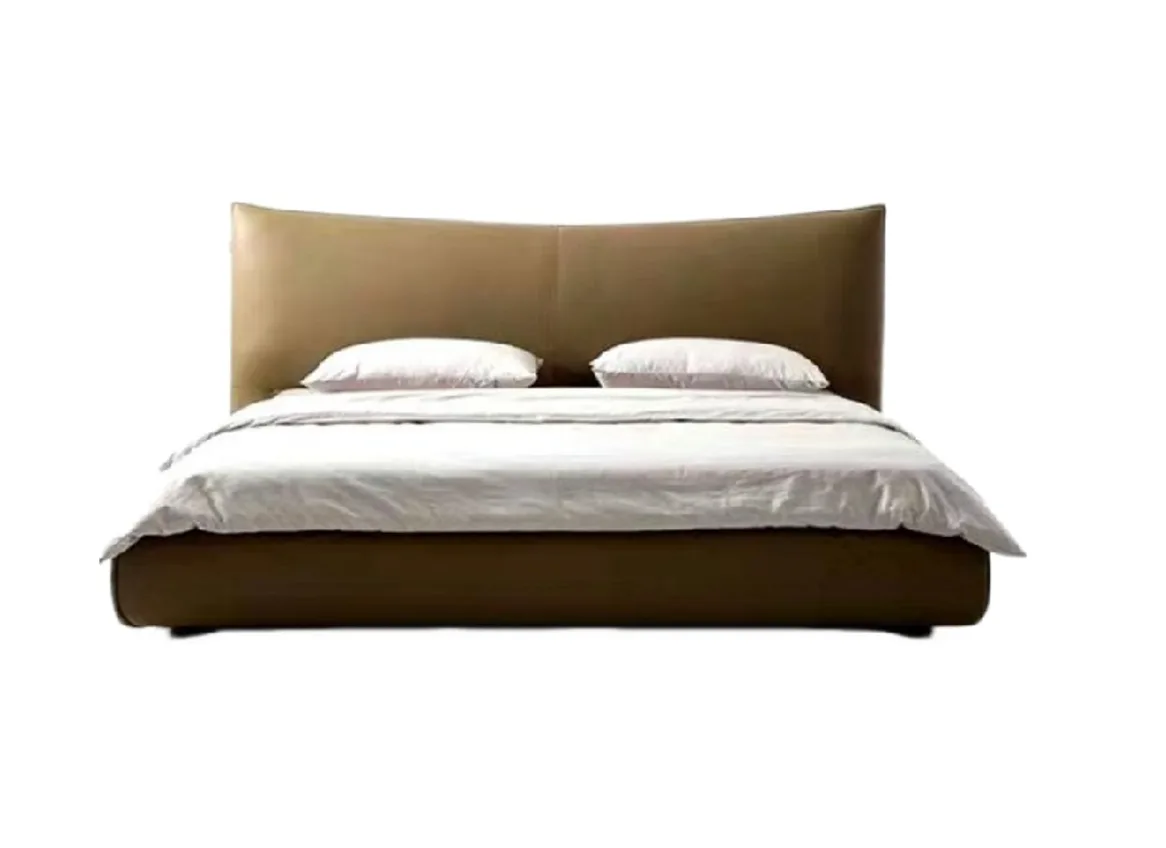
The Beige Fabric Panel Bed with Storage Drawers is listed in fabric and solid wood, with a panel headboard and under-bed drawers. The published example is 220 × 180 × 105 cm overall, and the seller lists queen and king options. Ask for the confirmed outside dimensions for your configuration and the actual mattress opening. Then get a drawing showing the storage movement. The catalog's closed front view helps show how the upholstered base sits below the mattress. An open plan and side view are what you need to assess the room.
Ask which side or end each drawer opens from, how far it travels and what part of the frame stays in the way when it is open. Check the maximum useful opening and the clear internal dimensions. A drawing that shows only the outer drawer width does little to tell you what will fit. If the furniture is meant to hold an extra duvet for a guest, measure it loosely folded rather than compressed as tightly as possible. Include the thickness where the fold is heaviest. The drawer has to accept that shape after repeated use, when nobody has time to pack it tightly.
Check the space above the fully open front as well. The top of a soft bundle can still catch on the fixed frame if it has to come out at an angle. At an available sample, place the folded bundle near the back and try to lift it without resting an arm firmly on the open drawer. If you need to work with heavier items, give the supplier the proposed contents and ask which weight and loading limits apply to the installed component. A larger compartment only helps if it is comfortable to use with the envelope you will actually put inside it.
Room & Board’s bed selection guide treats pullout space and a user's standing space as part of a storage-bed layout. IKEA’s instructions for its own upholstered storage bed give an example of documenting the drawer in relation to the frame. For the HEZEN CASA bed, ask for its specific drawing and instructions. No outside example establishes its drawer locations, the type of slides, or the amount of room it takes to use them.
Place the bedroom rug at the real drawer path
A thick rug can end directly under a drawer that opens out from a bed. Mark the rug edge, bindings and any pad on the floor plan. The top of the rug at an edge could be higher than it looks in a styled room view. If the operating parts travel close to the floor, ask whether that rug crosses any part of the path and test it on the selected bed or a useful sample. A test should use the rug and pad you intend to keep. The result can be different with the rug flattened under a frame or left free at a lifted edge.
Imagine a guest bedroom where the nightstand is close to the bed wall and a large rug sits partly beneath the bed. The housekeeper changes a duvet while a suitcase is open near the foot of the bed. Give the person who will do that work a full-size drawing or mock-up, and position the nightstand and suitcase as they typically are. If there is no easy place to stand beyond the drawer, try moving the rug or reassigning the drawer's contents before choosing the bed. A neatly stored duvet that takes two people to reach may be better on a cabinet shelf.
In a room at the end of a renovation, keep the final carpet and floor heights on the same sheet. HEZEN CASA’s under-bed clearance guide gives context on checking the space at floor level, including for cleaning. A storage bed adds a different question: can the drawers still be used with this floor and planned rug? Ask the manufacturer which measurements should stay clear for the specific construction. Test the working position before a new rug is trimmed or moved under other furniture.
Do a second floor test from the side where the person will have less space to move. A rug may be continuous on one side and end midway along the bed on the other. The frame can also sit closer to a wall at one end because of the room shape or because a nightstand has been moved. The day after the furniture is placed, check which side still opens with the rug laid and the neighboring pieces in use. If the two sides are very different, put the more frequently handled bedding on the more accessible side, subject to the actual drawer layout.
Compare an upholstered storage bed with a bed and dresser that work separately
Sort the things you plan to store by how often somebody needs them. Extra duvets and spare bed linen may be taken out weekly or between guests. Personal clothes are handled much more often. When easy standing access is important, a dresser can offer a more convenient working height and route. If the room has an open side at the bed and almost no free wall, integrated storage may let the bed do more. The geometry you draw for each option should include the open drawer and a place to handle the object.
Put daily clothes in a tall chest if the bed works better for spare linens
Consider the Curved 6 Drawer Tall Leather Chest of Drawers when the room has a small spare wall and a place to stand in front. It is listed at 60 × 45 × 130 cm with six drawers, in leather and solid wood. The 60 cm width can make the item worth drawing as one option near a closet. Confirm the clear dimensions of the drawers and how far they extend. For a heavier folded item, ask which storage height you would be comfortable using and how it will be reached. Have the installer confirm any required securing of the tall chest.
Another route is the Designer Stacked Irregular Accent Dresser, which HEZEN lists at 120 × 45 × 110 cm in solid wood and veneer with five drawers. The visible stagger gives the room a distinct piece and the larger listed width calls for more wall space. Its drawers should be compared by clear inside size and opening direction before assigning them anything bulky. A wide case with a distinctive silhouette can be useful for organizing clothing by drawer. It could be a poor substitute for a long, wide opening if the largest thing you want to store is a folded winter duvet.
Think about what happens on a normal morning while someone else is still in bed. A few drawers in a chest away from the mattress may keep everyday dressing away from the sleeping area. In a suite that is usually used by one person, a storage drawer that is easy to reach at the bed may be perfectly suitable for linens. A product photograph can help compare the appearance of the case and bed together. Build the daily routine into the decision before giving the dresser or the bed a fixed place on the order.
Use the floating-base upholstered bed as a separate-storage comparison
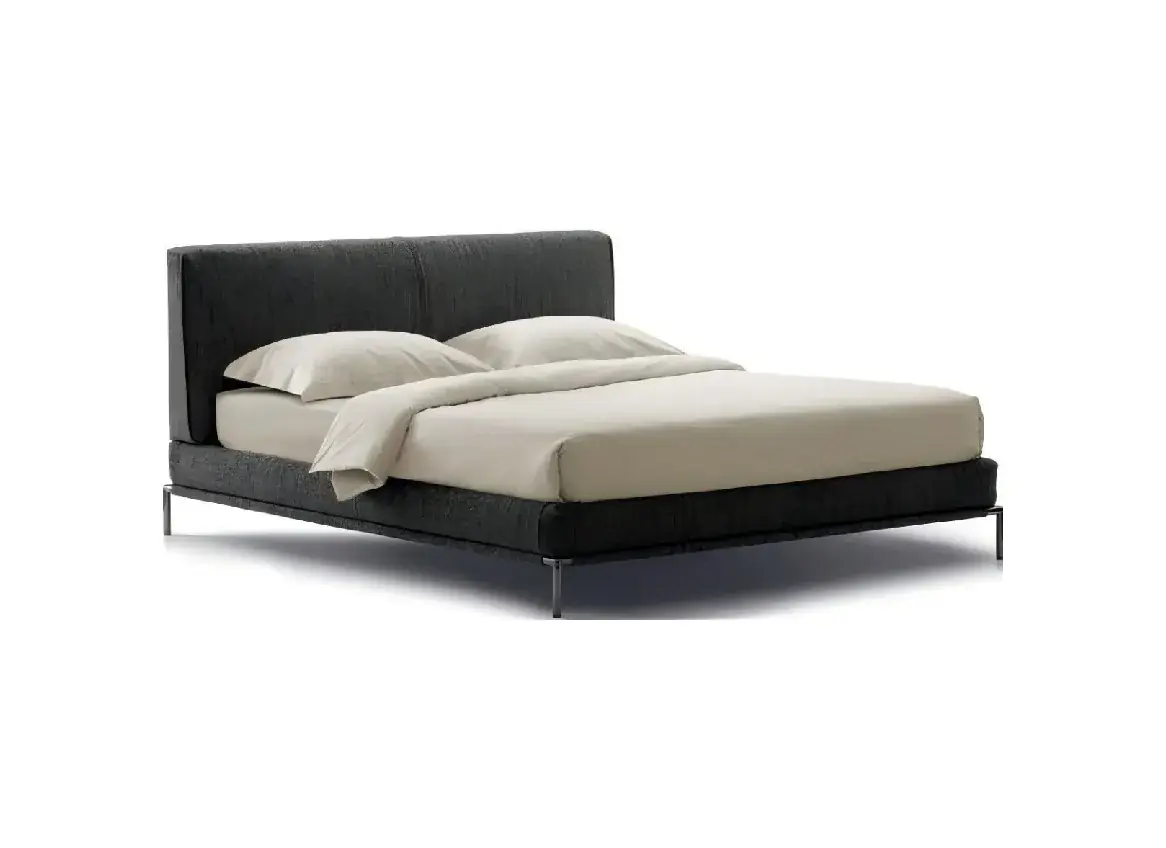
The Dark Grey Textured Linen Minimal Floating Bed is listed at 210 × 180 × 90 cm in linen and metal. The catalog emphasizes its low profile and floating appearance. Consider it when the space beside the bed needs to stay open in daily use and the main storage can sit against a quiet wall. It gives you another upholstered option to compare with the panel bed's closed drawer line. Confirm the finish and the exact underside configuration with the supplier, including how the room can be cleaned around the proposed bed.
A principal bedroom with a free wall beside the closet might use the separate bed and tall chest. Place the chest where drawers can extend without closing off the walk to the bathroom. Compare that with a storage bed that puts the spare bed linens close to where they are changed. When the separate chest is beyond a door, ask whether staff or the owner would routinely take the same extra steps. Some rooms only need a dresser and an easy route. Others will be easier to manage with seasonal storage near the mattress and smaller objects in the chest.
Think about how often the furniture arrangement might change. A seasonal room refresh may move an accent chair next to the bed or bring in a bench at the foot. An independent chest could free the bed perimeter wherever those pieces are placed. An integrated option works well when there is a consistently available opening and a reason to keep soft goods close at hand. Put the likely bench or chair on the sample plan now so one new piece does not quietly take away the use of the storage already chosen.
Approve the upholstered bed and drawer positions with one repeatable test
Bring the real item that will go in the drawer and have a second person open it. See whether the folded linens can come out in one movement at the proposed depth. Check if the opening would still work after the duvet cover hangs over the frame. A low drawer hidden neatly behind a bedspread in a showroom may need the covering moved out of the way when you use it. If the storage is important for daily housekeeping, pick a style of bedding and arrange the room so the action is simple.
Before ordering, put the selected fabric, mattress size, working drawer dimensions, travel direction and rug position on the same furniture schedule. Ask if the supplier can show how the drawer is handled on delivery or installation, especially if the bed comes into the room in multiple parts. The published 220 × 180 × 105 cm measurements describe a model's overall size. Get the actual shipping and installed dimensions for the selected order and identify how the drawer can be accessed for care or service if needed.
Try closing the mock-up or sample while holding the storage item. Nobody should need to stand in a narrow gap or lift a heavy bundle over a nearby piece of furniture just to retrieve it. Keep the duvet in the bed drawer if there is a clear, supported place to reach and lift it. If the item keeps catching on the rug or the opening has to be shared with the closet path, give it a better home before you buy. That is the point of adding storage in a room you want to feel calm.