Which Premium Leather Sofas Should Furniture Showrooms Put on the Floor?
When a retailer has room for only two premium leather sofas, make one a convincing everyday choice and give the other a different job. The second piece might show a wider seating configuration or make a particular type of upholstery easier to understand. Compare the outlines and finish information in HEZEN CASA’s sofa collection before choosing the display mix. Ask how the maker will identify each model and its specific leather. A showroom piece should tell the buyer something they could not see in an online photo and make it clear what can be ordered.
Two visually impressive sofas can still tell almost the same story. Put two long black sofas on the same stretch of floor and the salesperson may have to spend the first few minutes explaining which is which. A guest might only sit on the nearest one. Give your floor plan a reason to carry both items. One could show the proportions of a shorter leather sofa with clearly visible metal details. The other could let visitors sit in a larger tufted sectional and examine the way the upholstery changes as it goes over corners and seams.
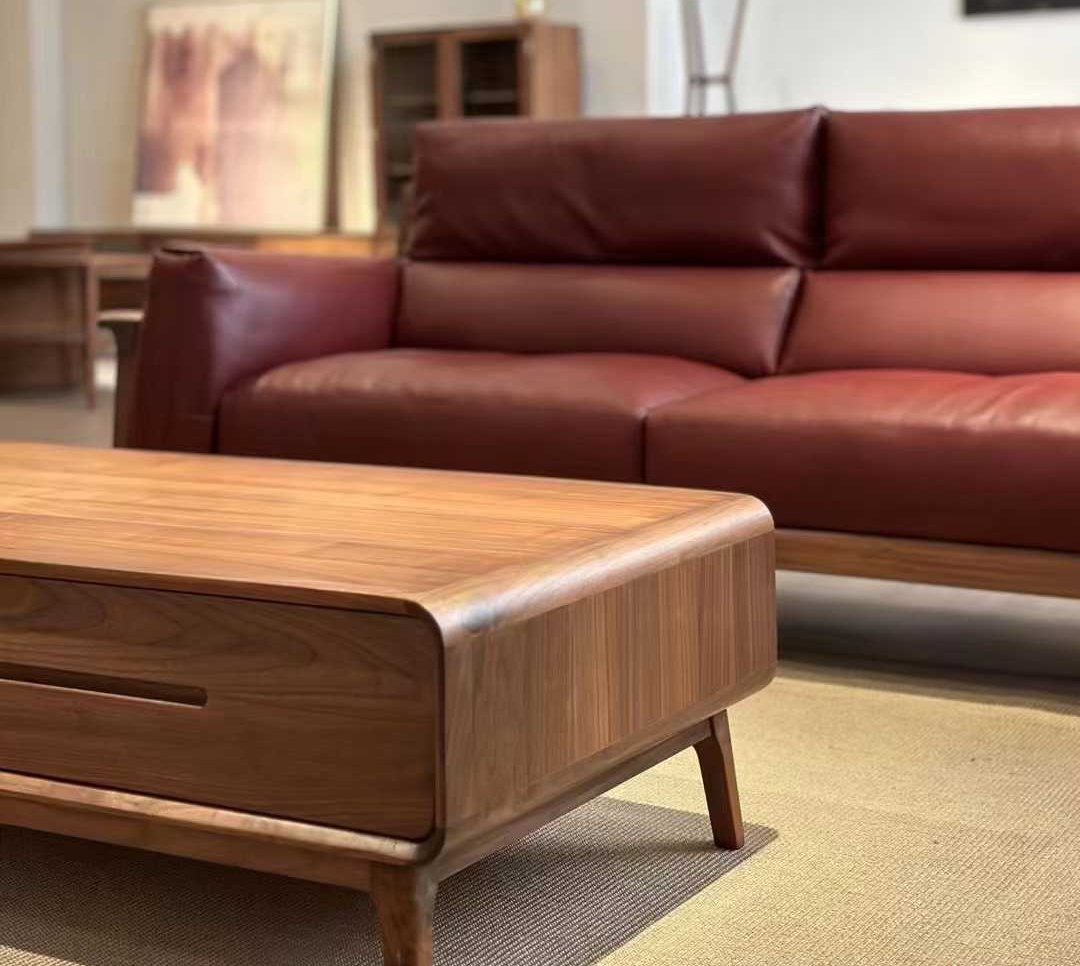
Make the first premium leather sofa an easy comparison point
Start by naming the furniture issue your staff encounters most. If customers often buy for an apartment, the comparison may begin with length and access. If the store mainly serves designers furnishing villas, the priority might be seeing a leather sample on the same sort of long seating run they are specifying. Both groups benefit from having one display they can easily identify, measure and sit on. Give it the floor position where visitors already slow down.
Use the leather and metal sofa to show a shorter option
The Italian Minimalist Leather Sofa with Metal Accents is listed at 260 × 150 × 78 cm with leather and metal. It makes a sensible starting point for a store that needs to show a premium-looking surface in a shorter overall outline. A buyer who is working with a designer can measure that outline against a room, then look carefully at the junction between the near arm and the base detail. There is more to learn from a smaller item than there is from a swatch. Customers can see what the surface and joins look like when an adult sits down or someone passes at the end.
Imagine a dealership with an active walkway that runs across the back of its main display. Staff want to show that a well-finished furniture back can be part of a room, not simply put against a wall. Place the shorter sofa where people can see both the front and an outer side, then mark which parts are visible from the approach. Before ordering the display, ask which surfaces will carry the selected material and finish. A photo taken straight from the front may not show the one panel the dealership most needs to explain.
Make the black tufted sectional answer a different question
The Black Full Grain Leather Tufted Cube Sectional Sofa is a larger proposition at 320 × 180 × 80 cm. Its product page lists full-grain leather and a solid wood structure. Its strong block shapes and deeply visible seam lines give a showroom something to discuss that a plain area of upholstery cannot. A potential buyer can see the difference between the broad sitting surface and the material bent into the details. Position the piece so visitors can stand far enough back to notice the whole shape and close enough to look at one seat.
Do a paper exercise before you reserve that much space. The 320 cm run takes up 60 cm more width than the 260 cm example. That difference is valuable when the whole point of the second display is to show a larger arrangement. It can be wasteful if staff usually discuss smaller rooms and need the floor space for a separate chair, sample table or room at the entrance. In that store, the larger item might be better shown on a marked dimension card and a set of manufacturer-approved photographs. The smaller physical display can still give customers a meaningful example of what a leather sofa feels like at seating height.

Let the second display show what the first cannot
Once you have a size benchmark, select a real point of difference. Look for an arrangement, finish or construction detail staff can point to. A finished curve can show how an uninterrupted shape reads across an open room. A piece that uses both suede and leather can help a customer understand a mixed-material treatment. Ask which decisions you most often need to explain when someone has already picked a general size.
Show the curved Nappa sectional as a distinct layout and finish
HEZEN CASA's Burgundy & White Nappa Leather Curved Sectional Sofa has a listed size of 320 × 180 × 85 cm and a solid wood frame. This is an interesting comparison with the black tufted sectional at the same published width and depth. Its curve and contrasting panels change where the seat group draws the eye, and the color contrast makes the arrangement easier to discuss. Put both outlines on paper rather than telling a customer they take the same space merely because two of the overall dimensions match. Where the side of the room matters, the outer geometry and placement can change the result.
Give the salesperson a clear, factual line about what makes this model different. It uses Nappa leather in the listed example and has a curved arrangement. That is enough to start the conversation. If a buyer asks whether a different color or finish is available, check the actual order options and how the color must be approved. The photo, the display piece and the approved swatch may have been used under very different lighting. Keep all three separate in the record so staff do not treat the brightest picture as an upholstery standard.
Put the suede and leather combination where customers can touch both surfaces
Another candidate for the second position is the Camel Suede & Black Leather Tufted Modular Sofa. At a listed 300 × 180 × 85 cm, it presents a different construction and look from the two leather examples. The catalogue identifies suede, top-grain leather and solid wood. Show which faces of the actual piece a visitor is touching, and avoid a broad sign that says “full leather” when the display intentionally combines finishes. The contrast is part of the design and of the reason a buyer may consider the piece. Give it a display position from which both materials can be seen.
At a larger design showroom, the staff may be comparing how to present the two surfaces without dedicating another full bay to a similar silhouette. Add an approved, labelled suede swatch and a leather swatch to the same sample board. Show where each would sit on the arrangement. Keep both alternatives with the product record even if the room ultimately shows only one piece. A builder or designer can see how the idea belongs to the sofa rather than being offered as an unmatched sample strip.
Give the premium leather display a usable specification card
Keep the card concise enough that someone can read it while the sofa is occupied. Use the maker's product name, overall size and the finish reference for the exact floor piece. Store the room and handling measurements separately so staff can answer an apartment or showroom delivery question accurately. A note about the ordered configuration needs to name the pieces included with it rather than hinting that every pictured table or ottoman comes with every order.
- What is physically on the floor?
- The checked model, the displayed configuration and the approved upholstery identifier. Identify any companion piece separately where it has its own order line.
- Which differences can your visitors see?
- The seam lines, arm proportions, upholstery transitions or outer sides that the store is using to demonstrate the piece.
- Which details belong in an order conversation?
- The available version, current configuration approval, site access questions, the maker's care instructions and any finish-specific documents the buyer needs.
A store need not list unsupported performance ratings to show what is valuable about a product. Put the fabric, frame and dimensions on the card as documented. Let a person sit and see what is different about the arrangement. If a distributor needs a particular program of repeat orders, discuss using the existing HEZEN CASA leather sofa supplier guide to ask more specific questions about panels and finish approval before the showroom relationship becomes a recurring order.
Keep the cleaning information attached to the right leather
Showroom cleaning happens before the visitor arrives and often after several people have used the sample. Keep the actual product care decision with the finish reference and ask who is responsible for approving a cleaner. Muuto’s product information is useful as an example of a manufacturer giving different routine instructions for different materials. It describes its own products. For a HEZEN CASA floor piece, use the instructions supplied for its actual finish, particularly when different surfaces meet on the same cushion or panel.
Check what happens if another store receives the same model and photographs it near a brighter window. It may want its own photo for the website or a display card that looks different from yours. Agree how the two stores will name the finish and how consumers will recognize the same product in both places. The local photographs can show different settings while both stores still carry the same verified finish identifier. Treat any shade or version change as a supplier decision to record, especially when the second store repeats an older order.
The easiest part of a showroom sample to photograph is often the least informative. A close crop of the flat seat might tell a buyer that a surface is brown, but leave no way to judge whether the panel continues past the arm or meets a different material. For the suede and leather model, take a photo that shows the junction and a second shot wide enough to identify where it sits. If the floor has been rearranged and the next buyer may never see that example in person, the two images still make sense together. For the solid-block leather sectional, keep a side shot showing the position of the seams around the end. It gives the next showroom an object they can compare against a proposed stock order.
It helps to decide what should happen when a floor sofa is sold. A smaller retailer may be delighted to clear a display quickly and then discover that every consultation now relies on a sample board and images. Leave behind the model and swatch identifiers, and decide which other piece can carry the size demonstration until the replacement arrives. If the black sectional goes first, the burgundy model could still illustrate the overall span while the staff shows the differences in geometry on a drawing. Write down which parts of the comparison are still possible. Otherwise a customer may sit in the curved model and assume the tufted seating has exactly the same position or support.
Record any ordered display units against the actual drawing or product record used when you selected them. A dealer who agrees a different configuration after looking at the 260 cm leather model should keep that alternate selection under its own reference. The photograph of the original can stay on the specification card as a comparison, but put the actual proposed dimensions separately. That simple distinction reduces the chance that a room planner later works from the stock dimensions.
Before placing the floor order, ask a salesperson to explain both of the selected sofas without saying “premium” twice. They should be able to talk about one shorter footprint or one visible material detail, then describe what makes the other model useful for a different visitor. Give them a finish card that names what they are showing. A well-considered showroom mix gives that exchange a clear beginning and gives the manufacturer an order it can recognize when the next piece is requested.