Working With a Leather Sofa Supplier in China on Panels, Finishes and Care
A sofa described as leather may still need several material decisions before it can be ordered accurately. The seating surface, contrasting panel and outer side should not disappear into one broad color name. A leather sofa supplier in China should identify the proposed covering by location and explain its care requirements. HEZEN CASA’s burgundy and white Nappa sectional and camel suede and black leather modular sofa are useful examples. Begin with the exact surfaces being supplied, then compare the approved material references on the actual furniture forms.
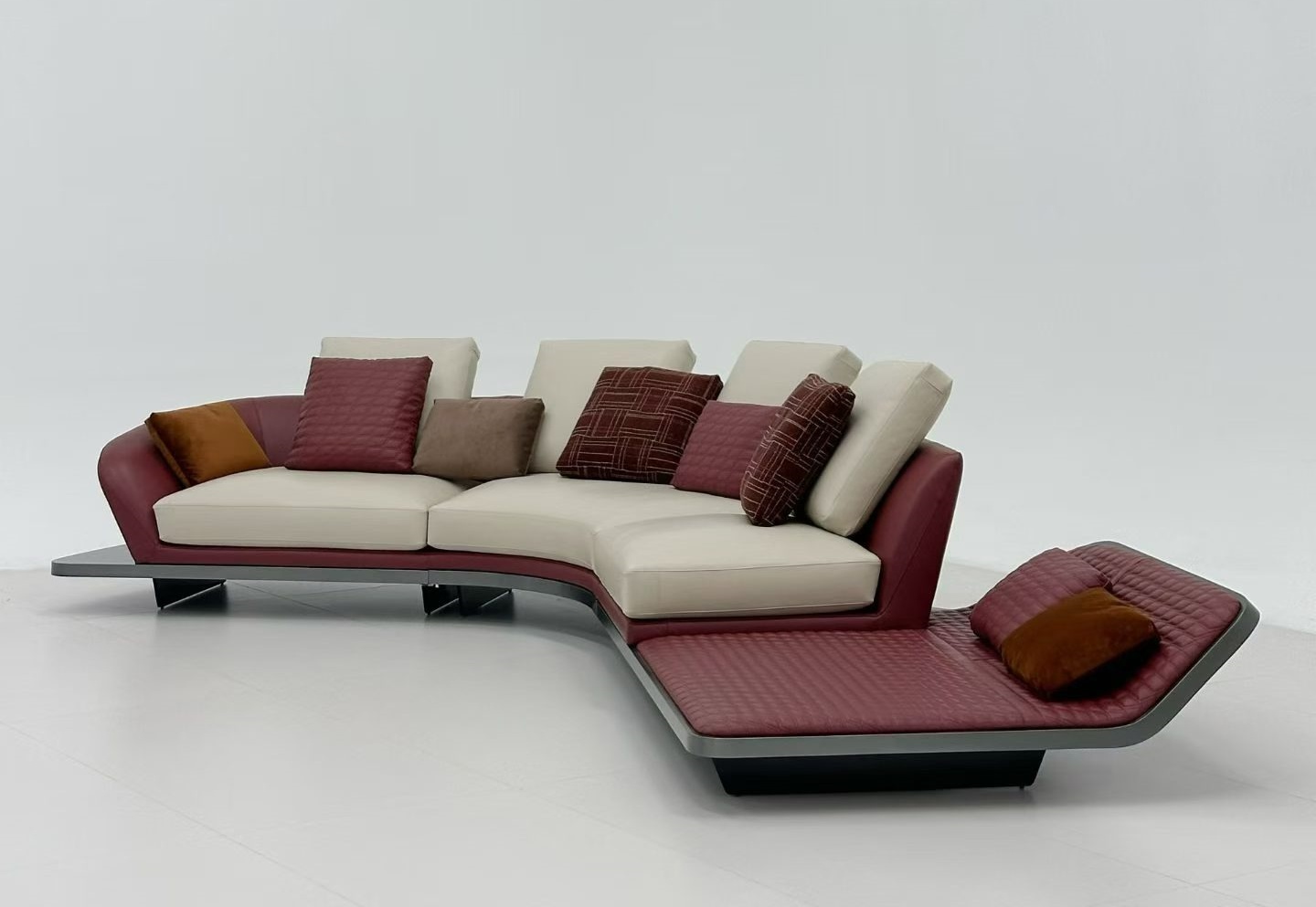
Ask the leather sofa supplier in China to map the upholstery zones
The burgundy and white sectional is listed at 320 × 180 × 85 cm with Nappa leather and solid wood. Its contrasting colors make the surface arrangement central to the design. Identify which parts use each approved material and color reference. A single entry reading burgundy leather sofa does not describe the white section or every visible surface.
The camel and black modular sofa is listed at 300 × 180 × 85 cm with suede, top-grain leather and solid wood. This is not simply another color version of the Nappa sectional. The listed materials describe different zones and appearances. Ask the supplier to show the actual proposed covering positions rather than assuming every part of the sofa uses the same leather.
The suede-and-leather sofa needs more than one care instruction
A cleaning method suitable for one selected surface may not be appropriate for another. Obtain the instructions applicable to the actual materials on the ordered sofa. The camel and black zones should remain identifiable in those instructions. Do not let the word leather become a reason to apply one unverified product across the whole piece.
A hospitality buyer may have an established maintenance routine, while a residential buyer may expect occasional household care. Describe that context before approving the materials. If the proposed surface does not suit the intended routine, discuss the specification with the supplier. A color match alone cannot establish that a substitution will behave or be maintained in the same way.
The Spinneybeck maintenance range distinguishes products for different leather categories. That supports the general need to identify the covering before choosing care products. It is not a recommendation to use those products on HEZEN furniture without confirmation from the supplier of the actual material.
Nappa is a starting description, not the complete sofa specification
The material name helps identify the design offered by HEZEN, but a buyer still needs the applicable finish, color reference and care information. Ask for those details on the ordered version. Do not infer a particular surface treatment, test result or maintenance promise solely from the name Nappa or from the smooth appearance of a photograph.
The distinction matters when the order includes a color change. A buyer may like the two-tone layout but want a different palette. Confirm what material is proposed in each revised color and whether any other characteristic changes. The original product description should not remain the only material record after the proposed covering has been altered.
Approve the burgundy and white surfaces beside each other
The visual effect comes from the relationship between the two areas. Review them together under comparable conditions rather than approving unrelated close-ups with different lighting. Ask to see the junction and the larger surfaces on the relevant sample. The contrast that works on two small swatches may read differently across a 320 cm sectional.
For a distributor planning a display, this relationship influences how the sofa is presented and described. Identify the exact displayed version before offering other combinations. Staff should know which material references belong to the sample and which alternatives still require approval. A broad promise of any color can create expectations that the available evidence does not yet support.
For a designer coordinating an open room, consider the sofa from the back and sides as well as the front. Those views may remain visible from other parts of the interior. Request the relevant photographs or sample views of the ordered version. Do not assume the material arrangement continues around every surface in the same way as the principal image.
Use the white chaise and burgundy seat as separate approval areas
On the two-tone sectional, a buyer may approve the burgundy sample enthusiastically and give less attention to the white chaise. That leaves a substantial visible surface underdefined. Review both selections together and separately. Record which sample belongs to each part, including whether the side and rear surfaces follow the same color arrangement as the displayed furniture.
A showroom purchasing one display sofa needs an accurate presentation for staff as well as an acceptable finished piece. Keep the selected swatches beside a clearly labeled layout image. When a visitor asks about changing one color, staff can identify the affected area without describing the entire sofa as a single leather option or implying that every alternative is already approved.
For a lounge facing a large window, evaluate the proposed colors in the intended viewing conditions where practical. The purpose is to understand the appearance, not to infer resistance to sunlight from a sample viewed briefly. Any performance question about the selected covering needs a supported answer tied to that material. A reassuring color photograph cannot substitute for it.
The junction between the two colors deserves its own close view because it makes alignment and proportion conspicuous. Confirm whether the image shows the ordered configuration and ask what will change if the chaise is moved or resized. Retain the revised view when approving a change. An earlier photograph may still look persuasive while describing a different arrangement.
If the buyer chooses the mixed suede-and-leather sofa instead, restart this surface review with its actual materials. Do not transfer the care decision or covering map from the two-tone Nappa design. The procurement record should follow the furniture selected, including the areas that people touch and the surfaces seen from behind.
Keep both approved colors identifiable on the final order so a later upholstery substitution can be reviewed surface by surface.
Matching a leather chair or bed means comparing actual references
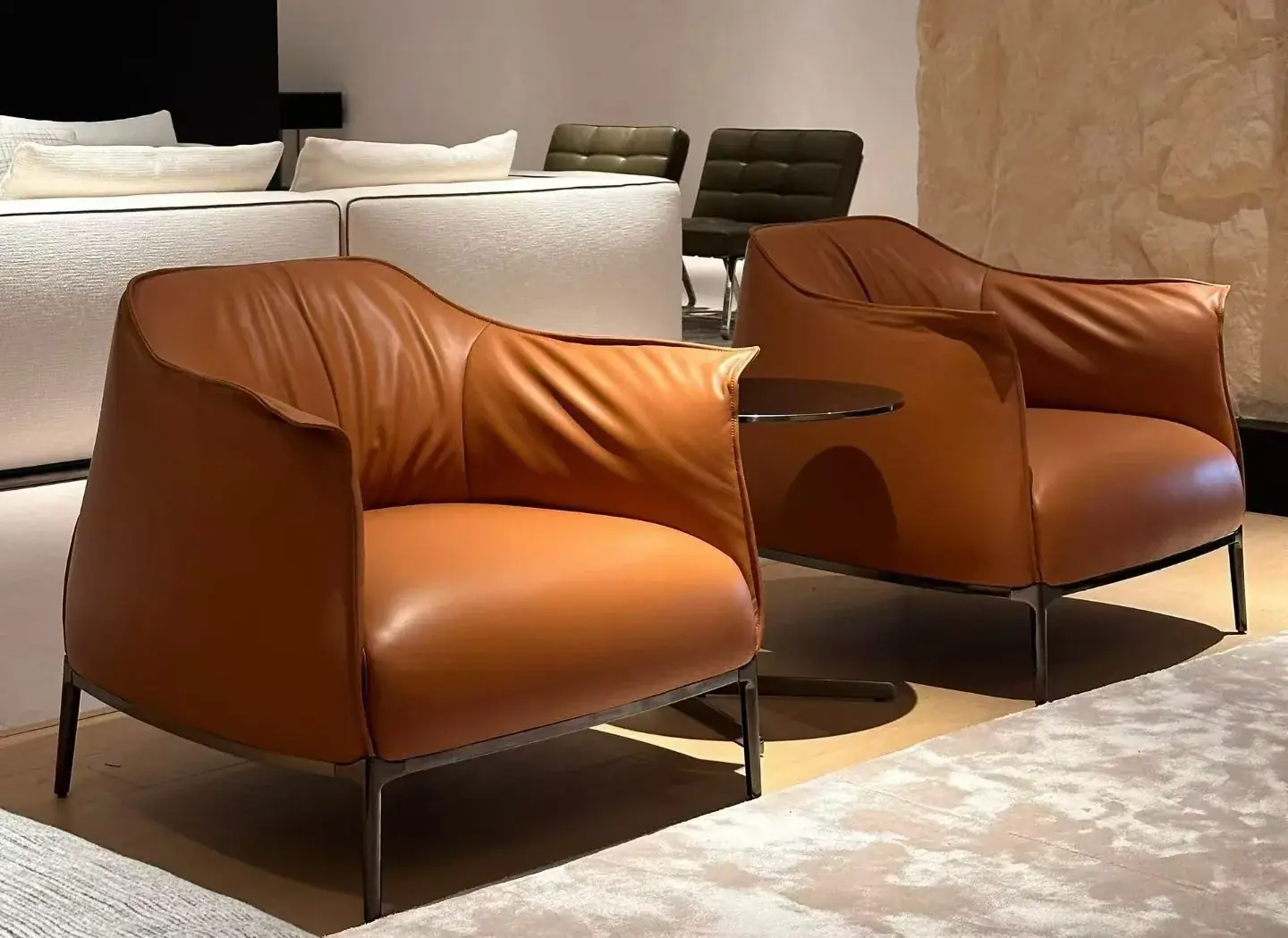
HEZEN’s caramel leather armchair is listed at 75 × 85 × 90 cm with a metal frame. Its material descriptions are not fully consistent about leather grade, so this guide does not treat a grade label as established. A buyer considering it beside the sofa should request the precise specification for the proposed chair.
The light grey dual-pillow Nappa bed is listed at 220 × 180 × 105 cm with a metal structure. Its upholstered shape and use differ from the sectional. Even where the same general material name appears, the sofa and bed should have their own approved covering references and care instructions.
A coordinated room can use related leather colors without claiming identical materials
A designer might want the chair to echo one sofa color while the bedroom remains quieter. That is a visual brief, not evidence that the products use identical leather. Compare the selected samples and define the intended relationship. The decision may be a deliberate contrast rather than an exact match that neither party can reliably describe.
Curves, seams and surrounding materials affect how the same-looking color is perceived. The armchair’s exposed metal frame creates a different context from the sofa’s large upholstered surfaces. The bed’s pillow-like headboard creates another. Review the proposed materials on the relevant forms whenever that visual relationship is important to the order.
A buyer replacing only the chair in an existing room should be especially cautious about matching from an old photograph. Lighting, use and image processing can change the apparent color. Identify the existing reference if available and compare the new proposal appropriately. Do not ask the supplier to guarantee an exact match to an uncontrolled screen image.
Panel seams deserve review before the leather sofa is released
Look at the locations where the covering changes direction: the front edge, arms, corners and transitions between colors or materials. Ask which details belong to the supplied version. A distant overall photograph can confirm a broad design, but it may not show the seam arrangement or edge finish the buyer expects.
On the tufted sofa, review how the selected covering sits around the depressed areas and panel divisions. If a material is substituted, revisit those locations. The new proposal should be assessed on the shape it must cover, not accepted only because its flat sample resembles the old one. That is a specific reason to retain the approved material and sample references.
Separate intended leather variation from an unexplained mismatch
Ask the supplier to explain the appearance range proposed for the order and agree an appropriate reference. Do not label every difference a defect, but do not use the word natural to avoid defining acceptance. The buyer needs enough information to distinguish an intended characteristic from a supplied version that differs from the agreement.
For a multi-sofa project, discuss the visual relationship between pieces that will stand together. An acceptable appearance for an isolated sofa may still need review across a coordinated lounge. Use comparable photographs or samples and preserve their identities. Separate approvals taken under unrelated lighting conditions provide a weak basis for judging the finished group.
Confirm what changes when the leather sofa order changes
HEZEN’s custom development service provides a route for discussing dimensions and material choices. If a buyer shortens the sofa or changes its configuration, ask how the upholstery boundaries and seams respond. The original covering map may no longer describe the revised furniture accurately.
A larger panel, a different arm or a moved junction can make the material relationship more visible. Review the affected drawing and sample details before approving the revision. A change described commercially as the same sofa in a smaller size may still need a new material-position record and updated images for the receiving team.
Connect the approved version to the actual packing and handling information. Ask how the supplied sofa components are protected and identified, particularly where light and dark surfaces are combined. Do not assume a particular wrap, carton or crate is included from the product photograph. The shipping proposal should describe the protection intended for this furniture.
At receipt, compare the delivered configuration with the approved material map before discarding the identifying information. If a question arises about a panel, record the relevant component and view clearly. An observation tied to a specific surface is easier to assess than a general complaint that the leather looks different.
The sample evidence guide explains how visible observations differ from construction claims. For a leather sofa order, bring the discussion back to the actual covering in each location. Agree the color relationship, finish reference and care guidance that the supplier can support, then keep those decisions connected to the version that will arrive.