Premium Bedside Furniture for Shared Bedrooms with Different Routines
One person reads for half an hour. The other wants to put a watch away and turn off the light. They can share a room without sharing the same nightstand setup. Premium bedside furniture for shared bedrooms should give each person a surface they can reach at mattress height, then enough room for the few things they actually use. Plan from the finished bed, including its mattress, and compare HEZEN CASA's two-drawer nightstand with its drawer-and-shelf bedside table. For designers and developers buying for repeat rooms, agree on what the pair should do before deciding it needs to be identical.
Think about the first several minutes after the room goes quiet. Someone reaches for a glass, takes out a charging cable or puts a book away. Every one of those actions has a height and a distance. The user on the other side could be doing something entirely different. A furniture schedule can allow those two arrangements while still showing a coherent pair as someone walks into the room. Start with the individual routines and bring them back together at the headboard.
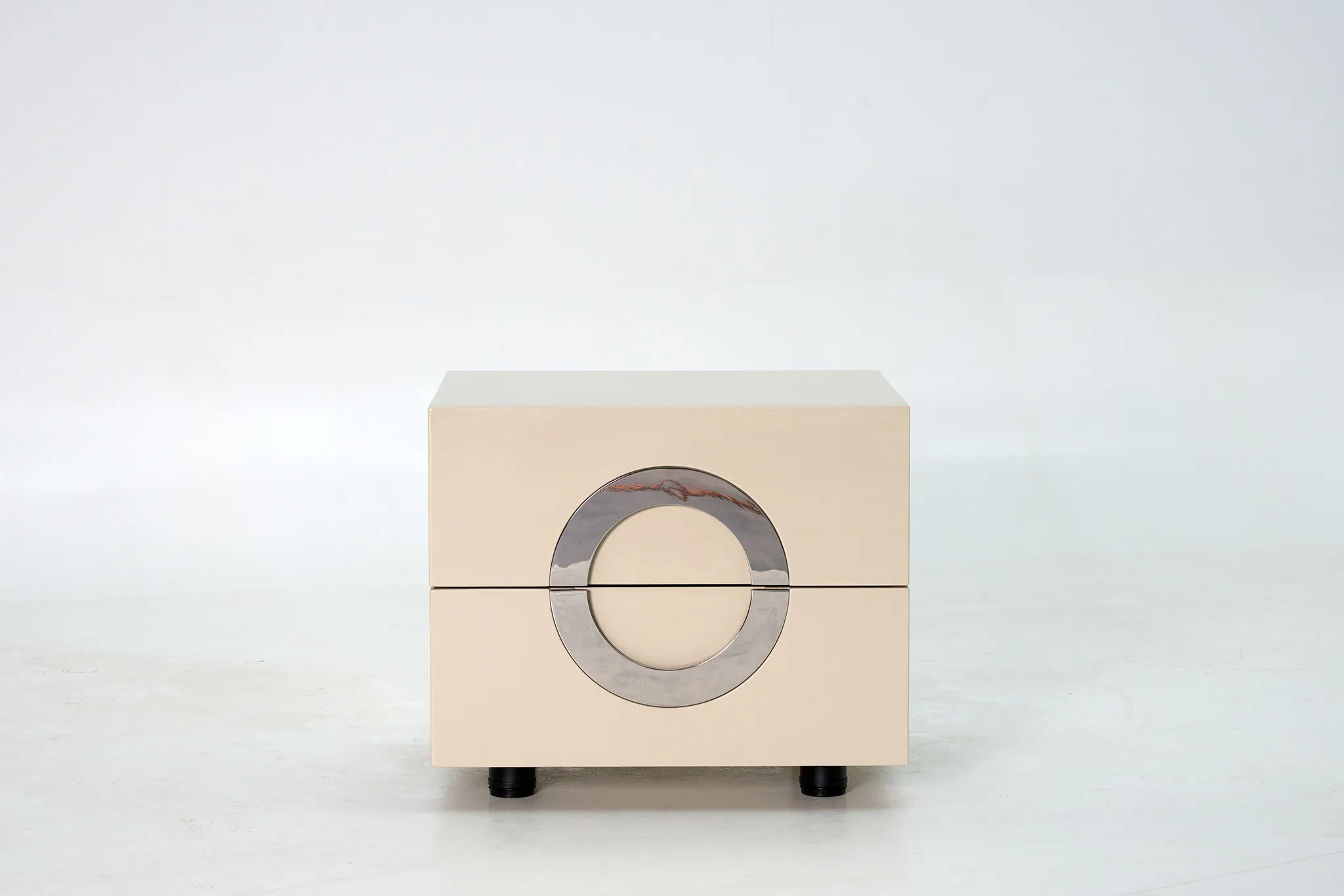
Let each bedside table serve the person who will use it
Set the items that stay out at night on two pieces of paper cut to the proposed top sizes. Give each user a lamp if they want one, add the water glass or book they normally leave there, then see how much area is free for a hand. A useful place for a tray might be lost to the lamp base. If the other side only needs somewhere safe to put eyeglasses, it may be possible to use a narrower top. That distinction matters more than the catalog's overall storage label.
Pair two drawers with an open shelf at the same bedside height
HEZEN CASA's Italian Minimalist Wooden Nightstand with two drawers and the Italian Minimalist Bedside Storage Table both list 50 × 40 × 55 cm outer dimensions in solid wood. The second is listed with one drawer and one shelf. This is a useful starting point if two users want a similar top area and height but have different habits. The one with a book can test whether the usable shelf takes it and keeps its edge within easy reach. The person who wants the surface clear can check the two drawers against the particular items that need to disappear at night.
Picture a shared suite where that second person gets up earlier. They want a place for keys, a watch and an extra charger. The partner who reads prefers a flat place to keep a book open. Put the paper version of the larger top on both sides of the bed, and check the route from pillows to each real object. In the reading position, a shelf can make the book easy to find after the lamp goes off. Ask the supplier for the shelf opening and how far back the objects would sit from the front. At the early riser's side, test a drawer opening without reaching through the other person's pool of light.
Check noise and feel on the actual hardware if it matters to the two buyers. A listing may describe a quiet drawer. The impression can change with the way the drawer is loaded, how quickly it is closed or a hand letting go near the end of its travel. Ask to see it open normally with representative contents. If this is part of a larger order, keep the requested drawer behavior with the approval record. A similar-looking unit with a different mechanism could change a small nighttime routine that mattered when the first model was chosen.
One quick test is to set the tabletop on the bed's plan and add an ordinary lamp base at the back. At a 40 cm catalog depth, whatever remains at the front is the area the user can approach without reaching past the shade or a cord. Leave a clear place near the near corner for the glass that user actually brings to bed. Compare the reading table and two-drawer example under the same test. If the useful bit of surface comes down to the last few centimeters, ask for the actual outline of the top and the location of any lip or rounded edge. The listed footprint may include areas where an object will not sit flat.
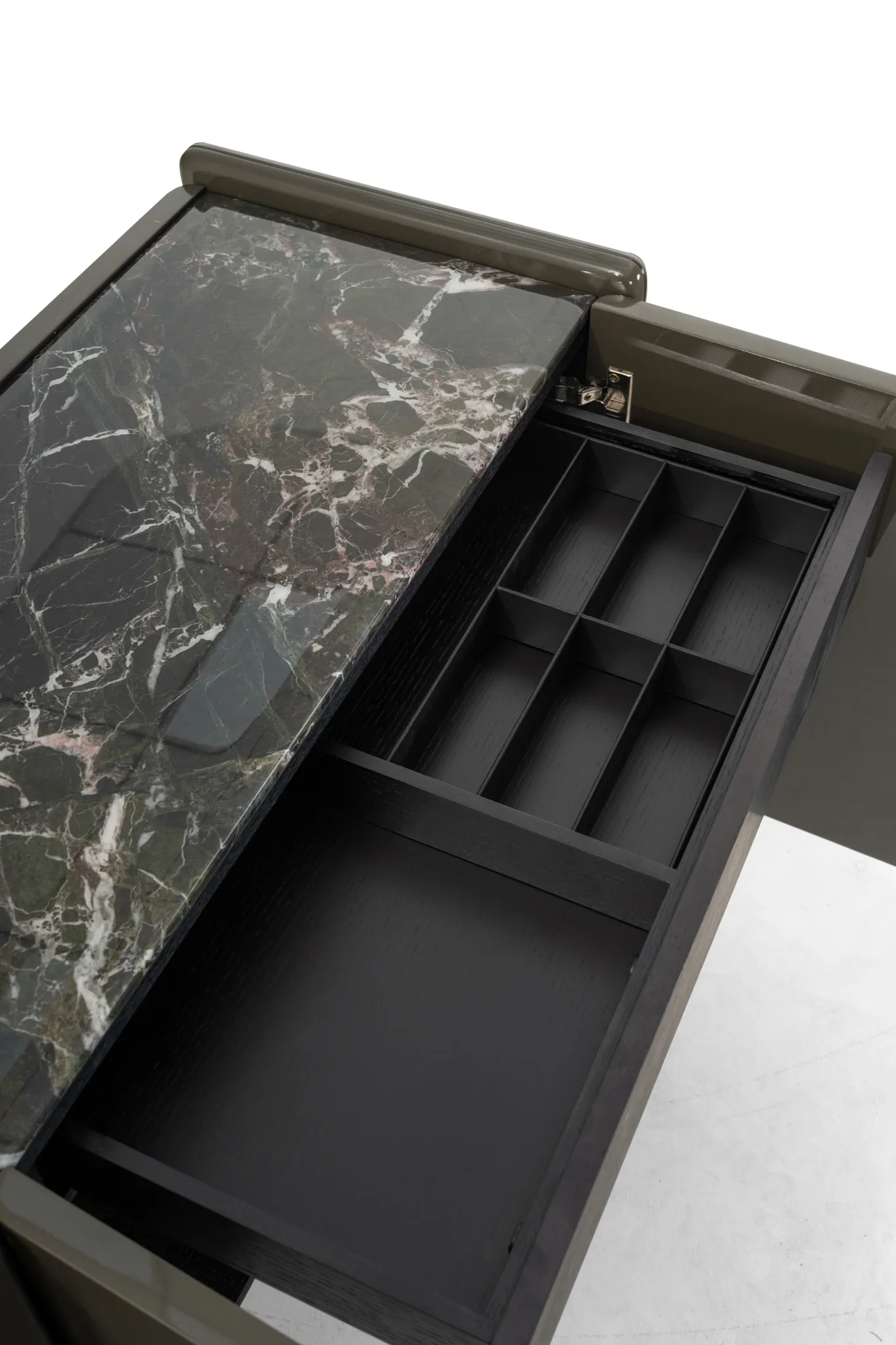
Set aside the narrower side table for the side that needs less surface
The Italian Minimalist Side Storage Table is listed at 45 × 40 × 55 cm in solid wood, with one drawer. At 45 cm wide it can make sense where the user has fewer items or the headboard has a wider outer silhouette on that side. The drawing shows 5 cm less width than the two 50 cm examples and the same advertised top height. Confirm the top's usable dimensions separately, then set the actual objects on that plan. The combination may make the smaller side feel just as purposeful when seen across the headboard.
In a development with mirrored layouts, a wall socket or a curtain can fall quite close to the edge on one side. The slimmer table can keep the socket easier to reach without forcing the other nightstand to shrink as well. Have the project team confirm where the plug and cable actually emerge and whether closing the drawer could trap the cable. Keep the bend and excess length where the person using that side won't catch it with a hand or a foot. A reachable top makes little difference if the charging point itself stays behind a piece that cannot easily be moved.
Set the premium bedside pair against the height of the bed in use
Measure from the finished floor to the top of the made bed. Then sit on it where the buyer would sit to put an object down. The top surface of a mattress can be substantially lower from a seated position than when you first measured it without weight. Mattress thickness and the frame's support level both feed into the comparison. Room & Board's bed and nightstand advice starts with the relationship between the two finished heights. Use that as a starting point, then check each user and the actual order.
Compare the 50 cm nightstand with the finished mattress surface
The Italian Minimalist Wooden Nightstand in the 45 × 40 × 50 cm size is listed with a single drawer and solid wood. It gives the buyer a top 5 cm lower than the two 55 cm examples. Test both top positions at the bed before deciding whether one feels more natural. The difference matters when an elbow reaches down to a solid edge or a hand passes over the rim of a glass. It also affects how much of the table appears as an object of its own beside the upholstered rail.
Look across the pair when nobody is sitting on the bed, then check the reach again from each side. If you plan to use different top levels, two lamps with the same combined height may still give an orderly appearance. The lamp switch should be easy to find without reaching across the glass or a charging phone. On the reading side, direct the approved fitting toward where the book is held. Put the drawing or sample in the room's evening light to see whether that position sends light toward the other pillow or leaves the page itself in shadow.
Measure the leather platform and chosen mattress as two components
HEZEN CASA's Beige Plain Smooth Nappa Leather Low Platform Bed uses Nappa leather and solid wood. It is listed at 220 × 180 × 85 cm overall for the pictured specification. The tallest outside measurement does not give the height at which the mattress sits. Separately, the Off-White Thin Stripe Hand Tufted Bed Mattress lists a 26 cm thickness and foam and pocket spring construction. Use that dimension to understand how a mattress contributes to the assembled height. Check bed and mattress fit with the maker before combining them, and measure the finished top for the actual approved components.
If an owner plans to keep a current mattress, make that clear in the furniture brief. The platform may be approved well before an old mattress is taken out of another room. When that top is higher than expected on the new frame, a nightstand that looked close on a model board could be awkward to reach. A mattress replacement can change the result too. Preserve the assembled measurement and today’s preferred piece in the order record. HEZEN CASA's bedside table height guide gives a fuller method when the project needs to check those numbers for more than one bedroom.
Suppose the measured top ends up at 54 cm once the mattress is on the platform. In that example, the 55 cm table would be about a centimeter above the bed and the 50 cm table about four below it. One person may still prefer the lower piece if they reach toward it more often from a reclined position. Have both users try reaching for a tissue or a glass with the bed dressed. A large duvet sometimes conceals the very edge a person needs to see. A difference of 5 cm can be obvious in that situation, though no one should infer actual fit from an isolated number in a drawing.
Use one shared reference to order two different bedside setups
Keep a side-by-side drawing of the selected pieces and the actual faces that will be visible from the end of the bed. It can show the same wood family across both or leave one darker surface on the reading side if that helps distinguish the two pieces. Approval of any specific finish and model combination belongs with HEZEN CASA, which manufactures furniture in Foshan. Similar listings establish physical options. They do not establish that each available finish can be ordered on every model.
Give switches, shelves and drawers a place on the bedside drawing
Sketch the reading lamp with the base that will be used and put the needed objects next to it. Put the switch by the relevant seat or sleeping position in the drawing. For a project with sconce controls already built into the wall, make sure the current phone charging idea still leaves a hand a clear path to the intended switch. A drop of 5 cm from the higher table may change that space. Use the proposed nightstand dimensions and a piece of card where the outlet or switch sits at the same height as on site.
For a buyer furnishing several apartments, mark bedside orientation from the foot of the bed on the unit drawing. Attach the actual model and finish to that side consistently. A plan shows a distinct 45 cm table or 50 cm table. The delivery team needs to know which bed and side it serves when both are in the same building. If one apartment has its fixed power connections in the opposite place, the handover record should still distinguish its reading side from its storage side. Compare the order against that drawing before cartons are routed to the rooms.
If the finishes on the units are meant to look related, compare which surfaces remain visible at night and which are covered by the bedding. An open shelf puts the books and their spines in view where a second drawer leaves one broad face. Leave space for that visible difference in the sample approval. The pair may already share the listed 55 cm height, so ask the maker to match the approved finish appearance where it actually matters to the homeowner. Give a repeat buyer the model identifiers and the approved views rather than only the description “two matching wooden tables.”
Switch off the overhead light for the last test. From each pillow, put down the object that person reaches for last, whether it is a paperback or a glass. If neither user has to wake the other person for it, the pair is doing what it should. Preserve the useful height, finish and storage choices when you draw up the two pieces with the manufacturer.