Bedside Table Height Guide for the Finished Mattress Level
You should be able to put down a book or reach a lamp without an awkward stretch from bed. That is the useful starting point for a bedside table height guide. Compare the table's top with the finished mattress surface, then test the reach, storage opening and space beside the frame. The headboard's height is a separate visual consideration; it is not the level from which to choose the table.
HEZEN CASA lists wooden nightstands at 50 cm and 55 cm high, along with mattresses of different thicknesses and several upholstered bed frames. Those choices give buyers a practical comparison to make. The missing piece is often the frame's confirmed mattress support level, which must be established before the finished sleeping height can be calculated.
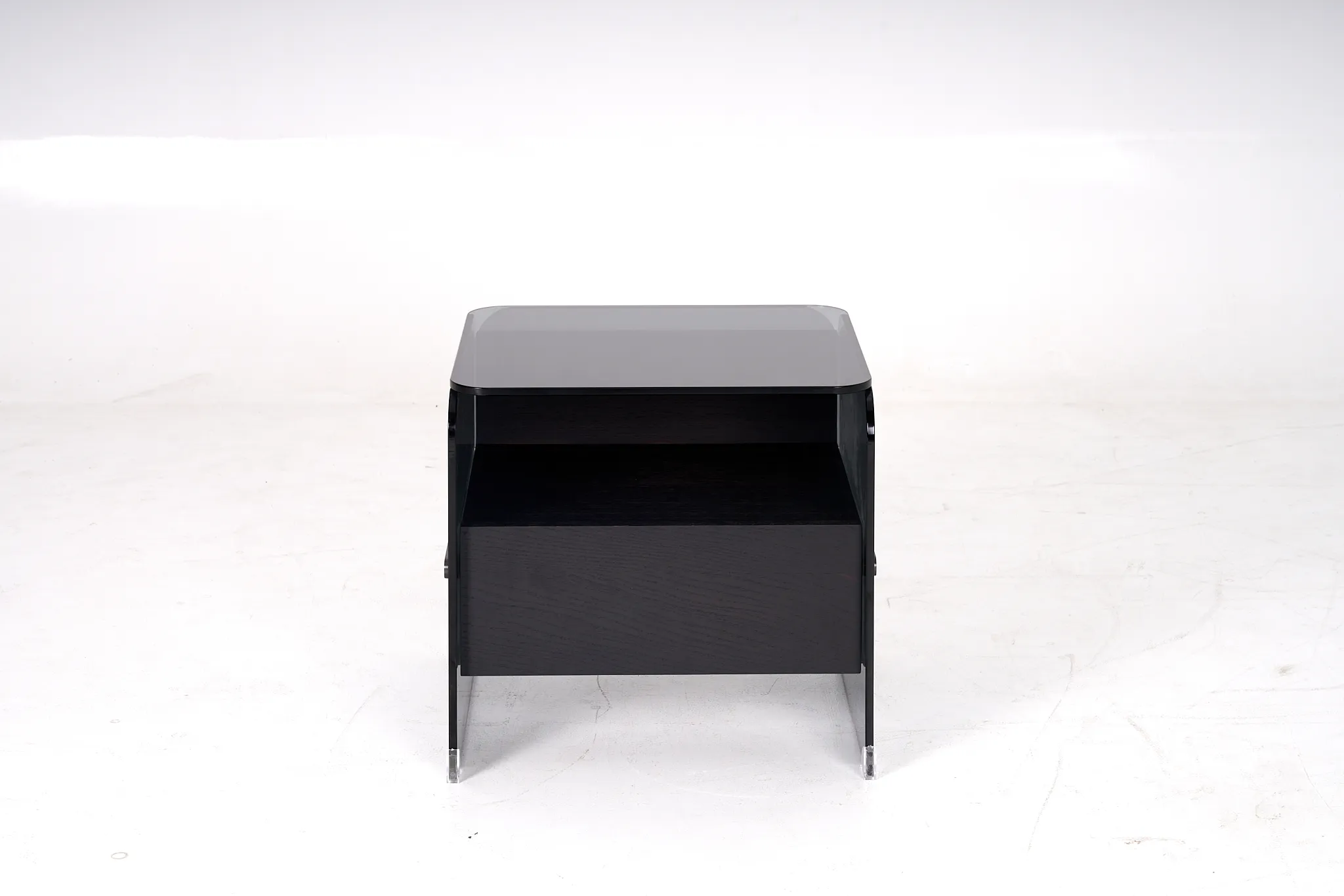
Use this bedside table height guide after choosing the mattress
A nightstand chosen beside an empty frame may sit differently once the mattress is installed. Record the floor-to-support measurement and the selected mattress thickness, then check the resulting floor-to-mattress-top level. For an existing bed, measure the actual finished arrangement rather than reconstructing it from a catalogue.
Use the normal bedding setup for a final reach test. A thick loose duvet should not become the only reference for the furniture height, but bedding can affect how easily someone reaches the table edge. The person using the bed matters more than a perfectly aligned line in a drawing.
As general design guidance, Room & Board suggests pairing the nightstand top around or slightly above mattress level. Treat that as a starting point for comparison, not a universal requirement. Test the actual bed, the user's reach and the items placed on the table before deciding.
The 26 cm mattress changes the comparison from the base upward
The Off-White Thin Stripe Hand Tufted Bed Mattress is listed at 200 × 180 × 26 cm, with foam and pocket springs in its material description. Its 26 cm listed thickness is relevant to the height calculation. It does not tell you the finished sleeping height without the frame's support level.
For an illustrative calculation, a confirmed support surface at 28 cm with a 26 cm mattress would place the unoccupied mattress top at about 54 cm. That example would put a 55 cm nightstand close to the mattress line. The 28 cm support figure is hypothetical, not a supplied dimension for a HEZEN bed.
Do not use this example to select the combination without checking the actual frame. The internal mattress opening, support conditions and supplied configuration still need to be compatible. A useful height relationship cannot correct a mattress that does not fit its frame properly.
The 32 cm mattress can move the tabletop below the sleeping surface
The Cream Check Plush Thick Comfort Mattress is listed at 200 × 180 × 32 cm. On the same compatible support arrangement, it would raise the mattress top by 6 cm compared with the 26 cm option. A nightstand that was almost level before the substitution could therefore become noticeably lower.
For a buyer replacing only the mattress, this is worth checking before purchase. The existing nightstands may remain perfectly usable, but their relationship to the bed will change. Test how easily the user can see and reach a glass, a lamp switch or other regularly used items.
Mattress firmness is another reason to try the arrangement, although a firmness label does not provide an exact loaded height. People and mattresses respond differently when someone sits or lies down. Use the unoccupied measurement to coordinate the order, then assess real reach where a sample or existing setup is available.
Watch for two substitutions happening together. Changing from the 26 cm mattress to the 32 cm option raises the mattress line by 6 cm on the same compatible support. Changing from the 55 cm nightstand to the 50 cm one lowers the table by another 5 cm. Together, those choices alter the relative top levels by 11 cm. Neither substitution may look dramatic on an order list, but their combined effect deserves a new reach check. Keep the previously approved combination visible while reviewing a revision so that the buyer can see exactly which relationship has changed.
Compare the 50 cm and 55 cm wooden nightstands as complete pieces
The height difference is only part of the choice. The two HEZEN wooden nightstands also differ in width, so switching between them affects both the bedside elevation and the floor plan. Keep each product reference attached to its dimensions during selection.
The 55 cm nightstand also needs its 50 cm width
The Italian Minimalist Wooden Nightstand listed at 50 × 40 × 55 cm has a 50 cm width and 40 cm depth to accommodate beside the bed. Its 55 cm listed height may be a useful candidate for a finished mattress level near that point, subject to the user's reach and the actual room.
For a broad bed wall, the extra width may help support the intended lamp and everyday belongings. Check the lamp base against the usable top, however, rather than assuming the whole nominal rectangle is available. Edges, detailing and the chosen object positions can change how the surface works.
Confirm the offered storage configuration with a current product image or drawing. Do not infer the number of drawers from the product name or use an unverified opening arrangement in the bedroom plan. The useful question is whether the supplied storage can be reached and opened beside the selected bed.
The 50 cm nightstand saves width without changing listed depth
The other Italian Minimalist Wooden Nightstand is listed at 45 × 40 × 50 cm. It is 5 cm narrower and 5 cm lower than the first option, while its listed depth remains 40 cm. This can be worth testing where the bed wall is tighter or a lower finished mattress level is intended.
A narrower top still needs to accommodate the actual bedside routine. For someone using a large lamp, a book and a drink, draw those objects at scale before assuming the smaller cabinet will feel sufficient. For a simpler guest room setup, the same width may be easier to place without crowding the bed.
The lower height is not automatically better for a low-looking frame. A bed can have a quiet, low-profile headboard while carrying a relatively thick mattress. Compare measured top levels rather than choosing the nightstand from the general style of the bed.
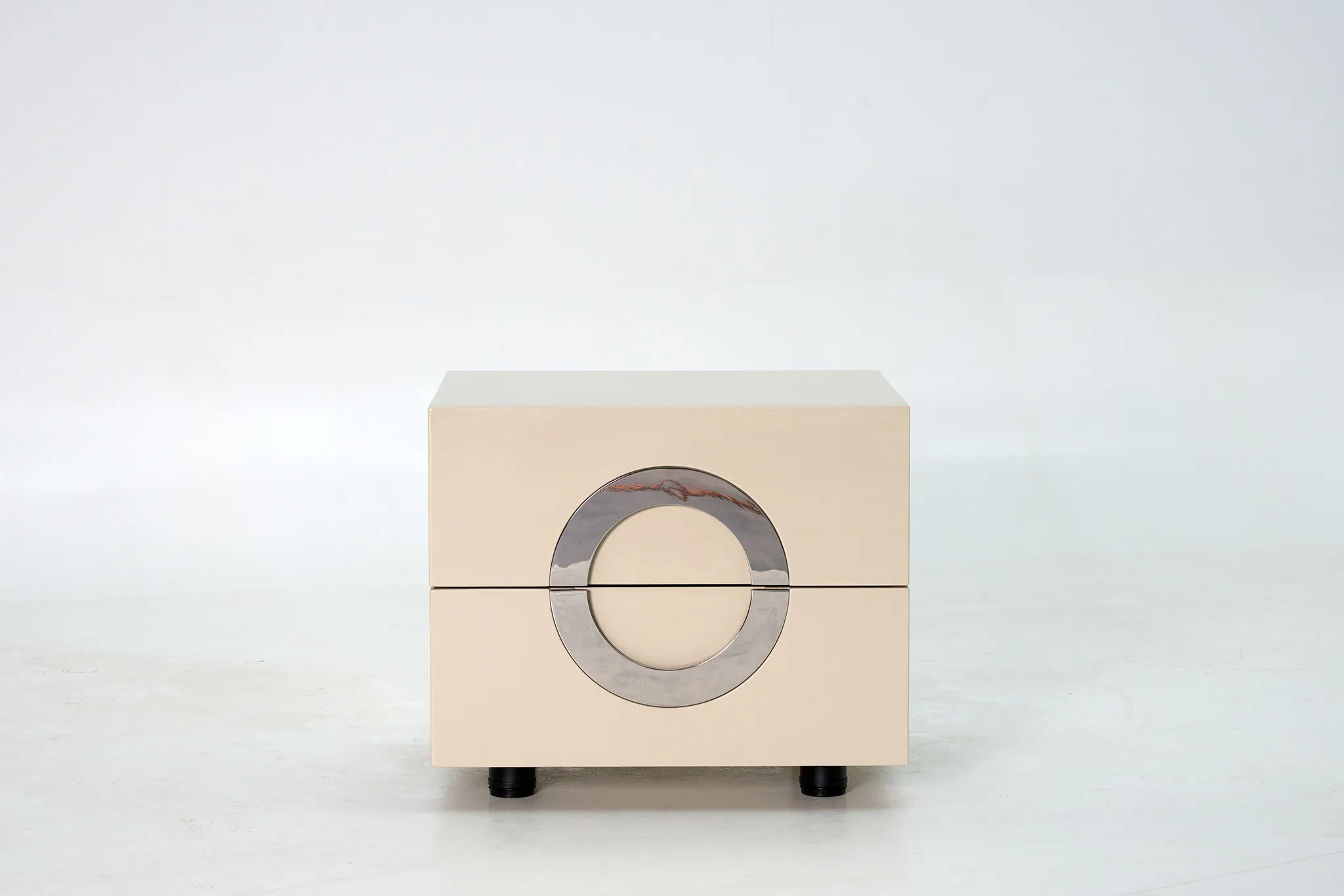
Test bedside reach from the position people actually use
Place a temporary surface at the proposed height beside an existing bed, or use a sample arrangement if available. Try reaching it while lying down and while sitting up. Notice whether the user has to twist, lift an arm awkwardly or reach past the upholstered frame to find the table edge.
The horizontal gap matters as much as the height. A tabletop close to mattress level can still be difficult to reach if the frame has a wide side rail or the cabinet is placed too far away. Confirm the outer frame profile and leave the separation appropriate to the supplied furniture and intended use.
For a home with two regular occupants, test both sides individually. One person may prioritise a reading lamp and books while the other needs a clear surface and easy access to storage. The same cabinet height can work for both, but that should come from the actual arrangement rather than an assumption about symmetry.
For a purchasing coordinator furnishing several guest bedrooms, review each bed and mattress combination as a set. If one room uses the thicker mattress, do not automatically copy the nightstand decision from another room. A short bedside elevation showing the chosen top levels is enough to reveal the difference.
Keep the woven bed's headboard height out of the reach calculation
The Grey Woven Textured Bed with Wooden Frame is listed at 225 × 185 × 110 cm. Its overall height helps describe the bed's presence against the wall. It does not mean the mattress support is 110 cm above the floor, and it should not be added to mattress thickness to choose a nightstand.
Ask for the support level and the relevant side-rail profile for the offered configuration. Then compare the 50 cm and 55 cm nightstand tops with the actual mattress-top level. Only after that functional check should the overall bed height be used to assess the visual balance of the complete arrangement.
A designer considering this woven bed with a larger bedside lamp should also draw the lamp's outline against the headboard. A cabinet can be comfortable to reach yet produce an unbalanced composition once the lamp is added. Solve those two questions together without confusing the headboard top with the sleeping surface.
Check cabinet openings and bedside lighting before the order is fixed
Draw the supplied storage fronts in their operating positions. Make sure the bed frame, bedding and nearby door do not prevent ordinary access. An attractive cabinet that opens only when it is pulled away from the bed will become a daily irritation.
For the 50 × 40 cm nightstand, consider whether the wider footprint approaches a door swing or a fixed wall detail. For the 45 × 40 cm version, check that the narrower top still supports the lighting plan. Both require their full 40 cm listed depth in the room drawing.
Show the lamp switch, nearby sockets and the route of any cable. The height of the cabinet does not establish whether a lamp is comfortable to operate or suitable for reading. Test the actual fixture and keep electrical installation decisions with the responsible person.
Finally, confirm the floor finish and any platform beneath the furniture. A nightstand standing on a raised area and a bed standing on the lower floor will not have the relationship shown by their catalogue heights alone. Measure from one common finished-floor reference whenever possible.
Approve the nightstand and mattress as one bedside arrangement
Record the bed reference, confirmed support level, selected mattress and chosen nightstand together. If the mattress changes before dispatch, revisit the top-level comparison rather than treating it as an unrelated substitution. The upholstered bed size guide helps with the separate frame-and-mattress fit check.
Use HEZEN CASA's furnishing service to resolve the offered bed and cabinet details while the selection is still open. Keep the decision tied to the exact items and dimensions being supplied.
When the arrangement is right, reaching the bedside surface should feel unremarkable. Put the book down, operate the lamp and open the storage in the proposed setup. Those ordinary actions will tell you more about the chosen height than a perfectly styled photograph can.