Performance Upholstery for Hospitality Lounge Chairs, From Swatch to Finished Seat
Before choosing performance upholstery for hospitality lounge chairs, work out where the chair will be touched, what staff will clean it with and how the upholstery looks on a finished sample. A fabric that makes sense on a guest-suite chair beside a window may be the wrong choice for a busy lobby seat. For hotel buyers and procurement teams, compare HEZEN CASA's sculptural bouclé accent chair with its curved lounge chair with leather, bouclé and metal listed in the materials. Start with material evidence for the exact finish under consideration. Keep the selected upholstery reference tied to the chair and the zone where it will be used.
Most upholstery conversations become clearer when somebody brings a drawing of a chair. The arm that takes a guest's weight may need a different kind of attention from the tall back facing a window. A large test result for one material does not describe all of those faces. Look at the reports, then trace what they actually tell you about the textiles you want the maker to use.
Specify performance upholstery for the surfaces guests will use most
Mark the front of each seat, the arm and the outside back on the selected chair drawing. Note what is likely to rub or rest there. Pull a luggage handle past the seat on the proposed floor plan. Picture a housekeeper treating a spot at the seam where the cushion meets the arm. The material may have a different job at each point. Set the questions for your fabric supplier and chair maker based on that use, then confirm they are both referring to the same material.
Check the bouclé arm and seat edge in a busy lobby
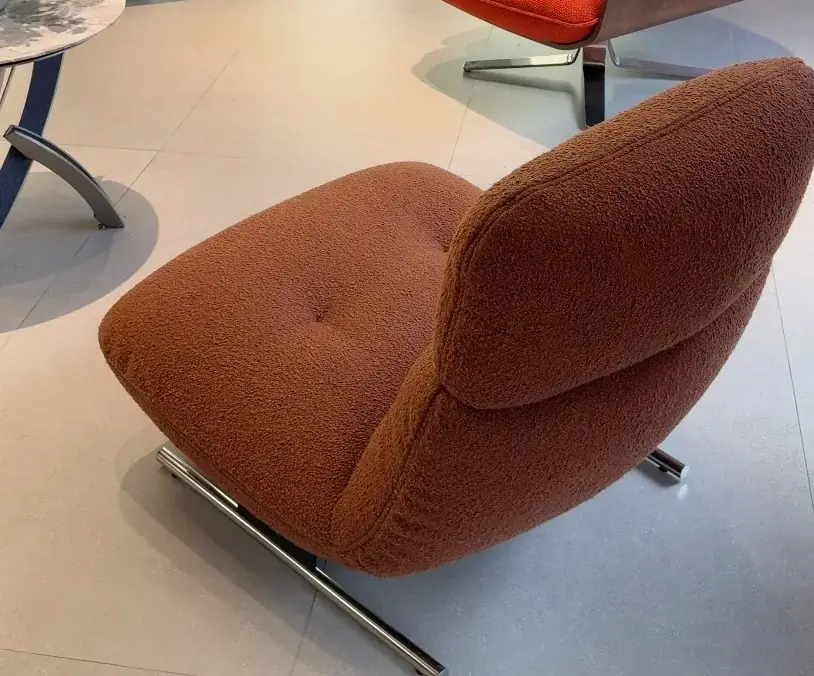
The Textured Boucle Fabric Sculptural Accent Chair is listed at 80 × 90 × 95 cm in bouclé and metal. It offers a continuous-looking upholstered form with texture on a substantial chair. That can be an attractive presence in a reception group. A buyer should look at the front, inside arm and areas where clothing may catch against the textile. Mark the places where the upholstery bends over a corner. A report on a flat sample may give the team a useful baseline without showing what those edges will look like after cleaning and ordinary use.
Imagine the day an independent hotel reopens its lobby. Guests in denim stop for a few minutes at a time, people pass the seats with bags and staff clean in the short gaps between check-ins. If the proposed bouclé is pale, ask the textile supplier which evidence it can provide about dye transfer and surface behavior, and get the chair maker's instructions for the exact finish. Check the way the seam is made on a representative upholstered chair. A broad material description will not describe how a guest's clothes rub against the edge when they turn to stand up.
Walk through the hotel lobby as a visitor would and see which part of the 90 cm-deep chair is closest to traffic. A projecting arm could get bumped by a suitcase even if the cushion feels protected. Check what happens at the side from which people normally sit and the point where they hand something to a companion. If the same model is under discussion for a quiet lounge off the reception hall, keep those two placements distinct on the purchase brief. The chair in the second zone may have less traffic brushing along its outer side, even if the number of people sitting in it looks similar.
Identify each upholstery face on the leather and bouclé lounge chair
The Curved Leather Modern Lounge Chair with Metal Legs is listed at 70 × 75 × 80 cm. The material field includes leather, bouclé and metal. Ask which components and visible faces carry each upholstery before you write the brief. In a hotel suite you might want a smooth surface where staff can readily reach each day and see more texture along the outside back. That is a design intention. The selected version and corresponding care requirements need confirmation with the maker.
Check what happens where those two surfaces meet. A staff member may be able to apply a supplier-approved cleaning method to one part and need a different approach on the neighboring textile. Make a note about the join according to the manufacturer's guidance and ask for the cleaning method for both finishes before ordering. In a repeat purchase, recheck that the new upholstery approval still applies to the finishes used on the earlier sample. It is easy to remember the look and lose the individual reference for a small area beside a seam.
Bring the housekeeping lead to that sample check. If the selected version is intended to be wiped between appointments, ask which approved procedure can be done on the exposed corner without spreading residue toward the second material. Let the supplier know what is already used in the property and check compatibility with the two exact finishes before relying on it. The working brief can then name two surfaces and the expected care for each. A hotel can also move a mixed-finish chair to a zone with fewer spills if its current maintenance routine suits another model better.
Read the test method before comparing hospitality upholstery numbers
The Association for Contract Textiles performance guidelines differentiate textile construction, intended application and environment. Those choices matter to which voluntary guideline applies. Start with the proposed fabric's exact structure and use. Ask for the method, result and material identity on the same evidence. An abrasion figure by itself won't show how the textile fares in a place with strong daylight or routine cleaning.
Keep abrasion, dye transfer and fading on separate lines in the textile review
ACT's indoor woven abrasion guideline for high-traffic use lists different test methods and cautions against reading abrasion results as a prediction of service life. Martindale cycles and Wyzenbeek double rubs should not be converted into one comparison figure. ACT's separate crocking guidance addresses dye transfer from a textile surface when rubbed. Ask what the results actually cover if the hotel is picking a pale chair, a chair next to dark garments or a fabric whose appearance needs to remain consistent over time.
At a hotel with a handsome south-facing guest suite, the team may want a textured chair for occasional reading next to a broad window. Its material might receive relatively little rubbing from passing coats yet sit in light for much of the day. Ask for the relevant lightfastness evidence for the exact chosen color and hold a representative sample exposed to the room's light just long enough to judge appearance. That second check looks at the color in the location. It cannot predict the rate of fading there. Use the approved mock-up to identify which fabric face is by the window and keep the requested documentation with the order.
Ask the supplier which material the test report actually describes
HEZEN CASA's Caramel Boucle Ergonomic Accent Lounge Chair lists a 75 × 80 × 85 cm outline, with leather, tweed and wood in its materials field. The product name and materials field use different upholstery terms. Ask for the actual surface designation and what it covers on your selected piece. A report about one cloth is only useful after the buyer can pair it with a confirmed textile reference. An upholstery approval from a catalog image is not enough to carry product requirements from the showroom to an order.
One way to prevent confusion is to point from the drawing to the physical sample. Give each reference a clear description on the purchase record. If the report describes a different weave, product or color than the one being submitted, ask the source for clarification before approving the match. There is no reason to transfer a report to another specification based on a general word such as tweed or bouclé. Have the product team confirm whether the relevant performance evidence is available for the chosen version.
Ask how much of the furnished prototype will be reproduced in the ordered chair. The textile on the curved back of the 75 cm-wide caramel example may be the face you intend to use as a visual marker. The part you most need to approve for cleaning could be the arm or seat instead. If a material has a distinct finish or backing, keep that identifier beside the surfaces on which it was approved. Color alone will not help a later buyer identify which report belongs with which finish. Keep a representative swatch packaged with its own product information and cross reference it to the exact chair model for the rooms.
Confirm the upholstery on the actual hospitality lounge chair before a repeat order
Take the physical chair, selected color sample and order reference through the same review. Look at what has been approved on each face. Compare the seating position and finish in the planned room. Ask which additional documentation is needed under the property's purchase requirements and at the destination. Textile test results and finished furniture requirements may involve separate checks. Avoid putting a general claim about the assembled chair on a schedule until the product and destination requirements have been independently established.
Decide whether the sheepskin lounge chair belongs in a quieter seating zone
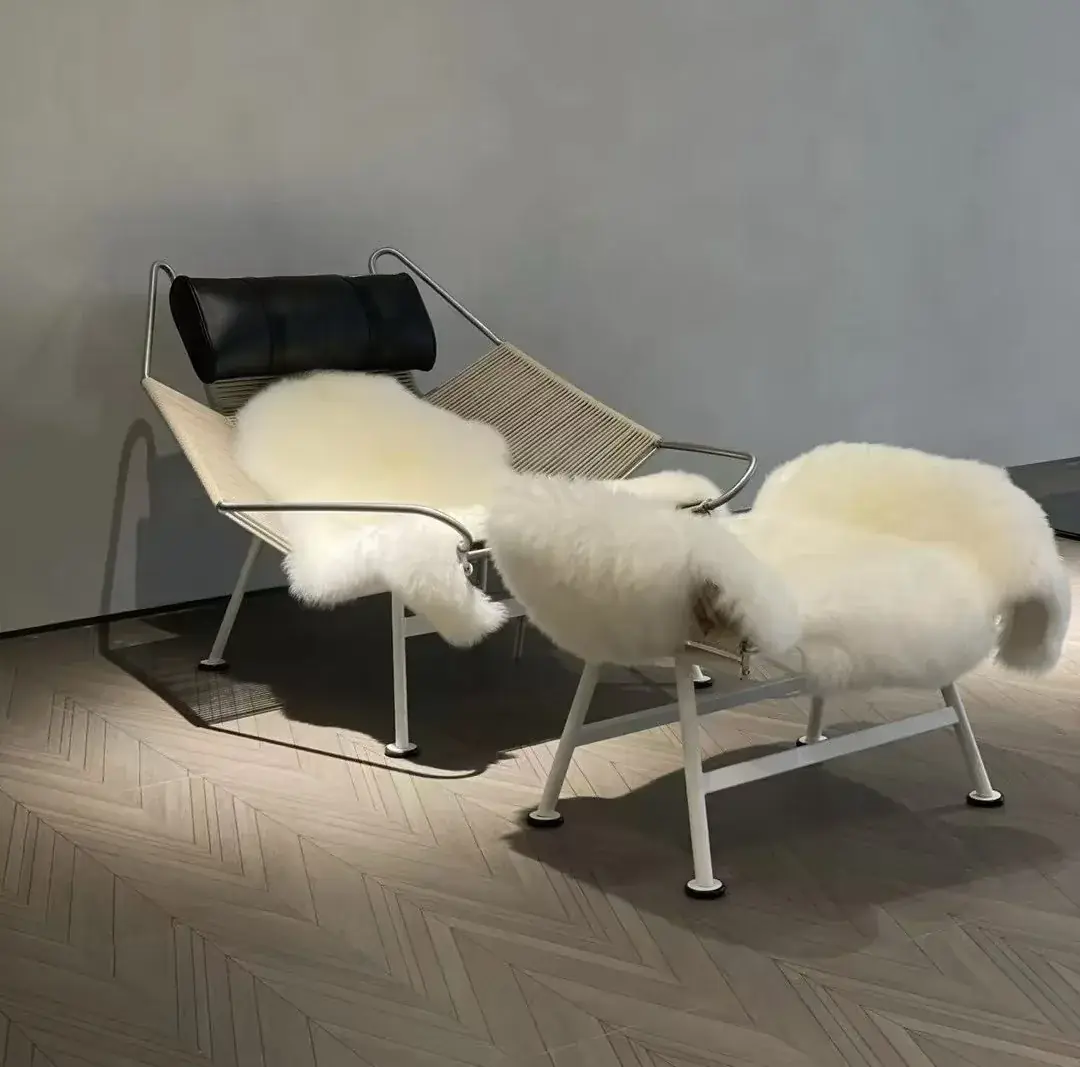
The Metal Frame Rope Weave Sheepskin Accent Lounge Chair is listed at 75 × 80 × 90 cm, with metal, sheepskin and rattan in the materials field. That makes it a distinct option to discuss when a suite wants noticeable texture and the maintenance crew is prepared to handle the selected materials. Check what the supplier recommends for each surface and how the finished furniture will be used. A woven-textile guideline does not establish performance for sheepskin. If staff cannot maintain the specified version across the property, ask whether a different chair works for the higher traffic zone.
Use the compact sculptural lounge chair to compare where a textile meets the frame
The Italian Minimalist Sculptural Lounge Chair is a 66 × 70 × 78 cm fabric and solid wood model. It gives the team a separate scale and frame appearance to compare with the larger bouclé piece. Examine the chosen version where the textile meets exposed trim and on the part of the seat where guests are likely to slide in. If the same selected textile is being considered on two forms, see how its appearance treats the different shapes. A nicely tailored edge and an available care routine matter to the procurement decision alongside the fabric evidence.
For a rollout with that compact chair in two colorways, retain a clearly labeled finish reference for each. The light fabric where people pass with drinks might make a worn arm easier to notice. A darker version by the window may need a close look at the chosen color in strong natural light. At the sample check look at the proposed seat alongside other materials, then use the selected manufacturer's documentation to settle the specific decision. Where a replacement order is likely, record the date, exact source reference and surfaces of the approved choice so there is something clear to go back to after the project has opened.
HEZEN CASA manufactures and supplies furniture in Foshan and describes its project furnishing services alongside its chairs. Establish who approves the factory sample, what information needs to stay with each property and what should happen if a proposed fabric changes. The site’s guide to working with a custom hotel furniture manufacturer covers the broader furnishing arrangement. For these chairs, have the approval follow the specific product, upholstery and room type so the supplier sees why the details matter.
Give operations the same swatch reference that the buyer uses. A photograph of the chair with its key surfaces marked can help the handover staff get the relevant cleaning information quickly. Keep a record of any finish the team declined and why, especially in the lobby where the furniture could get more frequent use. The paperwork is doing its job if somebody who was never in the sample meeting can identify the upholstery, the chair and the care information that belongs to it.