From the approved furniture to the buyer’s product record
Align Your Product Information With an OEM Furniture Manufacturer
A retailer can rename a furniture collection for its own audience, but the new sales name must still lead back to the right supplied product. Brands and distributors discussing an order with an OEM furniture manufacturer should agree how the accepted furniture, customer description and shipment identity correspond. The brand’s presentation should never imply a feature that the supplier has not confirmed.
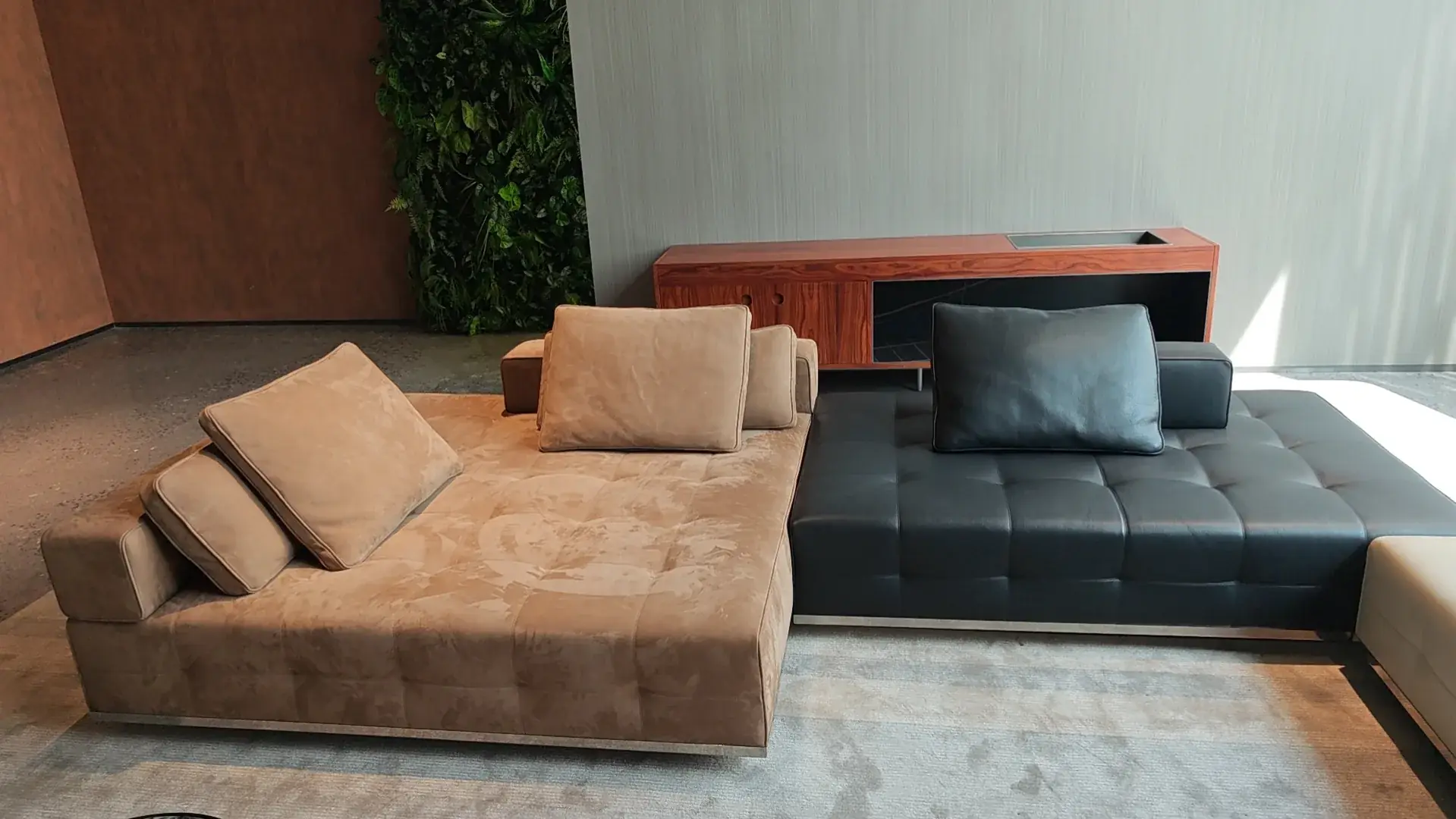
Use HEZEN CASA’s mixed-covering modular sofa, low Nappa bed, wood-and-fabric dining chair and asymmetrical sideboard as concrete references. Discuss the intended arrangement through the custom furnishing service. Private-label packaging, branding, documentation and other OEM services should be requested and confirmed individually, not assumed from the presence of a customization service.
An OEM furniture manufacturer needs the product identity behind the brand’s sales name
A sales name can help customers navigate a collection, but it is not enough to define an order. Associate it with the supplier’s actual reference, accepted dimensions, material arrangement and any confirmed changes. This allows a purchasing colleague to distinguish two visually similar items without relying on memory or an internal nickname.
For a distributor launching a collection, the danger is often a gradual loss of detail. The supplier describes a mixed-covering sofa; a buyer shortens the description; a designer creates a sales card that says only leather. By the time a customer orders, the presentation may no longer describe the accepted furniture accurately.
Keep one agreed product description as the basis for customer materials and ordering. It need not be a complicated system, but it should preserve the information that affects the supplied object. Marketing language can be added around that description without replacing the material, dimension and component facts.
The mixed sofa needs a covering map behind its collection name
The sofa is listed at 300 × 180 × 85 cm with camel suede, black top-grain leather and solid wood. Its visible contrast is part of the product identity. If the brand gives it a new name, retain the covering arrangement and the actual configuration in the internal record that supports the sales description.
A customer-facing description should not imply that every surface is leather or that every illustrated section is independently orderable. Ask the supplier to confirm the accepted components and available options. If the brand offers alternatives, each should be identifiable without allowing an unapproved combination to appear as a standard choice.
For a showroom, the display label and the order form should refer to the same sofa version. If the displayed item differs from the version being offered, explain the difference clearly. A familiar collection name should not hide a change in covering, configuration or included components.
If the brand sells the sofa through several dealers, provide the same accepted material description to each. One dealer should not describe the camel areas as leather while another correctly identifies the mixed covering. The visual distinction is commercially meaningful, so the description should remain attached to the furniture even when dealers use different room photographs or presentation styles.
Build furniture descriptions from the supplied specification, not from a styling image
A product image can show how the furniture looks, but may also include surrounding objects that are not part of the order. The brand needs to identify the supplied furniture independently from the styled scene. This is particularly important when the description is being shortened for a printed card, online listing or wholesale presentation.
| Furniture reference | Customer-facing fact to preserve | Information requiring separate confirmation |
|---|---|---|
| Mixed-covering modular sofa | The combination of suede and leather | Exact sections, supplied accessories and available configurations |
| Low Nappa bed | The upholstered form and selected size | Mattress opening, support and included components |
| Wood-and-fabric dining chair | The actual materials and outside dimensions | Seat dimensions, performance evidence and project suitability |
| Asymmetrical sideboard | The selected exterior and material combination | Usable compartments, hardware and any revised interior |
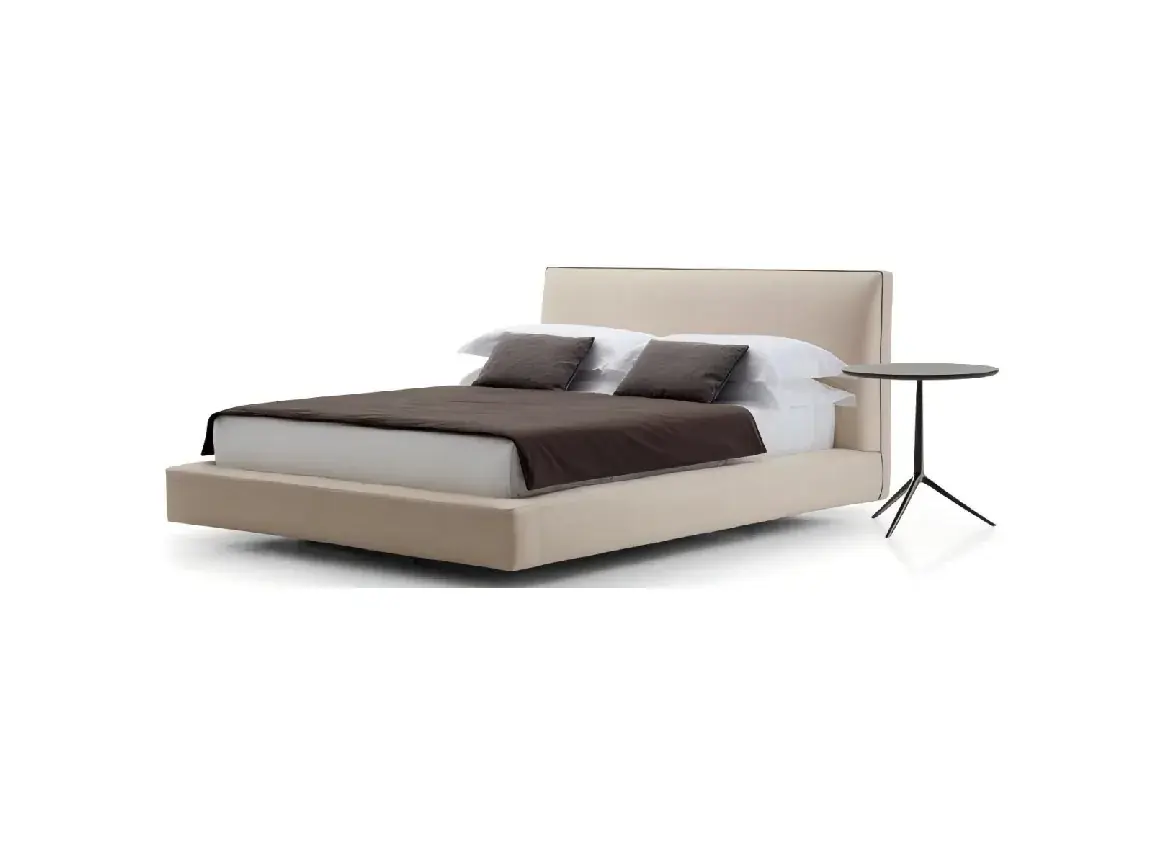
The low bed’s overall dimensions are not a mattress specification
The beige Nappa bed is listed at 220 × 180 × 85 cm with solid wood and Queen and King options. If the brand prepares a size chart, distinguish the selected bed’s external dimensions from the actual mattress opening and support arrangement. Obtain those details for the version being offered.
A distributor serving several markets should be especially careful with familiar size names. The brand should not substitute a local assumption for the supplier’s confirmed dimensions. The sales team needs the actual accepted information so that it can answer a buyer’s fit question accurately.
The same principle applies to included components. If a mattress or other element is not confirmed as part of the supply, it should not appear in the brand’s description as included. A styled photograph and a broad bed name cannot settle that commercial detail.
A bed comparison chart can retain separate entries for the available options rather than placing several size names beside one unexplained dimension. Ask the supplier to confirm the information for each version the brand intends to offer. If only one version has been accepted, publish that supported option instead of presenting a wider range as ready for ordering.
The dining chair’s appearance does not establish a commercial performance claim
The wood-and-fabric dining chair is listed at 50 × 55 × 90 cm. Those outside dimensions are useful facts to retain in the brand’s product record. They do not establish seat height, a load rating or suitability for every commercial setting. Request the evidence required for the intended use before making those claims.
A dealer selling to a residential buyer may need a different discussion from a dealer supplying a dining venue. The product description should remain accurate in both cases, while any project-specific acceptance requirements are assessed separately. Do not turn a style-led collection label into an unsupported declaration of contract suitability.
If the brand requests another fabric or finish, identify the accepted alternative with the chair record. A photograph of the original covering can remain useful as a shape reference, but should not be allowed to misrepresent the material that a customer will receive.
Agree the OEM furniture information that belongs with the shipment
A buyer may want a brand item code to appear alongside the supplier reference on approved documents or package identification. Ask whether that arrangement can be provided and how it will correspond to the actual packages. The purpose is to connect the accepted product to the delivered goods without losing either party’s reference.
For the modular sofa, one customer-facing item may involve several supplied components. For the bed, the headboard and frame may need identifiable assembly information. Obtain the actual packing and component arrangement rather than inventing package counts from a product image or assuming the same arrangement applies across the collection.
The International Trade Administration’s export-document overview distinguishes the commercial invoice from the packing list and explains the latter’s package-level detail. For this furniture order, agree the actual documents with the supplier and logistics provider. A brand’s internal product code should support clear identification, not replace the required transaction information.
The sideboard’s sales identity should lead to the correct interior proposal
The asymmetrical sideboard is listed at 180 × 45 × 80 cm with dark wood veneer, solid wood and multiple compartments. If the brand requests a revised interior, keep that proposal associated with the selected exterior and its accepted description. Two cabinets can look similar from outside while representing different storage arrangements.
A dealer responding to an order question should be able to identify which interior the customer purchased. The supplier should also be able to connect the dealer’s item reference to that version. An internal name such as large cabinet is not sufficiently precise when several finishes or arrangements are being discussed.
If no interior change has been confirmed, describe the listed furniture without inventing usable dimensions or adjustable features. The brand can explain the intended storage role while leaving specific fit questions to the actual confirmed information. This protects the customer from buying on the strength of a feature that was only suggested during development.
For a dealer handling both the original sideboard and a confirmed custom interior, the exterior photograph may not be enough to distinguish the orders. Keep an additional reference that identifies the interior arrangement. That information can remain concise, but it must let the sales and purchasing teams determine which cabinet was selected without asking the customer to repeat the entire design discussion.
Keep the approved furniture images aligned with the version being sold
A brand may receive a mixture of reference photographs, sample images and proposed finish illustrations. Establish which images represent the accepted product and what permission applies to their use. Do not assume that a supplier’s presentation automatically grants every form of image or design use required by the brand.
For the mixed sofa, an image showing the accepted covering arrangement should be distinguishable from a proposed alternative. For the bed, a photograph should not be paired with dimensions belonging to another version. For the chair, a changed fabric should not be described as the original material merely because the shape remains familiar.
A revised chair or sofa option should not silently overwrite an existing order
When a brand updates its collection, decide which orders use the previous accepted version and which use the new one. Keep the corresponding furniture references available. A customer who ordered the earlier sofa arrangement should not receive the revised arrangement simply because the brand’s latest sales presentation has changed.
For the chair, a new covering may be offered as an alternative rather than a replacement. Make that distinction clear in the ordering information. The supplier and the brand should be able to identify the intended choice without interpreting the date of an image as an approval instruction.
The guide to repeat furniture orders is useful once the collection begins to generate additional purchases. Retaining the accepted version helps the brand connect new orders to real supplied furniture rather than to a name that may have evolved.
Publish the brand description only when the furniture facts are ready
Before releasing the collection to buyers, compare the sales material with the actual accepted proposal. The sofa should retain its mixed covering, the bed its confirmed size and contents, the chair its supported specifications, and the sideboard its selected arrangement. Remove claims that were never confirmed during the supplier discussion.
The brand can still write distinctive, persuasive descriptions. It can explain why a low bed suits a particular room direction or why the sofa’s contrast defines a seating group, provided these are presented as design judgments. It should not fill missing technical information with invented performance, origin, warranty or availability claims.
A successful OEM discussion leaves the brand free to present a coherent collection while preserving a precise route back to the supplied furniture. Make the customer name, the approved specification and the shipment reference agree on the same sofa, bed, chair or sideboard. That connection is what lets a collection remain understandable after its first sale.