Modular Sofa Connectors: Confirm the Join Before Changing the Layout
If two sofa sections will not stay in the intended arrangement, buying a bracket that looks similar is a poor starting point. Modular sofa connectors need to suit the exact furniture and the way its sections are meant to join. For a HEZEN CASA order, establish the selected configuration and obtain its joining instructions before ordering replacement fittings or rearranging modules. A modular description alone does not identify the hardware.
The same principle helps before purchase. Decide which sections form one seating group, which pieces remain separate and how the arrangement faces into the room. That gives the supplier a clear configuration to discuss. It also prevents a later assumption that every module can be moved to any position simply because the sofa was sold as modular.
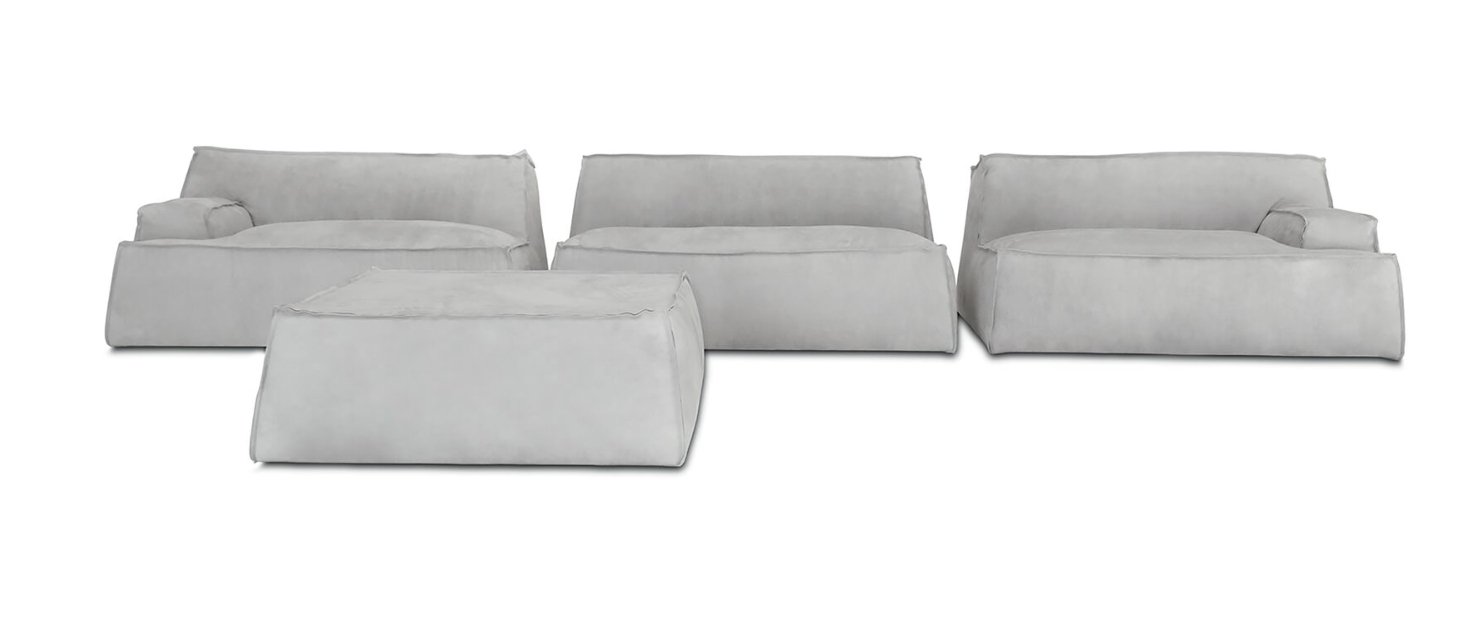
Choose the sofa arrangement before discussing modular sofa connectors
HEZEN CASA's sofa catalogue describes size customisation, modular layouts and fabric or leather upholstery choices. Those options open a useful design conversation, but the ordered version still needs to be identified. A reference picture of a similar sofa is not enough to establish the connection between two particular sections.
The Off-white Linen Fabric Modular Sofa With Side Storage Table is listed at 280 × 160 × 75 cm, with linen blend and solid wood. Its side-storage element is part of the layout discussion. Confirm where it sits in the proposed version and which seating sections are intended to meet beside it.
Mark the linen sofa's module positions from one agreed viewpoint
Use a top view of the actual proposed arrangement and identify each section. State where the room entrance, television or main view sits so “left” and “right” are not interpreted from opposite sides. The sofa's overall dimensions do not reveal the width of every module or whether an end section can swap positions.
For a buyer placing this linen sofa in an open living area, the back and the side-storage position may be visible from the dining room. Mark those relationships before discussing joins. A fitting that keeps two sections together cannot correct an arrangement ordered with the wrong end treatment or a shelf on the wrong side.
Keep the approved plan with the furniture reference, selected upholstery and overall dimensions. If a later drawing changes the section arrangement, make that difference explicit. Do not expect the person handling the connection question to reconstruct the intended version from several photographs sent at different stages.
On the linen arrangement, distinguish a surface that belongs to the sofa from a separate table placed beside it. A room photograph can make those objects look connected even when it does not explain their construction. Ask for the proposed item arrangement to identify the supplied elements, so the joining discussion does not begin with an assumed connection to a freestanding accessory.
A curved modular sofa needs its own joining information
The Olive Green Chenille Curved Modular Sofa is described with curved modules and a solid wood structure, at 280 × 160 × 80 cm. Its overall width and depth happen to match the linen sofa's listed 280 × 160 cm envelope. That does not make their components or fittings interchangeable.
Follow the chenille sofa's intended curve, not a generic straight join
A curved arrangement needs the approved relationship between its sections. Ask which edges are intended to meet and how that position is maintained on the ordered version. Do not straighten a curved group, close a visible gap or force two edges together on the assumption that the upholstery should form a continuous line.
Imagine an owner wanting more open floor for a gathering. Moving the chenille sections into a straight row may seem obvious from above, but the end shapes, backs and specified joins still matter. Obtain confirmation that the proposed arrangement is supported before treating the furniture as a set of interchangeable blocks.
Photographs can help communicate the question. Show the full arrangement first, then the particular meeting point, without lifting heavy sections or exposing the underside unsafely. The supplier needs to know which sofa and which joint are involved. A close-up with no furniture reference can be as unhelpful as a room photograph taken too far away.
With the 280 cm curved chenille sofa, also state whether the question concerns its original arrangement or a proposed new one. A joint that was intended between two neighbouring sections may have no equivalent at another edge. Clarifying that distinction prevents a replacement-parts request from becoming an unassessed change to the furniture layout.
Joining a mixed-upholstery sofa is more than matching two edges
The Camel Suede & Black Leather Tufted Modular Sofa combines suede, top-grain leather and solid wood, with a listed 300 × 180 × 85 cm outline. Its material contrast and button-tufted design need to remain consistent with the intended configuration. Identify the selected surface on each section as well as its position.
Keep the suede and leather allocation attached to the module plan
For this mixed sofa, a plan that shows only identical rectangles can leave important details unresolved. Label the proposed sections sufficiently to distinguish the suede and leather areas and any different end treatments. If a change is requested, review the resulting appearance instead of assuming the connector question is the only consequence.
A project buyer ordering more than one seating group should keep the instructions and loose fittings identified by the relevant sofa and arrangement. Do not put unlabelled parts from several deliveries into one box and assume the installer can tell them apart. Confirm the supplied parts information for each version; no shared connector standard should be presumed.
When checking delivery, note missing or unidentified fittings separately from marks on the upholstery. Preserve the original packing labels and the furniture reference where available. This gives the supplier a clearer question than a general report that the sofa “does not fit together,” which could refer to orientation, missing parts or the wrong configuration.
For the suede-and-leather sofa, keep photographs of the selected section faces with those labels. This helps identify a component without writing directly on the upholstery or pulling at a seam to find a hidden marking. Any temporary identification method should protect the finished surfaces and follow the handling guidance for the supplied furniture.
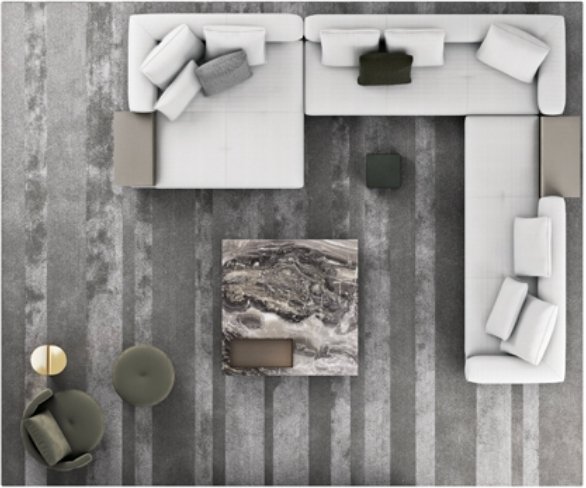
Modular sofa connector compatibility cannot be judged by appearance
Manufacturer documentation illustrates why compatibility should be specific. IKEA's VIMLE connection-fitting information identifies the supported sofa family and a cover-related exclusion. That is an example of a manufacturer's stated compatibility boundary, not a recommendation to fit IKEA parts to a HEZEN sofa.
For the linen, chenille and mixed-upholstery options above, ask for the joining method and part identification supplied for the actual order. Do not infer a fixing type from a visible gap or copy another brand's installation sequence. Similar-looking fittings can differ in the way they locate, engage or attach to a frame.
If replacement parts are needed, provide the original order reference, the affected sections and any existing part identification that can be recorded safely. Ask whether the proposed replacement is approved for that version. Avoid drilling new holes, substituting screws or attaching a generic plate before receiving suitable instructions for the furniture.
Keep the request focused. The useful answer is which part and method suit this sofa, not a list of every connector sold online. If the supplied information does not identify that detail, leave it unresolved until the appropriate source responds. A confident guess is still a guess when the attachment point is hidden inside the frame.
A larger corner sectional makes the module plan more important
The Oatmeal Chenille Curved Corner Sectional Sofa is listed at 340 × 200 × 85 cm, with chenille and solid wood. Its larger overall footprint can be useful for a substantial seating group. It also makes it especially important to understand the component arrangement before delivery or any later move.
Separate the corner sectional's overall size from its movable parts
The 340 × 200 cm listing describes the assembled furniture envelope. It does not tell a buyer the packed dimensions, the weight of each section or which pieces can be disconnected for access. Ask for those details where the delivery route requires them. Do not assume a modular description guarantees passage through a particular doorway.
For a villa with a turn between the entrance and living room, plan the access route with the actual component information. If separation is required, the responsible handlers need the approved method and a suitable place to work. Pulling joined sections across the floor is not a substitute for understanding how the furniture is meant to be moved.
After positioning, compare the assembled arrangement with the approved plan before the room fills with tables and accessories. Check that the intended sections are in the right places and raise any unclear join with the supplier. Do not add improvised restraints to hide a configuration problem.
The larger corner sectional should also be assessed in its final room position. A rug edge or a change in floor surface can affect how the sections sit relative to one another. Record the actual condition for the supplier rather than altering supports or using a connector to pull unevenly positioned sections into line.
Resolve unwanted movement before changing the furniture
If a section moves unexpectedly during ordinary use, stop treating that location as a settled seating position until the issue is assessed. Record whether movement is between sections, at the floor or around a particular support, without performing an improvised load test. Those observations help distinguish a joining question from a placement or assembly question.
With the 280 cm linen sofa, include the side-storage position in the record. With the curved chenille options, show the intended curve and the meeting point. With the suede-and-leather arrangement, identify the affected upholstery sections. Each description makes the enquiry specific without pretending to diagnose concealed hardware.
The modular-sofa layout guide helps establish the arrangement first. Use HEZEN CASA's furnishing service to clarify the proposed version and obtain the relevant joining information. Keep that information with the approved plan so a later owner or installer does not have to guess how the group belongs together.
Before buying any fitting, be able to name the sofa, identify the two sections and state the arrangement they are meant to form. If those three things are clear, the hardware question becomes much easier to answer correctly. If they are not, a different bracket is unlikely to solve the real problem.