Mixing Wood Finishes in a Home: Start with the Pieces You Are Keeping
The floor is staying, the dining chairs are new, and the sideboard you like is a different colour from both. That is a normal furnishing problem. Mixing wood finishes in a home becomes easier when you decide which surface sets the background, which furniture should stand apart, and which differences are small enough to look like an unsuccessful match.
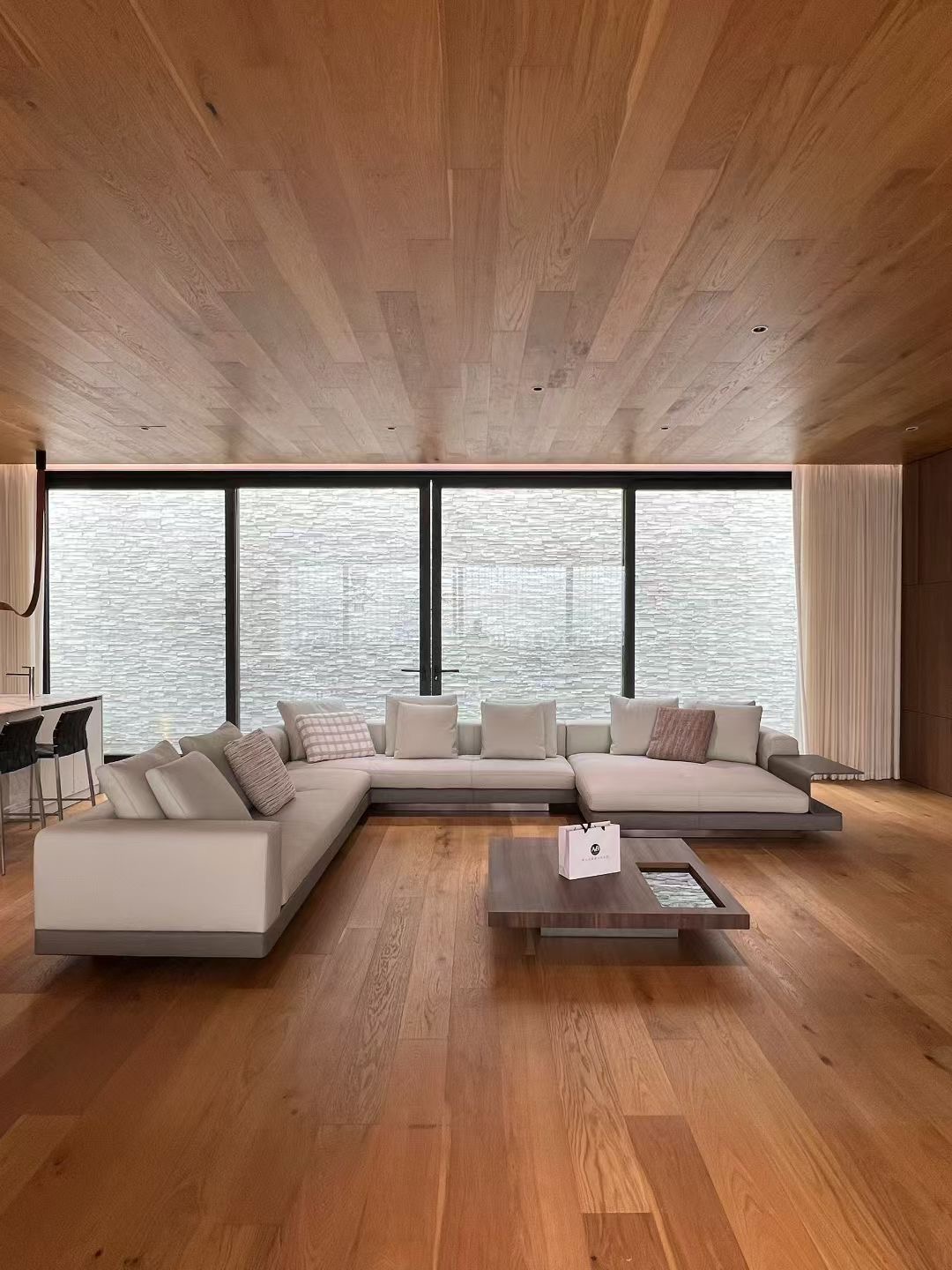
Start with the retained wood, then compare actual furniture finishes beside it. HEZEN CASA's light-oak marble-top sideboard, dark wood credenza, wood-framed dining chair and writing desk provide different routes through that decision. Their names establish useful material directions; the final relationship depends on the finishes offered for the individual pieces.
When mixing wood finishes in a home, separate colour from construction
“Dark wood” tells you something about the intended appearance. It does not identify a species, a stain formula or every part of the construction. Likewise, a grain pattern visible in a photograph does not prove that the whole cabinet is solid wood. Keep the visual choice and the material specification alongside each other without treating them as the same information.
The distinction matters when several suppliers or trades are involved. The floor contractor may describe a named timber, the cabinet schedule may identify a veneer, and the furniture selection may use a broader colour name. All three can form a convincing room, but an instruction to “match the wood” is too loose to settle what each party is providing.
For a project buyer, write two short descriptions for the retained finish: what it is, where known, and how it looks in the room. A floor might have a definite material record but an appearance altered by years of use. New furniture should be compared with its present appearance, not only with the original flooring sample filed away during construction.
Can a light-oak sideboard sit on a darker wood floor?
Yes, a lighter cabinet can stand clearly apart from a darker floor. The useful test is whether the contrast looks intentional in the whole dining area. Compare the cabinet front with the floor directly beneath it, the chairs in front of it and any timber doors alongside it. A close-up of the cabinet alone cannot answer that question.
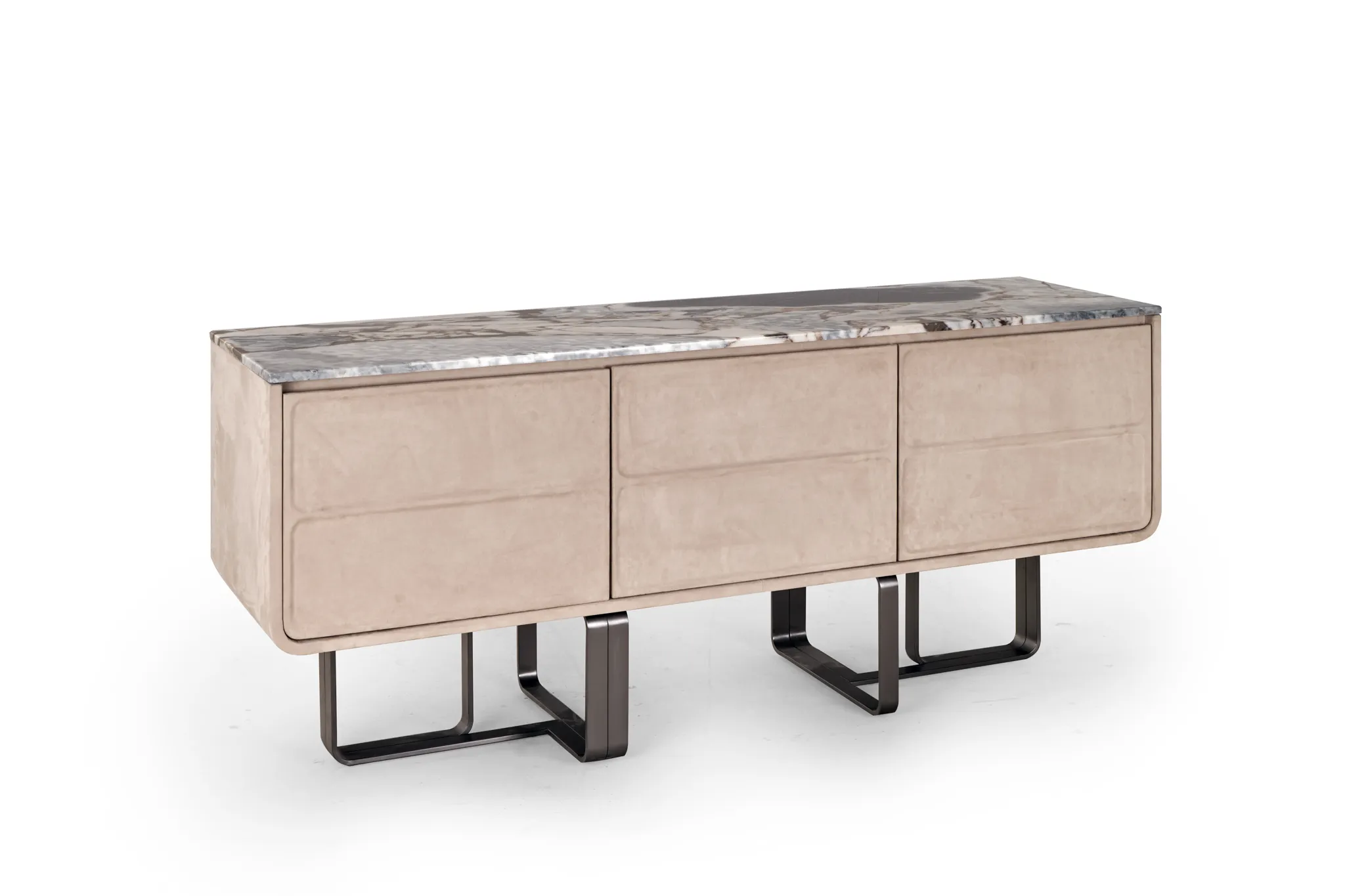
The rounded light-oak sideboard brings a second material above the wood
The Rounded Marble Top Light Oak Storage Sideboard is listed at 180 × 45 × 80 cm and described with a light-oak body and natural marble top. Its appearance will therefore depend on the relationship between two materials, not just the oak colour. Include the proposed stone when comparing this piece with a retained wood floor.
On a darker floor, the lighter front could create a readable division between furniture and background. Against a pale floor of a similar tone, the same cabinet might need more attention to its grain, edge and surrounding wall. Neither arrangement is automatically preferable; the decision depends on whether you want the cabinet to stand forward or sit quietly within the room.
Its rounded sides are another visible difference from a rectilinear floor pattern. Use a room view to judge that outline as well as the small samples. A finish combination that looks calm on a board may feel busier once the cabinet's shape, the stone markings and the chair backs enter the same view.
A dark credenza can balance pale dining furniture without matching it
Dark storage can give a pale dining area a more definite edge. Before choosing it, look at where else the room already has dark elements. A large dark door, a black kitchen island and a dark cabinet may group together from the entrance even if they feel separate on the floor plan.
The asymmetrical credenza needs its whole front considered
The Asymmetrical Dark Wood Minimal Sideboard Credenza is also listed at 180 × 45 × 80 cm. Its description identifies dark wood veneer and solid wood, with an asymmetrical arrangement. It offers a different visual weight from the light-oak sideboard within the same stated outer dimensions.
That makes the pair useful alternatives for a dining wall. Keep the room and furniture positions constant when comparing them. Changing the cabinet, floor photograph and chair colour all at once makes it difficult to understand which difference improved the proposal.
For a home with pale flooring and lighter dining seating, the dark credenza might be enough contrast on its own. There is no need to add a matching dark desk in the next room solely to repeat it. Repeat a finish where the furniture is needed and the relationship is visible, rather than purchasing another large object to satisfy a colour rule.
Compare wood undertone, grain and sheen as three separate choices
Two finishes can be equally light and still look quite different together. One may have a yellow or reddish cast; another may appear grey or cooler. Put them beside the retained floor sample, then against a quiet neutral background. This helps reveal whether the relationship you noticed belongs to the materials themselves or to their surroundings.
Room & Board's wood-mixing guidance suggests shared undertones as one way to connect different woods. Treat that as a design starting point. A deliberate light-dark contrast can still be convincing, and the HEZEN finishes need to be judged through their own samples rather than another manufacturer's wood names.
The dining chair's wood frame is seen in smaller, repeated areas
The Italian Minimalist Solid Wood Dining Chair combines a wood frame with an upholstered seat and is listed at 50 × 55 × 90 cm overall. Several of these chairs introduce repeated strips of wood around the table. That is a different visual effect from one broad, uninterrupted sideboard front.
Set the proposed chair finish beside the cabinet and the seat fabric. If the timber colours differ, the upholstery can provide a quieter interval between them. Look at a chair from behind as well as from the seated side, because the frame and back are often what you see first on entering the dining room.
Grain scale matters here. A strongly marked cabinet front beside a boldly patterned floor and a visually active chair frame can create more movement than intended. Instead of forcing identical colour, consider where a calmer surface would help. The relevant change might be the cabinet choice or seat fabric, rather than the wood species.
Sheen adds another layer. A glossy front can catch the windows or a pendant and appear much lighter at one angle. A quieter finish may read more consistently from the doorway. The available finish and care information should settle what is actually being supplied; an attractive reflection in a photograph is not a complete finish specification.
A marble-topped dining table changes how much wood the group shows
The Round Dark Wood Dining Table with Marble Top is listed at 160 cm in diameter and 75 cm high, with a two-tier top arrangement. It brings stone into the centre of the dining group, so its wood does not need to carry the whole relationship between the chairs and sideboard.
Compare the dining chair's frame with the table's visible wood, then step back and include the marble surface. The stone may occupy much more of the view than the wood beneath it. A presentation that shows only small wood samples can therefore overstate a difference that is modest in the assembled group, or overlook a much stronger contrast between the two stone surfaces.
For an open dining area, show the light-oak sideboard and this table together before deciding that their woods are incompatible. The lighter cabinet could remain distinct while the darker table structure relates to other dark details. If the marble patterns compete, address that specific combination. Adding another stain colour would not necessarily solve a disagreement between two prominent stone tops.
Let a home-office desk relate to the house without copying the dining room
A desk behind a door has more independence than one visible from the living area. Establish that sightline before trying to match it to the sideboard. If only the desktop edge is visible through the doorway, its form and relationship to the door frame may matter more than a close colour match to distant dining chairs.
The 160 cm writing desk introduces a broad horizontal wood surface
The Italian Minimalist Designer Writing Desk is described as solid wood and listed at 160 × 70 × 75 cm. Its desktop will be seen under a different angle of light from a vertical cabinet front. Compare the proposed finish in that horizontal position, including how it looks with the intended task light.
For a purchaser furnishing a residence in two stages, this desk may arrive after the main dining furniture. Retain the approved finish references from the first stage, but also review the installed room. A later desk should join the actual home rather than an idealised image from the first presentation.
Do not assume that a matching descriptive name makes the desk and credenza the same finish. If a close relationship is essential, identify what can be offered and compared before final approval. If the options differ clearly, decide whether that contrast suits the office instead of asking for an undefined “almost the same” result.
Resolve a wood-finish disagreement before it reaches the order
When two people disagree about a combination, first make sure they are looking at the same references. A phone photograph of a warm oak sample and a laptop rendering of a dark credenza are poor grounds for a precise comparison. Bring the identified references together and view them under the same light.
The furniture material schedule should connect each selection with its room and item. Keep the floor reference separate from the furniture finish, and record whether the intention is a close relationship or an obvious contrast. HEZEN CASA's furnishing service is a place to establish the offered options for the selected furniture.
Before approving, remove a finish from the board and ask what changes. If the room becomes clearer without it, the problem may be one unnecessary variation rather than the whole mix. Keep the wood combinations that have a useful role, allow natural differences within the agreed selection, and settle any essential matching requirement while there is still time to make a deliberate choice.