Stone selection and receipt
Working With a Marble Dining Table Supplier From Surface Approval to Arrival
The marble table in a reference photograph is not a complete supply specification. Interior designers, importers and villa buyers need to identify the proposed stone appearance, the matching base, the included components and the delivery arrangement. Begin with HEZEN CASA’s round dining tables, then confirm which details describe the actual order before approving a shipment.
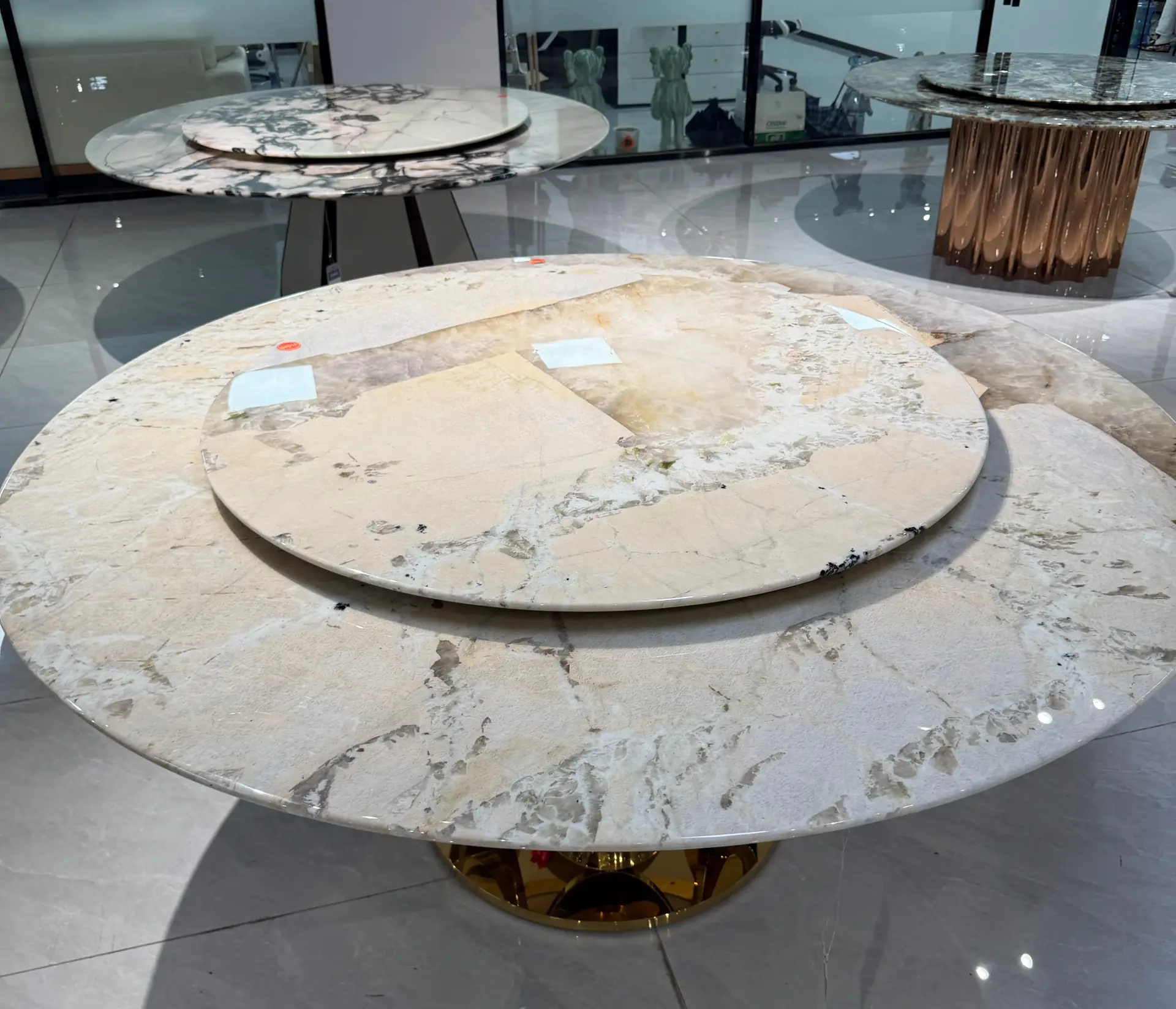
The Ø150 cm natural marble table with a lazy Susan, Ø160 cm dark-wood-frame marble table and Ø140 cm light crystal marble table offer distinct combinations. The solid-wood dining chair and upholstered dining chair provide two actual seating options to review alongside them. Do not finalize the tabletop separately from the furniture and components it must work with.
A marble dining table supplier should distinguish the reference from the supplied top
Ask what the product image represents and how the proposed stone for the order will be approved. The buyer needs to know whether an image is a general design reference or a representation of the specific proposed surface. Without that distinction, two parties can approve the same photograph while expecting different degrees of visual correspondence.
For a villa dining room with quiet surrounding finishes, the stone may become the main visual element. For a furnished apartment, it may need to sit comfortably within an established palette. Review the proposed appearance in that context. A decision made from a small cropped image can overlook the relationship between the whole top, its edge and the base.
The Ø150 cm natural marble table includes a separate rotating-surface question
The natural marble table is listed at Ø150 × 75 cm with a metal base and a lazy Susan. Confirm the rotating component’s actual dimensions, appearance and supplied scope. The overall diameter of the dining table does not describe that component. Ask how it relates visually to the main surface and what operating or assembly information accompanies it.
If the buyer expects the rotating surface to share a particular pattern relationship with the top, make that expectation explicit and obtain a supported response. Do not assume a matching arrangement from the product name. The order should identify the approved combination, including any limitation on how closely separate stone components can correspond.
The light crystal marble table needs its own finish reference
The light crystal marble option is listed at Ø140 × 75 cm with a glossy marble surface, a gold-colored metal base and a lazy Susan. Its smaller diameter and contrasting base create a different composition from the Ø150 cm table. Approve the surface and metal finish together rather than borrowing a reference from another table in the range.
Ask the supplier to identify the stone and finish proposed for the actual order. A descriptive product name should not be treated as a complete geological or performance specification. Keep the approved appearance record and applicable care information connected to this version. That is more useful at receipt than a broad instruction to supply the same luxury finish.
Keep the marble tabletop and base together in the procurement record
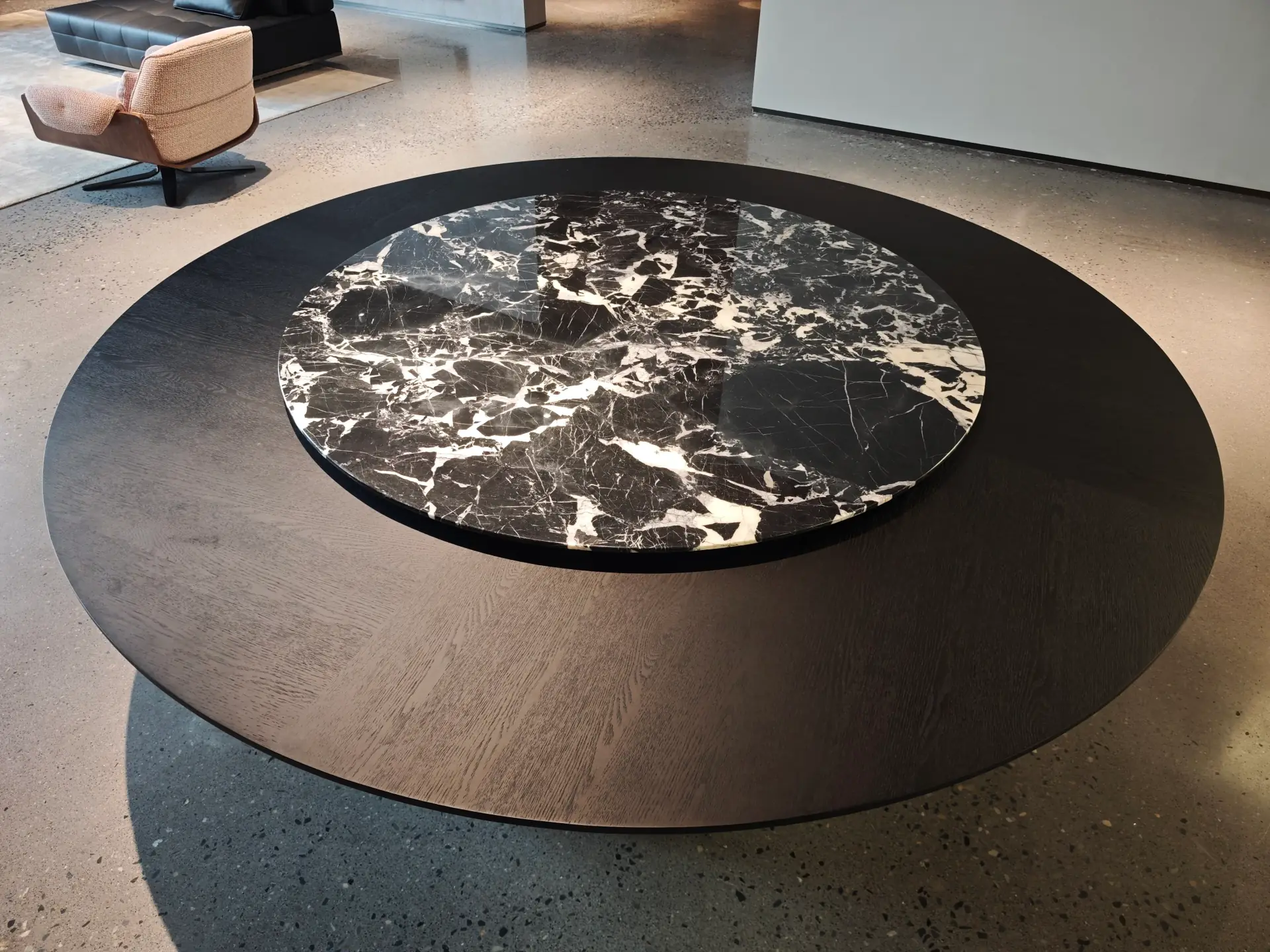
The Ø160 cm dark-wood-frame marble table is listed at Ø160 × 75 cm with dark wood and natural marble, and a two-tier construction is described. Obtain the relevant views and supplied component information. The buyer should understand which surfaces and supports belong to the order rather than inferring the assembly from one photograph.
A dark wood frame changes the visual boundary around the stone. Review the selected wood appearance with the proposed top, especially if the room includes other wood furniture. Exact matching should not be promised without an agreed reference. A deliberate relationship can be successful even when the materials are not identical, provided the buyer has approved that relationship.
Separate a changed metal finish from a changed table construction
A request for a different base appearance is not necessarily equivalent to a request for a different base design. State the intended change precisely and ask what the supplier can support. If dimensions or connections change, review the revised assembly information. Do not let a finish discussion quietly become an unreviewed structural alteration.
For a project buying several tables, record the top and base pairing for each room. Similar diameters or colors do not establish component interchangeability. The receiving team should be able to identify the correct parts without assembling combinations by visual guesswork. This is particularly important when shipments contain several furniture families and packing is opened in stages.
The dining chairs should be checked before the marble table is dispatched
The solid-wood dining chair is listed at 50 × 55 × 90 cm with fabric upholstery. The upholstered dining chair is listed at 54 × 56 × 93 cm with fabric and solid wood. These overall dimensions help reserve space, but they do not establish seat height or the relationship between the chair and the table’s underside.
Review the actual proposed pairing, including the base and any lower tier. Ask for the information needed to understand whether the chair can move into the intended position and whether the seated user has appropriate space. A tabletop diameter alone cannot resolve a conflict with the supporting structure below it.
The chair’s approach can reveal a problem hidden by an empty table photograph
For a family dining room, test the motion of pulling a chair out, sitting down and returning it. For a display suite, confirm that the presentation is also a usable arrangement rather than a tightly staged group. These are practical reviews of the selected furniture, not a reason to assign an unsupported seat count.
The table listings include seating suggestions, but the buyer should confirm the actual arrangement with the chosen chairs and room. A broader chair can change how the group feels without changing the table’s diameter. Keep any approved seating plan with the order so later chair substitutions are reviewed against the same dining arrangement.
Ask the marble table supplier what is packed, separated and identified
Before dispatch, obtain the actual packing list and component information. Confirm whether the top, base, lazy Susan and any applicable hardware arrive together or separately. Ask for packed dimensions and weights rather than substituting the assembled table dimensions. The public listings used here do not provide a complete transport specification.
The supplier should explain the protection and support proposed for the actual stone components. Do not prescribe a particular crate design or handling method from a product image. The receiving site and carrier need information that matches the shipment. A general assurance that the table is export-ready is less useful than identifiable components and applicable instructions.
The receiving area must accommodate the table before the dining room is ready
A villa project may receive the furniture while finishing work continues. Discuss where the table components can be inspected and held according to the supplier’s instructions. Do not assume a packed stone top can be stored in any available corridor or orientation. Resolve the temporary arrangement before dispatch if the final room cannot accept it.
For an importer receiving multiple orders, preserve the link between each package and its approved table. Record the relevant identifiers before packaging is removed. If a question arises about the surface or a component, photographs should show the actual item and its identifying information. That allows the supplier to assess a specific issue rather than a general report about a marble table.
Clarify the commercial delivery responsibilities separately from the furniture specification. ICC’s explanation of Incoterms rules provides background on delivery terms; the parties must agree the applicable term and named location for their own transaction. A furniture dimension sheet cannot settle those responsibilities.
Agree how the approved marble components remain recognizable after packing
A buyer who has approved a particular proposed surface needs a practical way to connect that approval with the shipment. Ask how the supplier identifies the table and its components in the dispatch record. The method should be clear enough for the receiving team to use without relying on a person who attended the original selection meeting.
For the Ø150 cm table with a lazy Susan, the record should make the complete supplied set understandable. For the dark-wood-frame design, it should distinguish the relevant top, frame and lower-tier parts. These are different assemblies, so a single generic line describing a round marble table can conceal information the installer will need.
If a project orders more than one finish, review the package identification before the shipment is mixed with unrelated furniture. The purpose is not to prescribe the supplier’s internal numbering system. It is to ensure that the buyer can associate each delivered part with the approved room and table version, including any revised selection.
A receiving photograph is most useful when it shows both the relevant surface and the item’s identity. If a concern appears after unpacking, retain the associated information while the supplier reviews it. An isolated image of stone may show a visual issue clearly but still leave uncertainty about which table or approved reference it belongs to.
Before removing temporary identifying materials, confirm the applicable instructions so the surface is not marked or damaged by an improvised labeling method. Keep the purchase record and receiving record connected electronically where possible. The actual furniture should not have to carry a permanent buyer-created mark simply because its paperwork was separated during delivery.
Keep the lazy Susan’s identity with its table rather than grouping all rotating components into one unidentified receiving lot.
Inspect the agreed stone appearance without inventing an acceptance rule at arrival
At receipt, compare the supplied surface with the approved reference and the documented appearance range. Use suitable views of the whole top and relevant details. Do not judge an overall pattern only from an isolated close-up, and do not dismiss every concern as natural variation. The useful comparison is the one both parties established before production or dispatch.
If the table includes a separate lazy Susan, inspect and identify it with the main top. Check the supplied operating and assembly information before use. If the order includes the two-tier dark-wood design, follow the actual instructions for its components. Avoid improvising a sequence or fastening method based on another table’s construction.
Pass the marble finish’s care instructions to the people using the table
The Natural Stone Institute’s care information explains general stone-care considerations. The supplied finish still needs its own guidance from the supplier. Pass that information to the household or operating team rather than leaving it only in the procurement file.
For a furnished rental or display property, the person selecting the stone may never clean it. Make the applicable care instructions available where they can be used. Do not infer resistance to spills, acids or cleaning products from the glossy appearance of the surface. Unsupported maintenance assumptions can undermine an otherwise careful purchase.
The round dining table sizing guide addresses the seating decision in greater detail. Once that arrangement is settled, release this order around a clearly identified surface, base and component set. The successful delivery is the approved table arriving with enough information to inspect, assemble and use it as intended.