Trade collections · Wholesale planning
A Wholesale Luxury Furniture Supplier Should Fit Your Showroom, Stock and Delivery Model
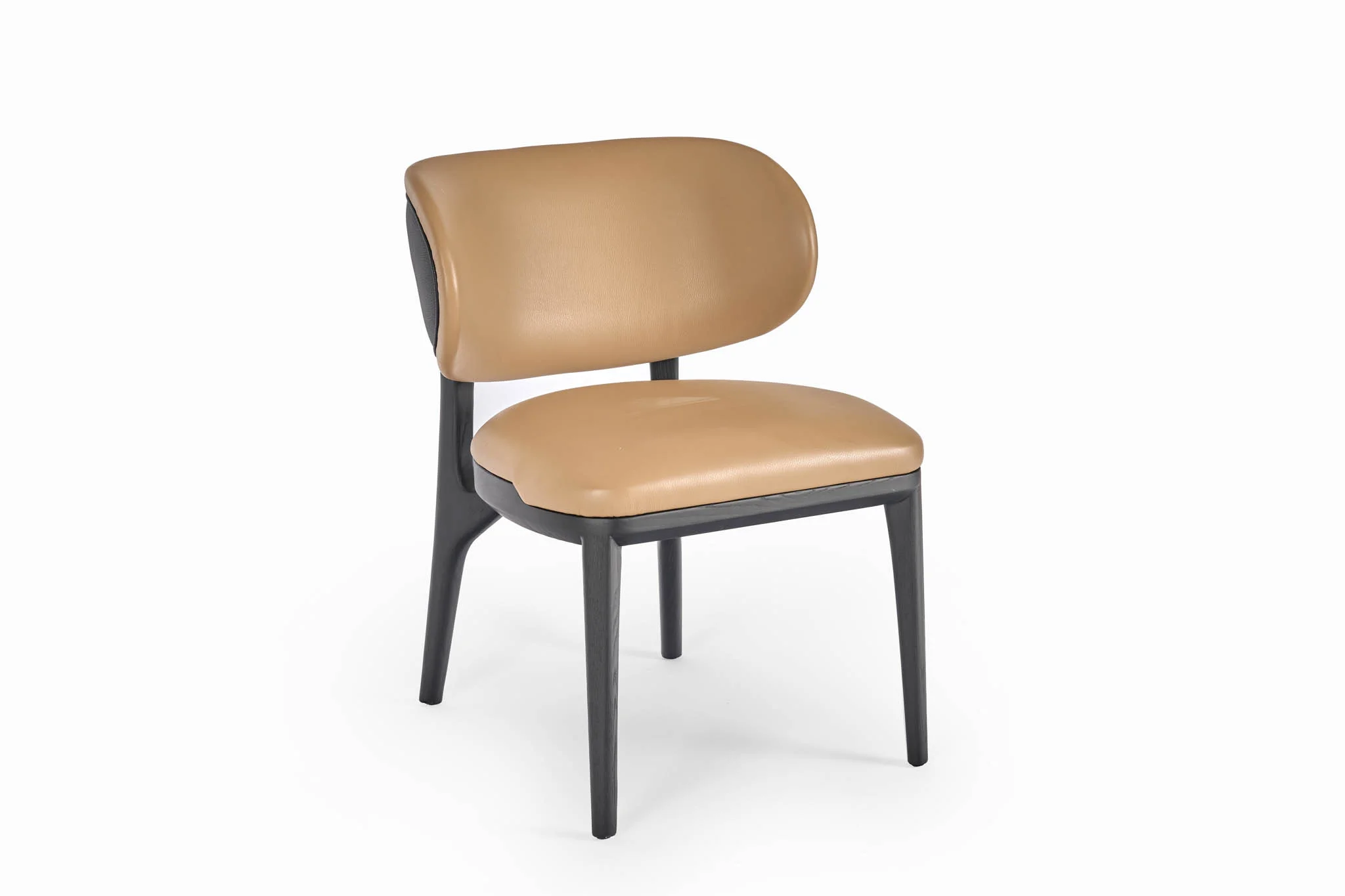
The most photographed piece in a showroom is not necessarily the piece a retailer should buy in the greatest quantity. When choosing a wholesale luxury furniture supplier, importers and dealers need to assign each design a job: demonstrate the collection, serve a repeatable customer need, or support an individual project. HEZEN CASA’s two-tone Nappa sectional, low leather platform bed and contoured dining chair can begin that discussion. Confirm the intended versions, order quantities and delivery responsibilities before comparing headline unit prices.
Build the wholesale furniture range around three commercial roles
A display piece attracts attention and communicates the retailer’s point of view. A repeat-order item needs a specification that sales staff can explain consistently. A project item can justify more individual development because it responds to a known room or buyer. One design may serve more than one role, but the purchasing assumptions should remain visible.
The Burgundy & White Nappa Leather Curved Sectional Sofa is listed at 320 × 180 × 85 cm, with dual-color upholstery and a quilted chaise area. It offers a strong visual statement for a showroom. Before treating it as a core stock item, a dealer needs to establish whether the displayed size, colors and configuration correspond to recurring customer requirements.
The Beige Plain Smooth Nappa Leather Low Platform Bed is listed at 220 × 180 × 85 cm and offers Queen/King options. Its restrained form may be easier to present in different bedroom schemes, but the size choices create a different commercial problem: which actual mattress dimensions will the retailer support, and which versions should be available only by order?
The Italian Minimalist Contoured Dining Chair is listed at 52 × 55 × 92 cm, with fabric and solid wood. A chair can complement several dining displays, yet the selected upholstery, finish and table pairing still need a stable definition. Its smaller footprint does not automatically make it a low-risk purchase if the retailer offers too many indistinguishable variations.
| Proposed role | Candidate design | Evidence the retailer needs | Commitment to avoid making early |
|---|---|---|---|
| Collection statement | Two-tone Nappa sectional | Response to the actual size, configuration and color placement | Large quantities based only on display appeal |
| Repeatable bedroom offer | Low leather platform bed | Confirmed mattress interface and selected upholstery reference | Every advertised size in every color |
| Dining collection component | Contoured dining chair | Approved table combination and material specification | Unverified promises about stackability or commercial testing |
| Room-completion option | Dark wood credenza | Storage arrangement and a defined finish sample | Assuming one piece fits every customer's wall |
Compare wholesale furniture quotes by specification and delivery scope
Request quotations for the defined versions and quantities, rather than a single price covering an open-ended family of options. For the sectional, specify the upholstery arrangement and configuration. For the bed, identify the mattress size and frame version. For the chair, identify the finish and fabric reference. A lower price is difficult to interpret when the quoted product has changed.
HEZEN CASA describes both single-piece and project orders on its website, but that does not establish a universal wholesale minimum, a guaranteed price break or stock availability for every model. Ask for the applicable quantity conditions for the proposed assortment. A mixed opening order and a repeat order of one specification may be handled differently.
Keep sample costs, any custom development, product cost, packing, freight and destination services distinguishable in the comparison. The supplier’s design, sourcing and logistics services can be relevant to a mixed collection, but their inclusion should be confirmed for the particular quotation. A service described publicly is not necessarily included in every quoted unit price.
For the Asymmetrical Dark Wood Minimal Sideboard Credenza, listed at 180 × 45 × 80 cm, request the packed dimensions as well as the furniture dimensions. The space occupied in transport and storage is part of the commercial comparison. Do not calculate it by assuming the carton exactly follows the product envelope.
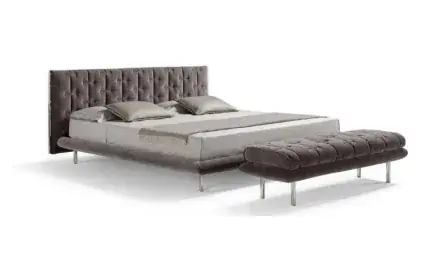
Price comparisons for the sectional should also identify which decorative cushions and chaise details belong to the quoted version. For the velvet bed, distinguish the bed from the matching bench. A retailer cannot calculate a meaningful selling package if the display includes pieces that are omitted from the purchase price. Have those components named before producing a customer-facing set description.
The statement sectional should not silently become a smaller production version
A new retailer might display the full two-tone sectional while taking orders from buyers with smaller rooms. If the supplier proposes a reduced version, treat it as a separate offer that needs its own dimensions, configuration image and price. The original showroom sample cannot demonstrate every detail of the smaller arrangement.
Sales staff should know which changes have been approved and which require review. A promise that the sofa can be made “any size” is less useful than a clear explanation of the versions that have actually been developed. This helps the retailer avoid selling a familiar photograph while ordering an unfamiliar structure.
Bed sizes and upholstery colors multiply the number of saleable versions
For the low leather platform bed, each confirmed mattress size and upholstery choice creates a distinct order specification. Consider how many of those combinations the business can describe, display and support before purchasing stock. A broad option list may be suitable for made-to-order sales while being impractical as a warehouse assortment.
The Dark Grey Button Tufted Velvet Bed with Matching Bench, listed at 220 × 180 × 120 cm, adds another decision: whether the bench is included in the retail offer. Confirm the bench specification and its quotation status separately. The customer should be able to distinguish the bed alone from the complete pictured arrangement.
In a showroom with limited floor area, one bed display might communicate upholstery and finish options through samples, while another demonstrates the complete bed-and-bench arrangement. That is a merchandising choice, not evidence that either model will sell faster. Use actual enquiries and orders to refine the range rather than inventing demand from the product’s appearance.
Delivery capability can change which furniture belongs in regular stock
A dealer selling the large sectional needs more than a warehouse position for it. The business needs a reliable way to assess the customer’s delivery route before making a commitment. A sofa that works in the showroom may be unsuitable for a building with a tight lift entrance or restricted stair landing.
Room & Board’s delivery-measuring guidance considers doorways, halls, stairs and elevators together. The useful principle for an importer is to evaluate the entire route. For the HEZEN CASA sectional, apply that evaluation to the actual protected components and confirmed disassembly options, not a guessed smaller package.
The dark wood credenza poses a different handling question. Its long, comparatively shallow form needs a defined transport and placement method. Ask what can be removed, how the finish is protected and what assembly is expected at the destination. Do not promise customers that it arrives flat-packed or fully assembled until the supplier confirms the format.
For the velvet bed and bench, establish the package count and which parts belong together. A retailer may receive several bedroom orders in one shipment, so cartons should identify the correct specification and customer allocation. A missing bench component or a mixed headboard can turn an otherwise complete delivery into a second visit.
These considerations may lead a dealer to keep one configuration available for repeat orders while selling more unusual versions as project items. That choice should reflect the business’s real receiving, storage and delivery capacity. It is not necessary to offer every possible configuration with the same availability promise.
Specify one contoured dining chair clearly before offering more finishes
The contoured dining chair can provide continuity across a showroom, but continuity depends on a defined material and finish. Retain an identifiable sample for the approved version and make clear whether alternative upholstery creates a separate order. A sales description such as “light fabric” is not a dependable reference for future purchases.
If a dealer wants the chair to accompany several tables, approve those combinations individually. The listed 92 cm overall height does not disclose seat height, and a compact-looking chair is not automatically suitable beneath every tabletop. The retailer should avoid turning a design family into a universal compatibility claim.
For the upholstery, consider the care information customers will receive. The Association for Contract Textiles explains why higher abrasion results do not automatically mean longer fabric life. A dealer should therefore obtain the relevant fabric specification and cleaning guidance rather than market the chair using one isolated test number.
The same discipline helps distinguish the chair from the leather sofa and beds in the collection. Each material needs its own description and care information. Combining everything under a broad “premium finish” label makes the range harder to explain and can create expectations that the actual order specification does not support.
The dark wood credenza can complete a room without being compulsory stock
A retailer may use the credenza to finish a living or dining display while ordering it only against confirmed customer requirements. Its 180 cm width and internal compartments make it a specific storage proposition, not a universal accessory that every sofa purchaser needs.
Show the interior arrangement and intended use in the sales material. If a customer wants a different width or equipment storage, move that request into a defined custom brief. That protects the standard version from accumulating informal variations that become difficult to price, inspect and reorder.
Use sofa enquiries and bed-size requests to plan wholesale replenishment
Separate requests for the low leather bed from requests for the velvet bed-and-bench arrangement. A customer declining the latter because the bench blocks a wardrobe is giving a different signal from a customer needing another mattress size. Recording the actual reason helps the dealer decide whether to change the assortment, the displayed layout or the explanation of available options.
Review the opening assortment by specification, not just by broad category. Record whether enquiries concern the sectional’s colors or size, whether bed customers need a different mattress interface, and whether the dining chair’s finish is the reason a combination is accepted or rejected. These observations help the next order answer real demand.
Keep manufacturing lead time, consolidation time, transport and local delivery separate when planning replenishment. The applicable schedule must be confirmed for the chosen models and quantities. A website description of global delivery is not a dated production slot or a guarantee that every finish is immediately available.
Before the repeat shipment leaves, use the retained specifications and HEZEN CASA’s pre-shipment inspection guidance to check the actual assortment. The sectional’s panel colors, the beds’ approved sizes, the chair finish and the credenza configuration should remain identifiable throughout that review.
A useful wholesale relationship gives the retailer a collection it can explain and deliver consistently. Start with a deliberate display, a limited group of confirmed repeat-order versions and clearly bounded custom options. Expand the range when customer evidence and operational capacity justify it, rather than asking the opening order to represent every possibility in the catalogue.