A Luxury Sofa Manufacturer Should Resolve Comfort Before Upholstery Is Signed Off
Two people can sit on the same sofa and reach different conclusions without either being wrong. One wants to sit upright during conversation; the other wants to curl up with a book. A luxury sofa manufacturer needs to understand that difference before a buyer approves a covering and assumes the seating decision is complete. Compare HEZEN CASA’s two-tone Nappa sectional, off-white curved sectional and tufted suede-and-leather sofa through the activities they must support. Begin with the intended posture and users, then confirm the actual seat dimensions and construction information that the public listings do not provide.
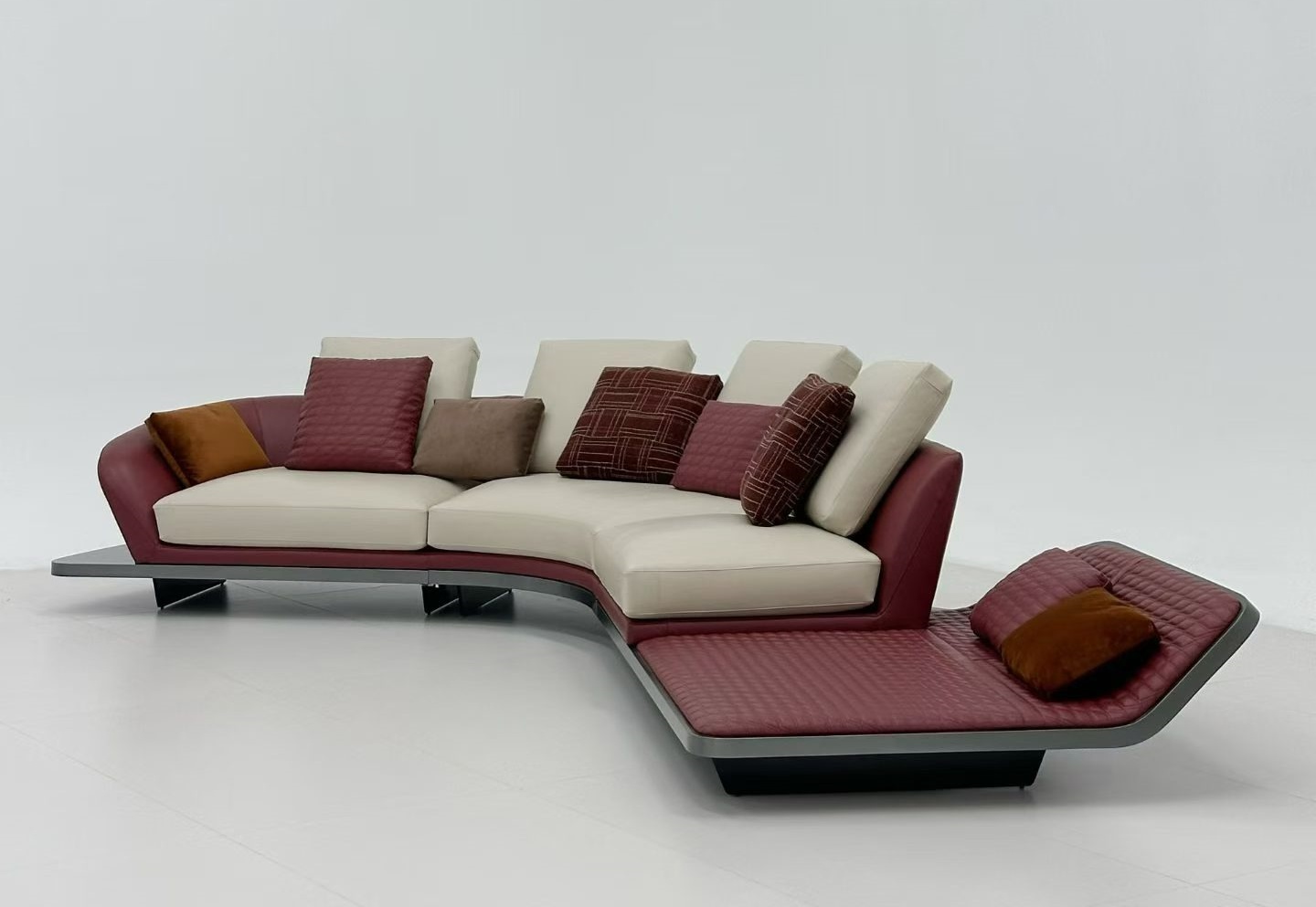
Ask the luxury sofa manufacturer which sitting position the sample represents
A sofa photograph usually presents a composed arrangement. It may include cushions placed for appearance, a chaise shown without an occupant and no neighboring table. Recreate the intended use during a sample review. If the buyer expects upright conversation, assess that posture instead of approving the sofa after a brief reclined sit.
The two-tone Nappa sectional is listed at 320 × 180 × 85 cm with solid wood. The off-white bouclé sectional is listed at 300 × 180 × 80 cm, also with solid wood. These outside dimensions help compare room scale. They do not establish usable seat depth, seat height or the support a particular person will experience.
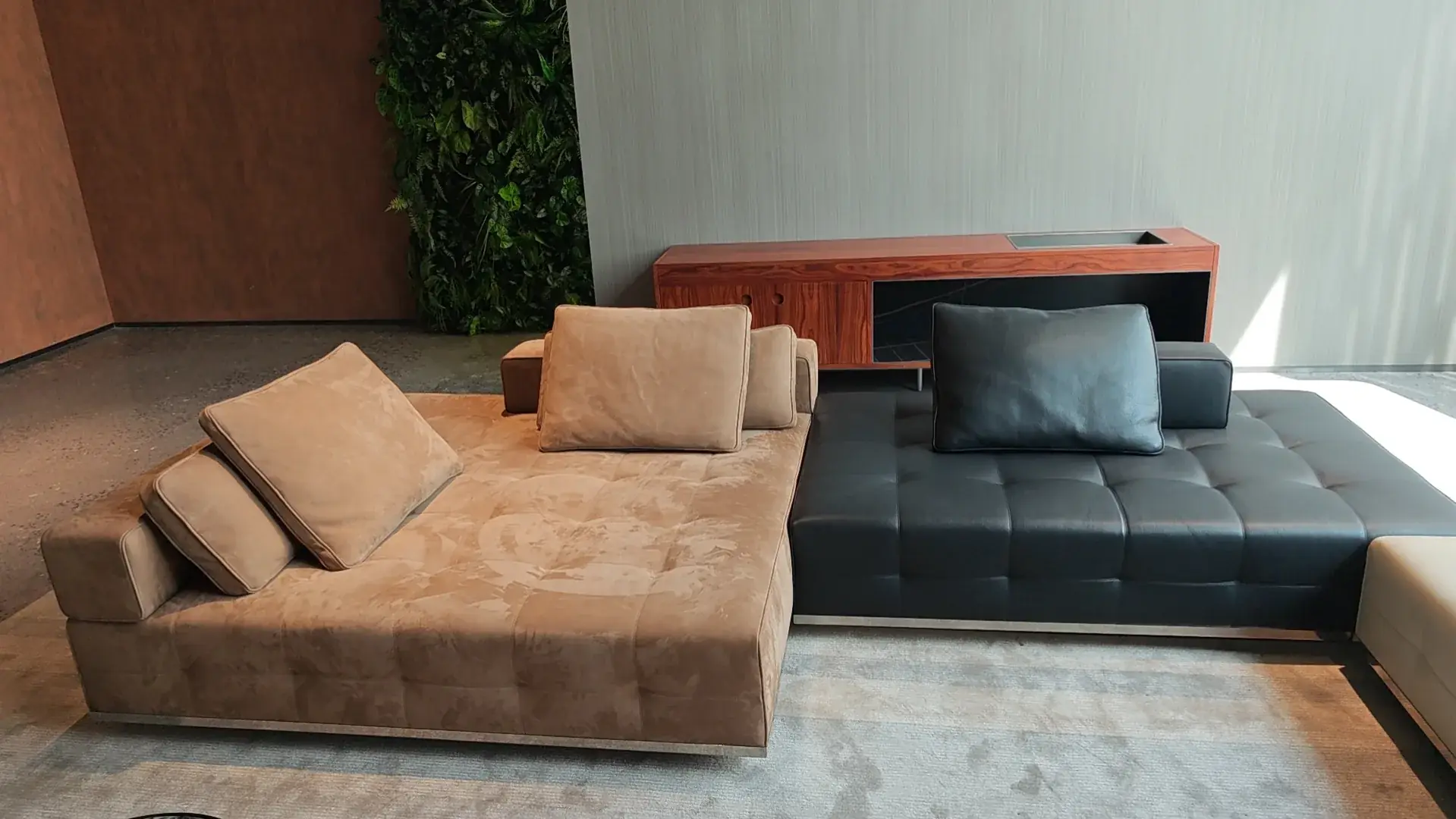
The tufted modular sofa is listed at 300 × 180 × 85 cm with suede, top-grain leather and solid wood. Its tufted surface and contrasting upholstery create another tactile and visual proposition. Review the actual sample and proposed configuration rather than assuming the similar overall envelope makes its seated experience equivalent to the curved bouclé sofa.
Upright conversation needs a different trial from chaise lounging
For a formal living room, sit as someone would while talking to another person. Notice the relationship between the back, feet and nearby seats. Ask for the relevant seat dimensions if they are not available. A buyer should be able to explain which part of the experience works or fails, rather than recording only that the sofa feels comfortable.
For relaxed use, try the intended lounging position without assuming every part of the sectional is designed for it. The chaise and a conventional seating section can support different activities. Confirm the actual component arrangement and ask how the sample relates to the ordered version. A photograph showing an extended section does not define every permitted configuration.
A couple selecting furniture for a shared lounge may need both kinds of use. If one person prefers an upright seat and another prefers a more relaxed position, identify where each will sit in the proposed arrangement. The answer may be a thoughtful combination of seating, rather than expecting one untested sofa position to satisfy every preference.
The luxury sofa’s outside height cannot answer a seat-height question
The published 80 or 85 cm overall heights describe the furniture envelope. They should not be substituted for seat-height measurements. Ask where the seat is measured and how the selected upholstery or cushion arrangement affects that reference. The buyer needs information about the surface actually used, not just the highest point of the back.
Try standing from the sofa without turning the test into a performance claim
Observe how the intended user approaches, sits and rises from the sample. This can reveal a practical preference that is invisible in a room rendering. It is not a medical or ergonomic assessment, and it does not establish suitability for every person. If a project has specific accessibility requirements, address those through the appropriate design process and documented dimensions.
A homeowner choosing a low-looking sofa may like its visual line across an open room but find the actual seat arrangement less convenient than expected. Another may prefer that same posture. Keep the aesthetic and physical decisions separate long enough to understand both. Changing a cover color will not resolve a mismatch in the sitting experience.
For an importer choosing a showroom sample, include more than one relevant user in the trial when possible. Record the posture and configuration associated with each observation. A simple average of different opinions can hide the reason they differ. The sales team needs to understand who the arrangement may suit and which questions a shopper should test personally.
Compare the curved bouclé sofa and tufted sofa where the body meets the upholstery
The curved sectional’s continuous rounded form and the tufted sofa’s divided surface invite different observations. Look at the actual junctions between cushions, back and arms. Ask which parts of the supplied version are separate and how they are supported. Do not infer internal construction or foam density from a soft-looking photograph.
On the tufted design, assess the surface while seated in the intended position. The appearance of the depressions and panel boundaries does not tell the buyer how they will feel during use. A fabric or leather substitution can also change the experience at those locations. Review the proposed covering on the relevant form before treating the material change as purely visual.
A fabric swatch cannot replace a full curved sofa sample
A swatch helps identify texture, color and a material reference. It cannot reproduce the support or shaping of the completed sofa. The off-white bouclé covering should be assessed on the curved form when that relationship matters. Likewise, the camel suede and black leather zones should be understood in their actual positions on the tufted design.
Ask for care and performance information for the proposed upholstery, but keep those documents separate from the comfort observation. ACT cautions against treating abrasion results as a direct prediction of service life. Neither a test number nor a material name can decide whether the sample supports the buyer’s preferred posture.
Compare the end seat with the center of the same sofa
A buyer may test only the most inviting position in the showroom. On a sectional, the end, corner and central positions can offer different relationships to arms and adjacent surfaces. Review the places the intended users are likely to choose. A positive impression of the chaise should not silently approve a conventional seat that has not been tried.
The two-tone Nappa design makes this especially relevant because its contrasting extended section is visually prominent. It may attract the buyer’s attention first, while other people in the household will use the adjoining seats. Ask those users to assess their expected positions. The selected arrangement should be explained as a group of seating experiences rather than reduced to one overall comfort label.
On the tufted design, compare how the material transitions relate to different positions. A seam that is visually attractive from across the room may be encountered differently by someone sitting near an edge. Record the actual observation and ask the manufacturer which aspect can be changed if needed. Do not diagnose an internal construction problem from appearance alone.
A remote buyer who cannot try the sample should recognize that limitation. Request clear dimensions and demonstrations of the proposed configuration, but avoid treating a video as equivalent to personal sitting experience. If comfort is the deciding factor for a substantial order, arrange an appropriate sample review before committing to the final version. The information should support an honest decision about what has and has not been assessed.
For a showroom display, preserve room around the sample so visitors can approach the relevant seats. A sofa pressed tightly against surrounding merchandise may prevent the very comparison the buyer needs to make. The display should let people test the intended use, including the separate chair if it forms part of the proposed conversation group.
A separate chair can solve a seating conflict that a larger sofa cannot
HEZEN’s sculptural bouclé chair is listed at 80 × 90 × 95 cm with bouclé and metal. Its more enclosed form offers a different seating proposition from a long sectional. Assess it as an additional choice within the group, without assuming its overall height reveals the seat position.
The wood-framed swivel chair is listed at 65 × 65 × 85 cm with wood, linen and metal. Its described turning function may help someone alternate between a conversation and a view, provided the actual movement and surrounding space are confirmed. It is not automatically a substitute for a fixed lounge chair.
A family room used for both television and visiting may benefit from an independent seat that can face a different direction. A small apartment may not have the space for that additional choice. Compare the actual plan and the sample experience. Adding more sofa length can increase the footprint without resolving the orientation or support that one user needs.
Test the conversation group with the chair occupied
Place the proposed chair relative to the sofa and imagine the intended conversation. Check whether people can see and address one another comfortably in the chosen arrangement. For the swivel option, confirm that turning does not bring the chair or occupant into conflict with nearby furniture. A closed footprint is only the starting point for that review.
For a designer furnishing a reception-style living room, a strong sofa silhouette may remain the visual center while the separate chair provides another posture. For a homeowner who mainly lounges alone, the chair may be less valuable than the right chaise arrangement. These decisions follow use, not a rule that every luxury seating group needs the same pieces.
Record the sofa configuration that produced the accepted sitting experience
Once a sample works, identify the configuration, upholstery and cushion arrangement reviewed. If the order changes any of those details, ask whether the earlier observation remains applicable. A buyer who approves one sample and orders a materially different version should not assume that the same comfort judgment transfers automatically.
The record should distinguish observed preferences from unverified construction statements. The buyer can say that the sample supported a particular seated activity. Claims about internal materials, frame construction or tested capacity require the corresponding specification or evidence. Avoid converting a positive sitting experience into a broad durability guarantee.
For delivery, retain the configuration identity through the actual packing and assembly information. The sofa should arrive with the parts and instructions needed to reproduce the approved arrangement. Ask how the selected components are identified and supported during handling. The published dimensions do not establish the package sizes or the method of joining the sections.
If a room layout changes after the sample review, reconsider where the approved seating positions will face. A chaise moved to the other side can affect the way people approach and use the sofa. Confirm the proposed version rather than treating the room change as unrelated to the furniture decision. Comfort belongs to an arrangement in use, not to a product name alone.
The daily-use furniture discussion extends this approach to chairs, tables and beds. For the sofa order itself, keep the final decision precise: identify which sample, posture and arrangement worked for the intended users, then ask the manufacturer to define that version clearly. Upholstery approval becomes more useful once the people who will sit on the furniture have a reason to accept it.