Make the two offers comparable
Compare Offers From a Luxury Furniture Supplier in China Beyond the Total Price
Two furniture offers can name the same rooms while supplying different things. For an overseas procurement manager, designer or distributor, the first task is to establish whether the quoted sofa, bed, dining table and cabinet actually represent the same scope. A luxury furniture supplier in China should be evaluated against that defined order before the buyer compares totals.
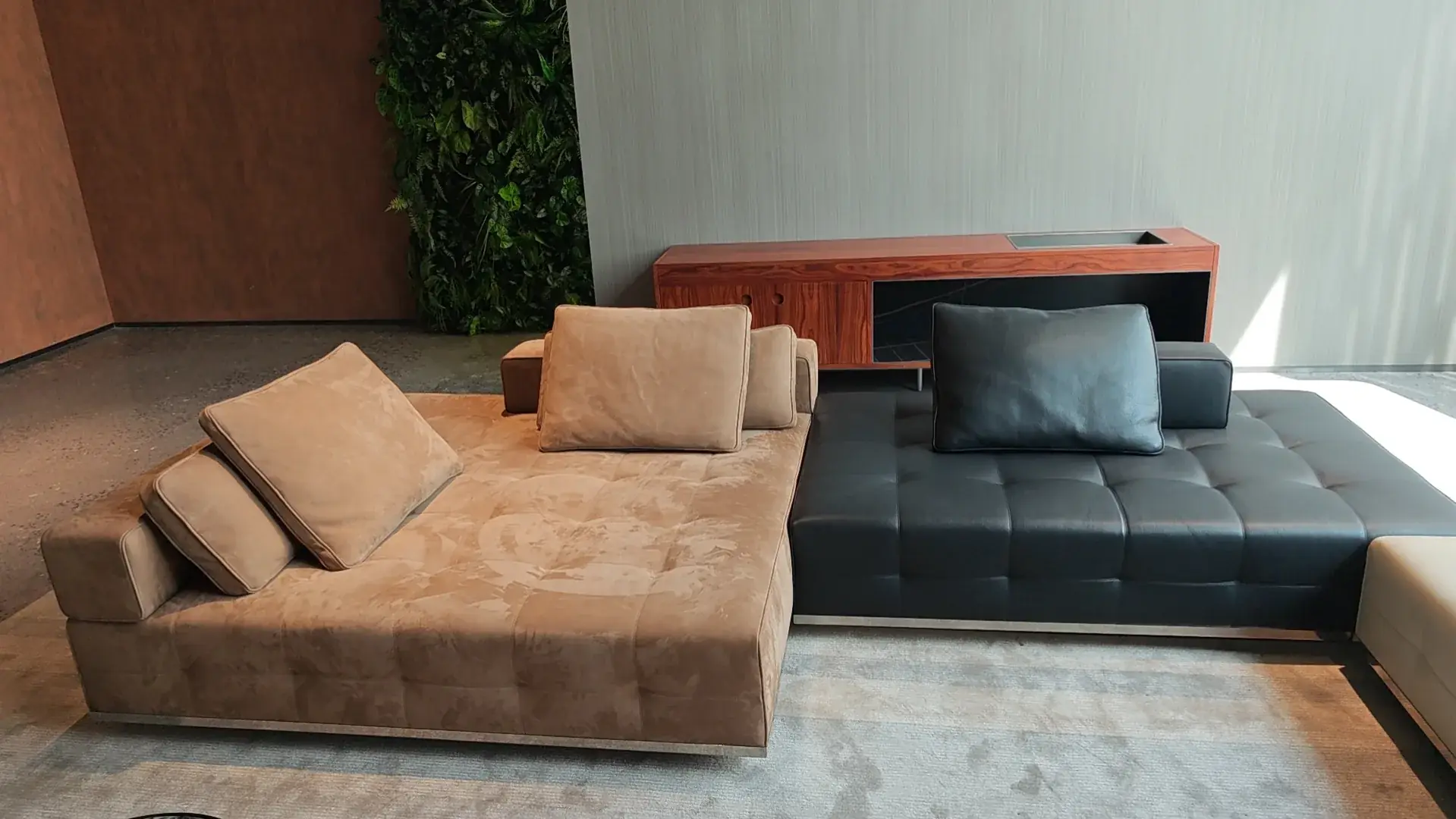
HEZEN CASA offers useful starting references in its suede-and-leather modular sofa, button-tufted velvet bed, round marble dining table and wide leather dresser. Discuss requested changes through the furniture customization service. These references identify the furniture being considered; they do not establish a public price, an included accessory package or a delivery commitment.
A luxury furniture supplier in China needs a comparable furniture scope
Start with the selected version of each item, not a broad room label such as “living room set.” The sofa, occasional furniture and decorative objects shown together may have different order positions. A buyer comparing a complete arrangement with a sofa-only offer will reach the wrong conclusion even when both suppliers have described their own offer accurately.
Give each proposed item one clear identity: a product reference, a current image, the intended dimensions and the requested material arrangement. Keep alternatives separate. If the buyer is considering both the listed sofa and a shorter custom version, show two options rather than placing the shorter dimensions beside a photograph without explaining the change.
The mixed-covering modular sofa needs a surface-by-surface description
The selected sofa is listed at 300 × 180 × 85 cm with camel suede, black top-grain leather and solid wood. Its two coverings are part of the visible composition. An offer that says only “leather sofa” leaves an important question unanswered: which surfaces use leather, and what is specified for the remaining sections?
For a retail order, this matters when the sales team explains the product to a customer. Ask for the covering arrangement associated with the quoted version and the actual configuration included in the amount. Do not infer that every illustrated section, cushion or detachable-looking component is included, independently available or constructed in the same way.
The velvet bed image does not price every object shown beside it
The dark grey button-tufted bed is listed at 220 × 180 × 120 cm with velvet upholstery and a metal frame, with Queen and King options described. The dimensions identify the listed furniture envelope, not a universal mattress opening. The buyer should request the dimensions and contents applicable to the exact quoted size.
A bench visible in the presentation creates another scope question. Confirm whether it is supplied, priced separately or shown for styling. The same discipline applies to the mattress and bed support. A lower bed quotation may simply exclude something the other offer includes; neither the photograph nor a size name resolves that difference.
Separate product changes from delivery costs in a luxury furniture offer
Once the item descriptions match, identify which differences arise from furniture choices and which arise from the agreed delivery scope. A revised sofa covering, a changed dresser finish and a different destination arrangement are separate decisions. Putting them into one unexplained adjustment makes it difficult to judge whether the revised offer still fits the project.
| Quoted furniture | Difference to isolate | Evidence needed before comparing the amount |
|---|---|---|
| Mixed-covering modular sofa | Configuration and covering allocation | Identified sections and a material arrangement for that version |
| Button-tufted velvet bed | Size, support and bench inclusion | Confirmed supplied components and actual size information |
| Round marble dining table | Top, base and lazy Susan | One description covering the agreed complete table |
| Wide leather dresser | Finish, drawer arrangement and delivery condition | The selected cabinet version and its supplied condition |
Consider a designer comparing two proposals for a furnished apartment. One includes the bed and a proposed support arrangement, while the other names only the upholstered frame. The useful response is to clarify the missing component and obtain a comparable description. Treating the price difference as a material-quality difference would skip the unresolved scope question.
A distributor may face a different problem: one sofa proposal uses the displayed mixed covering, while another has been revised to suit a local collection. Keep the original and revised options visible long enough to understand the commercial effect. Otherwise, the team may approve an attractive amount without noticing that the display sample no longer represents the ordered product.
The 150 cm marble table should be quoted as an identified assembly
The round dining table is listed at Ø150 × 75 cm with natural marble, a metal base and a lazy Susan. Ask whether the offer covers that complete configuration and how the components are described. A top-only amount cannot be compared directly with a complete table, and the rotating element should not disappear into an ambiguous accessory line.
Where a stone selection or finish is still undecided, identify the basis used for the quotation. The buyer may need to approve a particular appearance before finalizing the furniture choice. That is different from assuming that any available stone, edge treatment or base finish can be supplied at the same amount.

The six-drawer dresser should retain its selected finish identity
The wide dresser is listed at 160 × 45 × 85 cm with leather, solid wood and six drawers. Its contrasting side frame is visually important. If a proposal changes the covering or side treatment, request a revised reference that shows the intended result rather than accepting a familiar product name as proof that nothing changed.
For a bedroom package, ask whether the dresser is being supplied in the listed form or with a separately confirmed modification. Internal dimensions, drawer hardware details and any requested installation service need their own answers. The outside dimensions and drawer count are useful identification details, but they do not provide that missing information.
Suppose an apartment buyer wants the dresser and velvet bed to form a coordinated pair. The two offers might both include these objects, yet one may retain the dresser’s displayed leather while the other assumes a new covering. Ask which combination the amount represents. If the new covering is only a suggestion awaiting confirmation, it should not be treated as an accepted equivalent to the listed piece.
The bed introduces a similar distinction between the furniture requested and the furniture confirmed. A Queen option and a King option should have separately identifiable dimensions and supplied components. If the room has already been planned around one option, a change to the other affects more than the amount. Keep the correct option attached to the offer throughout the comparison.
Use package information to understand furniture freight allowances
A freight allowance for the selected sofa, bed, table and dresser needs a stated basis. Ask which destination and delivery stage it covers and whether it is based on confirmed package information or an estimate. The furniture’s assembled outside dimensions are not a substitute for packed dimensions, package count or shipment weight.
The marble table may have components handled separately; the actual packing arrangement must come from the supplier. The bed may also involve several pieces, but the buyer should not invent the number of packages from the photograph. The purpose is to obtain the real proposed arrangement, then let the logistics provider work from that information.
A revised sofa configuration can also change the shipment information on which an early allowance was based. Ask whether the supplier has updated that basis after the furniture decision changes. Retaining the original allowance without checking the actual proposed packages can make the revised total look more settled than it is. Identify the outstanding information rather than inventing a new shipping figure.
The US International Trade Administration’s overview of export documents distinguishes a quotation-stage pro forma invoice from a commercial invoice and packing list. Its general document definitions help explain why an early offer and a final package record serve different purposes. Destination-specific requirements still need to be confirmed for the actual transaction.
For the leather dresser, clarify its condition when delivered and any installation or placement work included in the offer. For the stone table, clarify which party will carry out the specified assembly. These questions identify the purchased service. They should not be answered by assuming that a quoted shipping amount includes every action inside the building.
Keep furniture alternatives visible when the budget changes
Budget revisions are easier to assess when the supplier can explain the particular product decision behind them. If the buyer changes the mixed sofa covering, removes the bench from a bedroom proposal or chooses another dresser, record that decision beside the relevant furniture item. This makes the lower total understandable to the designer and the purchasing team.
Do not assume that reducing an outside dimension produces a proportional reduction in price. A smaller custom bed or revised cabinet may require a different arrangement rather than a simple scaled copy. Request the actual proposal and judge whether its appearance, function and order conditions remain suitable. No published size comparison establishes a manufacturing-cost formula.
For the sofa, compare the accepted version rather than the earliest photograph
If the sofa discussion moves from the displayed camel-and-black combination to another covering arrangement, retain the accepted image and material reference with the revised offer. A purchasing colleague should not have to reconstruct the final choice from several messages. The same final configuration should appear wherever the order is described.
For an initial showroom purchase, it may be sensible to keep the listed composition while evaluating how customers respond to the form. For a specific interior, a confirmed customization may be more appropriate. Those are different commercial situations. Neither should be forced into the other merely to make the first quoted amount look simpler.
For the dresser, decide whether the visual change is worth a separate approval
A changed leather tone or side-frame finish can alter the relationship between the wide dresser and the bed. If that relationship matters to the room, retain time for a meaningful review of the proposed finish. If it does not, a listed version may avoid an unnecessary decision. The choice should follow the room’s requirement rather than a default preference for customization.
Buyers planning later additions can also use the discussion of repeat furniture orders and approved versions to decide which references should remain identifiable after this purchase. This is especially useful when a display item and a later customer order need to be distinguished.
Before choosing between the two totals, return to the four concrete objects: the sofa’s covering arrangement, the bed’s supplied parts, the complete marble table and the selected dresser finish. Resolve the differences that affect those items, retain any remaining estimate as an estimate, and compare the offers only at the same furniture and delivery scope.