What a Luxury Furniture Supplier for Interior Designers Can Bring to a Scheme
The fabric that looked calm in the studio can look almost silver beside a west-facing window. A luxury furniture supplier for interior designers can help the studio carry the intended colours, proportions and details into the pieces it orders. The first conversation is about which relationships in the room need to survive production. For a villa, furnished residence or small premium development, start with HEZEN CASA’s furnishing and custom design service and bring actual catalog references, room finishes and a plan. A Foshan manufacturer can discuss the piece to be made against the rest of the room in which it will sit.
A useful early meeting might cover just two views. Draw the line from the entry to the main seating first. Then look at the furniture the way an occupant will see and touch it, from a chair, at a desk, or while opening a drawer in the morning. A studio can usually identify two or three decisions in those views that do the most work. Those are the ones worth taking through a physical finish review before the team spends time settling every secondary choice.
What Interior Designers Need to Show a Luxury Furniture Supplier
In a sunlit sitting room, one studio might want two chair shapes from the same visual family. The seats will stand apart, one by the glass and another closer to a dark joinery wall. Sticking the same pale cover across both without a site review might make one disappear and turn the other into the first thing a visitor sees. Tell the supplier which seat should draw the eye and what else sits in that view. Photos showing the two positions are more practical than a single board cropped to show only the upholstery colour.
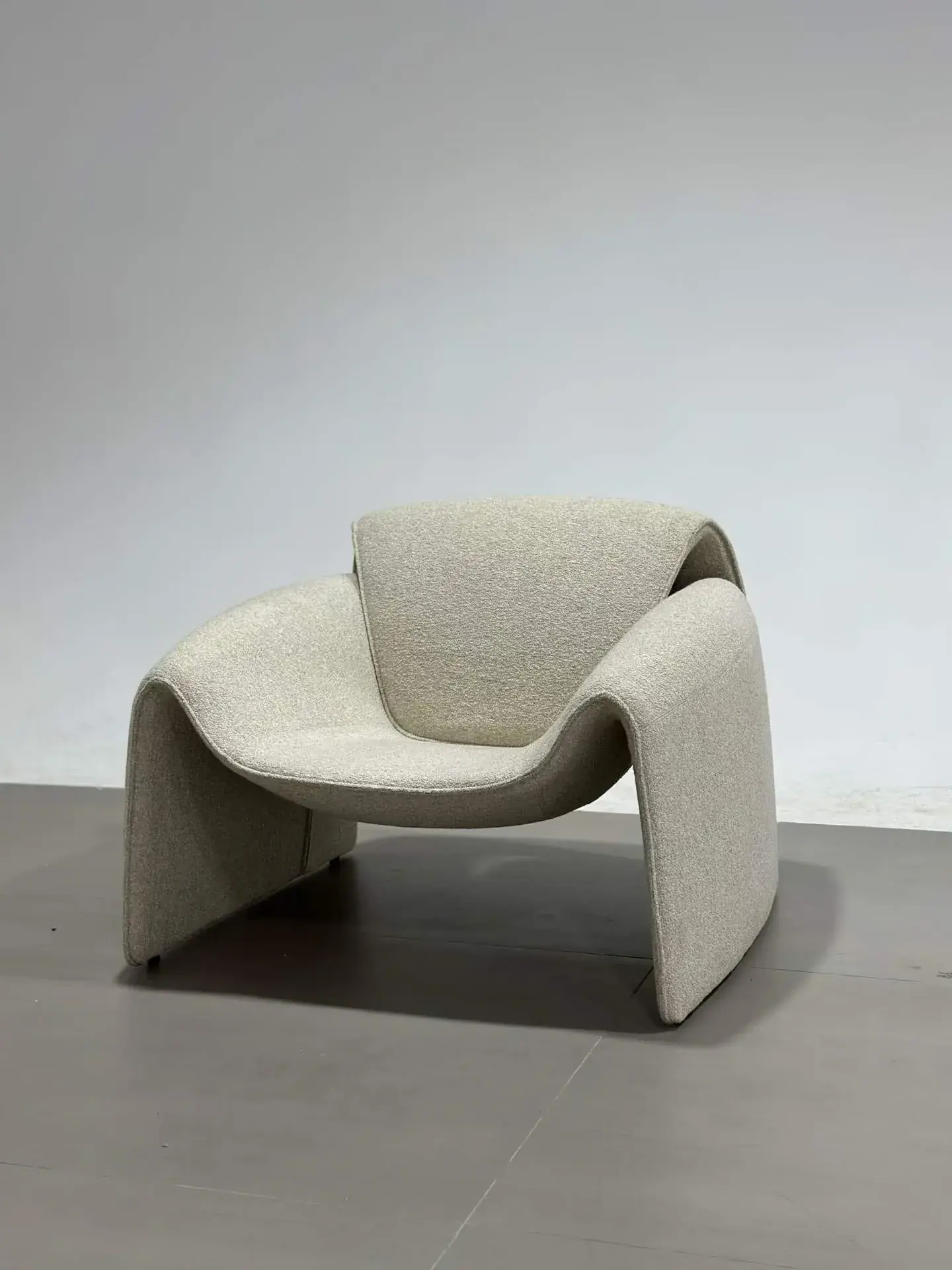
A sculptural bouclé chair takes light differently around its edges
HEZEN CASA’s sculptural bouclé accent chair is listed at 80 × 90 × 95 cm in bouclé and metal. Its single flowing form makes the side view as important as the front. In a room with hard surfaces and straight cabinetry, that curved volume can bring softness to the approach without adding another wood tone. It can also occupy more of the view than a photo of the seat alone suggests. Give it a full outline on the plan and look at an upright sample where the outer arm will catch light.
The seam is a design question on a shape like this. Ask the supplier where it will fall if you choose an upholstery with a clear grain or direction, and whether the intended texture works over that particular form. A low-contrast fabric can help the outer profile read as one line. A more pronounced texture will show changes in shadow at some angles, which may be exactly what the studio wants. Evaluate that effect at the distance from which a person actually enters the room, then look closer from the adjacent seat.
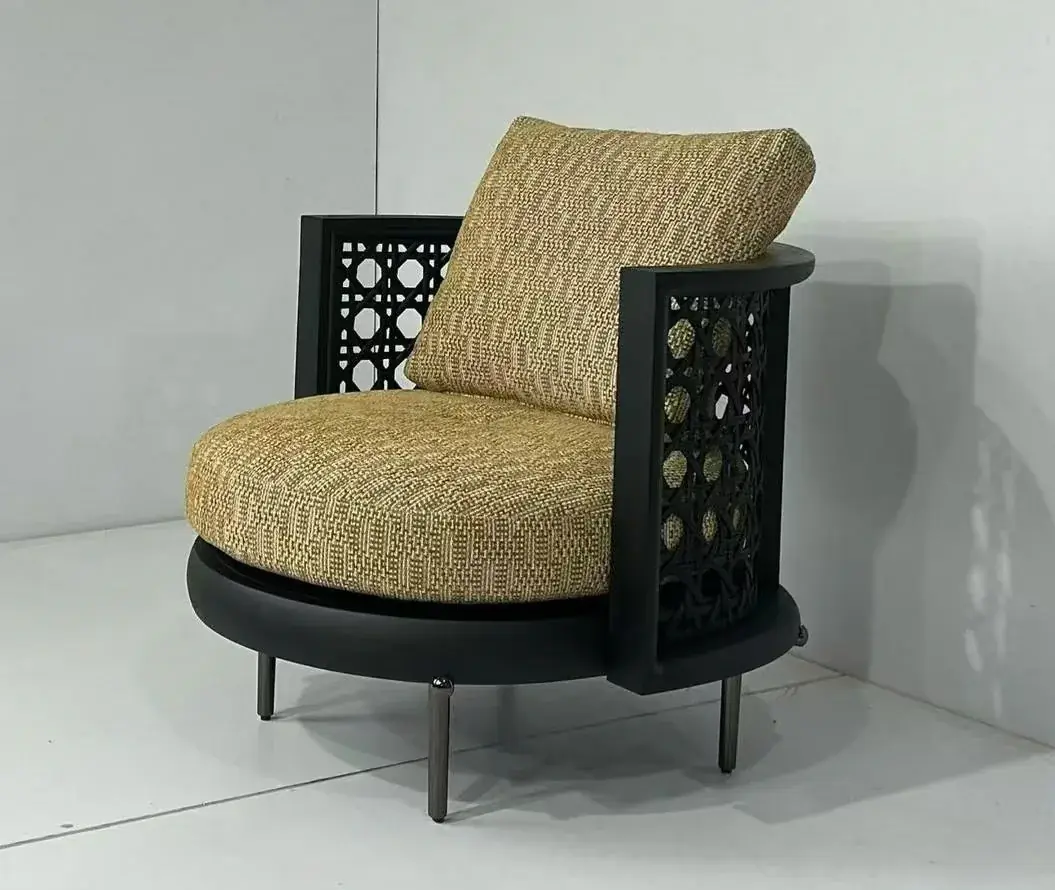
Let the woven swivel chair show how much pattern the room can carry
The wood and woven fabric swivel chair has a different role. Its catalog entry gives 65 × 65 × 85 cm and identifies wood, linen and metal. The pierced sides and distinct seat material allow the designer to relate the frame to adjacent woodwork while bringing more contrast into the seat. The smaller listed outline can help when a chair sits between two zones. The important space check is what happens when the chair turns or someone approaches it from the side. Ask for enough information to draw that movement separately.
For the sunlit project, try the woven chair by the darker wall and pull the sculptural chair a little forward from the glazing. These are test positions, and the right ones depend on the plan. Take a picture from the entry and a second from the sofa, then switch the chair locations in the plan or during a test. The images can tell the client more about what is being approved than four swatches lined up with no context. Make room to reject a pairing if the pierced frame begins competing with another pattern in the same sightline.
If the two chairs face one another, sit in the locations before saying how precisely their colours should match. An intermediary rug or the surface of a low table may hold them together more effectively than a shared upholstery. There is also a practical reason to keep the finish decisions separate. The woven seat and the uninterrupted upholstery on the sculptural chair expose different areas to contact. Ask which part would need attention if a bag scuffs the front or a drink splashes beside the arm. Check the care instructions for the actual finishes under consideration before choosing where each seat goes.
Use Your Luxury Furniture Supplier to Develop a Finish Family Across Rooms
A design team furnishing an apartment with existing millwork has a different decision. Imagine a full-width walnut-toned wall in the study and a quieter, pale bedroom next door. The client wants a leather-fronted writing desk and a bedroom dresser to belong to the same home, but the material the occupants see first differs in each room. The studio can keep a relationship across rooms by repeating a muted undertone or the scale of a detail. Explain that relationship to the manufacturer before asking for a match.
The curved writing desk is seen from the doorway and used from the seated side
Consider HEZEN’s curved leather writing desk with an integrated drawer unit, listed at 160 × 70 × 75 cm in leather and solid wood, with three drawers. As a freestanding study piece, it presents a side and back to the person entering. If the existing desk wall is warm, a subtly related leather tone may be enough to tie the piece to it. Have the studio confirm which surfaces are visible from the doorway and which ones the user will touch, then ask the supplier how it proposes to finish those faces.
The two roles overlap at the desk edge. A slim-looking curve could be a major part of the design, while the client keeps a monitor and writing pad there every day. Check the usable area and expected cable locations before approving an alternate that looks right in elevation. If the supplier proposes a matching colour with different sheen, evaluate it near the window and under the desk light. A sheen difference might be manageable on a side face and very apparent along the top. Spell out where an alternate would appear so the review stays tied to the visible part.
The wide dresser needs a finish decision at drawer scale
In the bedroom, HEZEN’s wide six-drawer dresser with leather and wood is listed at 160 × 45 × 85 cm. A narrow leather piece can read softly on a board while six repeated drawer faces create a much larger field of colour. Look at a representative face before selecting the warmer of two nearby samples. Also ask how the drawer divisions and edge detailing will read in the finish being quoted. If the bedroom is meant to feel quiet from the bed, the pattern made by the fronts is likely to matter more than whether the desk next door uses the same leather.
Take the finish up to the height of the installed dresser and lean it against the wall paint sample under the intended bedroom light. This review answers a different question from the one for the desk, where the occupant sees the leather from close range and above. Write that distinction down. In this example the designer might accept a softer colour on the dresser while requiring the desk edge and millwork to sit within a narrower tonal range. A manufacturer with both upholstery and casegood options can discuss those as related decisions and keep the instructions for the two pieces separate.
On the dresser elevation, also show the point where an open drawer comes closest to the bed or a passing occupant. If a proposed pull stands out far enough to change that relationship, mark its projection on the drawing. It may be possible to retain the same drawer-face look with another detail, depending on how the piece is made. Ask before approving the alternate. The aim is to preserve enough grip and working space while keeping the drawer bank visually calm, so an apparently small hardware choice deserves its own response.
Review Furniture Samples Where the Client Will See Them
Look at samples in the same orientation as the furniture. Hold the chair cover upright, lay the desk finish flat and place the dresser face where it will pick up the bedroom light. Room & Board’s swatch guidance illustrates how finishes with similar colours reflect light differently when their textures differ. Its point is especially useful for upholstery on broad and curved surfaces. A screen image helps narrow the conversation, while a marked physical reference gives the studio and manufacturer something specific to compare.
Bring an approved surface into the review whenever one exists. The stain in the study panelling, a paint chip from the bedroom or a cutoff of the stone next to the chairs can be more informative than a font label or a name in somebody’s email. Look at the sample for the practical details too. Where it folds around an upholstered edge, does the visual texture look different? Can the proposed cabinet finish still read as intended across a broad front? If a regular maintenance product will be used in the room, check the proposed surface with the supplier’s product-specific care instructions before relying on it.
Make the sample set readable once it leaves the studio. Put the furniture reference, proposed face, date and physical sample identifier together. If the room team accepts the material but asks to review its application on the curve, record two decisions. The allowed material can stay on the project list and the curve detail can stay open until there is a representative example or drawing. HEZEN’s furniture finish sample approval guide is useful when those early preferences turn into production references.
Tell the Furniture Maker What to Keep When a Finish Changes
Think through the most likely rejection before you ask for alternates. For the two chairs, the studio might have said the sculptural one must look quiet beside the glazing and the woven one should keep a strong frame. If the white bouclé looks too bright on site, send that observation and ask for a sample within an acceptable tonal range. The supplier can then preserve the flowing upholstery form while giving the studio a meaningful choice. Asking for a “more premium” material says very little about what the new sample needs to do in that room.
Then spell out the decision you’re willing to reopen. A desk leather that is too reflective in the afternoon does not automatically require changes to the curve or drawer unit. Discuss whether a different approved surface would affect the way it can be fitted, and ask how any change would be shown in the order. The dresser can retain the calmer finish if its room test was satisfactory. This keeps the review focused and keeps the buyer from paying for design work they already approved somewhere else in the home.
If the first approval moves the work into production, make it clear who receives a substitution request and what they need underneath it. For a change to the visible desk edge, a phone photograph alone might make it hard to judge sheen or colour. Ask to see a physical replacement next to the original reference and have the supplier identify whether the curve, edge and drawer remain as specified. For a change on the dresser, ask which fronts or visible sides would actually use the substitute.
At the last project meeting, leave the furniture maker with the two decisions that still matter visually. It might be the continuous fall of the upholstery around the chair and the way the desk edge reads next to the existing millwork. Put those notes beside the specific views in the drawings. Once the maker can point to those surfaces and identify the accepted samples, the studio has something more durable than a good-looking presentation board.