Discuss Future Furniture Care With a Luxury Furniture Manufacturer in China Before Ordering
A retailer’s promise to support furniture after delivery should begin with what can actually be identified and maintained. When evaluating a luxury furniture manufacturer in China, distributors and project buyers need to distinguish a visible cushion, drawer or moving part from a confirmed replaceable component. The product’s appearance alone does not establish how it can be serviced.
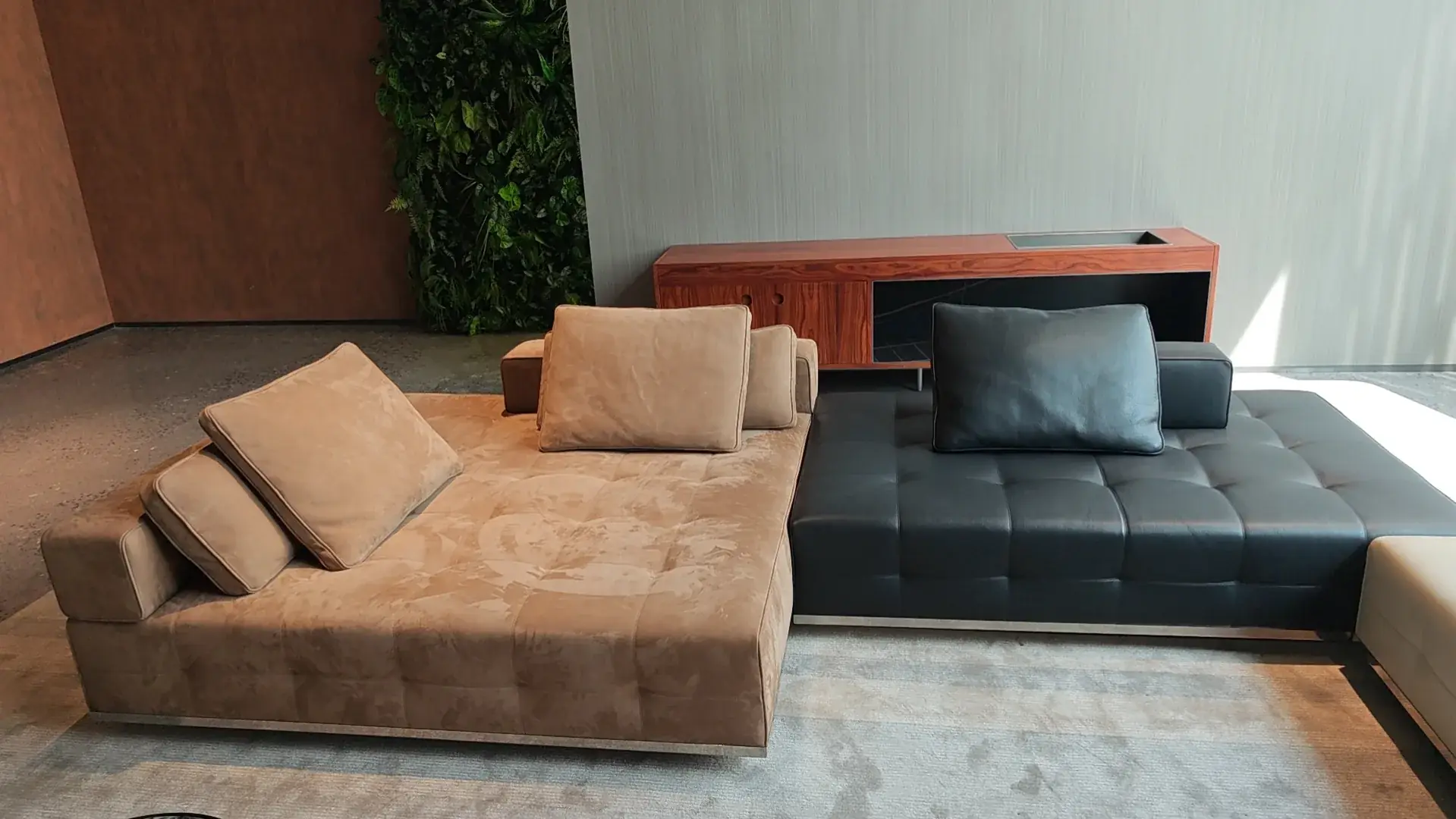
For HEZEN CASA, begin with the mixed suede-and-leather modular sofa, dual-pillow Nappa bed, sliding-door wood sideboard and wood-and-fabric swivel chair. Each raises a different support question. The custom furniture service is a route for discussing the proposed order, but availability of spare parts, future coverings or repair work must be confirmed separately.
A luxury furniture manufacturer in China should distinguish care from component replacement
Care instructions explain how to look after the supplied surfaces during normal use. Component replacement concerns whether a particular part can be identified, obtained and fitted. One does not prove the other. A leather care note, for example, does not mean that an upholstered panel can be removed or replaced without specialist work.
A distributor preparing a new collection should ask these questions before writing its own service promises. If the supplier has not confirmed a removable sofa cover, the sales team should not describe it as removable. If a cabinet fitting has not been identified, a general statement about after-sales support does not identify the fitting that a future buyer might need.
Map the mixed sofa’s leather and suede before promising a care routine
The sofa is listed at 300 × 180 × 85 cm with camel suede, black top-grain leather and solid wood. Those material descriptions create a practical need for separate surface information. A buyer should request instructions for the actual supplied coverings and identify their locations. A single instruction intended for one covering should not automatically be applied across the whole sofa.
Ask how the visible padded sections are constructed and whether any are intended to be removed by the user. Tufted divisions can look like separate parts without being separately serviceable. The supplier should clarify the specific version. Until that is known, keep customer-facing advice limited to the confirmed care procedure and normal use of the assembled sofa.
For a family living area, the purchaser may prioritize a clear response to ordinary spills or marks. For a retail display, the priority may be managing frequent handling of a small visible area. Explain which situation applies. This helps the supplier provide relevant information without the buyer inventing a universal cleaning treatment for suede and leather.
A replacement sofa section also has to relate to the remaining upholstery
If replacement is possible, discuss how the original covering and configuration would be identified. A newly supplied section may need to be evaluated beside furniture that has already been used. Do not promise an invisible match or permanent material availability without explicit support. The purchasing decision should account for the answer, including any limitations.
This does not mean every order needs spare upholstery supplied at the outset. It means the buyer should know whether that is a relevant, available option for the selected furniture. The quantity, storage suitability and practical value of any proposed spare material need to be discussed for that actual use rather than added automatically to every order.
A retailer might be comfortable displaying the mixed sofa even when future covering availability has not been established. It should then describe the current sofa accurately and avoid selling an open-ended matching service. A designer furnishing several connected rooms may reach a different decision if later visual continuity is essential. The unresolved support requirement belongs in that decision before the order is placed.
Ask the furniture manufacturer how the bed’s headboard is supported and accessed
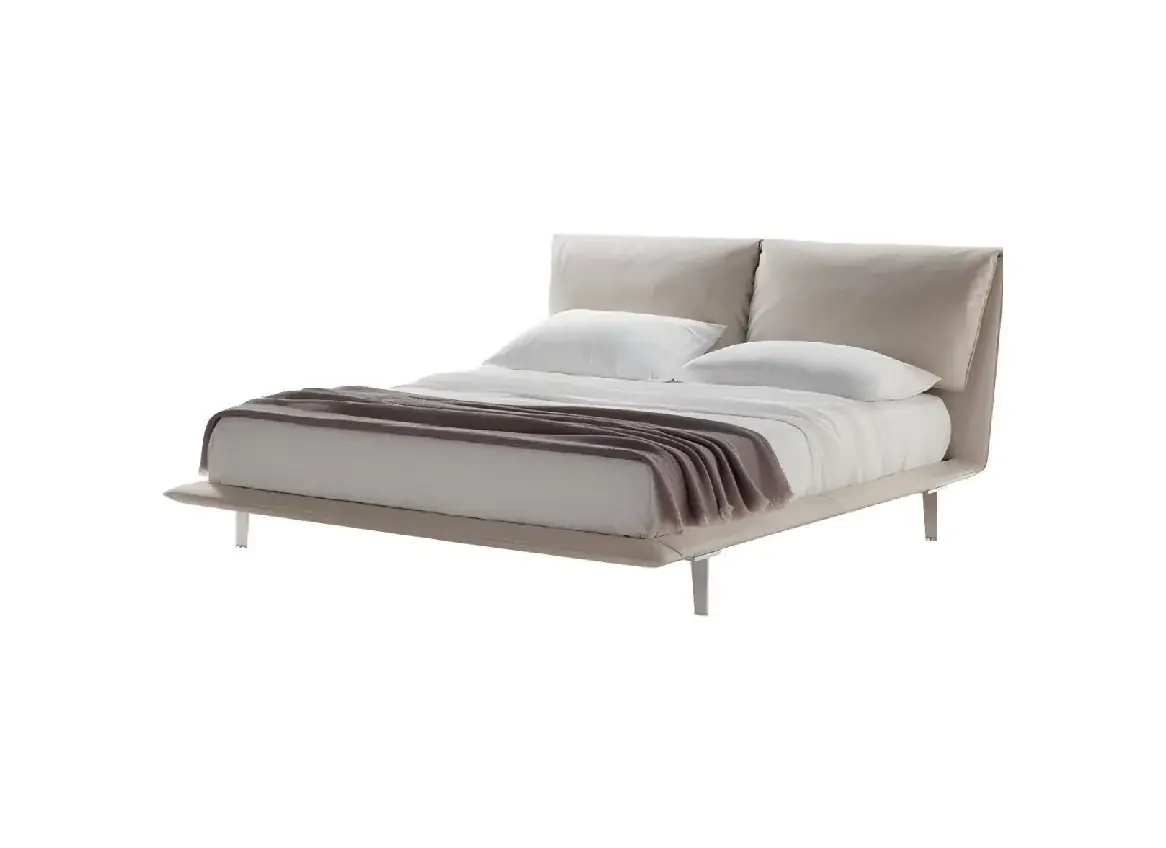
The light grey Nappa bed is listed at 220 × 180 × 105 cm with a metal frame and a dual-pillow headboard. The two padded forms are a visible design feature. Their appearance does not establish whether they are loose cushions, removable assemblies or upholstery attached by another method. Ask for the construction and access information relevant to the supplied bed.
A bedroom purchaser may want to understand what can be maintained without moving the complete bed. A project buyer may need to know how an installer reaches the connection between the frame and headboard. Those are different questions. Request the instructions that answer them instead of treating one overall photograph as a maintenance diagram.
For a furnished apartment managed remotely, the person arranging support may never have seen the bed before. A retained photograph of the complete dual-pillow form, its approved material and its assembly information gives that person a starting point. A close-up of light grey upholstery alone does not distinguish the headboard from another upholstered component in the apartment.
If the bed must later be moved to another room, ask for the appropriate disassembly and reassembly guidance for that version. Do not assume that the visible padded forms are suitable lifting points. The useful information concerns the supplied construction and handling method, not a general recommendation copied from a different bed with a similar silhouette.
Keep the bed’s supplied hardware identifiable after assembly
Ask whether the bed is supplied with an assembly guide and how its hardware is identified in that guide. An installer should be able to distinguish the parts intended for the frame and headboard. If anything is missing or unclear, obtain the correct instruction before substituting a visually similar fitting or altering the connection.
As an external example of why identification matters, IKEA’s missing-parts guidance uses assembly-guide part codes in its own support process. That is not a HEZEN CASA service policy. It illustrates the value of knowing how a particular component is identified before a replacement is needed.
If the buyer intends to retain an existing mattress, the separate discussion of replacing an upholstered bed around an existing mattress covers that interface. A serviceability review should not be used to skip mattress and support compatibility. Both questions need answers for the actual bedroom order.
The sliding-door sideboard needs instructions for its own moving arrangement
The dark wood sideboard is listed at 200 × 45 × 90 cm with two sliding doors and three drawers. Its moving elements make access and operation part of the purchase. Before promising easy adjustment or future replacement, request information about the supplied mechanism and the work intended to be performed by an installer or service provider.
For a dining space used every day, the buyer may care most about reaching the same cupboard contents repeatedly. For a display installation, the furniture may be moved to a new position later. Ask how the sideboard should be handled and checked in each situation. Do not assume that a movement problem can be resolved by a generic adjustment procedure.
Separate a blocked cabinet opening from a fault in the supplied mechanism
A drawer that cannot open because a nearby chair occupies its path presents a room-layout problem. A door that does not operate as instructed presents a different question for the supplier. Record what happens at the actual cabinet, including which moving element is affected, before deciding what remedy is appropriate.
For an overseas project, clear photos of the whole sideboard and the affected area can help identify the problem. They should accompany the product reference and the supplied configuration. Avoid sending only a close-up of an unidentified fitting: without the surrounding furniture and its position, the person reviewing it may not know which assembly is involved.
Wood finishes and sliding hardware need different support information
The sideboard’s dark wood appearance does not identify a maintenance product or a hardware supplier. Ask for surface-care instructions and mechanism information separately. If a finish has been customized, retain that approved reference with the cabinet description. A later repair discussion should not accidentally refer to the original display finish when the delivered piece differs.
If the supplier cannot confirm a requested replacement route, the purchaser can still assess the furniture, but should do so with that limitation visible. A retailer may choose a narrower service promise. A project with a strict maintenance requirement may need another approved solution. The answer should influence the purchase before the sideboard is installed.
Confirm the swivel chair’s operation before discussing future adjustment
The carved wood and woven-fabric chair is listed at 65 × 65 × 85 cm, with wood, linen and metal, and described as a swivel chair. Ask for the operating arrangement of the version being supplied. The listing does not establish its turning range, internal mechanism specification or a user-adjustment procedure.
In a lounge, the chair may be turned toward conversation and then toward a view. In a retail setting, several people may demonstrate the movement during a day. The supplier needs the intended use to assess the proposal. Do not turn an attractive motion feature into an unsupported promise about intensive use, load capacity or an unlimited service life.
Keep any demonstration of the swivel function linked to the same chair that appears in the order. A video of a different base or upholstery version may answer a broad question about movement while leaving the selected assembly unverified. If the proposed chair differs from the demonstrated one, request clarification of the relevant difference before using that demonstration to brief a buyer.
The chair’s wood, linen and metal also mean that appearance concerns can involve different surfaces. Identify whether the question concerns the woven upholstery, the carved wood area or the metal component. This avoids a support discussion in which a treatment suitable for one material is assumed to apply to the complete chair.
Describe the chair movement precisely when requesting help
If support is needed, distinguish between a chair that does not move as expected, one whose movement is obstructed by nearby furniture, and one with an issue in the upholstery or wood surface. These observations lead to different questions. A brief, accurate description tied to the complete chair is more useful than diagnosing an unseen mechanism remotely.
Ask what evidence the supplier would need and who should carry out any intervention. Do not instruct an end user to dismantle the swivel assembly based only on its external appearance. Equally, do not promise that the complete chair must be replaced before the supplier has assessed the actual problem and available options.
Let confirmed furniture support shape the offer to your own buyer
For the mixed-covering sofa, retain the surface map and applicable care information. For the Nappa bed, retain the supplied assembly description. For the sideboard, keep the confirmed door and drawer arrangement identifiable. For the swivel chair, preserve the operating guidance associated with the actual version. These are four different support needs, not one interchangeable instruction sheet.
Before committing to a collection, ask which of those documents and services can actually be provided and on what terms. Where an answer is not available, leave it unpromised. A carefully bounded offer is more useful to a furniture buyer than a broad assurance of easy maintenance that cannot be tied to the sofa, bed, cabinet or chair being delivered.