Luxury Dining Room Storage for Tableware You Can Reach Mid-Meal
Set your widest platter, tallest glass and heaviest stack of plates on the dining table before you specify a sideboard. Those three objects tell you more about the storage you need than the number of doors on a furniture photo. For a villa that hosts dinners or a hospitality room that staff turn over between meals, start with the sideboards and wine storage at HEZEN CASA, a Foshan furniture manufacturer and supplier. Give each piece of furniture a job during service, then get clear internal measurements for the dishes that need to be within reach.
Choose luxury dining room storage around the pieces you serve with
Take out the tableware you use whenever you have company and work through where it needs to go before and after a meal. Chargers and serving platters typically need a clear opening wide enough to grasp their rim with both hands. Flatware and linen are easier to replace when they can live near the front of a drawer. Stemware needs enough vertical space for your knuckles to pass above the glass without catching its neighbors. Each object has an envelope that includes your hands and the direction you will move it. That envelope is the number to check against an internal drawing.
A family preparing a house for frequent dinners might own a broad charger set that stacks well and a single oval serving platter that has to come out at an angle. Line those items up with the rest of the tableware. Measure the height of a reasonable stack, the width of the platter at its broadest point and the depth needed to keep the cabinet front clear. Then try lifting the stack as you normally would, perhaps by taking four plates at a time. Space for the object itself is easy to put in a schedule. Space for the movement takes a quick physical test.
Compare the storage needs of pieces you bought as a set with the ones you have added since. The everyday dinner plates may stack neatly behind a 45 cm cabinet case, while a large serving bowl with handles could occupy nearly the full clear depth. If the bowl needs to stay face up to be removed comfortably, set it beside the usual plate stack before counting the space left for the second stack. A low sideboard can look generous in the room. An object that can leave the cabinet only after something else is moved tells you where another opening is needed.
Measure the sideboard opening with your hands on the platter
The Rounded Marble Top Light Oak Storage Sideboard is listed at 180 × 45 × 80 cm, with four doors, hidden handles and a natural marble top. It gives you a broad surface for preparing the next course and a run of closed storage below. The 45 cm figure is the outside depth. Ask for the clear shelf dimensions, the location of any fixed divider and the size of the opening with the relevant door open. For a broad platter you also need to know whether a hinge, rounded end or internal edge reduces width where the platter enters the case.
Send a picture of that platter with a ruler laid across the broadest part and point out any feet, rim or handle. If the opening is close to the object width, a quick side view of the item can show why a buyer is concerned. A raised end that turns past a door or an inside divider can require more clearance than a flat drawing indicates. If the platter is required for every service, try to give it an opening where it can be withdrawn using both hands without first clearing another row of dishes. Keep occasional serving gear further back or in a separate cabinet.
Assign one drawer to setting a table from scratch
Picture a staff member laying six place settings in a private dining room just before guests arrive. They need flatware, spare napkins and perhaps a corkscrew within reach of the first place they pass. The Dark Wood Sliding Door Sideboard with Drawers lists two sliding doors and three drawers in a 200 × 45 × 90 cm cabinet. The separate drawers give you a straightforward way to keep frequently handled pieces away from the platter area. Start with the pieces someone should be able to retrieve when the room is nearly ready. Ask for the usable drawer width, depth and internal height before ordering organizers.
When you compare a drawer insert, remember that the edge of a divided tray also takes up space. Set your longest serving fork diagonally in the intended compartment before finalizing dimensions. Check whether a stack of folded napkins rubs the cabinet above it when the drawer closes. Blum’s AMBIA-LINE planning information gives examples of the measurements a drawer organization system can require. Use the dimensions from the supplied cabinet and insert for your purchase. The hardware guidance illustrates the planning step without identifying what is fitted in a HEZEN sideboard.
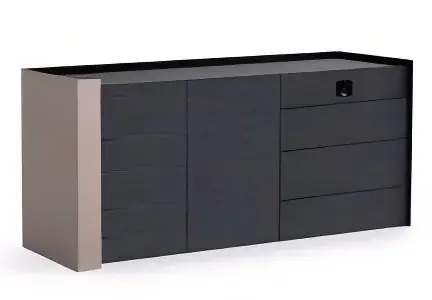
If you want another finish or a shallower-looking piece in the room, compare how you would use the Asymmetrical Dark Wood Minimal Sideboard Credenza. It is listed at 180 × 45 × 80 cm with split drawers and a dark wood veneer face. HEZEN CASA lists it for the living room and entryway. In a combined room, it could hold spare linen or dry accessories on the living side if its clear drawer sizes suit them. Keeping those items there may make sense when the dining sideboard needs its wider openings for dishes. Confirm the location and exact task before counting it as part of the core dinner service.
Give tableware storage a different role from the dining table itself
Walk the shortest route from the cabinet to the table, then do it again holding a full-sized platter. At HEZEN CASA’s 160 cm round wood-and-marble dining table, the dark surround and stone center create a strong central view. A nearby cabinet can keep a spare course, empty plates or unopened bottles ready without occupying that view. The 80 cm overall height on the light oak model and the 90 cm height on the sliding-door model will position those objects differently for someone carrying them. Try setting them down at both heights and decide what fits the space and the usual server.
For a host serving family style, the sideboard top might hold plates for the next course and a safe spot for a clean serving spoon. A professional server is more likely to work with a tray and clear the dining area in two directions. Mark a dedicated place to put a fuller tray, and check that it does not cover a handle or interfere with the next person retrieving utensils. The natural marble top on the light oak sideboard should be used in line with its finish-specific care instructions. Ask the supplier about suitable protection for your trays, bottles and hot serving items so that those can be included in the move-in kit.
Layout drawings for a furnished residence sometimes show a lamp and a decorative tray at both ends of the sideboard. That leaves a smaller landing surface for dinner. Mask off the proposed positions of those objects and work with what remains. A tray should rest on a usable portion of the top, with enough room left to lift one end as you load it. If you need the full width for occasional service, choose a small group of objects that can move together and agree where they will go on those evenings. This lets the cabinet keep its everyday styling and its dinner job.
Keep wine glasses near the pouring point with room to lift them out
The Italian Minimalist Freestanding Wine Cabinet is listed at 80 × 40 × 120 cm overall, made with solid wood and intended to store both wine bottles and glassware. Separating glassware from the general sideboard can free up room for plates, especially if the sideboard has to handle a full dinner service. Choose a location close enough to the pouring station that you can retrieve a glass without walking past someone opening the tableware cabinet. Ask for the clear height beneath the shelf above and the type of compartment intended for the glasses you own.
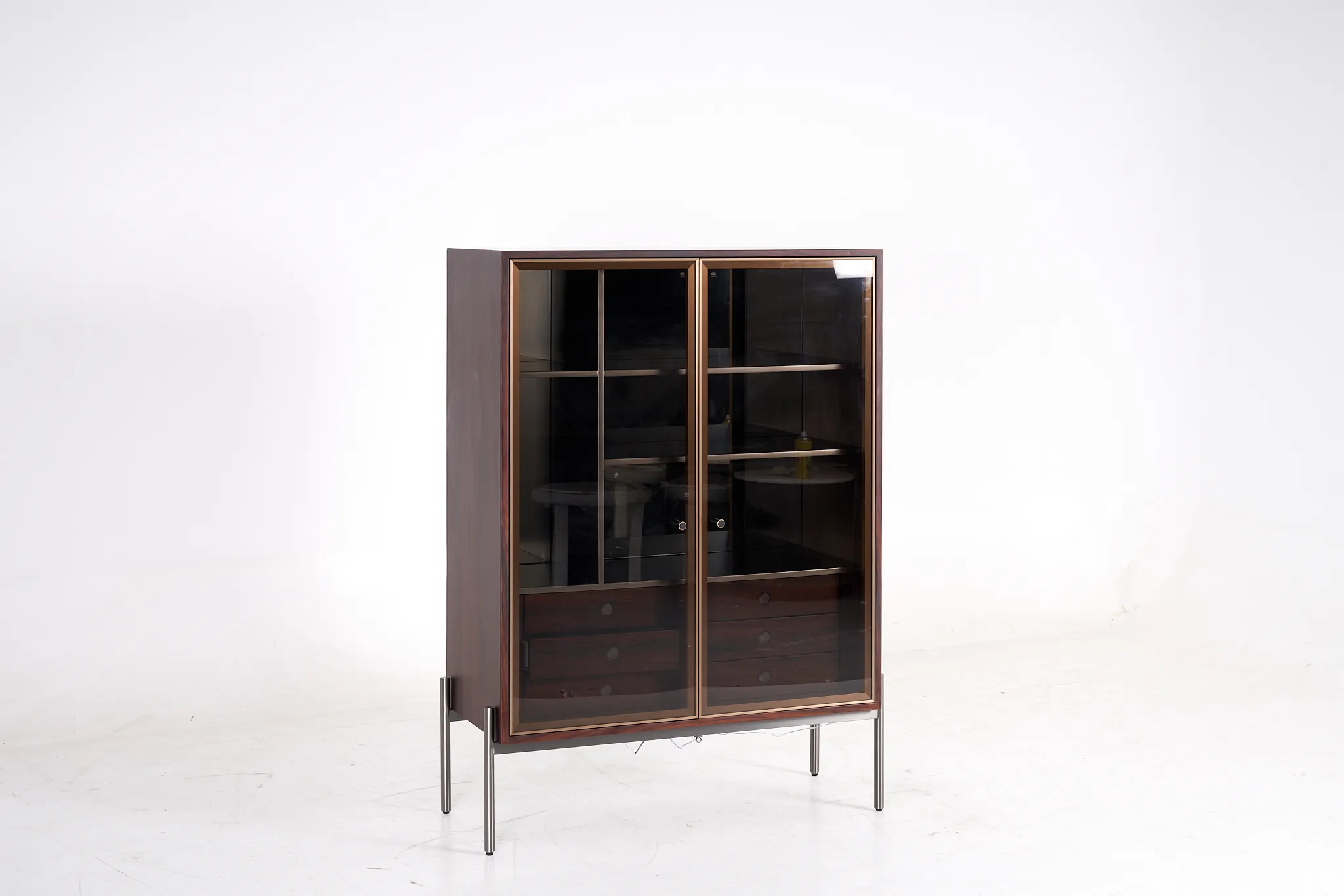
Try carrying one of your tallest glasses from the proposed compartment to the serving surface. If the cabinet is on the opposite side of an occupied chair, choose a closer shelf for the items you take out every time. If bottles and dry glasses need separate places, put each storage group on the cabinet drawing. Keep interest in how the case looks separate from any question about wine storage conditions. The published cabinet dimensions and glassware use give you a place to start the room layout. Confirm with the supplier how it is intended to be loaded and installed for that project.
Try a sliding door and a drawer with the chairs in service positions
Move the chair nearest the cabinet into the position a guest uses after sitting down, then reach the intended door or drawer. A sliding front avoids an outward door swing, which may help in the confined area behind a chair. One sliding panel can also cover the other section when open. Know which area can be reached at any given time before putting two commonly paired serving pieces into separate halves. The drawers on the same cabinet still need room to extend and a place for the server to stand.
Check the oak sideboard's door swing separately from the width of the opening. One cabinet might work well on a wall completely beyond the chair line, while the other may work better along the side of a room with traffic behind the table. If you need both people to pass and the drawer to open, test that situation in a floor marking before the purchase. HEZEN CASA’s sideboard size guide explains the overall room-planning dimensions and gives a starting point for this part of the drawing.
Walk through the reset with an empty tray as well. A server bringing plates back may reach the cabinet from the other side of the room, where the drawer that was easy to open before dinner is now behind an occupied chair. If the room is regularly turned over while guests still sit at one end, choose one nearby place for the tray and leave time to return the clean tableware from that position after guests leave. This may be enough to make a four-door cabinet work where putting each plate away mid-service would be difficult.
Put the measured serving pieces on the cabinet order
Attach a simple storage drawing to the selected sideboard or wine cabinet, keyed to the items you have on hand. Mark the longest platter, the largest everyday plate stack, the tallest glass and one drawer's intended insert, if applicable. Ask for the internal dimensions and door opening shown on the same drawing. If a shelf needs to hold a stack of heavy ceramic plates, record the planned load and ask which shelf and configuration suit it. Use the stock model specifications for early decisions and the confirmed drawing for the chosen pieces.
If the property will buy replacements from a range whose pieces vary in size, allow practical space around the current tableware. Use the approved drawing to show that margin. Record the clear measurements with the room schedule so the next person ordering plates can check them without moving the cabinet or guessing which 45 cm case depth was used.
Reserve one clean landing point and walk the path with someone who will actually set the table. That person may see a reason to move the linens to a different drawer or keep a spare plate stack beside the platter instead of with the display glasses. Put those changes in the schedule while the manufacturer can still check them against the chosen cabinet. When the drawing shows where the heavy dishes fit and exactly how the server reaches them, you have an order that reflects the way this dining room works.