Luxury Dining Furniture for Showrooms That Let Buyers Compare
Build one dining display around a question a real buyer can answer by sitting down. Start with a table suited to the projects your showroom sees most often, a chair that ordinarily goes with it and a second chair that changes something the customer can see or feel. This is a useful place to start for dealers, project specifiers and distributors with limited display space. HEZEN CASA, a Foshan furniture manufacturer and supplier, offers natural marble tables, solid wood and fabric dining chairs and seating for higher counters. Use a few deliberate examples to make the differences clear to a visiting buyer.
Give the first luxury dining furniture display one purchase to demonstrate
A customer can compare more on a smaller floor if one display gives them a clear reference. Decide what the first group should demonstrate. In a showroom serving villa projects, the first question may be whether a family can share dishes comfortably at a large marble table. In a studio serving architects, it could be how dark wood and marble look together beside a wall sample. Either way, choose the questions, then decide what full-size pieces are needed to answer them. A display should lead to a defined option the sales team can put into a schedule.
Set up the marble Lazy Susan table for an actual dining demonstration
The HEZEN CASA Round Natural Marble Dining Table with Lazy Susan is listed at 150 cm in diameter and 75 cm high, with a natural marble top, textured metal base and built-in turntable. Use it where visitors can sit opposite each other and turn a dish in the middle. Prepare two actual settings and a useful serving piece for that moment. A low arrangement shows how much of the stone remains visible once the tray is in use. Have the salesperson show where the serving spoon goes while a dish is turning.
Picture a dealer with only one dining bay. It sits beside a busy aisle and the original layout leaves the model's entire circumference surrounded by chairs. Remove the seats that prevent an easy approach before the tour starts and leave two working places well separated. Place another style at one location where a buyer can pull it forward and sit. Show the expected full setting on a small drawing with the model dimensions. Buyers can see the size of a complete order while you keep floor space available for inspecting the base and trying the table.
Choose a single task a salesperson can repeat during a demonstration. For example, have the buyer put a plate down, reach a shared piece on the turning center and lean forward without crossing the neighbor's place. Then show the difference made by the alternative chair in that same position. This gives the conversation something precise to follow. For a commercial trade buyer, it also makes the sample arrangement easier to explain to a remote project team that will see only photos of the visit.
Put the extra chair at the far side of the aisle if visitors can still see it and move it back safely. The empty floor near the #12 table makes the metal base easier to inspect. Ask the intended table supplier for the underside view and occupied chair check so staff can point out where knee space changes as the seat moves. A visitor may like the top in the first photograph yet choose the actual design because the sample lets them see how the chair fits around the support.
Show the dark wood surround and marble center from eye level
HEZEN CASA’s Round Dark Wood Frame Marble Dining Table is listed at 160 cm in diameter and 75 cm high. The dark wood surrounds a natural marble center with contrasting veins in the product photo. If the showroom mainly advises designers on visible finishes, this table could anchor the sample area. Give it a chair and a clean view of the wood-to-stone transition. Keep the side where remote buyers will see the detail available for a close-up at the height from which a guest normally looks across the top.
If there is room for only one full table, choose which one should earn that space by the questions you actually have to answer. Keep an overhead and side view for the alternative model and confirm what swatches the supplier can provide. A finish image helps explain the 160 cm table, but a visitor who came to examine the joint or the base will need a physical example or sufficient drawings. Photograph the specific display model with its visual reference number so someone ordering from another location can tell which table the photo shows.
A two-table showroom can make the comparison sharper by repeating one feature between the two displays. Use the same principal chair model on each, or use a simple place setting with the same plates. Then notice which surfaces the visitor asks about first. One table invites someone to turn the center and move through a meal. The other gives the surrounding wood and marble transition a more prominent visual role. Present the features as they appear on the exact displayed configuration. Use the maker's documentation when identifying the details that are hidden underneath.
For a trade showroom with mixed lighting, choose one location to judge stone samples separately from the table placement. A strong spotlight can make a particular wood edge look more intense than it will beside the window of a residence. Invite the visitor to compare the wood and stone flat on a sample surface, then look at them again in the display assembly. If a different texture or stone pattern is proposed for the order, attach it to the requested configuration and agree how the final natural variation will be reviewed.
Use dining chairs and upholstery to make the showroom choice tangible
Put chair candidates on the same floor surface and bring them to the same table. A small change in frame angle, arm position or softness can affect how someone approaches the piece. Separating the second chair into another room with a different table makes that comparison harder. Offer one ordinary seating position where buyers can try both chairs. If possible, put a simple sample of their proposed flooring and the table finish nearby. They can then see the chair beside a material that will be in the installed room.
Demonstrate three chair backs against the same tabletop
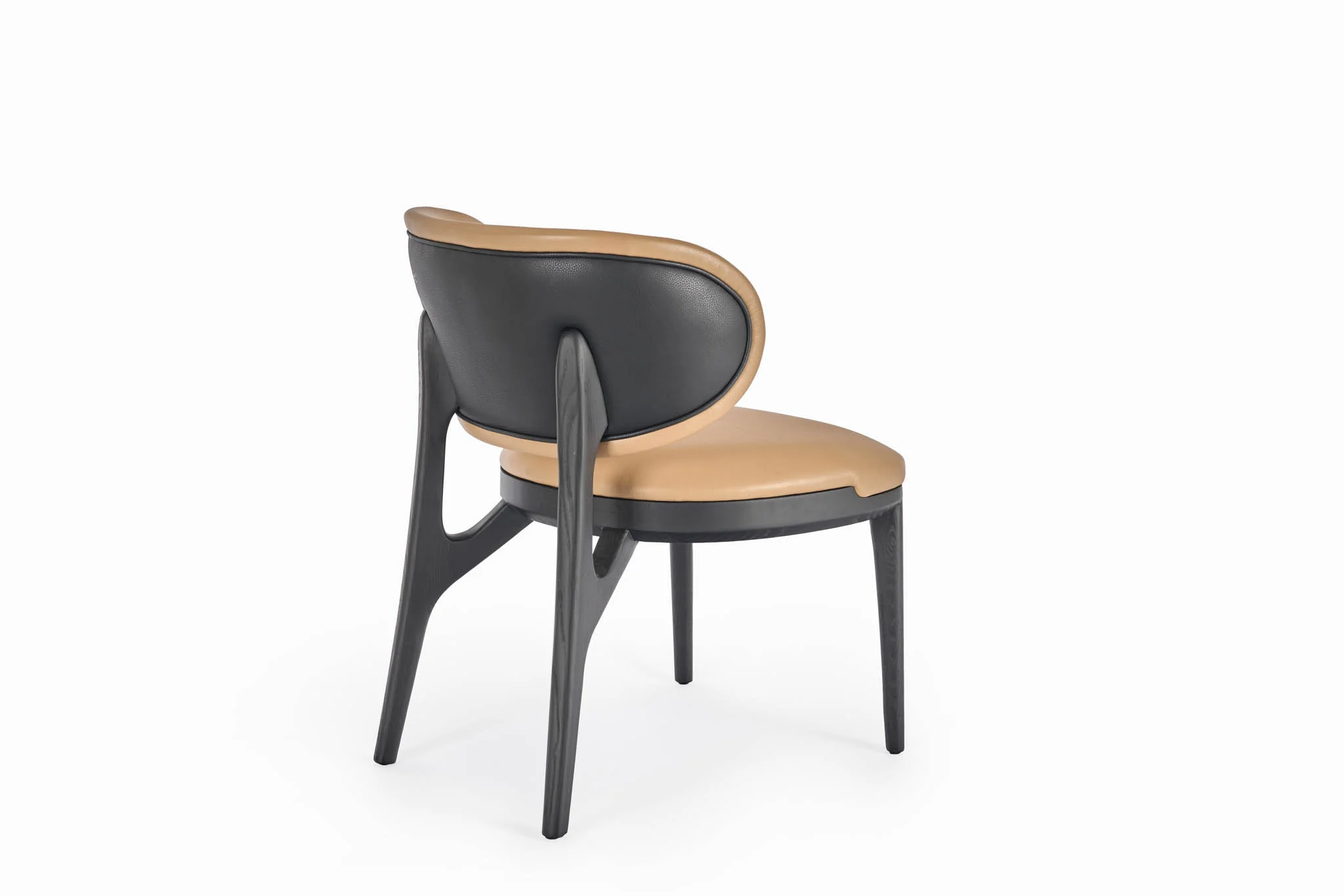
The Italian Minimalist Curved Back Dining Chair is listed in fabric and solid wood at 52 × 55 × 91 cm overall. The Italian Minimalist Contoured Dining Chair is listed at 52 × 55 × 92 cm overall in the same material categories, with contoured and upholstered surfaces. The two chairs occupy a similar listed envelope, yet their shaped backs and frame openings look different in the catalog. Present them one at a time beside the same table. Give the buyer a moment to stand, sit and see each rear view before discussing the colors that may suit the project.
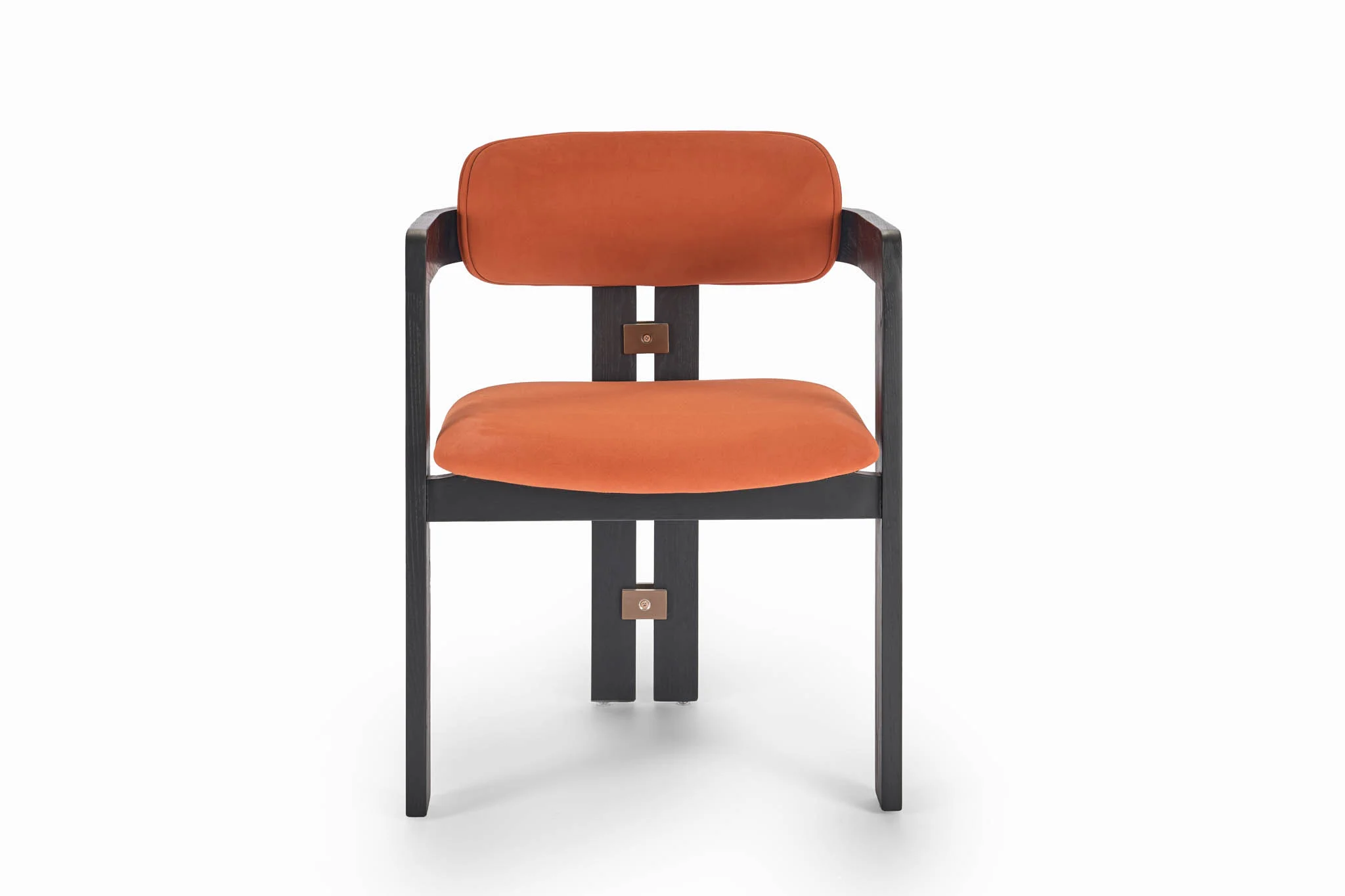
The Italian Minimalist Upholstered Dining Chair is a third option at 54 × 56 × 93 cm overall with fabric and solid wood. Its gallery shows a dark exposed frame with arm structures and a bright upholstered front. Try it at the end position if a visitor is drawn to that combination. Let the buyer see where the arms meet the underside on the display. Confirm that relationship again for the model they are ordering. The photo and the overall chair height alone are not a substitute for the correct table and chair dimensions.
In a studio with a small sample floor and larger project-based orders, put a chair reference on the back of a removable label. A client who sees the dining group from the console area may remember the shape and fabric together. The staff need to be able to match both to the intended order. Record the product and finish independently. If the order calls for a fabric different from the display, identify which one the buyer sat in and which one they approved for purchase. The two details can be easy to mix up when several people discuss the set by photographs.
Keep a visible record of the table paired with each side chair for that day's display. A dealer may change the floor after a new table arrives, and a photo from last month could show the same chair under a different apron. The buyer's desired frame or upholstery can carry forward while the fit must be verified for the new pairing. Give the team the overall dimensions and a place to record the confirmed seat and arm heights. This is especially useful when the end chair is chosen separately and needs to work alongside the usual side chairs.
Keep the swivel stool at a separate, measured showroom counter
Give a larger showroom's finish station one high seat if visitors often specify an island or bar beside the dining chairs. The Brown Nappa Leather Swivel Adjustable Bar Stool is listed at 45 × 45 × 110 cm overall, with nappa leather, a metal column, a footrest and a swivel base. The gas lift allows adjustment, but ask for the actual seat height range and check it against the intended island. A stool tried at your desk or worktop may behave differently once a project has a deeper underside or the guest must step down next to a wall.
One useful second showroom scenario is a dealer showing the same dining group to a designer who also needs seating at a high counter. Bring the two fabrics and floor reference together on the finish board instead of trying to make the stool stand in for a dining chair. At the counter, let the visitor sit and turn, then look at the width around the footrest and base. Note whether that motion was comfortable at the showroom surface. Give the client the dimensions of the actual showroom setup so the experience can be compared with their drawing.
Capture which dining furniture the buyer tried and what they approved
A good display can settle several points during a visit and still leave others to confirm. Write down the actual table and chair, the type of finish sample and any dimensions the client requested. If a dining order has upholstery requirements for a restaurant or other contract setting, use the Association for Contract Textiles guidelines as background on which textile performance evidence applies to a particular type of fabric and use. Obtain documentation for the exact material selected. The act of sitting in a display chair says something about perceived comfort and fit. It cannot prove how its fabric will perform in a specific setting.
Where the customer asks about production, connect the physical seat to the questions they intend to ask the manufacturer. HEZEN CASA's guide to working with a dining chair manufacturer offers context for confirming the intended material, specification and order details. Photograph the table and each selected chair in the position the buyer used. Set aside the reference for the intended fabric, frame and stone finishes. If a quantity changes or a second room needs a different finish, keep those requests tied to the project drawing and the actual confirmed configuration.
For a distributor considering a replenishment order, keep the original display material references beside any new samples. Ask the manufacturer to explain what can be repeated within its offered configuration and what may vary with a new piece of stone. If the appearance needs to be consistent across a visible group, agree how samples will be compared before treating the display as the complete standard.
Test the display with a colleague before leaving it on the floor. Have them walk in without the product list, sit at the table, compare both chairs and pick the finish they would request. See which item they struggle to describe when the visit ends. Add the missing view or sample reference beside the display. The best sign that it is working is a buyer who can leave the showroom and tell another person which table they tried and exactly what they want in the order.