Dining chairs · Sample evaluation
What to Test With a Dining Chair Manufacturer in China Before Ordering a Table Set
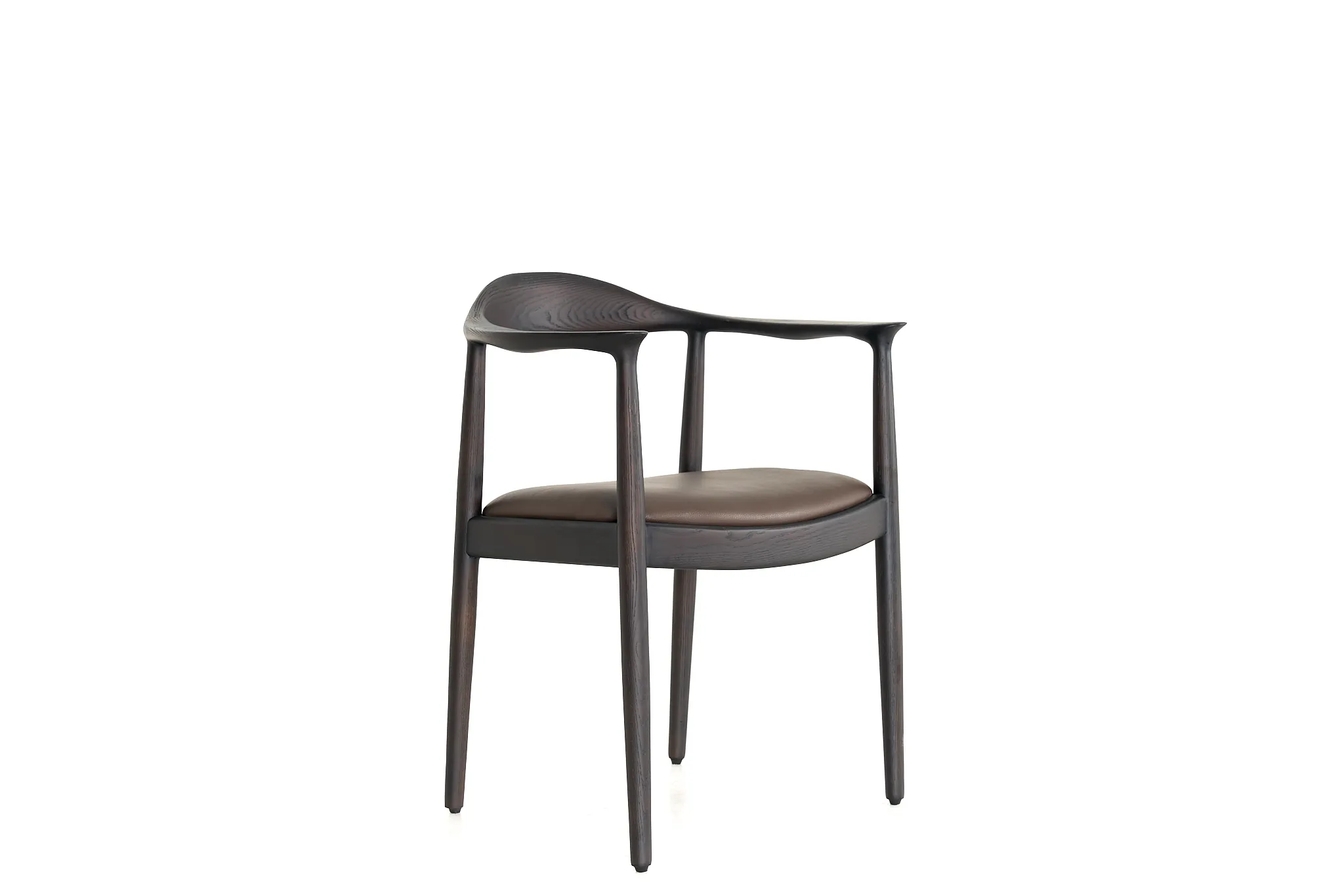
The chair measures 90 cm high. That still tells you very little about how someone will sit at the table. For importers, dining-room designers and project buyers evaluating a dining chair manufacturer in China, the first task is to separate overall dimensions from the measurements that govern eating, sitting and moving. Start with HEZEN CASA’s solid wood dining chair and curved-back dining chair, then evaluate the selected chair beside the actual table before approving a quantity order.
Dining chair dimensions need named measurement points
The Italian Minimalist Solid Wood Dining Chair is listed at 50 × 55 × 90 cm. The Italian Minimalist Curved Back Dining Chair is listed at 52 × 55 × 91 cm. These are useful overall dimensions for an initial furniture plan. They do not provide the seat height, usable seat depth, distance between arms or clearance below the table.
Ask for a drawing that identifies what each dimension measures. Overall width may be controlled by the arms or back rather than the cushion. Overall depth may include an angled back beyond the seating surface. A small difference between two product envelopes can conceal a more important difference in how the chair supports the person using it.
For a dining area with a defined number of places, write the chair arrangement into the brief. A buyer selecting chairs for a long rectangular table faces a different spacing problem from a buyer furnishing a circular table. The same chair can be suitable for both, but the approved number and placement should be established separately.
The 50 cm chair width is a starting envelope, not an elbow allowance
The 50 cm width listed for the solid wood dining chair helps a designer draw the furniture at scale. It should not be used as the exact distance between the centers of occupied chairs. People, movement and neighboring furniture extend beyond a bare product outline. Mark the chair positions, then evaluate the arrangement with the intended table and representative users.
Consider a distributor preparing a compact dining-set display. Closely spaced chairs may create a convincing photograph, but customers will judge the set while sitting down and standing up. Give the display enough room for that test. If the commercial offer includes a fixed number of chairs, demonstrate that combination rather than showing fewer chairs around the same table.
Seat height must be checked against the table underside
For a chair paired with HEZEN CASA’s Round Natural Marble Dining Table with Lazy Susan, the published table dimensions are diameter 150 × 75 cm. The 75 cm overall height is not the same as the usable clearance beneath the top. Stone thickness, any supporting structure and the base arrangement can reduce or relocate that clearance.
Confirm the chair’s unloaded seat height, the height while occupied and the relevant underside dimensions of the table. If the chair has arms, determine where their highest point sits as the chair moves inward. A chair that appears to fit when empty may feel restricted once someone is seated. Conversely, a chair that cannot tuck completely under the top may still be usable, but its stored position needs more room.
Record that stored position in the room plan. A customer should not discover after delivery that every chair projects farther into the walkway than the visual suggested. Avoid a universal clearance promise: the relevant dimensions depend on the particular chair, tabletop and support structure being supplied.
Bring three seating movements into the sample review
A useful dining-chair trial includes approaching the chair, sitting for the intended activity and leaving the table. Those movements expose different limitations. The trial should use the actual upholstery and cushion construction proposed for the order, because a visually similar sample may not sit in the same way.
Armrests can help define a seat but complicate entry
The Curved Back Dining Chair and the Solid Wood Dining Chair have visibly different back-and-arm arrangements. Review the space available to enter from the side and the way the arms meet the table edge. The curved-back option may provide the more enclosed appearance a room needs, but that appearance should be considered alongside access.
For a villa dining room used by people with different body sizes and movement preferences, invite representative users to try the sample. Do not infer an accessibility claim from the shape or from the presence of armrests. If the project has formal accessibility requirements, the responsible designer should assess the complete dining arrangement against those requirements.
The upholstered seat should be assessed during a meal-length trial
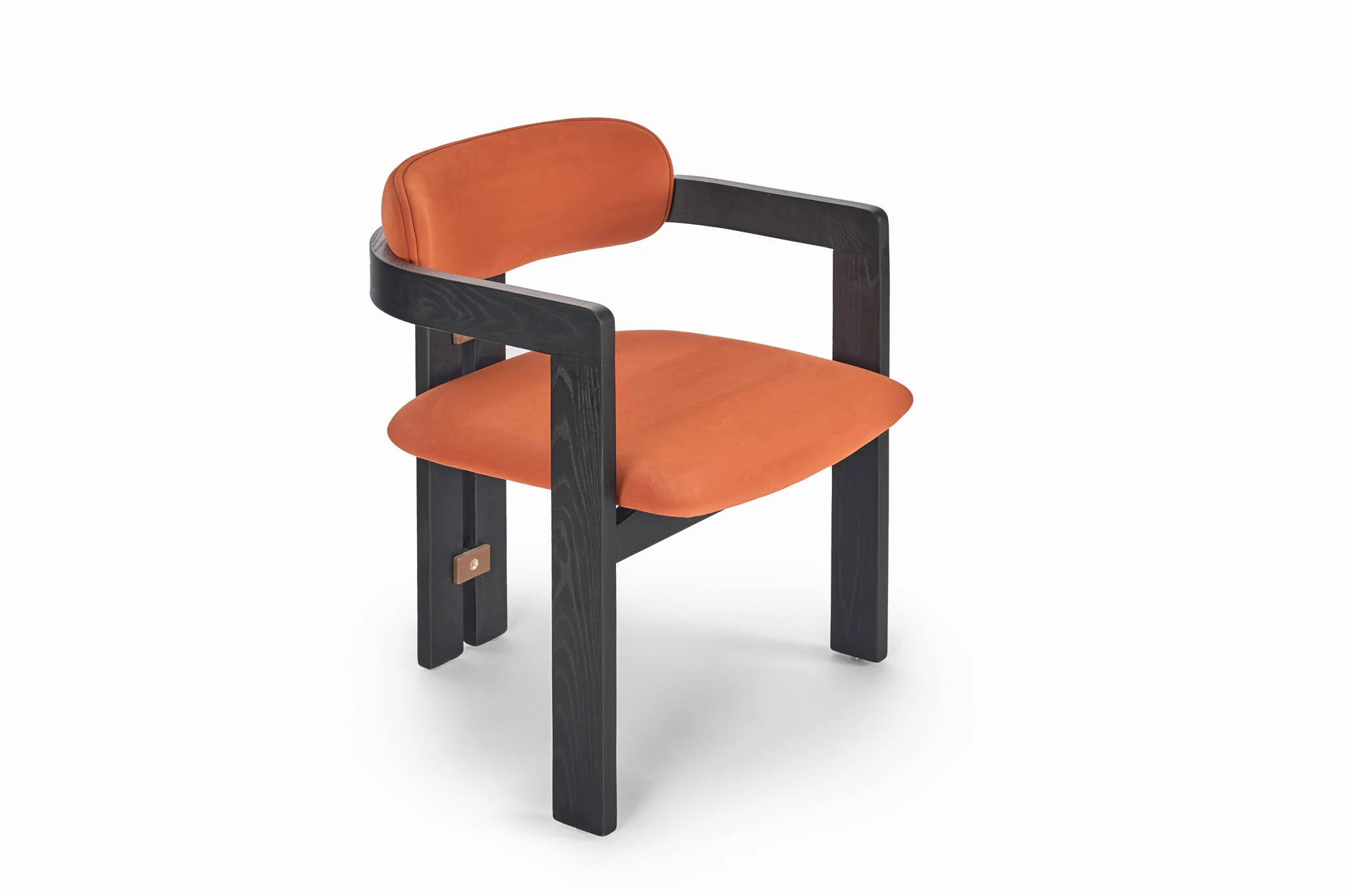
The Italian Minimalist Upholstered Dining Chair is listed at 54 × 56 × 93 cm, with an upholstered seat and a solid wood frame. Its slightly wider overall envelope is not proof of greater usable seat width or better comfort. Those questions need the sample, a dimensioned drawing and a clear description of the cushion construction.
When comparing it with the 50 cm solid wood dining chair, keep the table and trial conditions the same. Observe whether the front edge presses uncomfortably behind the legs, whether the back supports the intended posture and whether the user can approach the table without leaning forward excessively. These are observations for the selected users, not laboratory test results or a promise that one chair will suit everyone.
Chair legs and floor protection matter when the seat is moved
Dining chairs are pulled out and repositioned repeatedly. For the wood-framed models, inspect the leg ends and confirm the supplied glide or floor-contact detail. Ask which flooring types the proposed protection is intended for. A showroom floor may behave differently from polished stone, timber or a rug at the destination.
Test the sample on a representative surface if possible, and note movement, noise and any tendency to catch. Do not select an alternative glide solely because it makes the chair move more easily; stability and the intended floor must be considered together. The public descriptions do not identify a universal floor-protection specification.
A dining chair manufacturer in China should receive a defined use setting
Before expanding an order of the 54 cm upholstered dining chair beyond a private dining room, identify the intended frequency of use and cleaning method. A chair selected for a family dining set may face a different routine in a shared dining space. The manufacturer needs that distinction before proposing evidence or changes to the upholstery and frame specification.
The supplier needs to know whether the order is for private dining rooms, a retail collection or a commercial dining environment. These settings can require different supporting documents and maintenance arrangements. A dining-chair label alone does not demonstrate that a chair has been evaluated for every setting in which it might be used.
For example, an interior contractor may like the same curved-back chair for a private residence and a busy communal dining space. The visual choice can be similar while the performance requirements differ. Before extending the selection to the second setting, identify the relevant testing and documentation with the project team. Do not let an approved appearance stand in for approval of the intended duty.
BIFMA distinguishes public and lounge seating, including dining settings, from other seating categories. That distinction is useful when requesting appropriate evidence. It does not establish that any HEZEN CASA chair has passed a particular standard. A report, if required, should identify the tested chair or applicable construction and explain its relevance to the order.
Keep physical product inspection separate from documentary verification. A chair can appear well finished without a relevant test report, and a report does not replace inspection of the supplied finish, assembly and dimensions. Both forms of evidence should relate to the actual version being purchased.
Compare the upholstery and wood finish as a dining-room combination
The Italian Minimalist Dining Chair is listed at 52 × 55 × 92 cm with fabric and solid wood. Alongside the solid wood, curved-back and upholstered-seat alternatives, it provides another silhouette to compare. Use the actual material samples for the proposed versions; photographs cannot establish fabric composition, texture or cleaning behavior reliably.
For a dining set with a natural marble table, place the upholstery and wood finish beside the approved stone sample. A warm-colored seat can change how a cool stone appears, while a dark chair frame may make the table base visually recede. These are design judgments to test under the room’s lighting, not fixed rules that one color must accompany another.
A repeated retail order needs an agreed fabric reference and wood finish reference. If the buyer changes the upholstery to suit a new collection, assess the sample again at the cushion edges and around any curved back. A material that looks similar in a swatch can pull, fold or present its texture differently on the chair.
The Association for Contract Textiles’ performance guidance separates several aspects of textile performance. For these upholstered dining chairs, request available information relevant to the selected fabric and its cleaning regime. Do not treat a single abrasion figure as proof of stain resistance, seam performance or suitability for a particular detergent.
Approve the repeat order against the selected chair sample
Where the order includes both the solid wood dining chair and the curved-back design, keep their sample approvals separate even if the fabric color is shared. Identify the correct frame finish and cushion reference on each record. Otherwise, a material approval for one silhouette can be mistakenly applied to the other, and the buyer loses the ability to compare the delivered pair with the intended dining arrangement.
Once a chair-and-table combination works, identify the approved version precisely. Record the chair design, material references, finished dimensions and any agreed floor-protection detail. Keep the approval sample identifiable so that later discussions refer to the same object. A photograph named “final chair” is insufficient if several versions share that name.
For a mixed-chair order, explain which design belongs to which room or dining arrangement. The 50 cm solid wood chair and 54 cm upholstered dining chair should not be substituted automatically because they share a general style. A change can affect spacing, the appearance of the set and the expected material specification at the same time.
Ask the supplier to confirm whether the chairs ship assembled and how the frame and upholstery are protected. If any components are removed for transport, require the assembly information and a complete hardware list. The published product summaries do not confirm stackability or a flat-pack format, so a buyer should not build a freight calculation around either assumption.
Before dispatch, inspect the agreed finish and dimensions, the supplied component count and the movement of each chair on a suitable level surface. HEZEN CASA’s furniture inspection article offers wider preparation advice; the order record should identify the checks specific to these dining chairs.
The final choice may be the slimmer solid wood chair, the more enclosed curved-back design or the wider upholstered-seat version. Make that choice after the chair has worked beside the selected table, with the intended users and floor conditions represented. Then the order describes a usable dining set rather than a collection of dimensions that happen to fit in a spreadsheet.