Luxury Bedroom Furniture With Leather Accents You Will Actually Touch
Run a hand over the drawer front, then sit against the headboard. Those two surfaces may be sold under the same broad description, but they are used in very different ways. If you are buying luxury bedroom furniture with leather accents for a villa, a showroom or a set of guest rooms, decide where leather belongs before trying to match every piece. The HEZEN CASA bed and storage ranges give you places to start: a strongly shaped upholstered headboard, a low frame with a smoother line and leather-detailed dressers that bring the material into the dressing area.
We manufacture furniture in Foshan and supply upholstered beds and casegoods in several material combinations. That lets a procurement team approach one room as a set of individual surfaces. The headboard can be the part that catches the light. The chest can have a tactile drawer face. A side panel can carry a contrasting wood frame. Clarify those roles while the specifications are still open, because the way the furniture looks in a wide photograph cannot tell you every material your hand or a cleaning cloth will meet.
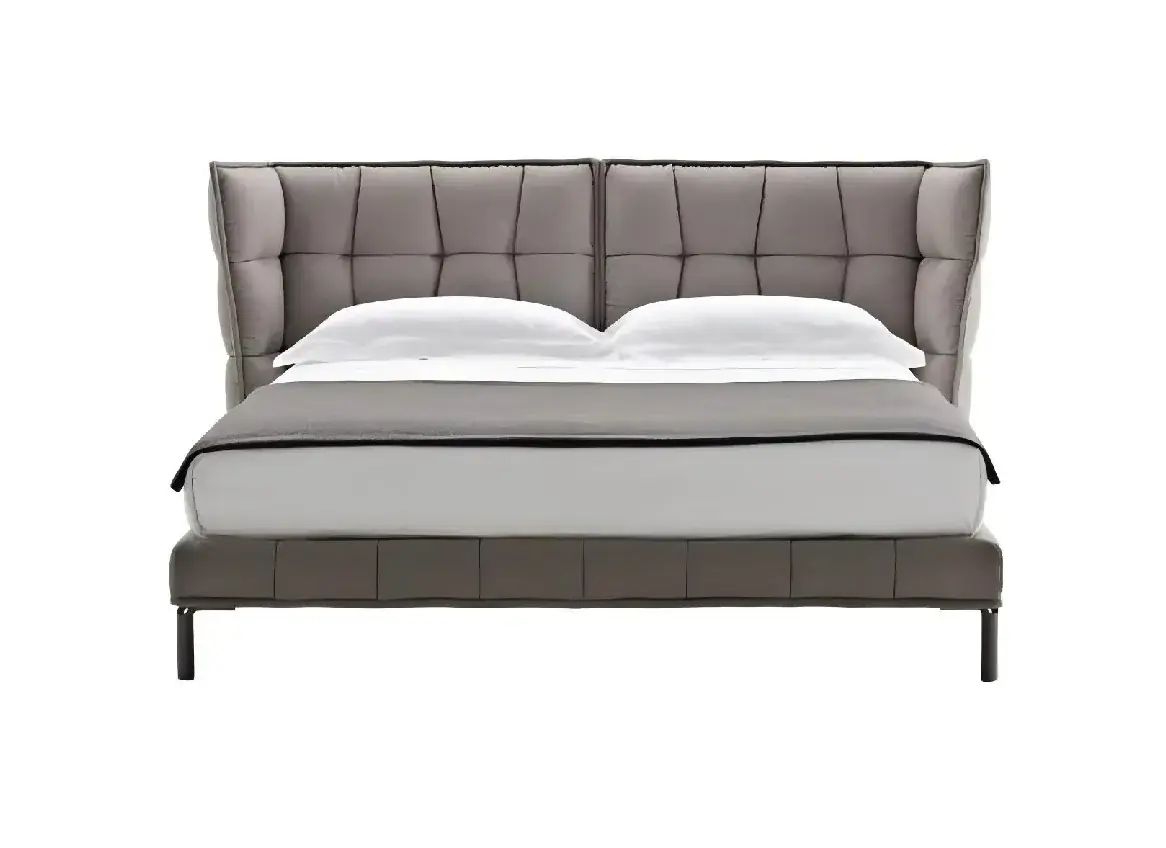
Choose which part of your leather bedroom furniture needs the strongest outline
Leather across an upright panel will meet the room's light from the front and often stays in view when the bed is fully dressed. Upholstery close to the floor may mainly be seen as a band beneath the bedding. Stand near the bedroom entrance and note how much of each face you can see. That helps you spend time on the finish and structure that shape the room. For projects selecting several pieces together, it also gives the manufacturer a clear reason for one surface to be treated differently from another.
Look at the stitched sections on a wingback headboard in side light
The Grey Grid Tufted Wingback Nappa Leather Bed is listed at 225 × 190 × 115 cm, with nappa leather and solid wood. It combines a segmented headboard surface with a winged outline. A designer considering this form for a large main bedroom can use the sections to bring some depth to an otherwise flat wall. Look at a finish sample from straight on and from the side, then compare an assembled corner if one is available. On a shaped upholstered piece, seams, side light and reflections can change the look more than a small flat swatch suggests.
For a villa where the head of the bed faces a quiet, undecorated wall, that texture may be the main visual detail. In a room that already has wall panelling and a patterned textile behind the bed, the same outline introduces another clear set of lines. Draw the headboard onto an elevation of the actual wall before approving the sample. Try looking at it with the pillows from the intended scheme, too. The area people see and use will change once the bed has been fully dressed. The decision can depend on whether the grid still reads calmly within that smaller visible surface.
Use a smoother leather face if the bed is meant to sit below the room's trim
The Beige Plain Smooth Nappa Leather Low Platform Bed, listed at 220 × 180 × 85 cm with nappa leather and solid wood, gives the buyer a different proportion to check. Its low frame and flat headboard emphasize a more continuous line. Consider it where a taller wing may interrupt a window return, or where the room already has a distinct horizontal band. A larger smooth area can look beautifully quiet. It also puts the appearance of the selected material in plain view, so bring the actual finish sample to the same daylight and lamplight used in the room.
A dealer can make the difference clear by setting enlarged product views alongside the actual material samples. Ask buyers which of the two headboards they would want behind them when reading. The answer may derive as much from perceived shaping and reach as from whether the leather is more prominent. Use the adopted mattress height while making that comparison. Where clients use large pillows, show the remaining visible upholstered face and the top area that remains within reach. This is a better discussion than presenting both simply as upholstered leather beds on a price list.
Compare the transitions at the bed's corners as well. The flat beige profile may be chosen because the occupant sees its side from the doorway. The grey wingback may be chosen because someone wants a feeling of enclosure when sitting up. If the purchase drawing identifies a leather face and also shows the backs of those shapes, mark which finish is expected on each side. A sample that represents the exposed part of a headboard does not automatically identify a surface beneath it or behind it. Approving the finish by face helps the people who review the piece from more than one direction.
Specify leather on the drawer fronts and identify the surrounding material
Moving from the bed to the dressing area changes how people come into contact with the material. At a drawer front, they touch the same places repeatedly while handling clothes and opening the unit. They also see the edge around the front from above and from the side. Agree where the leather finish begins and ends on the exact casegood. Check how it sits alongside the drawer pull or opening detail. Ask which finish is used at the top and sides rather than using the front material as a single description for the cabinet.
Put the narrow chest and wide dresser next to the rest of the finish board
Compare the Curved Six-Drawer Tall Leather Chest of Drawers, listed at 60 × 45 × 130 cm, with the Minimalist Six-Drawer Leather Wide Dresser, listed at 160 × 45 × 85 cm. Both specify leather and solid wood. The chest concentrates the drawers in a narrower vertical arrangement with rounded edges, while the wide dresser extends the leather-front treatment across more wall and has a contrasting dark side frame. Place both diagrams next to the selected headboard and compare how much material is visible at once. You can then decide whether to connect them with the same sort of surface or let the dresser introduce a deliberate contrast.
Consider a design team working with a long low dresser opposite a smooth bed. In the part of the room where a window lights both pieces, matching screens may make them look deceptively close. Put both physical samples against the actual frame or sample board. Tilt the drawer finish to the angle at which someone will see it when approaching the dresser. If the furniture does not share the same material on every face, that can still look deliberate when the color and texture have been judged together and the different surface roles are written into the order.
In a smaller guest suite with the tall chest at a corner, review the curved edge and the surface a guest uses to pull a drawer. If clothing will brush the finish whenever someone walks past, bring that observation to the supplier before committing to the piece and its placement. The dresser top may have a completely different job, including a place for keys and personal accessories. Specify the performance or protection that job requires for the actual top. An upholstered drawer front does not answer how the separate horizontal surface should be handled.
The room light can make the fronts of the six drawers appear uneven if a sample is viewed at one height and the dresser is checked at another. Look at the assembled chest from the point where a person normally stands. Then open the drawer they would use most often and observe which corners and edges come into view. Under a wall-mounted light, review the wide dresser from each end of its longer run. A single straight-on photograph is useful to identify what was selected, while the angled views show the relationship between front and frame that the team needs to accept.
Keep the material description tied to the actual bed and dresser
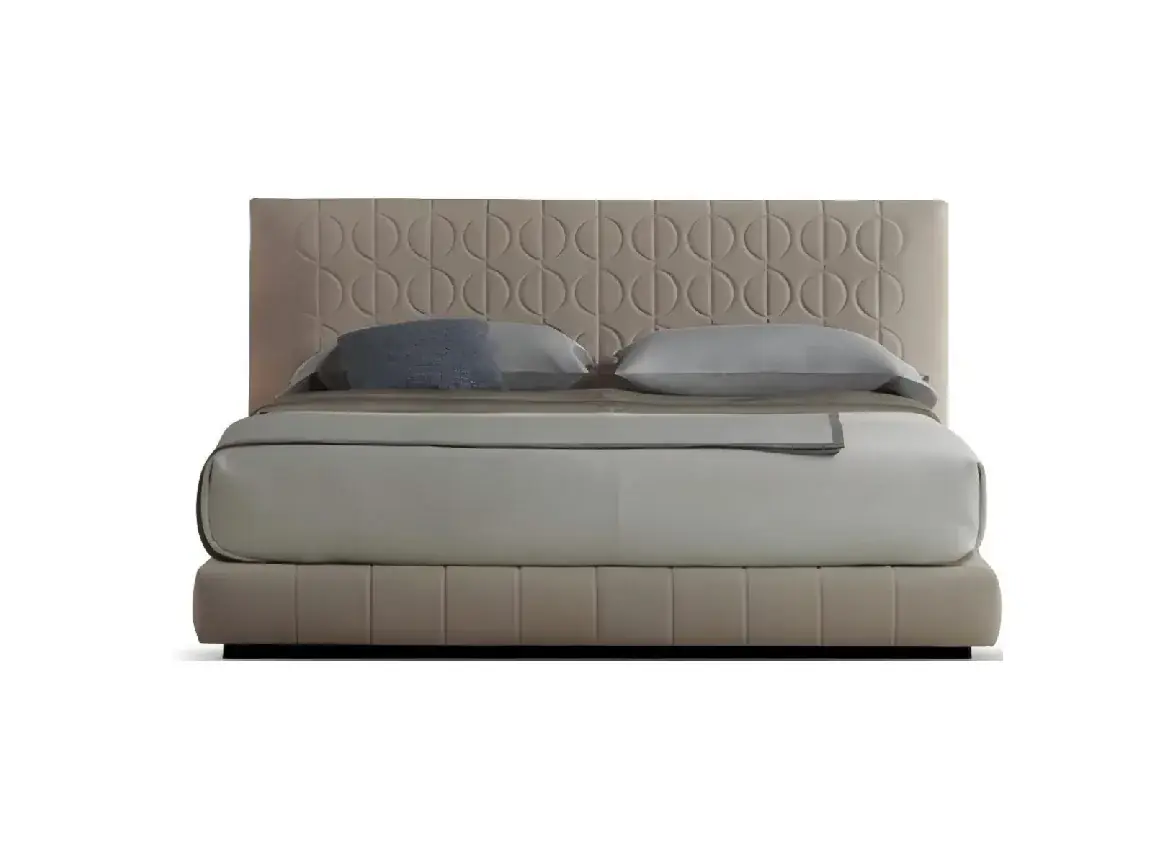
The Beige Circular Embossed Leather Luxury Bed, listed at 215 × 180 × 105 cm, identifies PU leather and solid wood in its specifications. Treat that as a separate upholstery choice from the listed nappa leather products. It may be a useful comparison if the project wants a certain curved or embossed appearance and is weighing different material routes. Before committing, ask what the product documentation calls the upholstery and which proof is available for the version actually being ordered. A buyer should be able to describe that material correctly in a showroom, guest-room handover or purchasing schedule.
The Leather Naturally terminology guide explains how different finishes are described. Get the precise surface treatment and care instructions from the supplier for the finish you have approved. In your own file, write the name seen on the approved sample and keep the actual finish documentation linked to the furniture reference. If the treatment is unknown, leave that question open during review. A word like nappa by itself offers little guidance about which care routine to follow.
One annotated surface schedule can carry the difference through several suppliers or installation phases. A bedroom might use a shaped genuine-leather upholstered headboard and a separate dresser that also lists leather, or prioritize the soft face at the headboard and use an alternative on less visible pieces. Give the headings in the schedule names that describe what is being approved. A short example might read like this:
| Surface we will see or use | Question to settle at the sample review |
|---|---|
| Grid face on the higher headboard | Which finish follows the surface across the front and wing? |
| Vertical drawers on the tall chest | Which finish is used on the drawer face, edge and adjoining frame? |
| Low platform shown with PU upholstery | Does the signed specification identify the upholstery accurately? |
For a multiroom order, retain the reference you approved under lighting typical of the room. If a later order uses similar wording but a different sample code, compare it with the retained reference before assigning it to the same product listing at your store. This is particularly helpful when the wide dresser is sold with a contrasting frame. A variation may do little to the drawer face by itself, yet look quite different next to a finish the customer already bought. Agree with the factory whether the later specification should match or intentionally differ, then record that decision so the difference is visible to whoever handles the order next.
Where the principal concern is a fabric feel at the headboard, use our comparison of upholstery for beds to put woven and textured options alongside the leather ones. Try the chosen surface where a person's shoulders meet the panel and keep the clothing storage sample going through its own set of checks. A surface that appeals as a large tactile headboard can be different from the finish you want at the chest where clothes and personal objects are handled.
Set the actual care card beside the finish board before signing off. Locate which document covers the leather face and which covers the wood or other adjacent material. If instructions for a panel or cabinet top are missing, bring the exact item reference back to the supplier and complete that part of the order file. This also gives a site team somewhere to check before removing installation dust from an unfamiliar finish. Let the approved furniture choose the instructions, especially when several materials meet at the same edge.
Keep close views of the approved drawer edge and wingback seam with that record. If a later buyer wants to repeat the room using a shorter bed, those photos help convey the relationship without implying that a different frame takes all the same materials. Confirm the new selection afresh.
Pick the surface you want a person to notice first, then make the frequently touched ones easy to identify on the order. You'll have a bedroom that looks coherent from the doorway and a record precise enough for the people who sell, receive and use the pieces.