Pairing Luxury Accent Chairs in a Formal Sitting Room
The first view of a formal sitting room is often the back of a chair. That makes it an odd place to buy two matching pieces from front-facing photos alone. If you are specifying luxury accent chairs for a residence, design studio or display suite, decide whether they should frame the sofa or create a place for two people to talk. Then draw their actual angles, including the space needed for someone to get in and stand up. The chairs in HEZEN CASA's collection range from compact fabric lounge chairs to wider upholstered forms. Start by comparing two of those footprints in the sitting room rather than picking a pair purely for the upholstery.
A pair of chairs brings rhythm to the room. It can also close it up. Two broad backs next to one another may feel almost like a second sofa when they face away from the entrance. Angling the chairs can show more of their profiles and make the space feel ready for people. Watch the space between arms as you move each chair. One foot of a chair can change the angle a visitor naturally takes as they turn to sit. Draw the arm and the back clearly instead of using a single square for each piece at the presentation stage.
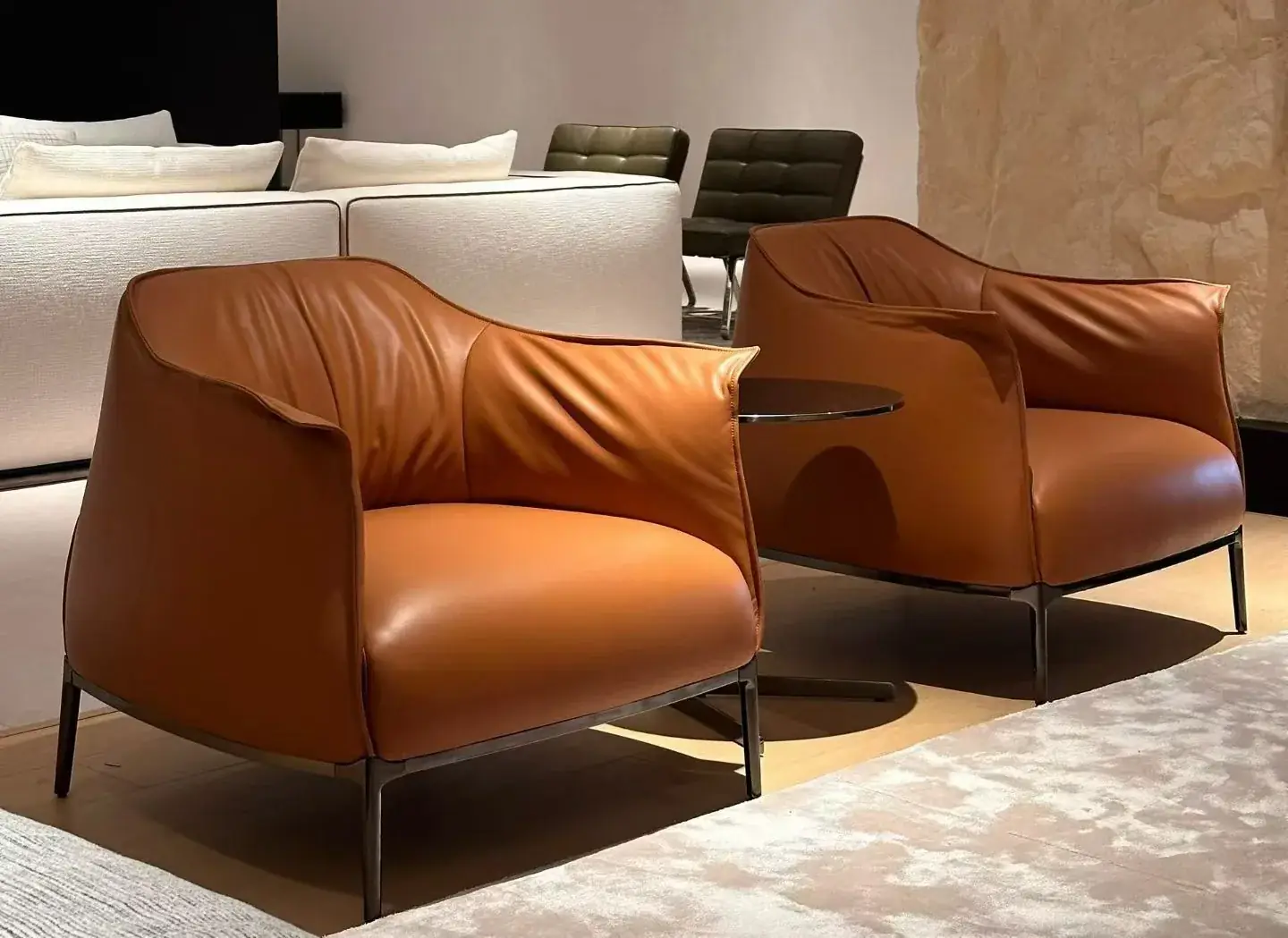
Place the luxury accent chair pair where the conversation should happen
Let the room's expected use determine whether the pair should match. Two matching chairs with similar approach spaces can make a natural conversation corner opposite a sofa. A single larger chair with a more compact companion might suit an existing fireplace and a narrower corner. If one position is likely to be used mainly for reception and the other by a family member who spends more time there, discuss that with the person choosing upholstery. The seat one uses for fifteen minutes may be different from the one that suits an evening's conversation.
Fit the sculptural fabric chair between a sofa and a window
Suppose a designer has to arrange seating beside a full-length window. The chairs should take in the view while leaving a visible part of the glass from the hallway. The Italian Minimalist Sculptural Lounge Chair is listed at 66 × 70 × 78 cm, with fabric and solid wood. A pair gives the designer a smaller initial outline than the two broad upholstered alternatives below. Turn one toward the person sitting toward the middle of the sofa. Check the other chair from the same spot. If the turning arcs create a narrow V that guests have to step into, try slightly different angles before ordering both pieces.
Leave room for curtains and their hardware in this particular position. A chair can clear the fabric when a curtain is open, then catch a fold when someone draws it in the evening. Mark the actual line of the track and the curtain stack. A slim chair may still fit comfortably after the curtains are drawn, but the outside of its arm or frame can be the part to measure against the textile. Test with the chair slightly farther from the window end than you first drew it and see whether it still reads as part of the pair.
Try an armrest lounge chair below a prominent view line
The Italian Minimalist Armrest Lounge Chair is listed at 68 × 72 × 78 cm with fabric and solid wood. It has a similar overall height to the sculptural model. An obvious arm changes how a guest may find and settle in the seat, and how the pair appears from a corner. Put the projected arm in the mock-up instead of working from shell height alone. The page's overall dimension cannot establish the exact width between arms, the angle of the back or how much support someone feels. Ask for those details on the actual version when they affect selection.
One chair can also face the room at a more open angle for a buyer who regularly invites guests. Use the drawing to decide whether that chair needs permission to shift on the rug. Somebody may move it a little to face the speaker as the room fills. If that movement unbalances the display, plan a new baseline where both uses work. It takes a little more thought than setting the chairs at matching diagonals for a photograph. On a fit-out drawing it can be as simple as documenting two acceptable positions alongside a fixed centre line for the sofa.
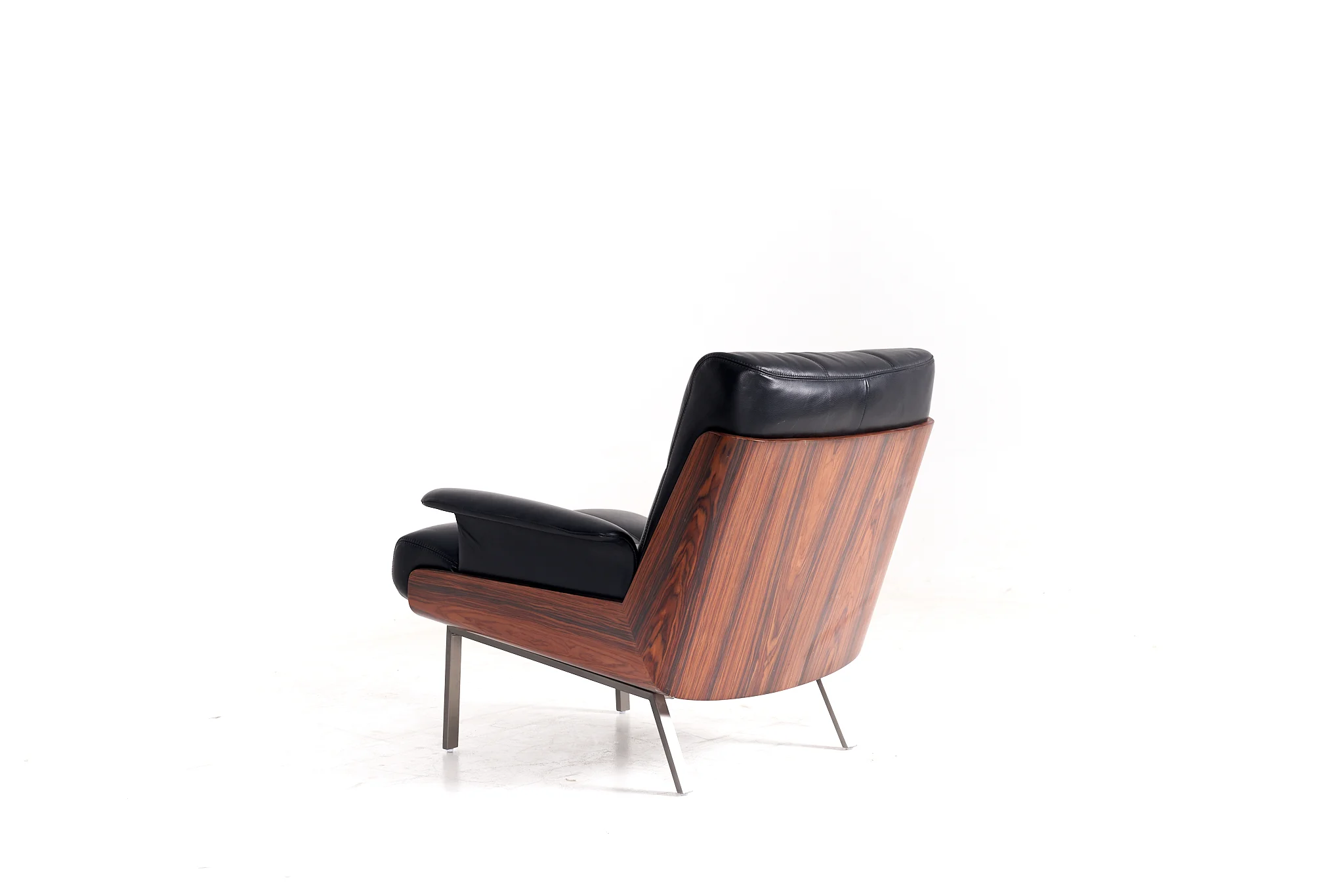
Give each formal room a chair silhouette that can be recognized from the hall
A larger statement chair is useful where the floor can carry its volume and the visitor sees enough of the side to understand its shape. In a room with very high skirting or large wall panels, a prominent side can give a room a stronger local focus. If the door presents only the top of the back, that same piece might look heavier than it feels when you sit down. Try a quick sketch of the two elevations separately. Use the silhouette your guests will see, not the product photograph's best angle.
Show more of the caramel leather armchair than its back
HEZEN CASA's Caramel Top Grain Leather Luxury Armchair is 75 × 85 × 90 cm according to its product specifications, which list leather and metal. Its larger footprint can be worthwhile when the chair has a clear place of its own away from the entry route. The color and slender visible base give a designer two aspects of the piece to consider beside the sofa. Show enough of the side for that decision to mean something. If the chair is tucked so far away that the sofa hides its lower half, see whether a compact fabric option would sit more naturally on the plan.
Imagine a procurement manager coordinating two adjoining rooms visible from the same hallway. The owner wants the rooms to feel related without seeing identical backs on both sides of the view. In the room with warmer finishes, a caramel chair can appear as visitors approach, with the outside edge of another chair facing the first. In the second room a fabric chair with a shallower overall envelope can keep that hallway perspective quiet. Ask for two genuine samples and photograph them from the part of the corridor where they can both be seen. Discuss each chair as a separate finish decision with the manufacturer.
Keep a position on the drawing for a particularly dark or light chair to be exchanged between the rooms during the sample test. A caramel chair might look strong against a pale couch in the first room and disappear beside the wall finish in the other. If the owner wants both rooms to share that color, the finish can recur on the seat or on an adjacent item where it will still be seen. The decision starts with the actual 75 × 85 cm of the armchair. If the hall views would be clearer with two chairs with shorter backs, bring that back to the floor plan before choosing a color.
Give the larger textured bouclé accent chair an unbroken outline
The Textured Boucle Fabric Sculptural Accent Chair is listed at 80 × 90 × 95 cm with bouclé and metal. It is a larger object than the 66 cm fabric chair, particularly in the 20 cm difference between their listed depths. Its wrapped upholstered shape can work as a focal point where there is an open view across floor or rug. Tape the full outline, then see whether a second chair actually contributes something to that side of the room. One substantial chair and enough space to cross the group may serve the owner better than two equally strong forms taking up the whole view.
Where the room hosts many appointments, confirm the expected care for the exact chair textile and the likely points of contact. A material that gets little wear in a quiet reading area may see two hands enter and leave a formal group many times a day. Ask for the available evidence without assuming that bouclé, fabric or leather as a label has one particular performance level. The Association for Contract Textiles performance guidelines explain separate factors such as abrasion and colorfastness for contract textiles. Those guidelines can inform a supplier conversation. They do not establish results for the chair you are specifying.
Check how the accent chairs use the coffee table before approving the pair
Start from the area a person actually sits in. Trace that line to the closest part of the table and draw the path they take to leave. A pair looks even on a plan when both pieces face the same point. A cup set in the middle of the table may still only be reachable from one seat. If the table mainly serves the sofa and the chairs ordinarily look across at it, plan for the chairs' needs separately.
Use the round table to compare two directions of reach
The Italian Minimalist Round Coffee Table is listed at 90 × 90 × 45 cm in solid wood. A similar-size tracing lets buyers see whether each chair faces useful space on the table. Lay out the measured chairs instead of putting a distance arrow between their fronts. One may approach from the near side of the table while the other needs to reach past its arm. Move the 90 cm outline a little off center and look at the trade. One guest may gain a comfortable place to put a glass while the floor route behind the other seat stays steady.
It is easy to confuse how the grouping feels empty with how people use it during a conversation. Test with two people in chairs and a third person passing to the other part of the room. That reveals whether the gap everyone planned as an opening can still be entered from both sides. Place a glass where the first chair can reach and see if the second person can use it without leaning over the table's center. If one chair needs a separate surface, you can solve that before the schedule has already assigned one coffee table to everything.
For the same test, lay a strip of card around the expected edge of the rug. See where the legs actually meet the floor as each chair moves. Two people seated opposite one another may rotate in different ways as they get up. A carpet edge immediately beneath one of the outer feet can make the chair's planned position impractical. The option of shifting the rug a few centimeters might keep both seats visually centred. If that introduces a fold close to an actual door, revisit the rug and chair combination before changing the table. The full-width arm of the larger bouclé chair may need a little more space to read clearly in the room after that change. Look at the outside profile again from the hall and retest the smaller lane people use to reach the pair.
Keep the selected shapes separate through the supplier handoff. HEZEN CASA is a furniture manufacturer in Foshan, and the named chair models give the discussion an object for each finish, count and placement. A designer who wants two versions of the same form can show those exact fabric or leather references to the maker. Avoid ordering an unspecified “pair of caramel chairs” if each one belongs in a different setting. The company's guide to specifying with an accent chair supplier goes further into how the buyer can keep an intended finish attached to the right item.
Leave the room with the chairs facing the way two people naturally sat through the test. If one turned slightly to keep talking without a stiff neck, keep that angle on the plan. Capture the view from the hall and give the maker the room names, product references and approved finishes. A pair that still looks balanced after someone has used it is worth holding on to.