Look closely at the outline
Review Curved Details With an Italian Style Furniture Manufacturer
A curved sofa, a tufted bed and a rounded lounge chair can share a soft visual character without being made or used in the same way. Designers and furniture buyers working with an Italian style furniture manufacturer should evaluate the actual edges, surface divisions and material junctions that create each piece’s form. Start with the detail that matters to the room, not a general request for smoother curves.
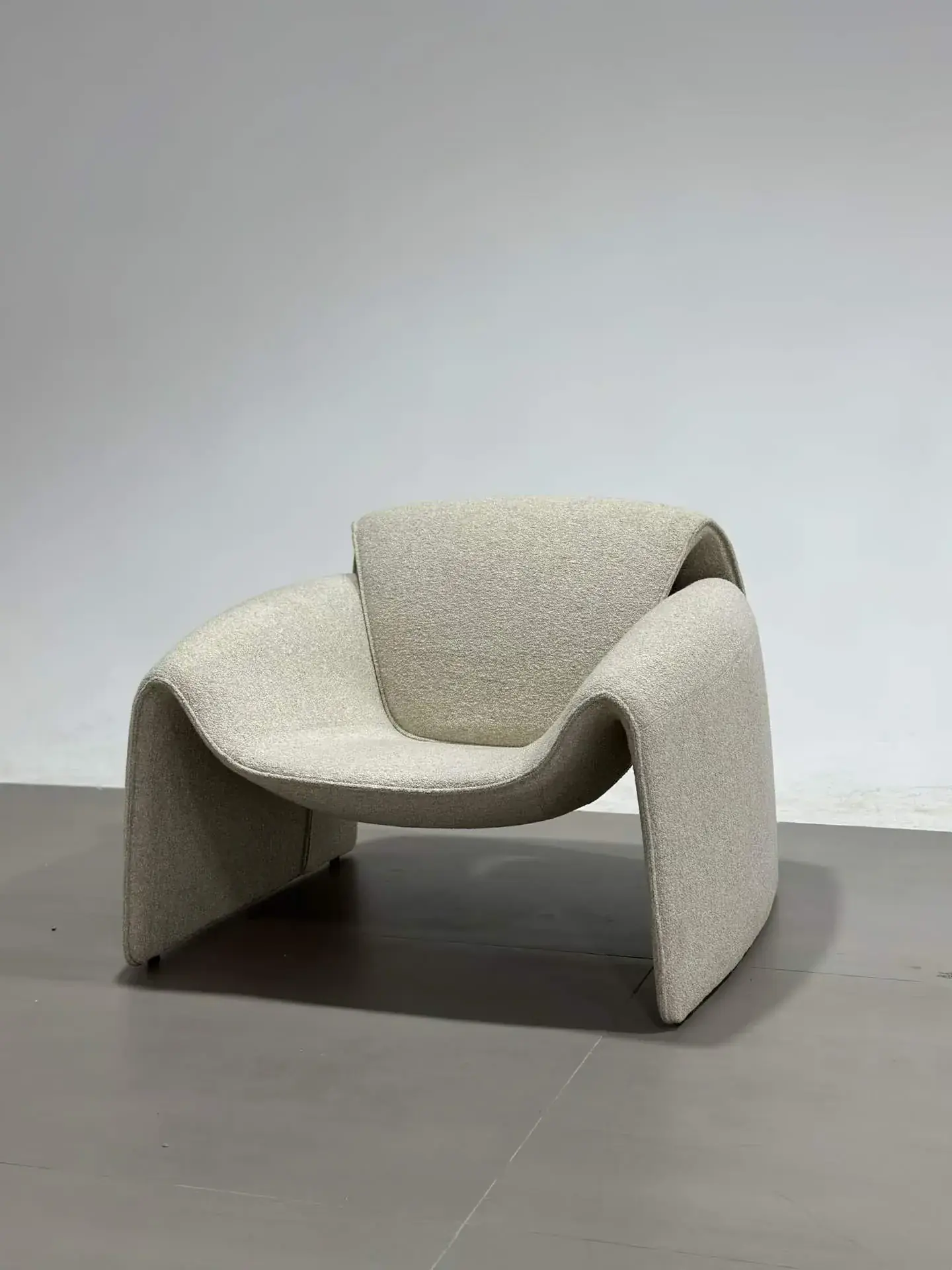
HEZEN CASA’s curved bouclé sectional, cream tufted bouclé bed, sculptural bouclé accent chair and light crystal marble dining table offer different expressions of a rounded form. Use the custom furnishing service to discuss a proposed adjustment. Italian style describes a design direction here; it does not establish Italian manufacture or another brand’s authorship.
An Italian style furniture manufacturer should explain which curved detail is being approved
A buyer may like the overall outline while disliking a particular surface division. Another buyer may want to preserve the tufting because it gives the form its character. Identify the actual detail before requesting a change. Asking for a more minimal version can mean fewer visible divisions, a different edge or an entirely different piece.
For a designer preparing a calm bedroom, the repeated padded areas of the bouclé bed may be the feature that makes the room work. For a living room with several textured finishes, the buyer may prefer a more continuous sofa outline. The right decision depends on the individual furniture and the surrounding composition.
The curved bouclé sofa should be reviewed from the end as well as the front
The off-white sectional is listed at 300 × 180 × 80 cm with bouclé upholstery and solid wood. A front photograph establishes part of its appearance, but the end and rear views show how the curve continues. Ask for views of the selected configuration from the directions in which it will actually be seen.
If the sofa floats in the living area, a rear surface becomes part of the room’s normal view. If one end faces the entrance, that termination deserves attention. A buyer should not approve only the most flattering angle and assume that the rest of the furniture has been considered.
Discuss the visible seam or surface divisions where they affect the accepted appearance. The purpose is to identify the intended execution, not to prescribe an unsupported sewing technique. The supplier should confirm how the proposed covering and form can be realized for the actual furniture.
A change in upholstery can also require another visual review. A sample showing the curve in one covering does not automatically represent the appearance of every alternative material. Ask which aspects of the sample remain representative and which need confirmation for the proposed version.
For a curved sofa viewed against a plain wall, the outline may be more noticeable than it is in a busy showroom scene. Ask for a clear view that allows the buyer to follow the curve without decorative objects obscuring it. This is particularly useful when the accepted design depends on a continuous rear profile rather than a front-facing composition alone.
Keep the distinction between an intentional surface division and an unresolved visual detail explicit. If the buyer wants a particular line retained, identify it in the accepted reference. If a line is unclear in the photograph, request another view. A vague instruction to remove all seams is not a complete or necessarily feasible upholstery proposal.
The Italian style furniture proposal should preserve the bed’s intended rhythm
The cream bouclé bed is listed at 210 × 180 × 100 cm with solid wood and Queen and King options. Its tufted treatment divides the upholstered form into repeated areas. Those divisions are a visible part of the design rather than incidental lines that can be ignored when judging the headboard.
Tufting on the bouclé headboard should be assessed as a complete composition
Look at the relationship between the padded areas across the headboard, including the ends. A close-up can help assess a surface detail, while a complete view shows the rhythm. Both are useful when the buyer is deciding whether the proposed piece retains the character of the selected reference.
If a different bed width is proposed, ask for the corresponding design rather than assuming that the same image applies without change. The buyer needs to understand the actual arrangement for the selected size. Do not infer the number, spacing or construction of padded sections from another version.
For a residential bedroom, the headboard may be seen mainly from the doorway and from beside the bed. For a showroom, visitors may approach much closer to the ends and rear. Explain the relevant views so that the supplier can provide evidence suited to the way the furniture will be assessed.
A buyer should also keep appearance approval separate from mattress and support approval. The outside measurements and size options do not establish every internal dimension. A successful tufting review does not answer whether the selected mattress and supplied support arrangement are compatible.
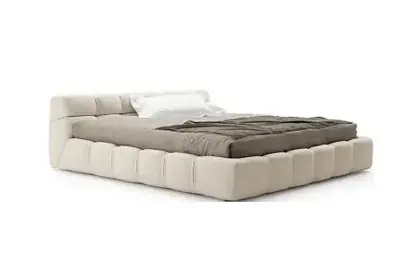
A requested smooth bed surface is a new design question
If the buyer dislikes the tufting, first decide whether this is still the right starting bed. Removing a defining detail may produce a different object rather than a minor variation. Ask the supplier to assess the proposed change, or compare a different listed bed whose existing form is closer to the intended result.
This is particularly relevant when the project has a clear visual brief but limited need for customization. A suitable existing form may make the decision more understandable. Where a custom form is necessary, the buyer should evaluate that actual proposal rather than approve the original photograph with a short instruction to simplify it.
Read the sculptural chair as a seat before treating it as an accent shape
The bouclé accent chair is listed at 80 × 90 × 95 cm with a metal structure and a sculptural upholstered form. Its curved arms and back contribute to the appearance, but a buyer also needs to understand the actual seating space and intended posture. Overall dimensions do not establish those details.
For a conversation area, the chair may be selected because its form remains visible from several directions. For prolonged reading, the buyer may need a more specific assessment of comfort and support. The same attractive silhouette can be relevant to both discussions without proving that it meets both needs.
Review the chair’s inside curve where the user actually sits
Ask for views that explain the seat and the relationship between the arms and back. The outside width includes upholstered form that may not be usable sitting width. A purchaser should not infer generous internal space solely from the overall 80 cm measurement.
If comfort is a deciding factor, seek an appropriate physical evaluation or other relevant evidence for the actual chair. A sculptural appearance does not establish a particular seat firmness, load rating or commercial-use suitability. Keep those claims out of the purchase description until supported.
A buyer comparing the chair with the curved sofa should consider whether their different contours support the same conversation arrangement. The chair does not need to imitate the sofa. It may work precisely because it introduces a distinct shape while serving a clear seating role.
At close range, review where the chair’s arm form meets the seat and back. At room distance, review whether those same curves create the intended silhouette. The two views answer different questions. A buyer who approves only the close-up may miss the room-level effect, while one who approves only the distant view may leave a personally important surface detail unresolved.
If two sculptural chairs are proposed together, assess the arrangement with both forms represented. Their combined visual presence may differ from the impression of a single isolated chair. This is a reason to evaluate the actual room proposal, not to assume that repeating an attractive object automatically creates the preferred composition.
Separate bouclé appearance from textile performance evidence
The word bouclé helps describe a texture, but does not identify every performance characteristic of a particular covering. Ask for the actual material specification and relevant supporting information. The sofa, bed and chair should not be assumed to use an identical fabric simply because their descriptions share that word.
As an external example, Kvadrat’s Serpentine upholstery information lists durability information for that specific textile. Such product-specific reporting illustrates why a texture name alone is insufficient. It does not identify Kvadrat as the covering supplier for these HEZEN CASA pieces or transfer any test result to them.
A round marble table needs a different kind of detail review
The light crystal marble table is listed at Ø140 × 75 cm with a glossy marble surface, a gold-colored metal base and a lazy Susan. Its rounded outline can complement upholstered curves, but the tabletop, edge, rotating element and base are separate visible components. Review the actual proposed combination.
A designer may want the table to create a clear change of material in a soft seating scheme. A buyer furnishing a compact dining area may instead prioritize the complete table’s use with the intended chairs. In either case, an appealing circular outline is only the starting point.
Judge the marble edge and metal base without guessing hidden support
Ask for the edge profile and underside information relevant to the selected table. A thin-looking edge does not establish the complete top construction, and a polished base photograph does not establish its connections. The buyer needs the actual assembly information when those details affect the purchase.
The lazy Susan should also remain identifiable in the proposal. Confirm the supplied arrangement rather than assuming that the circular central element is decorative or interchangeable with another version. Its relationship to the tabletop belongs in the complete-table review.
For the room composition, compare the table’s glossy stone and metal with the selected bouclé forms. The objective may be contrast rather than similarity. Describe that relationship to the supplier so that a later finish change is judged against the intended room, not simply against another isolated sample.
Approve the furniture’s visible details at both room distance and close range
The curved sofa needs a coherent outline from the entrance and an acceptable finish at its visible ends. The tufted bed needs its complete headboard rhythm as well as appropriate local detail. The accent chair needs an understandable seat inside its sculptural form. The marble table needs a coordinated top, edge and base.
A room-distance review prevents the buyer from losing the design in a series of close-ups. A close review prevents an attractive room image from hiding unresolved details. Use both deliberately, making clear which furniture version and finish are being assessed.
The guide to selecting accent chairs for actual room activities can help place the sculptural chair in that wider decision. A chair earns its place through its use as well as its outline.
When requesting the final proposal, identify the few details that must survive: the sofa’s continuous curve, the bed’s padded rhythm, the chair’s usable inner form and the table’s stone-and-metal relationship. Let the supplier confirm a feasible execution for each. That gives the buyer something concrete to approve without inventing a construction method behind the finished appearance.