Assessing an Italian Style Furniture Manufacturer Through Proportion, Upholstery and Finish
A pale sofa, a metal base and a stone table do not automatically form a coherent interior. Designers evaluating an Italian style furniture manufacturer need to look at how shapes and materials relate, rather than using a style label as a complete specification. HEZEN CASA’s off-white curved sectional, two-tone tufted modular sofa, sculptural accent chair, round marble dining table and low wood-and-metal coffee table offer different ways to build that relationship. Start by deciding which piece should dominate the room and which should support it.
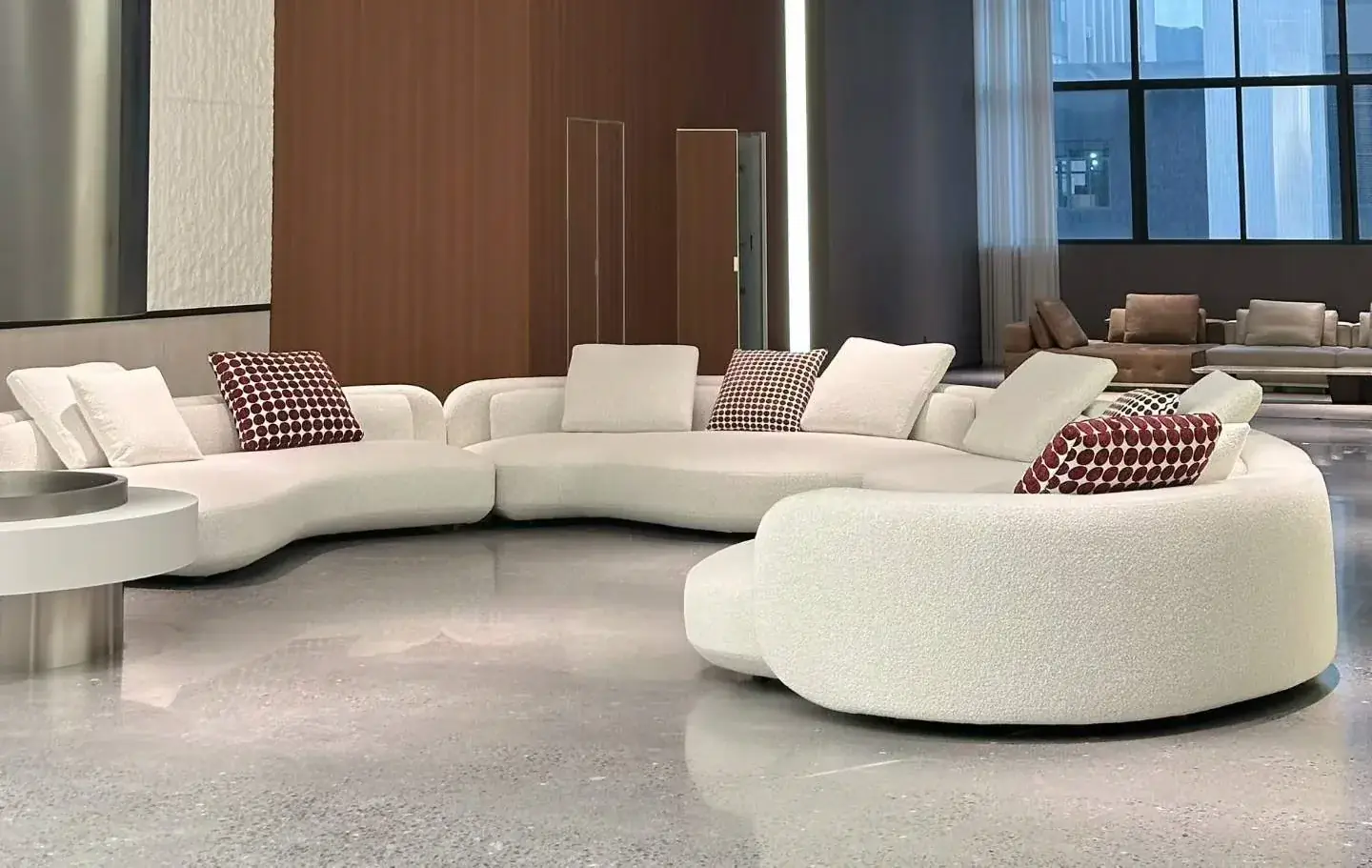
An Italian style furniture manufacturer should make the design language visible
Italian style describes a design direction here, not proof that a piece was manufactured in Italy or licensed by an Italian designer. HEZEN positions its collection around Italian minimalist luxury furniture in Foshan. A buyer should therefore evaluate the actual proposed furniture: its proportions, visible construction, materials and suitability for the intended interior. A geographic style reference cannot replace those decisions or establish an unverified origin claim.
The off-white sectional is listed at 300 × 180 × 80 cm, with boucle fabric and solid wood. Its rounded composition gives the room a different visual rhythm from the camel suede and black leather modular sofa, listed at 300 × 180 × 85 cm. Similar overall dimensions do not make them stylistic equivalents. One emphasizes a continuous pale curve; the other makes its contrast and divided upholstery more prominent.
A designer working with a quiet stone floor and restrained wall finish might choose the curved sectional as the principal soft form. In a room that already contains several strong curves, the two-tone modular design may create a clearer contrast. Neither is universally more refined. The useful judgment is whether the selected design strengthens the room’s intended hierarchy or adds another competing idea.
Compare the boucle curve with the tufted material grid
The boucle sectional should be reviewed as a sequence of curved surfaces, not just as an off-white color sample. Look at the back, front edge and visible ends in the proposed room. The tufted sofa asks a different question: how do the camel and black areas divide the composition, and where do those divisions meet? A room drawing should show enough of the furniture to make those differences legible.
If the buyer intends to change colors, preserve the discussion about form. Making both sofas beige would not erase their different upholstery geometry. Likewise, changing the curved sofa’s fabric would not automatically give it the same visual structure as the tufted design. Ask for the proposed material on the actual shape or an appropriate sample study, rather than deciding from isolated swatches alone.
Use the low coffee table to test the room’s visual weight
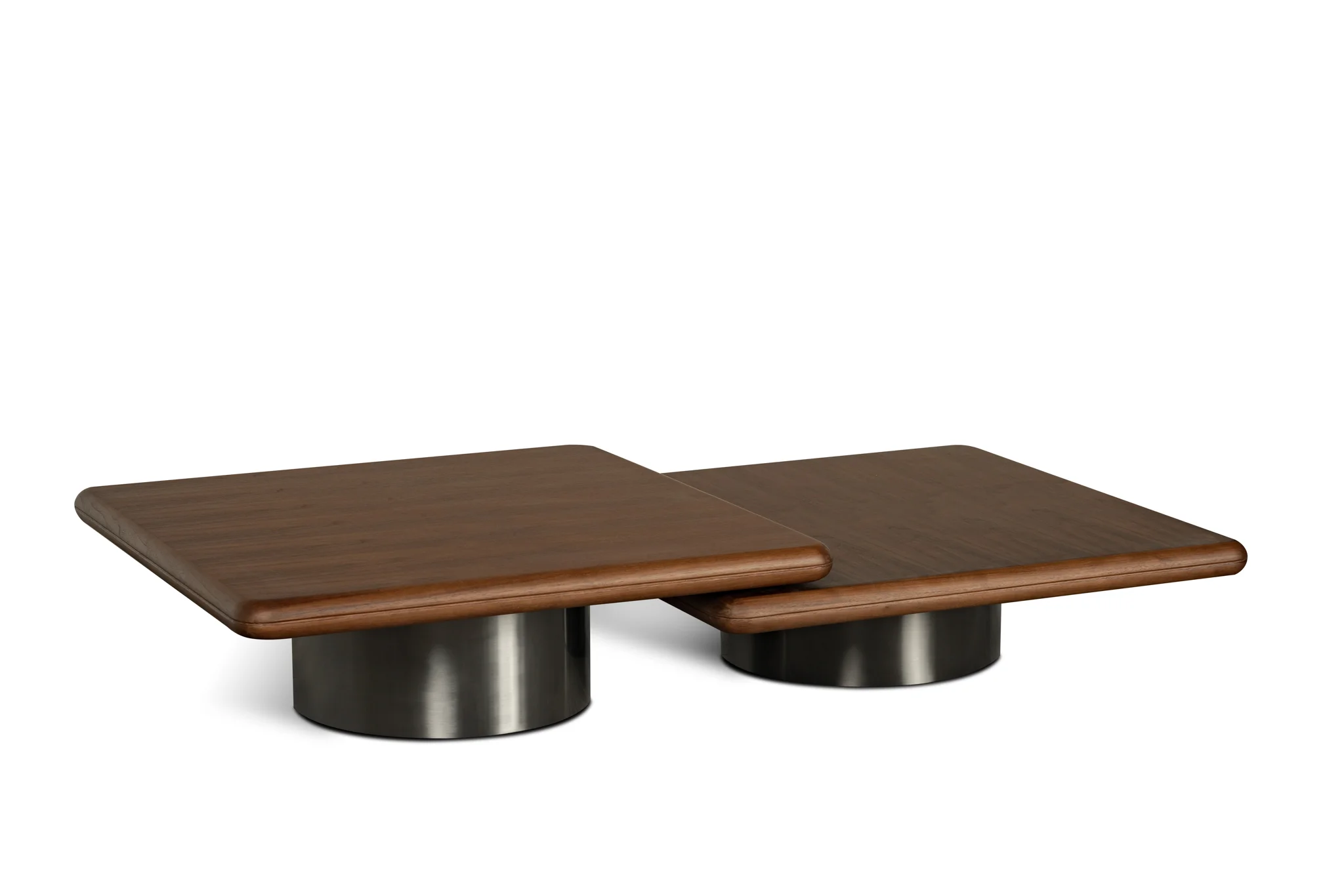
The designer low coffee table is listed at 110 × 65 × 32 cm, using solid wood and metal. Its low profile can help a seating group read as a horizontal composition. That is a design possibility, not a claim that its height suits every sofa or user. The buyer still needs to compare the actual seat position and intended use of the surface. A table can look visually quiet while being inconvenient for the activity expected of it.
For a reception-style conversation setting, the table may primarily organize the center of the group. For a family sitting room, it may need to support drinks, reading material or other everyday objects. Review reach and placement with the selected sofa. Do not choose the 32 cm height solely because low furniture appears in a reference image. The room’s daily use should remain understandable once the styling is removed.
A 32 cm table changes the relationship between sofa and floor
The coffee table’s top sits relatively low within the collection’s published furniture envelopes. In a drawing, show it beside the selected sofa rather than enlarging it independently to make a presentation board balanced. A product image scaled to fill a square can make a low table look much taller than it will in the room. Use the listed dimensions to keep the visual comparison honest, then confirm the supplied version before ordering.
The table’s wood and metal also create a material bridge between soft seating and harder architectural surfaces. That does not require matching every metal or every wood tone exactly. It requires an intentional relationship. If the table’s metal is different from another visible base, decide whether the contrast is part of the scheme. Do not allow several almost-matching finishes to accumulate because each was approved separately.
The sculptural chair should have a deliberate role beside the sofa
The textured boucle accent chair is listed at 80 × 90 × 95 cm, with boucle and metal. Its enclosed, shaped appearance can make it a strong object in a room even though it occupies much less width than the sectional. Placing it beside the off-white sofa creates a relationship between two upholstered forms. The question is whether they read as a controlled family or as too much of the same visual gesture.
A small gallery-like living room may benefit from one sculptural chair placed where it can be seen independently. A denser family arrangement may require the chair to work more quietly within the group. Test both positions in plan and from the main entry view. The chair should not be treated as a decorative sculpture that happens to permit sitting; its access and intended sitting activity still matter.
The accent chair’s 95 cm overall height is not its seat height
The published height describes the outside form. It cannot tell the buyer exactly where a seated person’s eye line will fall or how easily someone will get up. Request the relevant seat measurements and evaluate the sample when these details affect the project. This is particularly useful when the chair is placed opposite a lower-looking sofa. The overall silhouettes can be compared from the listing; the actual sitting relationship needs more information.
If the buyer wants a common boucle treatment across chair and sofa, identify the material on each piece. A shared descriptive word does not prove a shared textile. Curvature, seams and upholstery build-up can also change how a material appears. The manufacturer should show the proposed relationship on the relevant forms instead of promising that the finished furniture will look identical because both descriptions mention boucle.
Let the marble dining table introduce a controlled change of character
The light crystal marble table is listed at 140 cm in diameter and 75 cm high, with glossy marble, gold-colored metal and a rotating tray. In an open-plan interior, it can introduce a different material emphasis from the wood coffee table. The connection between the two zones need not be literal matching. Their proportions, finish intensity and relationship to surrounding furniture can create continuity while allowing the dining area to have its own identity.
For a designer coordinating a living and dining space, ask whether the glossy stone becomes the main visual focus when viewed from the sofa. If the intention is a restrained room, too many reflective or highly patterned surfaces can compete. If the dining area is intended to be more formal, that contrast may be useful. Review the actual proposed stone and metal finish together, rather than choosing the table only from a small catalogue photograph.
The rotating tray adds another circle within the tabletop. Its appearance should be considered alongside its use. Confirm the proposed tray and how it relates visually to the main stone surface. A buyer who expects continuous veining should not infer that result from a photograph of a different top. Natural stone variation is part of the approval discussion, not an imperfection that can be eliminated by a style label.
The Natural Stone Institute’s care information distinguishes appropriate stone care from casual all-purpose cleaning. Request guidance for the selected finish. A formal-looking table may still be used every day, so the design proposal should acknowledge its care needs without claiming that the surface is maintenance-free.
Judge the Italian style furniture collection as one room at normal scale
Review the furniture in the room’s actual light as far as the project allows. The pale boucle sectional, textured chair, wood table and glossy marble do not respond to light in the same way. A single color palette can therefore look more varied when applied to these surfaces. Request comparable material views and avoid treating a bright catalogue image as a precise color standard. The desired relationship should survive ordinary lighting, not only the conditions used to photograph one product.
The viewing direction matters as well. A low coffee table may be almost hidden when the room is seen from the entrance, while the chair’s taller outer form remains prominent. From the sofa, the table becomes more noticeable and the dining table may sit beyond it. Check those different compositions before deciding which piece should be visually dominant. A room is experienced from several positions, not as one fixed presentation board.
If the client requests a stronger statement after reviewing the scheme, change one defined relationship first. Reconsider the two-tone sofa or the marble’s visual emphasis before increasing contrast on every object. This gives the manufacturer a specific proposal to develop and preserves an intelligible hierarchy among the furniture already selected.
Before choosing the manufacturer’s proposed combination, assemble a scaled view containing the actual sectional, chair, coffee table and dining table. Check which object attracts attention first and whether that is intentional. Review the room from its entrance and from a seated position. A collection that looks coherent in a row of isolated product images may create a very different hierarchy once the published dimensions are represented accurately.
For a retail buyer, the same exercise can create a useful display story. Explain why the curved boucle sofa is paired with the low wood table, or why the tufted two-tone sofa is allowed to be the dominant object. Staff can then describe a relationship between products instead of repeating the phrase Italian style. That makes the collection easier to understand without inventing a designer attribution or an origin story.
Inspect the visible junctions that support the selected look. On the tufted sofa, that means the material transitions and padded divisions. On the chair, it means the continuity of its curved upholstery. On the tables, it means the relationship between top and base and the approved surface appearance. These are product-specific observations; they should not be replaced by a broad assertion that every item has premium craftsmanship.
HEZEN’s discussion of dining-chair and table fit adds the functional check once the room’s visual direction is settled. Keep both judgments in the final selection: the furniture should communicate the intended design, and the selected combinations should support actual use. Choose the manufacturer’s proposal because those relationships have been resolved, not because a familiar style term appears beside every product.