High-End Upholstered Beds That Earn Their Place on the Showroom Floor
A showroom bed should do two jobs. It needs to catch someone's eye from the aisle, and it needs to help the sales team take an accurate order once the shopper stops. For a furniture dealer, the first decision is which difference you want shoppers to see in person: the height of a more expressive velvet headboard, the sweep of a rounded bouclé back or the lower line of a pared-back frame. The HEZEN CASA bed collection contains examples of each, so you can start with the available floor space and choose what is worth showing at full size.
We manufacture furniture in Foshan and supply bed designs in several materials and proportions. That gives you room to build an assortment around the customers who actually visit the shop. A wide two-floor store might show two distinct silhouettes. A small independent retailer with one bay can use one bed as the anchor and support it with well-documented finish samples and a lower alternative to order. The most useful starting point is the conversation that the display needs to make possible.
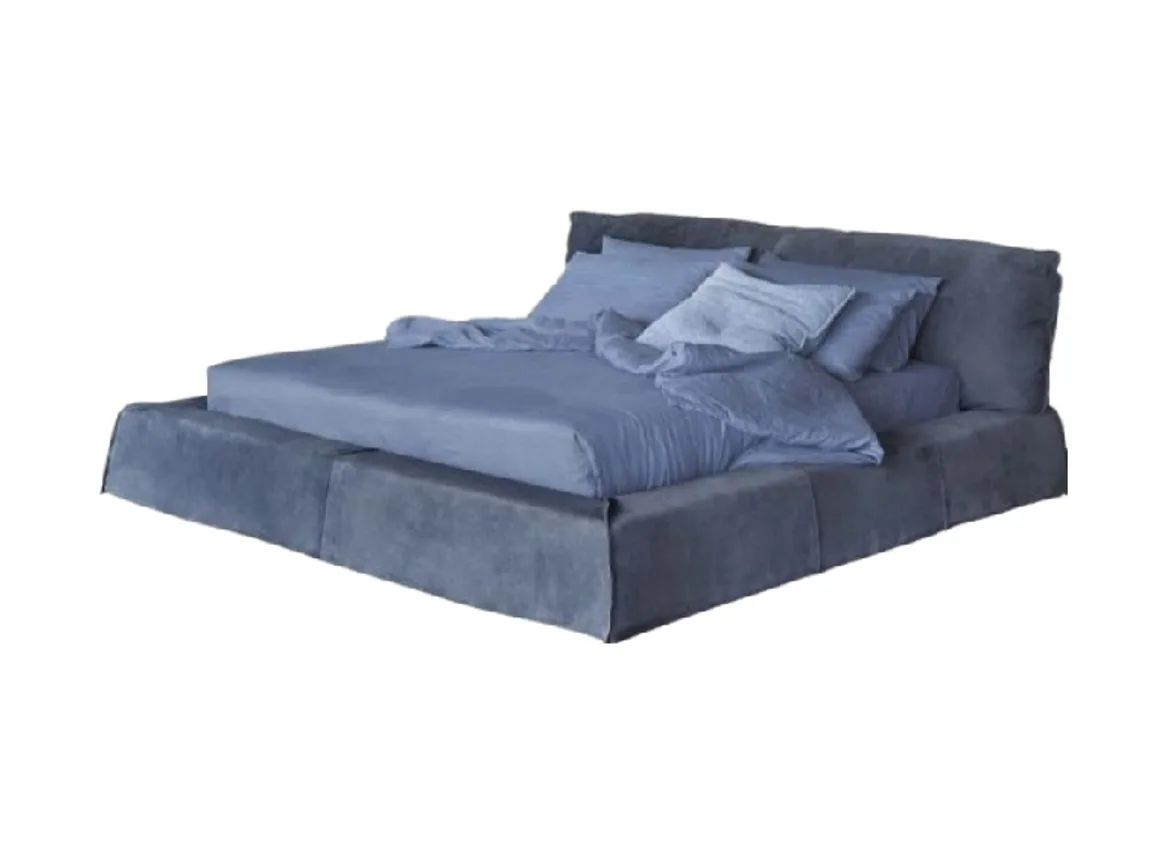
Give each showroom bed a question it can answer
Suppose a shopper loves the idea of an upholstered headboard but has only seen cropped photos. They want to know whether the furniture will overwhelm the room and whether they will still like the fabric when it takes up a whole wall. A floor model lets them move back far enough to judge the proportions, then come close enough to see how the surface is worked. Covering nearly the whole headboard with cushions makes both tests harder. Keep one edge and the base visible so that a person can connect what they see on the floor with the supplied specification.
Use a tall velvet headboard when the display needs to read from the aisle
The Emerald Green Velvet Tufted Bed with Brass Accents is listed at 225 × 190 × 130 cm, with velvet and solid wood in the specification. The 130 cm listed height and the tufted face are useful talking points in a bay where shoppers first see the headboard from a distance. Give the headboard a plain backdrop before you decide how much pattern to put on the bedding. When the customer comes close, show them the actual fabric sample and the approved color. The shape visible across the aisle and the look of the fabric at arm's length should feel like two parts of the same product.
Walk toward the display from both directions before settling the lighting. A spot aimed across the velvet can make one section look darker as the pile changes direction. This can be an informative moment in the conversation if the sales team can show the change on a physical sample. It becomes a problem when a single dramatic display photo is the only record of the color. Photograph the selected fabric in consistent lighting, keep the sample reference nearby, and indicate which image shows the room styling. That gives both the shopper and your order team something more dependable than the name of the color.
There is a practical reason to leave the lower corner visible as well. A shopper who likes the height may still need to see where the padded frame projects beyond the bedding. If that person is replacing an existing wood frame, a mattress label is a poor basis for estimating the clearance they will have after installation. At the tall velvet display, let them trace the full profile from head to foot on the drawing. Use the floor sample to explain where the upholstered side starts and what dimension is measured, so they know exactly what to measure at home.
Let a rounded bouclé bed demonstrate how much the outline changes
The Off-White Bouclé Bed with Rounded Headboard is listed at 210 × 180 × 95 cm with bouclé and solid wood. Compared with the velvet model above, it gives a shopper a much lower listed height and a softer upper edge to evaluate. Use that difference if you serve people furnishing rooms with visible wall trim, lower windows or a design that already has a strong feature behind the bed. A large cushion arrangement may hide the rounded shape that makes this bed worth showing. Try styling it first with a simple set of pillows that stops short of the curve.
A showroom with limited room may decide to show the higher bed physically while providing a full rear and side drawing for the rounded frame. Another shop may have many clients trying to keep the line across a bedroom low. It can use the rounded bed as the full-size sample and present the taller velvet design as an alternative to order. Make the choice by reviewing what sent buyers home to measure on their last visits. If headboard height kept holding up their orders, a clearly marked height on the display and a drawing of the second frame are worth the floor space.
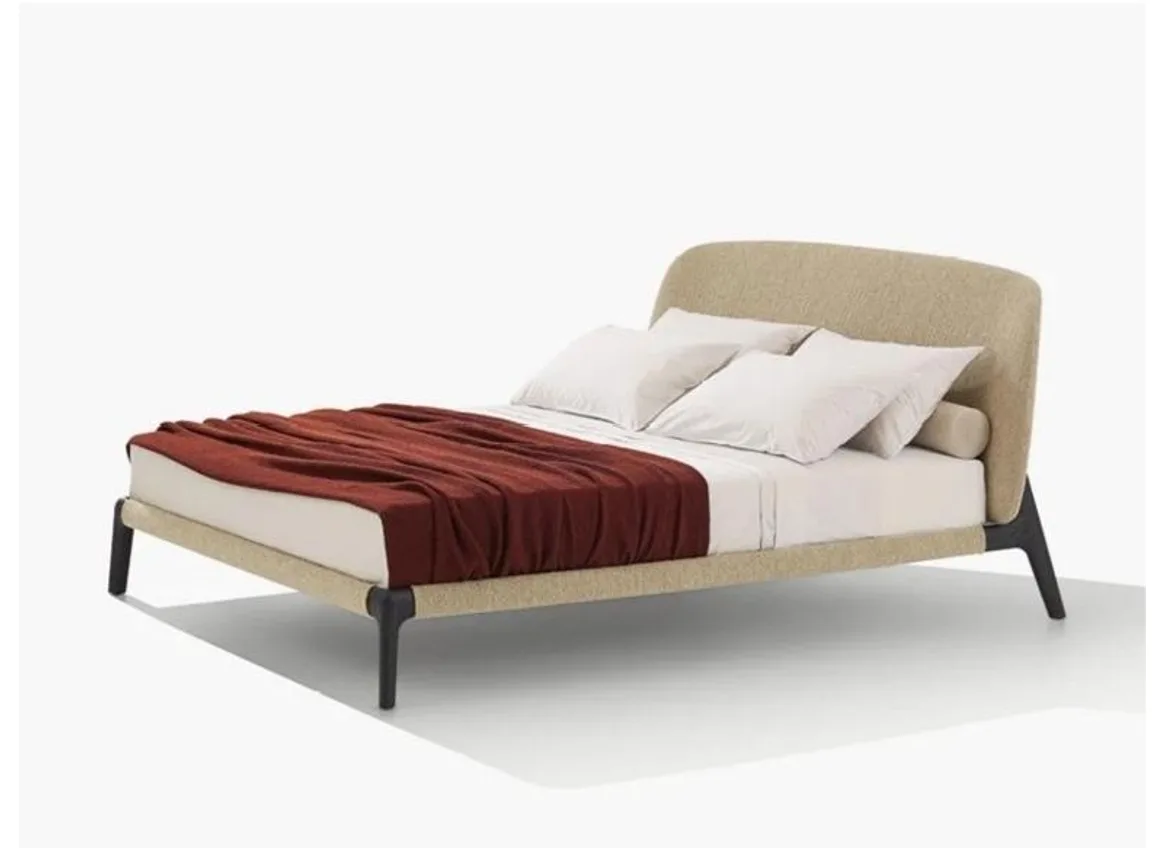
Translate the display into an order for a specific upholstered bed
Imagine a city dealer who loses the second display bay and keeps a velvet bed as the centrepiece. A shopper sees a lower floating bed in the catalogue and assumes it's the same frame with a shorter panel. Show the footprint and the base from the side so the difference is visible. The Dark Grey Textured Linen Minimal Floating Bed, listed at 210 × 180 × 90 cm with linen and metal, gives the sales team a clear candidate for that lower, visually lighter line. Its listed envelope and material set give the shopper a genuine choice to make before discussing the order.
For the low linen bed, keep a side view that shows the line beneath the upholstery. A buyer who is furnishing a small room may use that view to judge how the frame will look from a doorway. The same buyer might be preserving an existing tall mattress and want to know how much of the headboard will remain in sight. Put the selected mattress thickness alongside the frame drawing. A floating appearance is a visible characteristic of the frame. The combined upper line of the mattress and the headboard needs to be shown at the height the customer will actually live with.
Show which bedside table actually goes with the floor sample
Place the Italian Minimalist Bedside Storage Table in the bay if the sales team often answers questions about bedside access. This solid-wood piece is listed at 50 × 40 × 55 cm. It gives a customer a real surface to reach from the mattress and a known footprint to draw next to the frame. Use it to show why changing the mattress thickness can change how convenient the table feels. Record whether the table is part of the sale. People photograph the scene as a whole and may otherwise assume every object beside the display mattress is bundled in the bed price.
When two models are being considered, use a small record that lets staff explain the difference in one conversation. List the approved drawings separately for each. Keep room dimensions and mattress fit visible on both. A photo still helps, especially in a showroom where shoppers like to take examples home, but the order description needs the agreed furniture variant, finish reference and dimensions. Point the buyer to the profile that answers their concern before showing every fabric choice in the cabinet.
| What the shopper is deciding | What to put in front of them | What the order should carry |
|---|---|---|
| Can a taller headboard anchor the room? | The tufted velvet face and a measured side elevation | Approved frame and headboard envelope |
| Can the bed sit below an existing visual line? | The rounded bouclé profile or the low linen frame | Overall height and effective mattress position |
| Can I reach my glasses without sitting up? | The nightstand beside the selected mattress height | Separately named table and installed mattress details |
Keep the showroom's upholstery sample useful after the sale
Our Blush Pink Velvet Bed with Mirrored Headboard is listed at 220 × 180 × 125 cm with velvet and chrome. It can be an interesting display where shoppers want to see how an upholstered bed works with reflective decoration. Try moving the sample under the same light that would fall on the finished installation. A finish that reads gently in one corner of the store can look quite different when framed by reflections or direct window light. Compare the color physically with the bedding and nearby furniture before using that memory to describe the material to a returning customer.
Consider a dealer with a tall west-facing window and a store layout that puts the main bed close to it. The retailer must decide whether to keep a reference sample out of that direct light. Start by looking at how the fabric receives light over the day. If light exposure is important to the project, request relevant information for the actual selected textile. The Association for Contract Textiles guide to lightfastness for indoor woven fabrics explains what that test is intended to measure. Apply the relevant guideline only when the textile construction and its use match. Use the actual supplier's documentation when discussing performance with a customer.
Give the display itself a small written identity. Include the product name, the fabric the shopper is looking at, the floor model's overall size and which pieces nearby are staged accessories. Label the reference swatch with enough detail for the sales team to find it months later. Someone who liked the tufted bed in the store and returns after seeing a different photograph should be able to establish which viewing conditions or finishes changed. If a substitute fabric is proposed, bring both available samples to the conversation and confirm the change on the order before it moves into production.
A good time to catch these mistakes is when the person who ordered the floor sample is away. Ask a colleague to reconstruct the actual order from the floor card, the current drawing and the retained sample. Can they tell whether the 125 cm velvet display shown beside the reflective finish is the selected frame or just the example that illustrates it? Can they explain which material belongs to the frame and which belongs to the surface? A quick exercise like this shows where a showroom label needs one more detail. It also gives the dealer a repeatable way to brief new staff without relying on memory.
The HEZEN CASA comparison of upholstered bed fabrics can help people who are deciding what they want to touch and maintain at home. On the showroom floor, keep the advice specific to the customer's choice. A buyer deciding between a textured bouclé model and the low linen frame is comparing two shapes as well as two surfaces. The fabric sample answers how the texture feels. The floor display or drawing answers where the upholstered edge falls next to their existing furniture. Show the shopper both before asking them to approve the configuration.
Make one more check from the loading side before the floor model is confirmed. Record the largest packed component of the selected bed with the manufacturer and compare it with the receiving route. A tall tufted headboard can change the delivery plan if the entrance turns immediately inside the door. The 95 cm listed height of an assembled bed is useful for display planning, while its packaging needs a separate confirmation. If the delivery uses a rear lift or a corner approach, pass those actual measurements along with the model reference. Keep the floor unit and later customer orders distinguishable in the shop's records.
If you only have room for one bed, choose the one that answers the question a shopper struggles to resolve from a photo. Then stand at the display with the drawing for its strongest alternative. If a colleague can explain the visible difference, show the exact finish and write down what the customer is actually ordering, the floor model is doing the job you gave it.