Narrow a Shortlist With a Furniture Supplier in Foshan When Both Options Look Right
Returning from a furniture visit with two attractive alternatives is not the same as having an order ready. Overseas buyers, designers and dealers working with a furniture supplier in Foshan need a way to resolve the remaining choice without restarting the entire selection. Begin with the room requirement that cannot be compromised, then compare what each actual piece offers.
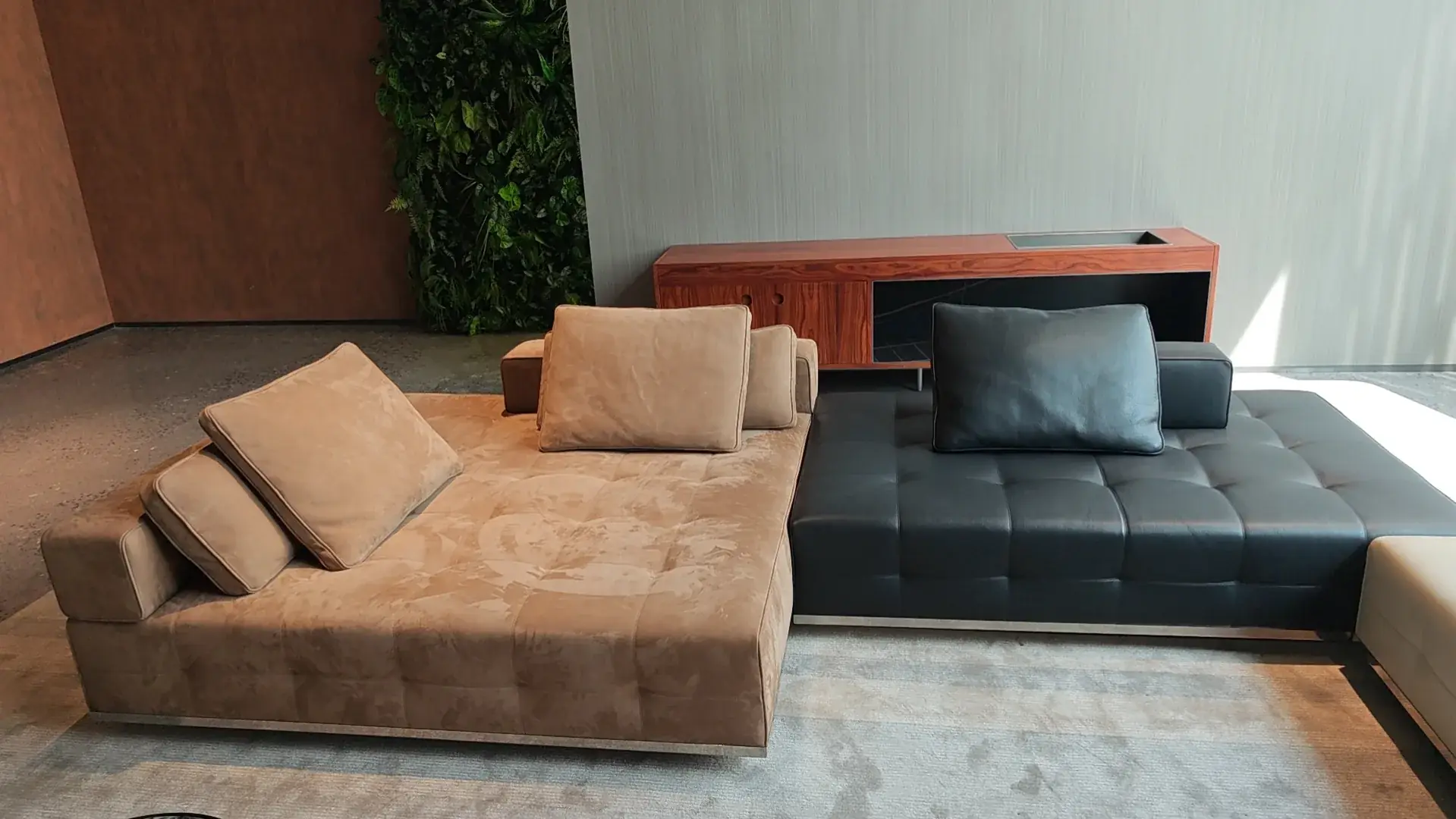
HEZEN CASA’s off-white curved bouclé sofa and camel suede-and-black-leather modular sofa make a useful living-room comparison. For bedrooms, consider the low beige Nappa bed alongside the wingback linen bed with lamps. The custom furnishing service can support discussion of the selected direction; a desired modification remains a proposal until confirmed.
Give the furniture supplier in Foshan the reason the shortlist is still open
A shortlist can remain unresolved for several reasons. Two people may prefer different appearances, the room may have an unverified dimension, or the buyer may be uncertain about a feature. Name the actual issue. Asking the supplier for more options before explaining the conflict often adds furniture without resolving the decision.
Suppose a designer prefers the curved bouclé sofa because its outline suits an open seating area, while the owner prefers the visual contrast of the suede-and-leather sofa. That is a design discussion. If the owner also needs a particular seating arrangement, the question becomes more specific: which proposed configuration can support that use within the real room?
Separate requirements from preferences before comparing the alternatives. A doorway that must remain usable is a requirement. A preference for a continuous pale surface is a design choice. Both matter, but they do not carry the same consequence. The supplier can respond more usefully when the buyer makes that distinction clear.
Compare the two 300 cm sofas by their different forms
The bouclé sectional is listed at 300 × 180 × 80 cm with bouclé upholstery and solid wood. The mixed-covering modular sofa is listed at 300 × 180 × 85 cm with camel suede, black top-grain leather and solid wood. Their shared overall width and depth do not make their outlines or seating arrangements interchangeable.
Request the configuration information needed to position each in the room. For the curved sofa, the relationship between the outer curve and the usable seating matters. For the modular sofa, the actual sections and their arrangement matter. Do not use a single rectangle to conclude that both choices will work in exactly the same way.
A living room approached from one side may expose different parts of the two sofas. If the back is visible, ask for the views needed to judge it. If the main route passes a projecting end, examine that part of the proposed footprint. This is a practical reason to retain two options briefly, not a reason to keep every attractive sofa on the list.
Place the two sofa proposals on separate versions of the same room drawing. Retain the same fixed doors and other furniture so that the comparison answers one question at a time. If the chair or table is moved for one option, note the reason. Otherwise, the buyer may attribute an improvement to the sofa when it actually comes from a different room arrangement.
Where one proposal leaves a more convenient approach but the other better supports the intended conversation group, describe that trade-off directly. The owner can then decide which matters more. Asking the supplier to choose the better sofa without explaining that priority transfers a personal room decision to someone who may not know how the household uses the space.
Choose the upholstery combination for the intended living routine
The off-white bouclé and the mixed suede-and-leather covering create different material discussions. Ask for the care information and available samples for the actual proposed materials. A buyer should not assume that a pale textured surface and a two-material composition have identical care requirements, or that a generic leather instruction applies to suede.
For a distributor, the mixed covering may require a clearer explanation to shoppers about where each material appears. For an interior designer, the continuous bouclé appearance may be important to the room’s visual rhythm. These are useful reasons to choose, provided the buyer also accepts the actual material and use requirements.
Do not resolve the decision by inventing a durability hierarchy from the names alone. The relevant evidence concerns the supplied covering, its intended use and any applicable documentation. A material label can identify a question to investigate; it does not by itself establish which sofa will perform better in a particular household or project.
Use the Foshan furniture shortlist to expose the bedroom’s real priority
The two beds create a more pronounced choice. The low Nappa bed is listed at 220 × 180 × 85 cm, while the wingback linen bed is listed at 230 × 190 × 130 cm. The low bed has a restrained upholstered profile; the wingback design includes lamps and a taller, wider headboard form.
If the bedroom needs a quiet visual center beneath a strong wall treatment, the lower bed may be the more relevant starting direction. If the buyer wants a more enclosing headboard composition and integrated lighting, the wingback option deserves examination. These are conditional design judgments, not guarantees that either bed fits the room or mattress.
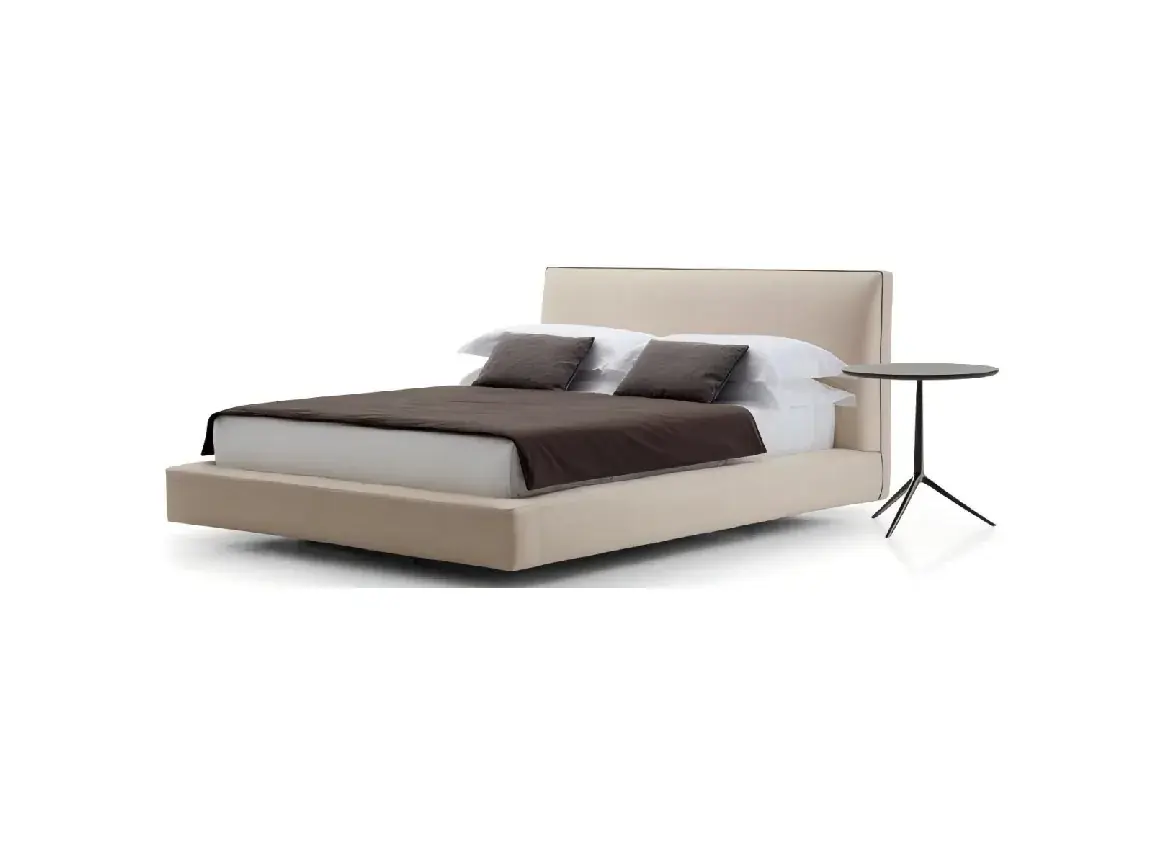
The 85 cm headboard and the 130 cm wingback form solve different visual problems
The listed overall heights help identify the scale difference, but the buyer still needs the dimensions applicable to the chosen version. Compare each headboard with the room’s wall features and intended bedside arrangement. A taller form can be the desired focal point in one room and an unnecessary conflict in another.
For a bedroom with an existing wall composition, consider whether the new furniture should sit quietly in front of it or become the main element. That question can settle a shortlist more effectively than comparing isolated product images. It gives the supplier a clear reason for the preferred direction and for any customization request.
The bed’s displayed size name should also remain separate from its outside envelope. Confirm the mattress opening, support arrangement and supplied dimensions for the selected option. Choosing the visual direction is a useful step, but it does not complete the fit decision.
A buyer keeping existing bedside furniture should compare it with both headboard proposals before closing the choice. The wingback form may create a different relationship at the sides from the lower smooth bed. Ask for the relevant dimensions and assess the actual arrangement, rather than assuming that the existing pieces can remain in exactly the same positions with either bed.
If one bed requires the buyer to replace more surrounding furniture, make that consequence visible in the shortlist. It may still be the preferred design, but the decision then concerns a wider bedroom change. The supplier should receive that complete requirement so that a bed selection does not create an unexpected second round of furniture purchases.
Built-in lamps create an additional decision, not an automatic advantage
The wingback bed’s lamps may be attractive to a buyer who wants the headboard and reading-light arrangement considered together. Their suitability still depends on the proposed electrical specification, installation requirements and intended use. The public presentation does not establish those details for every destination.
If the room already has a carefully positioned lighting scheme, built-in lamps may add a question that the low bed avoids. If integrated lighting is an essential part of the brief, the buyer should obtain the missing information before selecting the wingback proposal. Treat the feature according to the room, rather than counting it as an unconditional extra benefit.
Keep a preferred furniture option separate from an unconfirmed custom alternative
A buyer sometimes tries to combine every attractive feature into one imagined item: the bouclé sofa’s curve with another arrangement, or the low bed’s height with the wingback bed’s lighting. That may be a valid design conversation, but it is not an existing confirmed product. Ask the supplier to assess the specific proposal.
Keep the listed alternative visible while that assessment takes place. This preserves a real option if the custom request is unsuitable, unavailable or does not meet the project’s requirements. Do not remove the viable standard direction merely because a proposed combination sounds appealing in a message.
A custom sofa request should explain which requirement the listed versions miss
If neither sofa works, identify the unresolved function or geometry. The buyer might need a different approach to the seating group, a different covering relationship or a confirmed configuration with another footprint. That explanation is more useful than asking for a hybrid of two photographs without describing why the change is needed.
A retailer choosing a display piece may not need that extra development step. It might be more useful to select one listed direction, evaluate the actual sample and explain the furniture accurately. A project with a fixed room constraint may justify a custom discussion. The choice between those routes should follow the purchasing situation.
A custom bed request should preserve the bedroom’s accepted purpose
If the low bed is preferred because it leaves the wall composition visible, a later request for a much taller headboard would reopen the original decision. If the wingback bed is preferred for its enclosing form, reducing it without reviewing the result could remove the feature that justified choosing it.
Describe the reason for the preferred bed in the design brief. This gives the supplier and the buyer a way to judge subsequent proposals. The aim is not to prevent changes; it is to avoid losing the functional or visual requirement that settled the shortlist in the first place.
Close the furniture comparison with a decision another buyer can understand
Record which sofa and bed are preferred, why they suit the intended rooms and which details remain unconfirmed. A colleague should be able to understand the decision without having attended the original visit. Keep the rejected alternatives clearly separate so that an old image is not mistaken for the final choice.
If color relationships remain part of the comparison, remember that viewing conditions matter. Konica Minolta’s explanation of metamerism describes why a color relationship seen under one light source may change under another. Use appropriate material references when that relationship is important.
The discussion of furnishing a compact apartment is useful when a shortlist is constrained by the roles that furniture must serve. It can help identify which object deserves the room’s limited space before another product is added to the comparison.
For the living room, choose the sofa direction that meets the actual seating and material brief. For the bedroom, choose the headboard and lighting approach that belongs in that room. Send those two decisions back to the supplier with the unresolved specifications clearly attached. That is a more actionable result than a larger folder of equally appealing furniture.