A Furniture Supplier in Foshan for Mixed Room Packages: How to Divide the Order
One bedroom is ready to furnish, another still needs a mattress decision, and the living room has already been approved. An overseas project coordinator does not need to hold every furniture decision at the same stage. When working with a furniture supplier in Foshan, divide the order into room packages that remain understandable even when their progress differs. HEZEN CASA’s off-white curved sectional, low Nappa leather bed, round marble dining table and narrow six-drawer chest show why each room needs its own definition of complete.
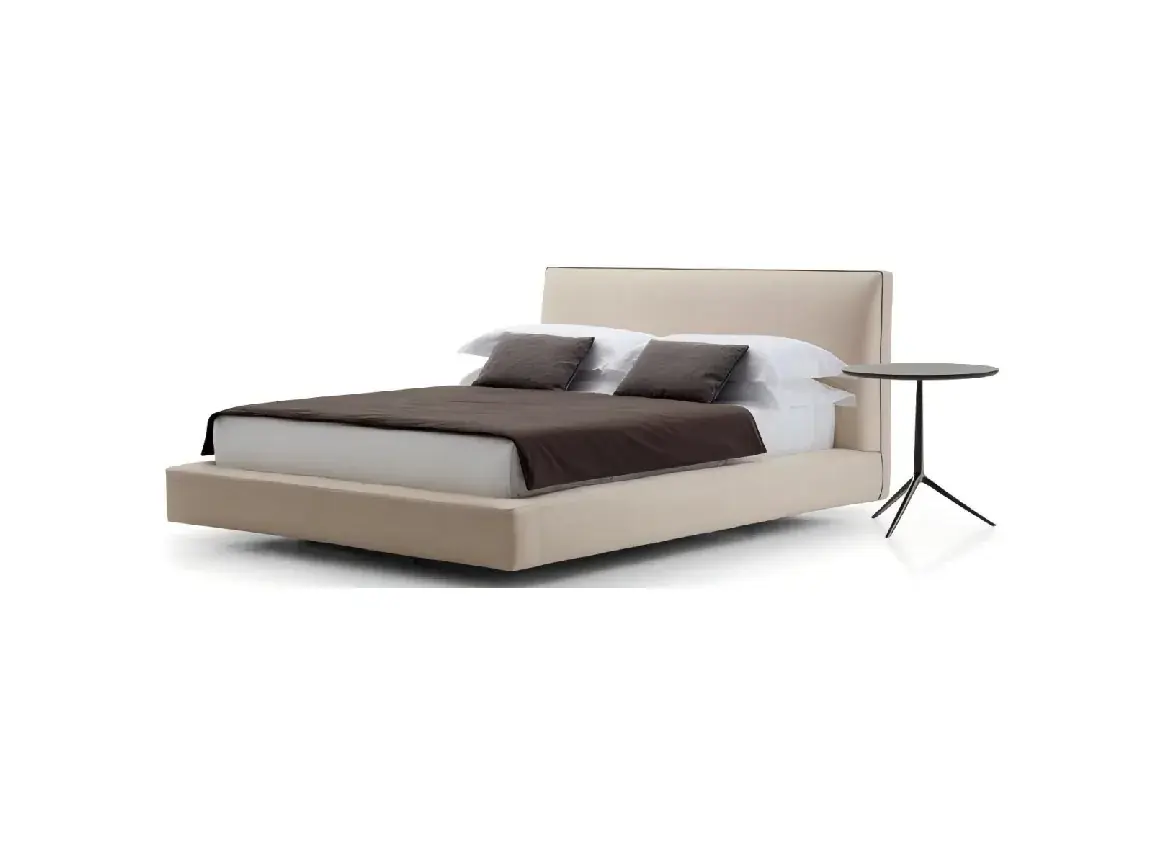
Ask the furniture supplier in Foshan to separate room identity from product identity
A product name identifies a design; it does not identify where a particular ordered piece belongs. If two bedrooms use the same low platform bed, their mattress openings, materials or orientations may still differ. Assign a room reference to each ordered item while retaining its product reference. This lets the supplier discuss the design accurately and lets the receiving team distinguish two pieces that look almost identical through protective wrapping.
The low Nappa bed is listed at 220 × 180 × 85 cm, with Nappa leather and solid wood and Queen/King availability. Treat that as the starting furniture description. Bedroom A and Bedroom B still need their own actual mattress dimensions and approved versions. Do not use Queen for one room and King for the other as though those labels alone communicate every manufacturing dimension. A room package should make the intended combination clear enough to check.
HEZEN’s interior design and custom furniture services can support the room drawings and proposed modifications. Keep that development work linked to the relevant room. If the second bedroom changes, the first bedroom’s approved bed should not silently inherit the revision. The supplier needs to know whether a request applies to one identified piece or to every occurrence of the design.
Two leather beds can share a design without sharing an approval
Imagine a villa with a primary bedroom and a guest bedroom using the same low bed. The primary room has a selected mattress and a confirmed wall finish; the guest room is still being coordinated. The first bed can reach an approval decision on its own. Mark the guest bed as unresolved and identify the information it lacks. That is more precise than approving two beds subject to later details, which can leave production uncertain about both.
If a shared upholstery color is important, retain one identified color reference while confirming its application to each bed. A common palette is not the same as a common size. The approval record should distinguish the shared decision from the room-specific one. That allows a coordinated appearance without erasing the differences that determine whether the furniture fits.
Define a complete living-room package by the activity it supports
The off-white curved sectional is listed at 300 × 180 × 80 cm, using boucle fabric and solid wood. Its curved form can organize a conversation area, but the package is not complete just because the sofa has been selected. Identify the actual arrangement in the living room and the route that must remain available beside it. If the sofa is part of a larger design proposal, distinguish included furniture from styling objects shown only to explain the setting.
A designer may show a rug, occasional chair or table beside the sectional before those objects have been ordered. The purchasing schedule should not convert them into included goods by implication. Conversely, if a small supporting item is essential to the agreed arrangement, do not let it disappear because the sofa dominates the quotation. Completeness is a defined scope, not a visual impression from a rendering.
The curved sofa’s room assignment should include its approved orientation
A room label should point to an actual layout. The sectional’s overall 300 × 180 cm envelope does not identify every curved element or its position. Ask for the approved plan and the supplier’s component information for the selected configuration. If an alternative orientation is proposed, verify it rather than assuming the visible arrangement can simply be mirrored. That distinction matters when the entry route approaches one end of the sofa.
For an importer furnishing several display apartments, the same room name may occur repeatedly. Add the apartment or property reference so a living-room package cannot be confused with its counterpart elsewhere. The required level of identification grows with repetition. It need not become complicated, but it should prevent a receiving team from deciding placement by opening every package and comparing photographs.
The dining-room furniture group must keep its working parts together
The 150 cm round marble table is listed at 75 cm high with a rotating tray. Its room package should identify the intended top, base and included components. Confirm the actual assembly and packing arrangement with the supplier. If these parts travel separately within the shipment, they must still be traceable to the same table. A packing list with one large stone piece and several unnamed metal parts is not an adequate room-level explanation.
Review the table in relation to the chairs specified for the project, even if those chairs are purchased under another order. The room package should identify that dependency. The table’s listed seating range does not establish that every selected chair will work around it. If the chair decision is outside the supplier’s scope, name who will provide the final dimensions and who will approve the pairing.
A contractor receiving the dining furniture may care most about whether the table can be assembled in the completed room. The design team may care most about the stone selection. Both belong to the package, but neither replaces the other. Attach the approved appearance reference and the relevant assembly information to the same item identity so the table does not arrive with one requirement understood and the other forgotten.
| Room group | Defined furniture | Dependency to resolve |
|---|---|---|
| Living room | Curved boucle sectional and its approved arrangement | Entry route and any separately purchased companion pieces |
| Primary bedroom | Low Nappa bed in the selected version | Actual mattress and final position |
| Guest bedroom | Second identified bed, if selected | Room-specific size decision rather than inherited approval |
| Dining room | Marble top, base and agreed rotating tray | Chair pairing and assembly information |
Storage furniture should follow its user, not an empty corner on the plan
The curved six-drawer leather chest is listed at 60 × 45 × 130 cm, with leather and solid wood. Its narrow footprint can be relevant where wall width is limited, but it needs an identified storage purpose and operating space. Decide which bedroom receives it and what will be kept inside. Do not allocate it to whichever room has an apparent gap after the larger furniture has been placed.
The tall leather chest needs an open-drawer position in its room brief
Show the chest with its drawers in use and obtain the actual extension information for the supplied construction. The closed 45 cm depth cannot describe the full space required in front. Consider access to the upper drawers and the relationship to the bed and door. Applicable stability and restraint instructions also need to reach the installer. A room assignment is incomplete if it names a corner without explaining how the piece will be used there.
The Anchor It furniture safety guidance highlights tip-over prevention. Obtain the relevant instructions for the actual chest and wall condition rather than inventing a universal fixing detail. The room package should identify who will carry out the applicable installation work. A furniture supplier’s shipping scope should not be mistaken for an agreement to assess the building substrate at the destination.
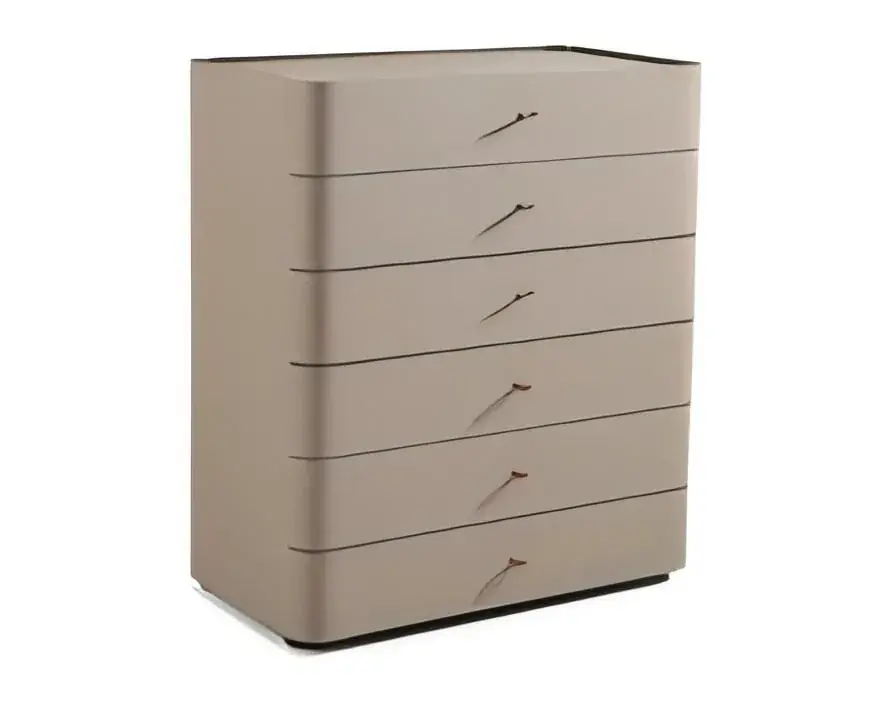
If the chest is moved from the guest room to the primary bedroom, review the new position rather than changing only the room code. The first room may have offered unobstructed space in front, while the second places the chest beside a bed or door swing. The product remains the same, but the room decision changes. This is why a useful package connects item identity to a real layout.
Release room packages independently without losing the whole-house picture
A room package also needs a clear boundary when furniture is supplied by more than one party. If the primary bed comes from HEZEN but the mattress is purchased locally, name the local mattress as a dependency and record its confirmed dimensions. If the dining chairs are outside this order, keep their approved relationship to the marble table visible. The Foshan supplier should not be expected to verify an unidentified third-party item, while the buyer should not assume that separate purchasing automatically guarantees compatibility.
For a property with repeated guest rooms, consider whether every tall chest truly belongs to the same room arrangement. A mirrored architectural plan can change the location of a door or the convenient approach to the drawers. The chest itself may remain unchanged, but its assigned position should be checked. This prevents a repeated room label from concealing a different operating condition.
When a room is removed from the order, reconcile its furniture rather than deleting only the room heading. Confirm whether its low bed or chest is cancelled, reassigned or retained for another property. The remaining rooms should not inherit those pieces without a new placement decision.
Once the rooms are defined, a coordinator can identify which packages are ready for the next decision. The living-room sofa may be approved while the guest bed remains open. That need not prevent review of the dining table’s stone. Keep the whole-house overview, but make each unresolved dependency visible at the room where it matters. A single project-wide approved label is too blunt for furniture at different stages.
For the supplier, this separation should clarify what can be quoted or developed, not create contradictory instructions. If a shared finish changes across both beds and the chest, say explicitly which rooms are affected. If only the guest bed’s dimensions change, keep the primary bed’s approval intact. Review the cross-room consequences only when a genuinely shared decision is being revised.
Before dispatch, reconcile room groups with the actual packing information. A living-room package may contain several physical packages; a single container may contain many room groups. Neither relationship should be guessed. The mixed furniture supply discussion explains the separate choice between consolidated and split movements. Room identity should remain clear whichever transport arrangement is chosen.
At the destination, the receiving team should be able to answer three product-specific questions without calling the designer: which approved bed belongs in this bedroom, which parts complete this marble table, and where this tall chest is intended to operate. Give them the information that makes those answers possible. A furniture supplier in Foshan can coordinate a mixed order effectively when each room remains a defined, usable part of the larger project.