Make a Furniture Sample Request That Answers a Real Question
“Please send samples” is an understandable request, but it leaves the most important question unanswered: what do you need to decide? A furniture sample request works better when it names the item, the surface under review and the decision that cannot be made from the available information. A small swatch can help with texture and colour. It cannot demonstrate the comfort of a complete sofa or the appearance of an entire natural stone top.
Before discussing sample availability with HEZEN CASA, choose the relevant furniture and write down your uncertainty. You may be comparing boucle and suede upholstery, coordinating an oak sideboard with stone, or checking a rug beside the living-room seating. Ask what form of sample or evidence is appropriate, then confirm the actual arrangements. Do not assume that every material, size or sample type is available on the same terms.
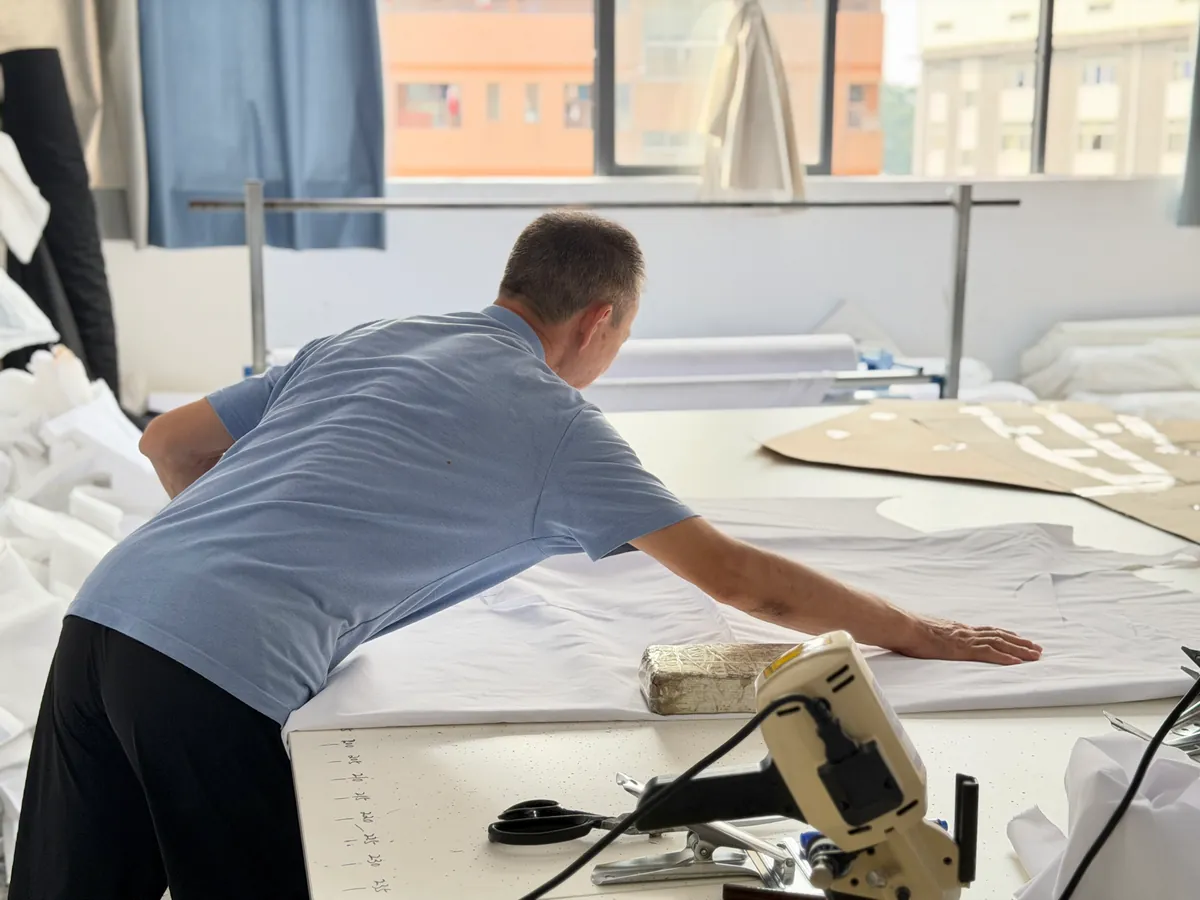
Start the furniture sample request with the decision you cannot make
A remote buyer considering the Off-White Large Curved Sectional Sofa may already like the overall shape. The remaining question could be whether the boucle texture is right for a formal sitting room. That is a material decision. Asking for another distant room photograph is unlikely to answer it as well as a suitably identified material reference.
Another buyer may be unsure about the sofa's comfort or the way the curved modules meet. That requires different evidence. A loose upholstery square does not reproduce a completed seat, the cushion structure or the finished seams. Explain which of those characteristics needs review before discussing what should be sent.
Say whether the boucle question is about feel, colour or construction
This sofa is listed with boucle fabric, a solid wood frame and overall dimensions of 300 × 180 × 80 cm. None of those details establishes a measured abrasion rating, a particular cleaning code or the exact feel of an upholstered seat. If one of those points matters, ask for the relevant confirmation separately.
For colour coordination, provide the other materials that will sit nearby. An off-white fabric can look different beside a pale stone surface than beside a dark floor. A buyer choosing furniture for a room with large windows should also consider the intended light, rather than evaluating a sample only on a desk under different lighting.
For construction, ask what the sample represents. Is it the proposed upholstery material, a finished seam or a completed corner? The answer changes what you can reasonably approve. Keep that explanation with the sample so a person reviewing it later does not assume it demonstrates more than it does.
Photograph the selected boucle reference beside the other proposed fabrics, with its label visible. A close view helps discuss the loops; a wider view helps show the relationship between the surfaces. Keep both views if they answer different questions. Neither should be described as a measured comfort test or as proof of how a complete sofa will look in every light.
Choose the furniture sample that can answer your question
Small samples are convenient for building a palette. Finished sections can reveal how materials behave around an edge or junction. Full-size furniture is relevant when the question is proportion, sitting comfort or physical use. These are different tools, not a simple progression from a cheap sample to a better one.
A two-material sofa needs the junction explained
The Camel Suede & Black Leather Tufted Modular Sofa combines suede and top-grain leather, with listed dimensions of 300 × 180 × 85 cm. A request for its materials should identify both surfaces and where they will be used. If the buyer wants a different colour combination, mark that as a proposal rather than as an approved version of the photographed sofa.
If the concern is how the suede meets the leather, ask whether a finished junction or detailed photograph can be reviewed. Two separate swatches can help with colour and texture, but they do not show the seam, alignment or treatment of the transition. A request tied to that junction is much more precise than asking for “the sofa material.”
A dealer planning to display the sofa may want to show customers how the two surfaces differ. That creates a useful discussion about the evidence needed for presentation. It does not establish that the supplier will provide a particular display kit or a custom sample arrangement. Confirm the offered scope before planning around it.
For a private buyer, the same material pair raises a care question. Ask for guidance appropriate to each selected surface. Do not interpret a general leather instruction as permission to clean the suede or fabric in the same way. Material selection and maintenance information need to remain connected.
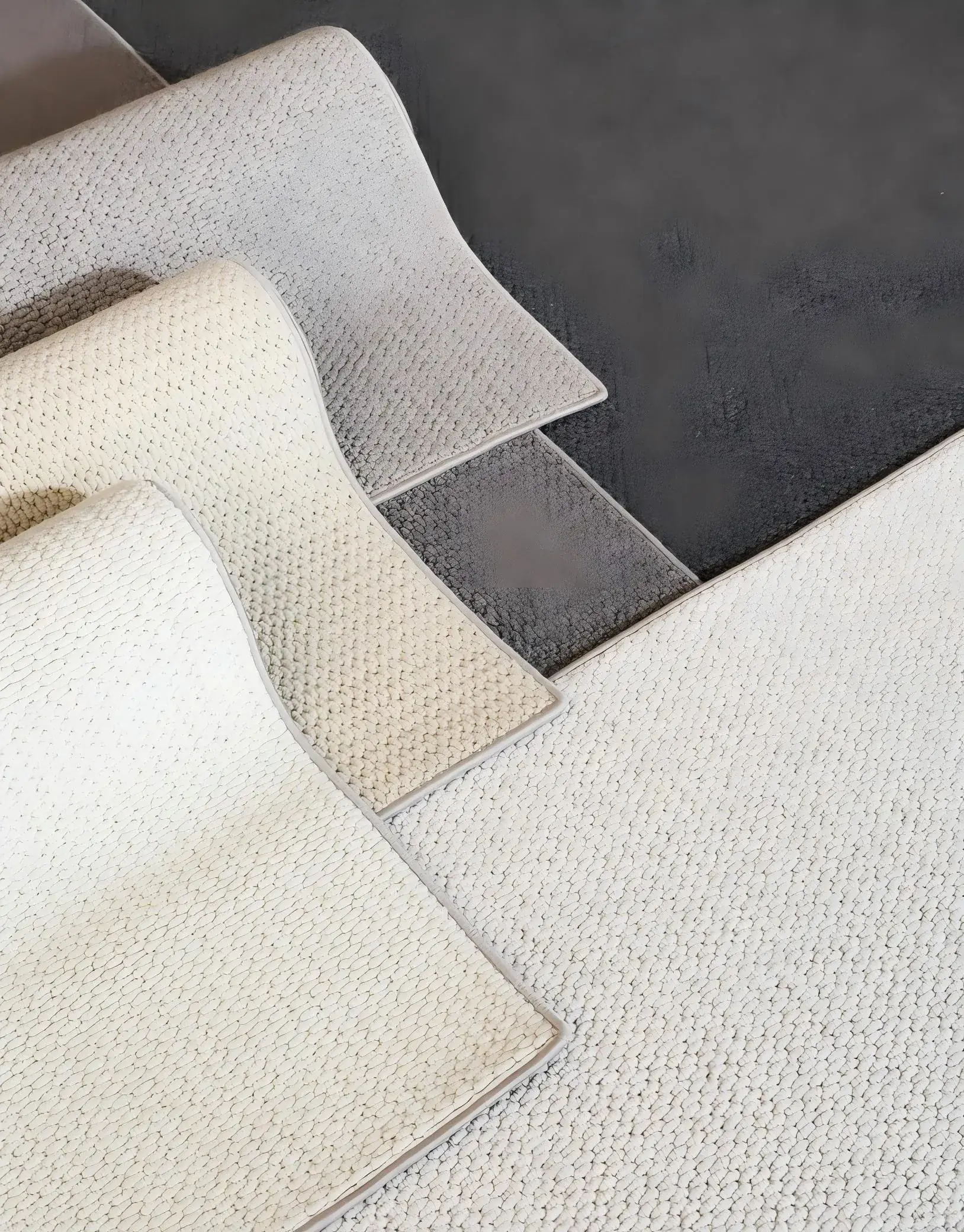
Review the rug beside the furniture it will accompany
The Textured Bubble Solid Color Living Room Rug is listed at 200 × 300 cm, with polyester and acrylic and a 25 mm pile description. Those details create several separate decisions. The full rug dimensions affect the seating arrangement; the surface affects its appearance and feel; the pile needs considering alongside the intended furniture and routine use.
Use the textile sample for the question it can answer
A sample can help the buyer see the colour relationship with the selected sofa. It may also make the texture easier to understand. It cannot show whether the whole 200 × 300 cm rug fits the planned room, whether its edge falls at the intended point or how an entire pattern will read at full size.
Mark the rug outline on the plan independently of the sample review. For a modular sofa, check the relationship to the seating footprint and the coffee-table position. Otherwise a beautiful small sample can distract from an unresolved layout. The material choice and the room fit should support each other.
If a project has a specific requirement for cleaning, wear, fire performance or another characteristic, identify that requirement and request applicable documentation. Do not use the fabric's thickness or its appearance in a photograph as a substitute for evidence. A visual review can support a visual decision; it cannot quietly become a performance test.
Ask what the stone reference represents
For the Rounded Marble Top Light Oak Storage Sideboard, the listed 180 × 45 × 80 cm dimensions identify the candidate furniture. The material discussion still contains separate oak and natural marble decisions. Keep those references distinct even when you are trying to create one coordinated dining-room palette.
A small stone sample can be useful for discussing tone and surface treatment. It cannot depict every feature of a complete top. Ask whether it is representative of a range, linked to a proposed selection or intended only to establish a general direction. Those explanations matter when natural variation is part of the material.
For the oak appearance, ask which surface the reference relates to and how it will be identified in the order. A buyer comparing several rooms may want an oak sideboard to coordinate with another wood finish, rather than to look identical to it. State that intention in the request. The supplier should not have to infer the relationship from several unlabelled photographs.
If the sideboard will stand near the dining table, include the proposed tabletop reference in that review. The two stones do not have to be the same to work together, but an accidental near-match can be harder to judge than a deliberate contrast. Explain which relationship you are trying to achieve and whether either material is already fixed. That lets the discussion focus on the available choice instead of reopening an accepted part of the room.
The custom furnishing discussion can bring these material decisions together, but each sample should still retain its own identity. An accepted oak reference should not be assumed to approve the stone, the cabinet dimensions or an internal arrangement that has not been reviewed.
Make the request easy to answer from a distance
Send the product reference, the material location and a short explanation of the decision. Add a marked image if the location could be misunderstood. For the two-material sofa, identify the particular panel. For the sideboard, distinguish the top from the body. For the rug, say which sofa upholstery you want to compare it with.
Then ask what evidence can be provided and what it will represent. Confirm any costs, timing, delivery arrangements and limitations directly for the request. Avoid treating another company's sample policy as a standard that must apply to this order. The useful outcome is an agreed method of making the decision, not an assumed entitlement to a particular sample.
For background on why material identity matters, Room & Board's upholstery care guidance separates care considerations for its fabrics. Its product-specific treatments are not instructions for HEZEN CASA materials. The relevant lesson for a sample request is to obtain the care information for the actual selected upholstery rather than relying on a broad fabric name.
Record what the furniture sample actually confirms
When the sample arrives, check its identity before evaluating it. Match it to the intended item and surface, review it in the relevant surroundings and write the decision it supports. If it answers colour but leaves comfort unresolved, keep comfort open. That is a useful result, not a failed sample review.
Keep the accepted physical reference available during later discussions. A replacement photograph may be easier to send, but it should still point back to the same identified sample. If the proposed material changes, request a new review instead of quietly reusing the earlier acceptance.
HEZEN CASA's guide to remote furniture decisions discusses the broader exchange of drawings and evidence. For the sample itself, keep the question specific enough that the response can move the order forward. “This colour works beside the selected rug” is clearer than “everything approved.”
Do not let a growing pile of swatches become a substitute for a choice. Keep the accepted references, identify the alternatives that were rejected and ask for further evidence only where a real question remains. The best furniture sample request is the one that makes the next decision easier without pretending a small piece of material can answer every question about the finished furniture.