When the decision makers are in different places
Make Remote Furniture Decisions With a Custom Furniture Supplier in China
The designer likes the sofa photograph, the owner wants to know how it feels, and the installer needs dimensions that are not visible in either person’s messages. For an overseas residential or project purchase, a custom furniture supplier in China needs to understand which decision each person is trying to make. One attractive presentation cannot answer every question.
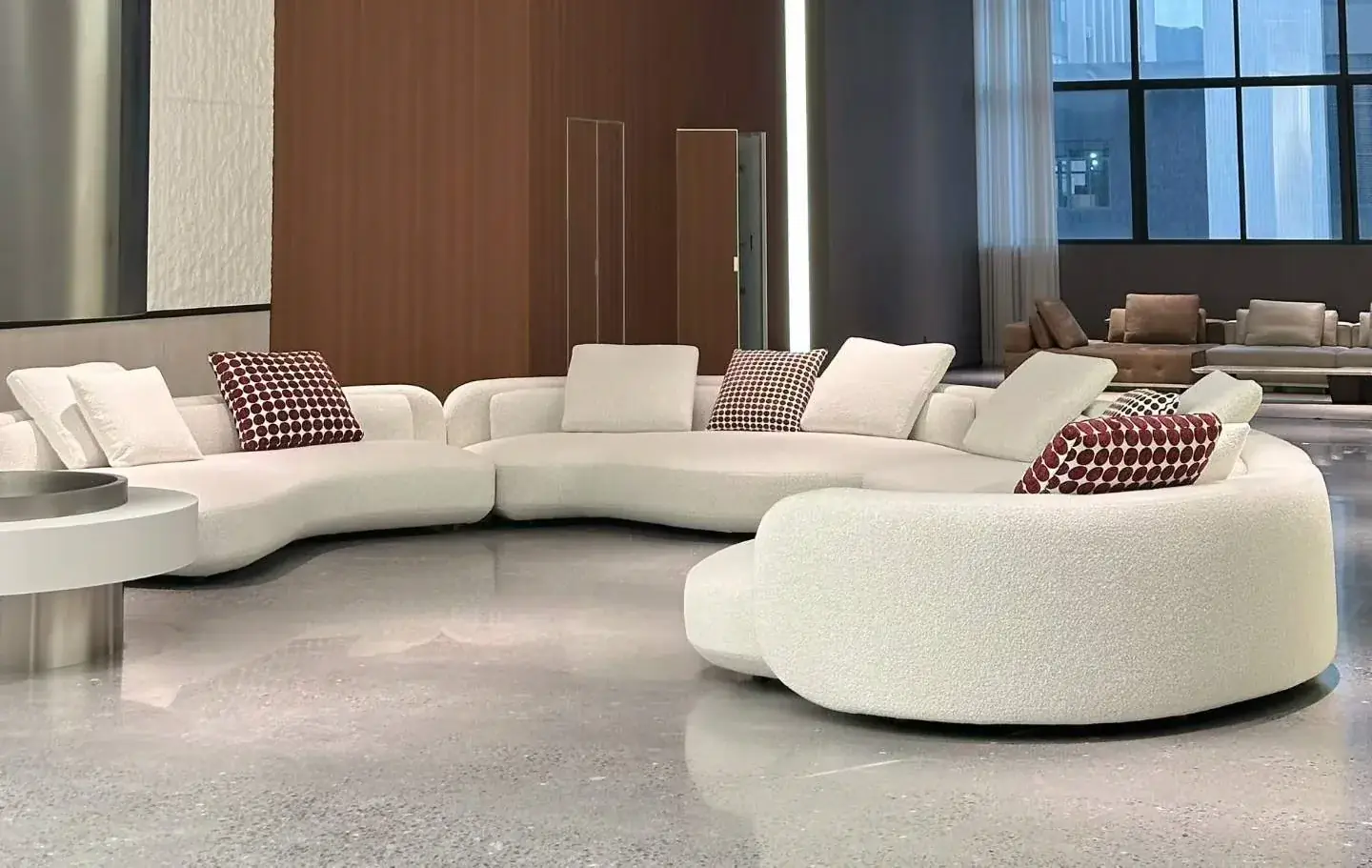
HEZEN CASA’s curved bouclé sectional, wingback linen bed with lamps, asymmetrical dark wood sideboard and curved fabric-and-wood lounge chair illustrate four different remote decisions. Begin with those actual references and the custom furnishing service, then request evidence for the particular version and room being considered.
A custom furniture supplier in China needs to know who will decide what
A designer may be judging the relationship between curved forms. The person who will sit on the furniture is judging comfort. An installer is checking whether a headboard, light or cabinet can be positioned and used correctly. These are complementary responsibilities. A remote process works better when each person’s answer is attached to the relevant question.
For example, an owner might approve the bouclé sofa’s appearance while leaving the seating experience unresolved. Record those as two different outcomes. The visual approval should not silently become a statement that the owner has tested the sofa. If a representative evaluates a physical sample, identify the sample and the aspects actually assessed.
The same separation helps avoid repeated discussions. A designer can continue reviewing the sofa and chair as a composition while another person obtains the missing seating information. The whole project need not return to its starting point simply because one question remains open. What matters is keeping the unresolved issue visible before the final order is accepted.
The 300 cm curved sofa needs views that explain its footprint
The off-white bouclé sectional is listed at 300 × 180 × 80 cm with bouclé upholstery and a solid-wood frame. Those overall measurements establish a starting envelope. They do not describe every point along the curved edge, the usable seating depth or the space occupied when a person approaches and sits down.
Ask for a plan view or drawing appropriate to the selected configuration, together with views that show the front, back and ends. A remote buyer should understand which part of the curve projects furthest into the room. This is especially useful when the sofa stands away from a wall and its rear surface is visible from an entrance.
A photograph can help identify the profile and covering, but it cannot prove sitting comfort. If that is a deciding factor, discuss access to a relevant sample or another suitable way to evaluate it. Do not replace an unresolved comfort question with adjectives such as soft or supportive unless those words have been connected to a meaningful assessment.
A useful sofa demonstration begins with the complete item, then moves to the area under discussion. If the buyer needs to understand the curved end, show its relationship to the rest of the seating before moving closer. This avoids a remote conversation where an attractive detail is accepted without anyone understanding which side of the room it will occupy.
When a person assesses the sofa on the buyer’s behalf, ask them to describe the activity they tried rather than simply say that it was comfortable. Sitting upright for conversation and reclining informally are different uses. The overseas buyer can then judge how relevant that observation is to the people who will use the intended living room.
Use the custom furniture discussion to separate demonstration from specification
A demonstration shows what happened with the furniture being demonstrated. A specification describes what is proposed for supply. They need to refer to the same version before one can support the other. If a video shows the displayed item while the order proposes different dimensions or materials, the supplier should explain which observations remain applicable.
This distinction is particularly important when several people join a video call. One person may remember the overall appearance; another may remember a measurement shown briefly. Retain the relevant evidence with the furniture reference and the question it answered. The buyer should not have to reconstruct the accepted specification from recollections of the call.
The lamp bed needs separate answers about the headboard and the lighting
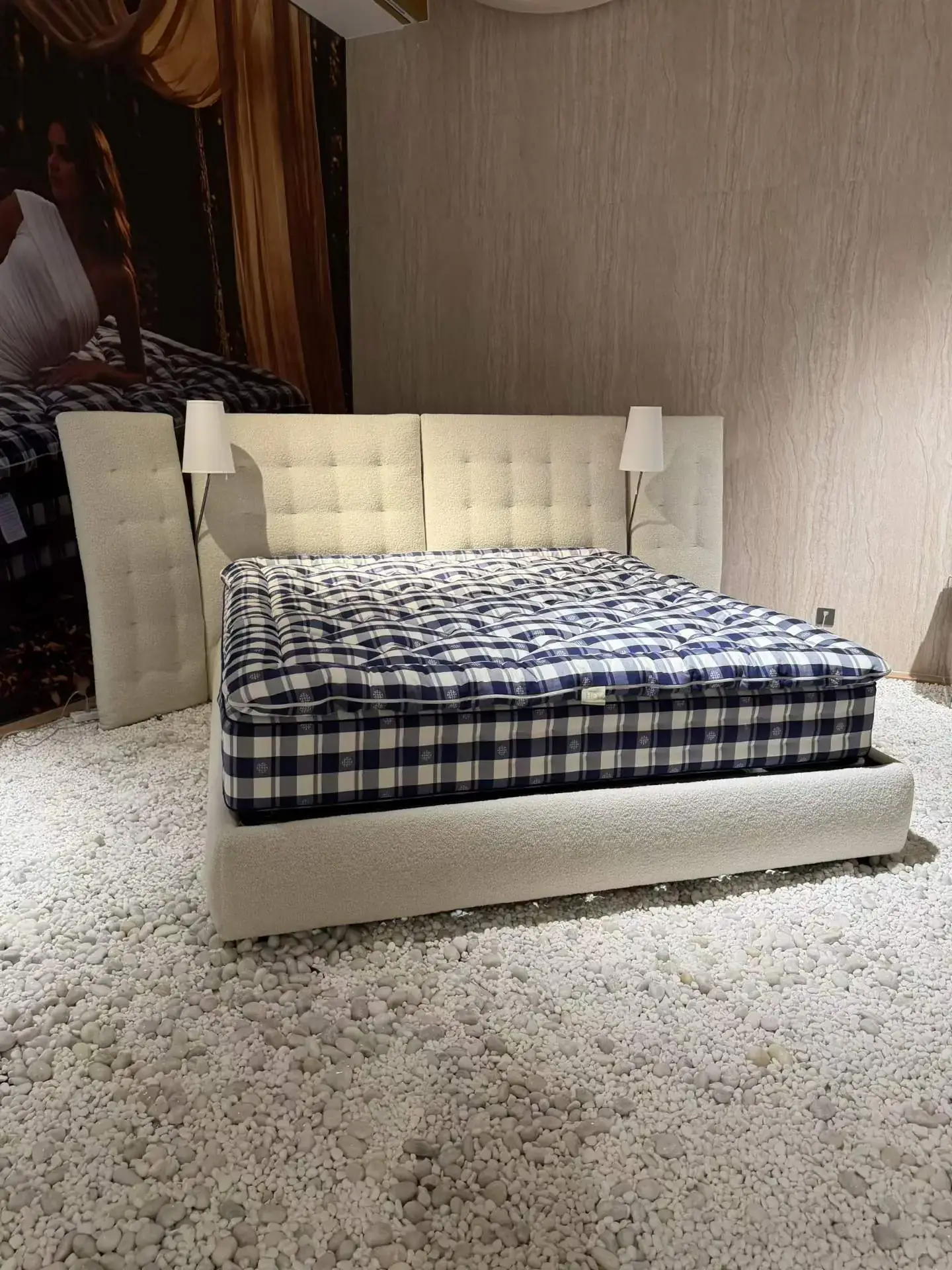
The wingback linen bed is listed at 230 × 190 × 130 cm with solid wood, a King option and built-in lamps. A designer can evaluate the wings and upholstered composition from suitable views. The buyer still needs the actual proposed lamp specification, electrical compatibility and installation requirements for the destination.
A lamp switching on during a demonstration does not establish all of those details. Ask for the information applicable to the supplied unit and the intended installation. If the lighting remains unconfirmed, the bed’s visual acceptance should remain separate from acceptance of the electrical arrangement. Do not infer a voltage, certification or replaceable light source from the image.
Consider a bedroom where the owner is overseas and a local designer is coordinating the wall treatment. The designer may need to understand the wings’ position relative to the bedside furniture, while the installer needs to know how the lighting will be connected. The remote owner can approve the appearance without pretending to have resolved either technical interface.
The sideboard requires open views when storage is part of the brief
The asymmetrical sideboard is listed at 180 × 45 × 80 cm with dark wood veneer, solid wood and multiple compartments. A closed front view can establish its exterior rhythm. It cannot establish the usable internal dimensions, the opening sequence or whether a particular serving dish will pass through the available opening.
For a remote dining-room purchase, show the supplier the objects that must be stored and their relevant measurements. Request the internal information needed to compare them with the proposed cabinet. If the supplier demonstrates access, make sure the demonstration identifies the compartment being considered rather than merely showing that one door can open.
An owner may prefer the asymmetrical exterior while a project manager is concerned about storage. Those preferences need not conflict if the actual contents fit. If they do not, the buyer should consider another arrangement or a separately confirmed custom proposal. Repeating the closed photograph will not resolve the functional question.
Ask the person demonstrating the sideboard to identify the same compartment in the open and closed views. With an asymmetrical arrangement, a remote observer may otherwise confuse two differently sized spaces. Keep any measurement associated with the opening it actually describes. A depth measurement taken inside one compartment should not be applied to every part of the cabinet without confirmation.
If a serving item needs to enter at an angle, describe that concern explicitly and request a suitable demonstration or drawing. The buyer should not infer the answer from a camera perspective that makes the opening appear larger. Where the real object is unavailable, retain the uncertainty and obtain the information necessary to resolve it before approving the storage function.
Give furniture finish approval a reference that survives the video call
Remote presentations are useful for arranging a shortlist, but a displayed color should not become the only identity of an approved material. Ask how the proposed covering or finish will be referenced in the order. Where appearance is important, discuss an appropriate physical sample and how it relates to the intended furniture.
Lighting is one reason to be careful. Konica Minolta’s explanation of metamerism describes how two colors can match under one light source and differ under another. The purchasing implication is modest: judge important material relationships under relevant conditions rather than treating one viewing condition as universal proof.
For the off-white bouclé sofa and dark wood sideboard, the objective may be a deliberate contrast, not an exact color match. Describe that intent clearly. A supplier cannot infer whether the buyer wants matching warmth, a visibly different texture or a close tonal relationship merely from two images placed beside one another.
The lounge chair’s fabric and wood should be identified independently
The curved lounge chair is listed at 65 × 72 × 80 cm with fabric and wood. Its two materials contribute differently to the appearance. If the buyer requests a change to one, keep the other separately identified. A broad instruction to make the chair lighter could otherwise mean a fabric change, a wood finish change or both.
A remote designer may want the chair’s wood to relate to the sideboard while keeping its upholstery distinct from the sofa. Explain those two relationships rather than asking for one general matching finish. The supplier can then confirm what is available and what evidence can be provided for the proposed combination.
The chair’s overall dimensions also do not establish seat height or a particular sitting posture. If it is intended for reading, conversation or occasional seating, identify that role and obtain the information needed to assess it. A room rendering can demonstrate a proposed location; it cannot substitute for the unresolved seating decision.
Resolve disagreement over the furniture by returning to the actual use
When remote participants disagree, identify whether they are answering the same question. An owner who rejects a chair because it looks small and a designer who prefers it because it leaves a route open may both have valid concerns. Compare the chair’s actual envelope, its intended use and the required movement around it.
For a compact apartment, the lounge chair may provide the needed occasional seat without filling the room. For a person who expects prolonged reading comfort, that same choice remains provisional until the seating experience is assessed. Neither participant should be asked to accept a purely visual compromise as proof that the functional requirement has been met.
A sofa revision should return only the affected decisions for review
If the supplier proposes a different sofa configuration, the designer needs to reconsider its footprint and visible surfaces. The owner may also need to reconsider the seating arrangement. A cabinet finish already accepted independently does not necessarily need to be reopened. Identify the relationship that changed rather than declaring the entire room either approved or rejected.
At the same time, do not let an apparently small change pass through without examining its consequences. A revised curved end may affect the nearest chair position. A different covering may change the visual relationship with that chair. Describe the actual revision and ask the relevant decision maker to address it.
The guide to furniture in an open living area helps with shared views between the sofa, chair and storage. Use that room-level discussion alongside the specific confirmations; neither replaces the other.
End the remote selection with an understandable status for each piece: what was accepted, which reference defines it and what still needs an answer. The curved sofa’s seating, the lamp bed’s installation, the sideboard’s usable interior and the lounge chair’s material combination should each be clear enough for a colleague who did not attend the call to continue the purchase accurately.