Build a Furniture Order List That Survives a Room Change
A furniture order list should tell you which physical pieces are being bought, where they belong and which version has been approved. For a multi-room home, hotel scheme or dealer order, that is more useful than a long list of product names. Start with individual item references and quantities, then connect each one to its room, material choice and supporting drawing. Keep package counts separate until packing information has actually been confirmed.
You can build the list around selected pieces from HEZEN CASA's furniture collection. The important step is retaining a stable identity for each item when something changes. A sofa moved from one room to another should not become an accidental duplicate purchase. A bed in a different upholstery should not disappear into a row that only says “bed, two pieces.”

Build the furniture order list around item identity
Give each distinct furniture requirement its own reference. A short project code followed by a sequential item number is enough. The code needs to stay useful when the furniture moves. If you make the room name the only identifier, a late room swap can leave the same piece appearing under two names.
For example, a sofa can keep the item reference SF-01 while its proposed destination changes from the upstairs lounge to the family room. Those are illustrative buyer references, not HEZEN CASA model codes. Record the actual product link in the same row so the project label cannot be mistaken for a manufacturer's product designation.
A modular sofa is an ordered configuration, not an assumed carton count
The Off-white Linen Fabric Modular Sofa with Side Storage Table is listed at 280 × 160 × 75 cm and described with linen-blend upholstery and a side storage element. Put the chosen configuration on one clear order line. If the supplier subsequently identifies several modules, link their detail to that line rather than quietly changing the ordered quantity from one configuration to several sofas.
For a contractor coordinating rooms, the distinction matters on arrival. Three packages might contain one sofa arrangement, while three order units might mean three complete arrangements. Neither can be inferred from the overall dimensions. Leave the package field unconfirmed until the supplier provides the packing detail for the actual version.
Also write whether the illustrated side storage element belongs in the selected version. A lounge can look complete in a picture without every visible object being part of the quoted scope. The order list should identify the included components and separately note any accessories still under discussion.
A leather bed needs its own size and upholstery reference
The Light Grey Dual Pillow Nappa Leather Floating Bed is listed at 220 × 180 × 105 cm, with Nappa leather and metal in its material description. Use those details to identify the candidate, then record the selected mattress fit and upholstery reference once they are confirmed. Do not make a catalogue name carry the whole approval.
If two bedrooms need the same design in different sizes, keep separate lines or clearly identified variants. Two identical confirmed beds can share a quantity of two; two visually similar beds with different dimensions cannot safely share a vague quantity. This is where a simple list becomes useful to the people actually placing the order.
A developer furnishing several similar rooms should be particularly careful with mirrored layouts. The bed may remain the same while bedside storage, lighting positions or access differ. That does not automatically create a different bed specification, but it does justify recording the room assignment precisely.
Keep the room schedule connected to the selected furniture
A room schedule answers “where does it go?” An order list answers “what are we buying?” You need both views, but they should agree on the item reference. You can keep them on separate spreadsheet tabs if the same reference connects them. Avoid manually maintaining two unrelated lists of names and hoping they remain consistent.
The round dining table should not be split into unconfirmed components
The Light Crystal Marble Round Dining Table with Lazy Susan is listed at 140 cm in diameter and 75 cm high, with glossy marble and gold-finished metal. Record the table as the selected ordered item, then list a separate component breakdown only when the supplier confirms what is supplied and how it is packed.
For instance, a stone top, base and rotating centre may need separate handling records. That does not mean you should create three independently purchasable order lines from a photograph. If the components travel separately, give the packing records a shared parent item reference so the receiving team can recognise an incomplete delivery.
Keep chairs out of the table quantity unless an agreed package explicitly includes them. A dining image can show a coordinated setting, but the purchasing scope must say which chairs, how many and which finish. Otherwise the buyer and supplier may both use the phrase “dining set” while counting different things.
The six-drawer dresser needs more than a cabinet label
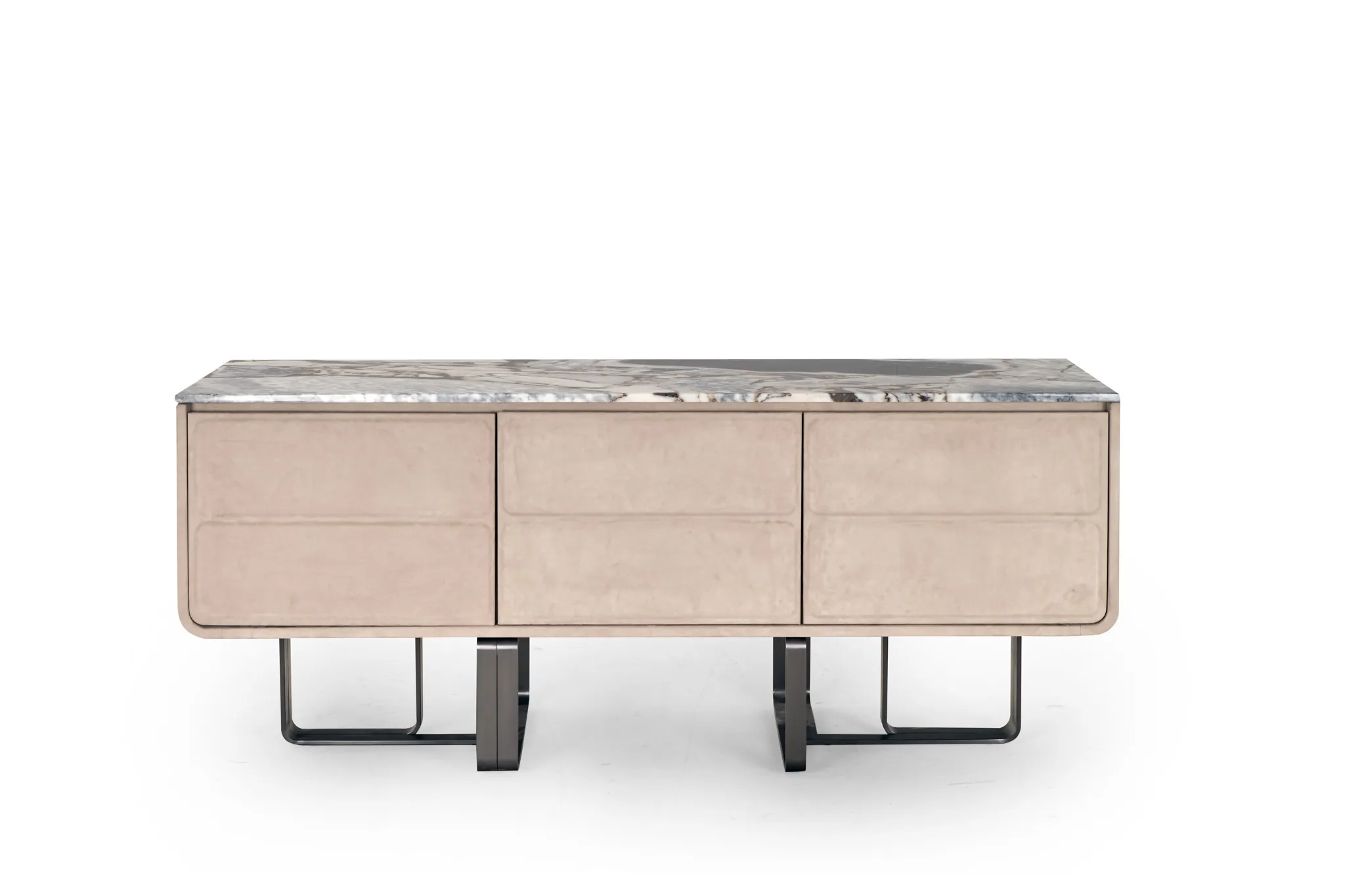
The Minimalist 6 Drawer Leather Wide Dresser is listed at 160 × 45 × 85 cm, with leather and solid wood. That is a different requirement from a tall chest or a dining sideboard, even if all three are described loosely as storage. Record the drawer configuration and approved material reference against this item.
If the dresser moves from a dressing area to a bedroom, keep the item identity and update the destination. Then recheck the surrounding furniture. The listed 45 cm depth does not include an allowance for someone opening a drawer, and moving it opposite a bed can change how the room functions. A location change may therefore need a design review without needing a replacement order line.
Use columns that describe purchasing decisions
The following fields are a practical starting point. Expand them where the order genuinely needs more detail, rather than adding columns that everyone leaves blank. A small project can work with one sheet; a repeated-room scheme may need linked schedules and a separate packing register.
| Field | What it should identify | Common ambiguity to remove |
|---|---|---|
| Project item reference | The same ordered piece throughout revisions | A room move being treated as a second item |
| Product and selected variant | Exact product link, drawing or approved configuration | A family name being mistaken for a final specification |
| Order quantity and unit | Complete pieces, sets or another agreed unit | Packages being counted as complete furniture |
| Destination | Building, floor and room where applicable | Identical room names on different floors |
| Approval reference | The current drawing and material decision | A later message being detached from the order |
| Open point | The unresolved question and person responsible | An empty cell being read as permission to proceed |
Use a consistent unit for dimensions and show it in the heading. If the source uses centimetres but the project drawings use millimetres, retain a checked conversion rather than allowing both units to drift through the list. A 180 cm bed width and a 1,800 mm project allowance can describe the same number while still needing confirmation that they refer to the same part of the bed.
Record a change without erasing the earlier decision
A room change, fabric change and quantity change should not all be treated as a general update. Record what changed, which item it affected and whether the change requires a new drawing, price or approval. Keep the previous version available so a discussion can be traced without guessing which screenshot was current.
Suppose the lounge sofa remains the same model but the upholstery changes. The product reference can stay, while the finish reference and approval status change. If its footprint changes instead, the room layout and delivery assumptions need checking too. Neither change should silently carry forward the earlier approval.
Make cancellations visible as well. If a second bedroom is removed from the scope, mark its bed line as removed and reconcile the order quantity with the supplier. Deleting the row from a personal spreadsheet does not tell another person that their earlier instruction has changed. Where the same dresser is assigned to several rooms, review the remaining allocation instead of assuming a reduction in room count automatically reduces every furniture quantity.
Before a revised file leaves the purchasing team, compare it with the previous issue. Look specifically for changed quantities, destinations and product references, then explain those changes in the covering message. That short comparison is useful when the drawing team and purchasing team update their files at different times.
For a distributor, a sample-room item and later stock units may have different approval stages. Keep the sample decision visible, but do not mark the whole later quantity approved merely because one display piece has been accepted. Confirm what the later order is required to match and which records define that agreement.
HEZEN CASA's guide to furnishing a property in phases explores the room-use side of staged delivery. In the order list, the task is simpler: preserve the identity and status of the furniture at each stage, so an early room release does not conceal unfinished decisions elsewhere.
Reconcile furniture quantities before using the list for receiving
Once the supplier provides the packing information, add it alongside the agreed order units. Keep a field for complete receipt. A bed arriving in several packages may still be incomplete if one component is missing; a received carton total alone cannot settle that question. Ask for a component-to-item relationship when the arrangement is complex.
The list should also distinguish “received” from “assembled” and “accepted.” A stone table can have arrived while its base is still awaiting assembly. A dresser can be in its room while a finish question remains open. These are normal differences in progress, and they become manageable when the language stays precise.
Before releasing the final list, compare the total ordered furniture with the room-by-room allocation. Every piece should have a destination or a clearly stated reason for being held separately. Every room requirement should point to an ordered item or an unresolved decision. That last comparison is often where a forgotten bedside cabinet, an extra chair or a duplicated sofa becomes visible.
Keep the file readable enough for someone at the property to use without the original design conversation. They should be able to identify the piece, locate its room and find the current approval. If a late change can be made without losing those three things, the furniture order list is doing its job.