Follow the selected furniture through its making
Evaluate a Furniture Manufacturer in Foshan Across Upholstery, Wood and Stone
A complete furniture collection can involve several different kinds of work. Buyers evaluating a furniture manufacturer in Foshan should ask how the selected upholstered, wooden and stone pieces will be produced, assembled and checked. Evidence about one workshop activity should not be treated as proof of every product in a mixed order.
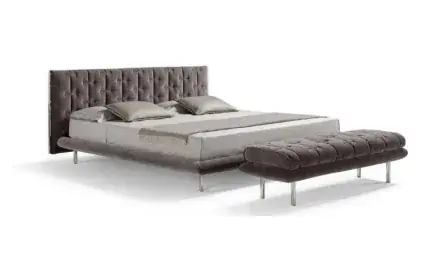
For a HEZEN CASA proposal, use the curved bouclé sectional, button-tufted velvet bed, round marble table with a dark wood frame and sliding-door wood sideboard as specific discussion points. The furnishing service can coordinate the proposal, while the manufacturing responsibilities for the accepted order need to be confirmed.
| Selected item | Activity the buyer needs to understand | What one photograph cannot establish |
|---|---|---|
| Curved bouclé sofa | Upholstery execution and the agreed configuration | Hidden construction or tested seating performance |
| Velvet upholstered bed | Relationship between upholstered parts and the metal frame | The supplied support system or every connection detail |
| Wood-and-marble table | Coordination of the stone top, lower tier and frame | Complete assembly suitability from the top alone |
| Sliding-door sideboard | Cabinet construction and moving-part operation | Usable interior dimensions or hardware specification |
Ask the furniture manufacturer in Foshan to describe its role for each selected piece
The useful question is not simply whether a supplier uses the word factory. Ask which work is performed by which party for the furniture in the proposal, who controls the agreed specification and who accepts responsibility for the completed item. A clear answer can describe a coordinated supply arrangement without pretending that every component is made in one place.
For a distributor buying sofas and cabinets together, the commercial convenience of one order may be valuable. It should still be possible to understand how each furniture family is controlled. The buyer should not infer that a demonstrated upholstery process establishes the cabinet hardware specification or the source of a stone component.
For a hospitality buyer, the intended use may create further evidence requirements. Explain those requirements for the actual bed, sofa or table and ask what documentation can be supplied. Do not apply a general assurance about furniture quality to every product, configuration and use environment in the project.
The bouclé sofa’s curve needs evidence tied to the proposed configuration
The off-white sectional is listed at 300 × 180 × 80 cm with bouclé upholstery and a solid-wood frame. A buyer can use that reference to ask how the accepted curved form and covering arrangement will be represented in the proposal. If a custom version is requested, identify the differences from the displayed item.
Views of the completed sample may help evaluate the visible curve, seams and rear appearance. They do not reveal the complete internal structure or prove a performance test. Ask separately for the construction information and any relevant evidence needed for the intended purchase. The supplier’s answer should identify the furniture version to which it applies.
A sample with a different upholstery material may be useful for understanding the broad shape, but it should not be treated as a complete demonstration of the proposed bouclé execution. The buyer needs to know which aspects are represented and which remain to be assessed on an appropriate sample or confirmed specification.
Ask the supplier to connect a proposed inspection to the sofa’s accepted configuration. If the order changes the curved end or covering, the inspection reference should show that version. A buyer reviewing a finished image needs to know whether it is the ordered sofa, an earlier sample or another configuration offered as an illustration of the design family.
For a mixed order, keep that upholstery evidence distinct from the cabinet and table evidence. This makes it possible to release a resolved sofa decision while still investigating the table’s component relationship. It also prevents a clear answer about one piece from creating unwarranted confidence in another piece whose construction remains unexplained.
Trace the manufacturing interfaces where furniture materials meet
In a mixed-material piece, the finished result depends on the relationship between its parts. The buyer should ask how those parts are specified together and how the completed item is assessed. Looking only at the most attractive surface can leave the connection, fit or operation of the whole furniture piece unexplained.
The velvet bed connects upholstered forms to a metal frame
The dark grey bed is listed at 220 × 180 × 120 cm with velvet upholstery, a metal frame and Queen and King options. The buyer should ask which dimensions and supplied components apply to the selected size. The listed outside envelope does not by itself identify the mattress opening or support arrangement.
Ask how the upholstered sections relate to the supplied frame and what assembly information accompanies the order. If a factory presentation shows upholstery work, that may answer a question about the visible padded component. The buyer still needs the accepted complete-bed specification and any relevant evidence for the assembled furniture.
A project buyer ordering beds for several rooms should make the selected size and version clear before requesting evidence. A document for another bed or an image of a different support arrangement should not be used to close the question. The connection between the evidence and the purchased item matters more than the volume of material supplied.
The velvet bed’s decorative button tufting and its frame interface should therefore be reviewed for different reasons. A buyer can accept the visible padded appearance and still request clarification of the supplied frame components. Neither decision needs to be exaggerated: accepting the appearance is useful progress, while keeping the unresolved assembly question open protects the accuracy of the purchase.
The marble table has a wood frame and a two-tier arrangement to coordinate
The round table is listed at Ø160 × 75 cm with natural marble, wood and a two-tier form. A stone-top image can show an appearance proposal, but it does not establish how the complete table is assembled. Ask for the actual proposed arrangement of the top, lower tier and supporting frame.
If different parties provide components, clarify who checks their relationship before the furniture is released. That question concerns the supplied table as a complete object. It does not require the buyer to assume a particular manufacturing route or to claim that the supplier performs every specialist process internally.
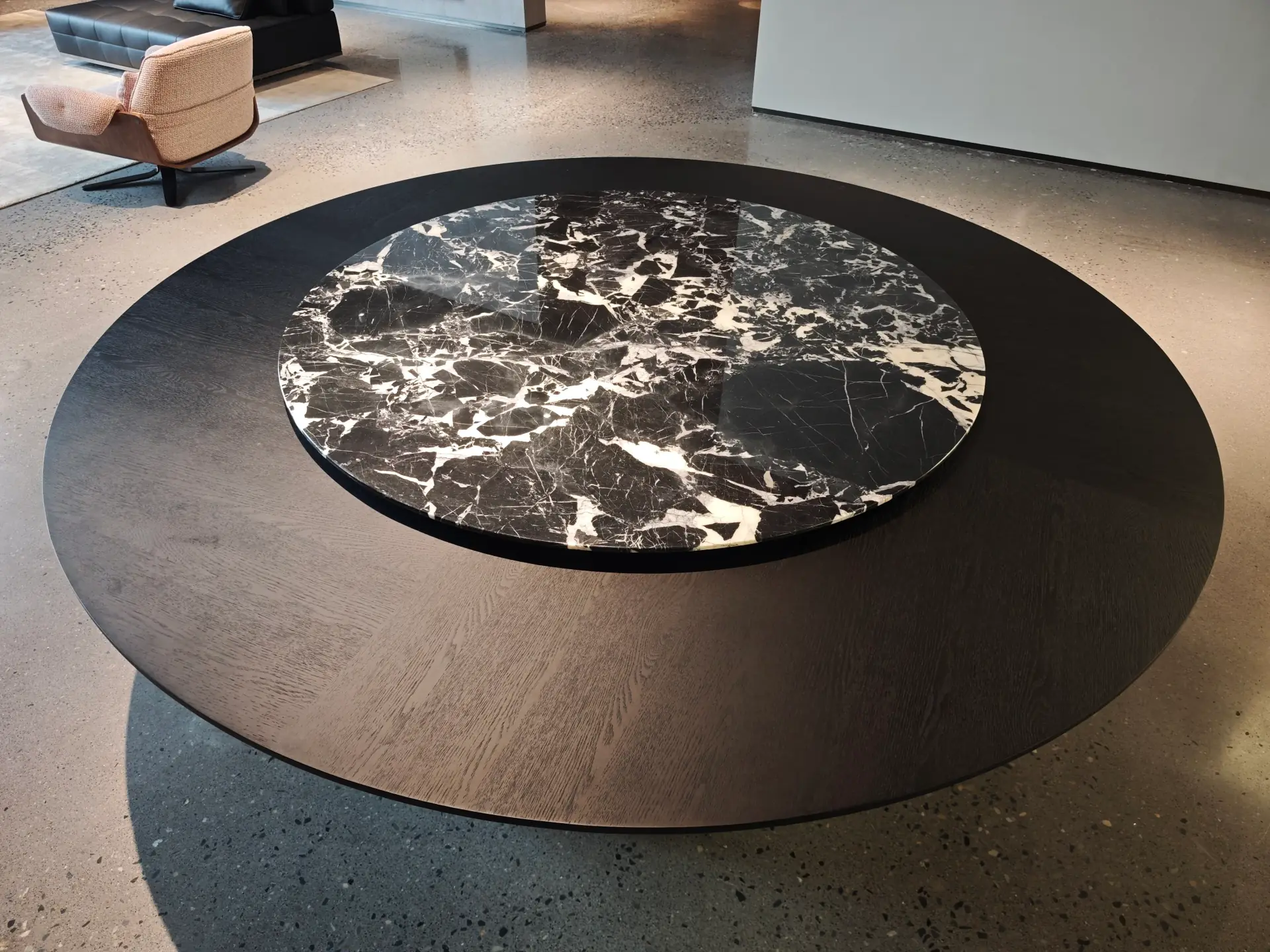
A dining-room buyer may accept the stone appearance while still needing an answer about chair clearance below the table. Keep those approvals separate. The discussion of dining-table bases and chair clearance explains why the underside deserves its own review.
The wood sideboard combines a fixed cabinet with moving doors and drawers
The sideboard is listed at 200 × 45 × 90 cm with two sliding doors and three drawers. Ask for the operation and interior information relevant to the selected version. A view of wood finishing does not establish the sliding mechanism, the usable compartments or the completed furniture’s movement.
The USDA Forest Products Laboratory’s Wood Handbook treats wood properties, fastening and finishing as distinct technical subjects. For this purchase, the limited practical point is that a wood description alone does not answer every construction question. It is not evidence of a particular HEZEN CASA material test or manufacturing method.
A buyer using the sideboard for dining storage should connect the manufacturing discussion to the actual contents and access routine. Ask which internal dimensions can be provided and how the moving parts are intended to be used. The objective is to understand this cabinet, not to collect a general statement that wood furniture is carefully made.
If the proposed sideboard has a revised finish, identify whether the evidence shows that finish or the original display version. If the interior changes as well, request information that covers the revised access arrangement. A wood sample can answer the finish question without answering how the cabinet doors and drawers will operate together after the requested modification.
Read furniture evidence for its scope before accepting its conclusion
A photograph, drawing, test report and demonstration answer different questions. Identify the item and version, the activity shown and the conclusion the evidence can reasonably support. A supplier may provide useful information while still leaving an important question open. Record that limit rather than stretching the evidence to cover the complete order.
For the bouclé sofa, a rear photograph can support a decision about visible finish. It cannot establish internal construction. For the table, a complete assembly drawing can clarify the relationship of components, but it is not automatically a load test. For the bed, a size description is not a declaration of mattress compatibility for every market.
If a certificate or test report is offered, ask which product, material, configuration and test scope it concerns. The presence of a logo on a presentation is not enough. Where project-specific requirements apply, the buyer should have a suitably qualified reviewer assess whether the actual documentation addresses them.
Keep production capacity separate from a proposed delivery date
A buyer may want to know whether the selected sofas, beds, tables and sideboards can be supplied for a project. Request a schedule based on the accepted quantities, versions and outstanding approvals. A general statement about factory size or capacity does not establish when this particular mixed order can be completed.
For example, the upholstered furniture may be fully defined while the table’s stone selection remains open. Ask how that unresolved choice affects the proposed sequence. The buyer should not assume that every item is ready at the same time merely because the furniture appears together in one commercial proposal.
Similarly, a custom sideboard interior may require information not needed for the listed version. Identify that additional decision and its consequences in the supplier’s actual proposal. No public product dimensions establish a production lead time, so avoid building a project schedule from an unsupported estimate presented as a commitment.
Choose the manufacturing arrangement you can understand and verify
A purchasing team should be able to explain why it is comfortable with the proposed supply arrangement. For the curved sofa, it needs the accepted upholstery and configuration evidence. For the velvet bed, it needs the complete supplied arrangement. For the marble table, it needs coordinated components. For the sideboard, it needs an understandable cabinet and operating specification.
If one of those areas remains uncertain, ask a targeted question about that furniture rather than rejecting or accepting the entire collection on the strength of a general impression. A clear response may resolve the issue; an unsupported answer may justify keeping that item out of the order until suitable evidence is available.
The strongest purchasing decision is the one whose limits are visible. Select the furniture and manufacturing arrangement that can be described accurately, supported at the required level and coordinated for the actual project. A broad collection is useful when the buyer can still follow the evidence back to the particular sofa, bed, table and sideboard being supplied.