Freestanding Wine Cabinets for Residential Entertaining and Easy Pouring
Choose a wine cabinet by trying the glass and bottle you reach for most, then leave a separate, stable place to pour. For a villa dining room, apartment or private reception space, you want guests to be able to sit down while somebody serves them. HEZEN CASA, a Foshan furniture manufacturer and supplier, lists a freestanding cabinet with space for bottles and glassware, alongside sideboards and dining furniture. Start with that cabinet if you want to keep serving pieces together. If you need to chill wine or store a collection for ageing, plan suitable climate-controlled storage separately.
Define the role of a freestanding wine cabinet before the first guests arrive
Picture the beginning of a normal evening. The first visitor may choose a glass near the door while the others put down bags. Later, once people sit, the host may bring a different bottle to the table. Give each of those moments a place. The cabinet can hold glasses and bottles selected for service, while a separate surface can hold an open bottle, a water carafe and a tray. Trace the distance between the two. Leave room for the person serving to stand without leaning on a door or stepping around the first occupied chair.
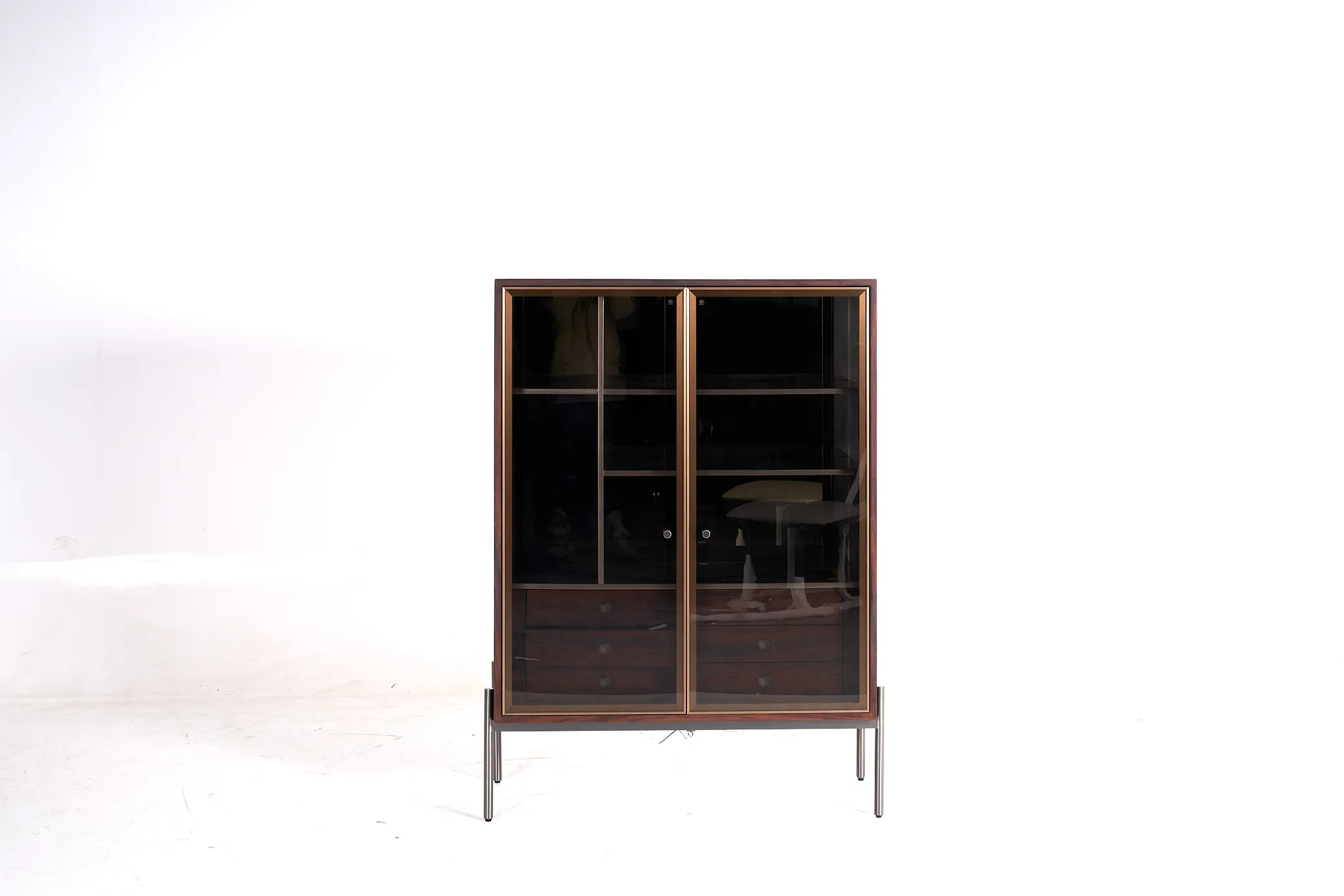
For the Italian Minimalist Freestanding Wine Cabinet, HEZEN CASA lists a solid wood case at 80 × 40 × 120 cm overall, intended for wine bottles and glassware. Its product gallery shows a dark glazed front and several levels of storage. Treat it as a piece of cabinetry for serving items. The listing gives no active temperature or humidity control, and the outside depth does not tell you the usable compartment dimensions. Ask for those before deciding which bottles and glasses it will hold.
Confirm which bottle and tall glass fit the cabinet opening
Take one of the broadest bottles and one of the tallest glasses you would actually bring out for dinner. The neck and shoulders of the bottle can take up space differently as it goes through the opening. A large glass may be easy to stand on a shelf but harder to lift past the middle frame and adjacent glasses. The Wine & Spirit Education Trust’s guide to bottle shapes and sizes explains why a single familiar bottle makes a poor stand-in for everything. Use your own pieces when asking for the compartment’s clear width, depth and height.
Check how far the door needs to open for your hand to reach the glass. Behind one door, there may be space to take two glasses together. The same movement at the side of a narrow compartment could leave a bowl close to the opening while the other person passes. Confirm the opening angle, side of access and useful shelf positions on the selected configuration. For a layout that depends on leaving a bottle standing at the front, the manufacturer also needs to confirm whether its weight and footprint are appropriate for that shelf.
Decide how many of the glasses are useful to keep at that level. A formal set can include several shapes, but the one you use most should be simple to take out in pairs. Hold the widest glass with the grip you use for a stem, and check whether you need more room above the rim or to one side. When you mark the shelf, leave the different glass types enough separation to pick up the intended piece easily. Send the maker a few representative diameters and heights. A total glass count on its own misses the point of the test.
Keep service bottles separate from wines that need cellaring
If you want to keep wine for a longer period, choose storage that provides the conditions required for the kind of wine and the time you intend to keep it. WSET’s guide to serving temperatures and storage sets out the importance of stable, cool conditions and protection from strong light for ageing. The #136 furniture case is useful as a place to present the selected glasses and support the serving setup. For wines that need cooling or a stable storage environment, use dedicated storage and bring out the bottles you intend to serve.
In a room with afternoon sun, look at the glazed front once the cabinet is in the proposed place. You may like to see the arrangement of the glasses from the next room. The glare can still make the glasses harder to distinguish when someone needs one quickly. Put the same glass where it will actually stand and see whether the shelf behind it stays visible. If the light is strongest just before dinner, choose a less exposed spot or leave the cabinet there for clean serving pieces and keep the wine under appropriate conditions until the meal.
If the case sits across from the dining area, choose what the people seated there will see most often. An even row of clear glasses can give the cabinet a quiet presence in the room. A collection of unrelated labels and boxes can feel busier even when the doors are closed. Keep the opener and a small cloth at the serving point instead of filling the visible shelves with accessories. For the finish approval, take a picture from a normal seat as well as from the front. These are the views that make the case and the sideboard look connected in the room.
Set the pour station where it will still work once chairs are occupied
In an apartment dining room, imagine a guest taking a chair at the end nearest the cabinet. A path that looks direct before dinner may now go behind that person. Bring a tray through it with at least two places around the table occupied. Plan the pour point where there is a clear area to set down the bottle before the tray has to turn. The shorter route may be along the dining room wall, even when the cabinet itself sits more naturally nearer the entrance.
Use a lower sideboard for opening and pouring when the cabinet’s job is storage
HEZEN CASA’s Rounded Marble Top Light Oak Storage Sideboard is listed at 180 × 45 × 80 cm. Its light oak body, natural marble top and four doors give you an option for a broad staging surface and nearby storage. Check the height against the person who will open and lift the bottles. Put a dry tray, the widest glass and an opener on the proposed surface. Leave enough space to move the open bottle onto the tray without reaching over dirty glasses. Ask the supplier about care and suitable surface protection for the selected marble before using it for drinks.
A different option is the Dark Wood Sliding Door Sideboard with Drawers, listed at 200 × 45 × 90 cm with two sliding doors and three drawers. The longer dark top may suit a room where the host sets out several items at once. Compartments can be assigned to things like napkins or accessories once their clear size is known. If you select it for a narrow lane, open a drawer during the service walk. The sliding doors can save room near the front, while the drawers still need space to extend and let a person stand in front.
A villa with a separate reception room might have a serving station where people gather before dinner while the main sideboard stays clear for dishes. Set one group of glasses out and stock the rest in the cabinet. Bring a bottle and one empty glass to the proposed serving point. Standing at the 120 cm cabinet top will feel different from using either of the lower sideboard examples. Check how the vessel is lifted and tipped at the actual surface you intend to use. Reserve the tall cabinet for access and display if a lower surface gives the host more control over those movements.
At the light oak sideboard, try the station with the tray near each end. The end closer to the wine cabinet can make replenishing glasses easier. The opposite end may be where guests arrive, so it may be better for handing someone a glass after the pour. The four closed storage fronts only help if the person at the tray can still open the part they need. Mark which surface remains clear for serving and where cold or wet items will rest with the right protective accessory. Ask the maker if intended uses affect the care recommendations.
Keep the dining chair position out of the wine cabinet’s opening
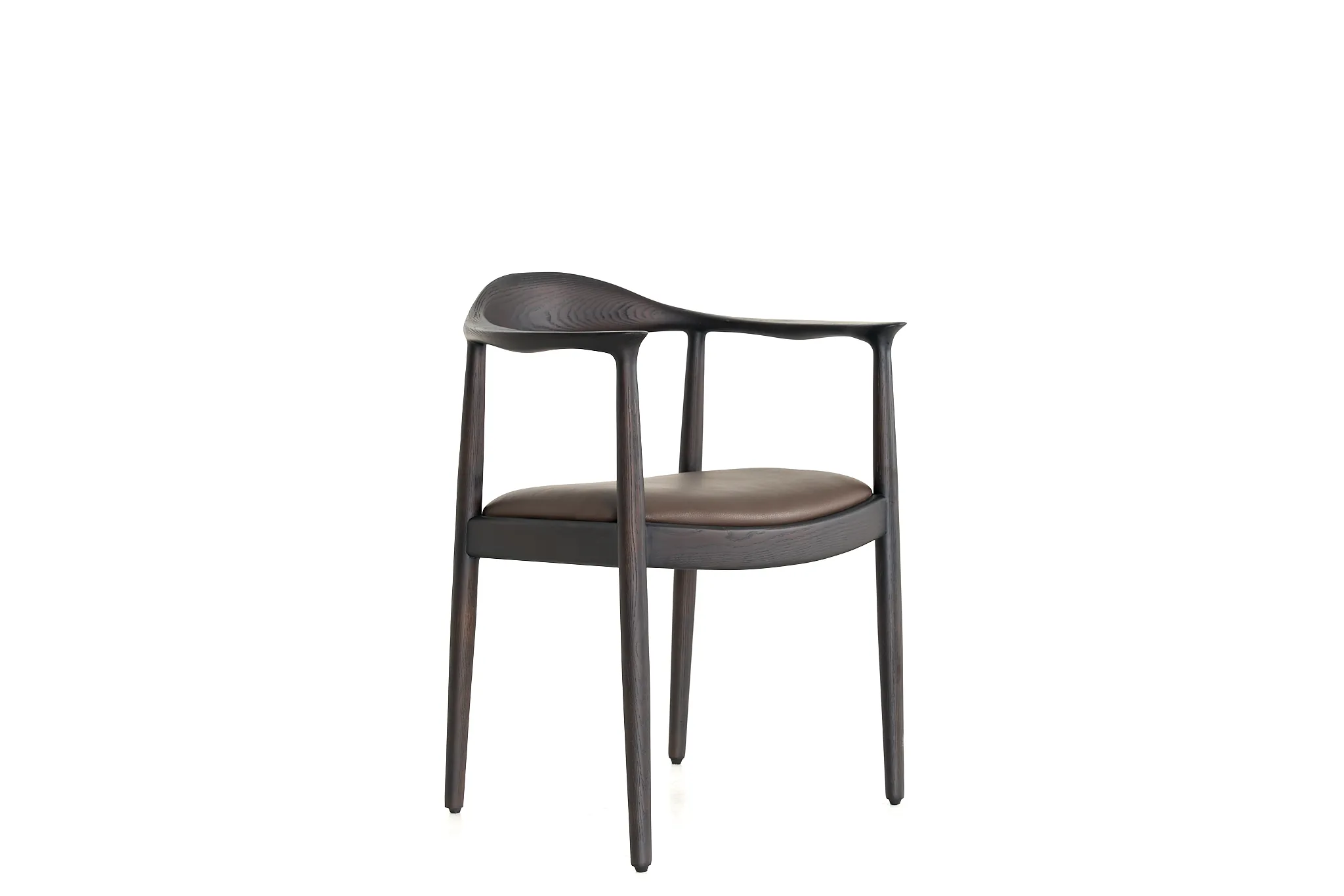
Try the service route with HEZEN CASA’s Italian Minimalist Solid Wood Dining Chair or the chair already selected for the project. The #140 listing gives solid wood and fabric with a contoured back and 50 × 55 × 90 cm overall dimensions. Move the chair into its occupied position and ask a second person to use the cabinet door and carry a glass to the table. An unused chair pulled in tightly is a poor reference for the space a host will have once people sit.
For comparison, the Round Natural Marble Dining Table with Lazy Susan is listed at 150 cm in diameter and 75 cm high, with a natural marble top, metal base and built-in turntable. At a shared meal, let the tray serve the dishes people reach for and reserve a separate place to work with bottles. A host need not stay in the aisle behind someone’s chair while setting down or retrieving every glass. Compare the edge the host faces with the layout people occupy at the table. Place the freestanding cabinet where it can be opened without changing the chairs’ normal positions.
Walk the same route in reverse. It may be easy to reach empty glasses before the table is full, then harder to put them away when someone stands up or a door is left open. Store clean glasses in the cabinet and use a separate spot to collect used items until they can return to the kitchen. HEZEN CASA’s guide to organizing tableware for service covers adjacent plates and general serving items. The wine cabinet only needs to carry what will fit and be retrieved comfortably.
When a single guest helps serve, they should see where to put a glass without guessing which full tray is ready to move. Give them one designated handoff edge on the sideboard, leaving the bottle in its place while the next glass is poured. This small detail keeps the cabinet doors usable during conversation and simplifies the return at the end of the meal.
Choose the cabinet location after a full serving and reset trial
Rehearse this once with the furniture positions on the floor. Retrieve a glass, take it to the pour surface, bring it to a seat and bring the empty glass back. Include the place where you put the stopper or opener down. If the route works in one direction and fails in the other, find the point where the two people cross. Moving the pour surface closer to that point can reduce a second trip past an occupied chair. Write down the part of the cabinet you must open without moving a serving tray.
Ask the furniture supplier for the clear compartment arrangement, proposed finish, door motion and installation guidance for the selected case. Confirm the chosen shelves or racks are specified for the glassware, the bottles and the way you want to access them. The 80 cm outside width helps you draw the cabinet on the floor plan, but its usable width needs to come from the manufacturer’s drawing. Check the appearance of the sample near the chosen sideboard so the two pieces each carry a clear function and sit naturally in the same room.
Leave the cabinet on the plan at the location where you could host the whole evening with the normal furniture in place. Put one measurable bottle and one tall glass next to the drawing for approval. Write down the pour surface and where you will return items after the guests leave. The test is whether you can pour another glass while people remain seated and put everything away without emptying the middle of the dining room first.