Match Dining Table and Chair Height Before Ordering a Set
A dining chair can look right beside a table and still leave too little room beneath the edge. Matching dining table and chair height means checking the seat, the underside of the table and any chair arms together. For a buyer combining separately selected pieces, approve the pair in a side view before multiplying the chair quantity across the order.
HEZEN CASA lists several dining tables at 75 cm overall height, but its dining-chair overall dimensions do not establish seat height. Start with the named table and chair options, then obtain the missing seat, arm and underside measurements. Those are the dimensions that tell you whether someone can sit comfortably and whether the chair can move into the intended position.
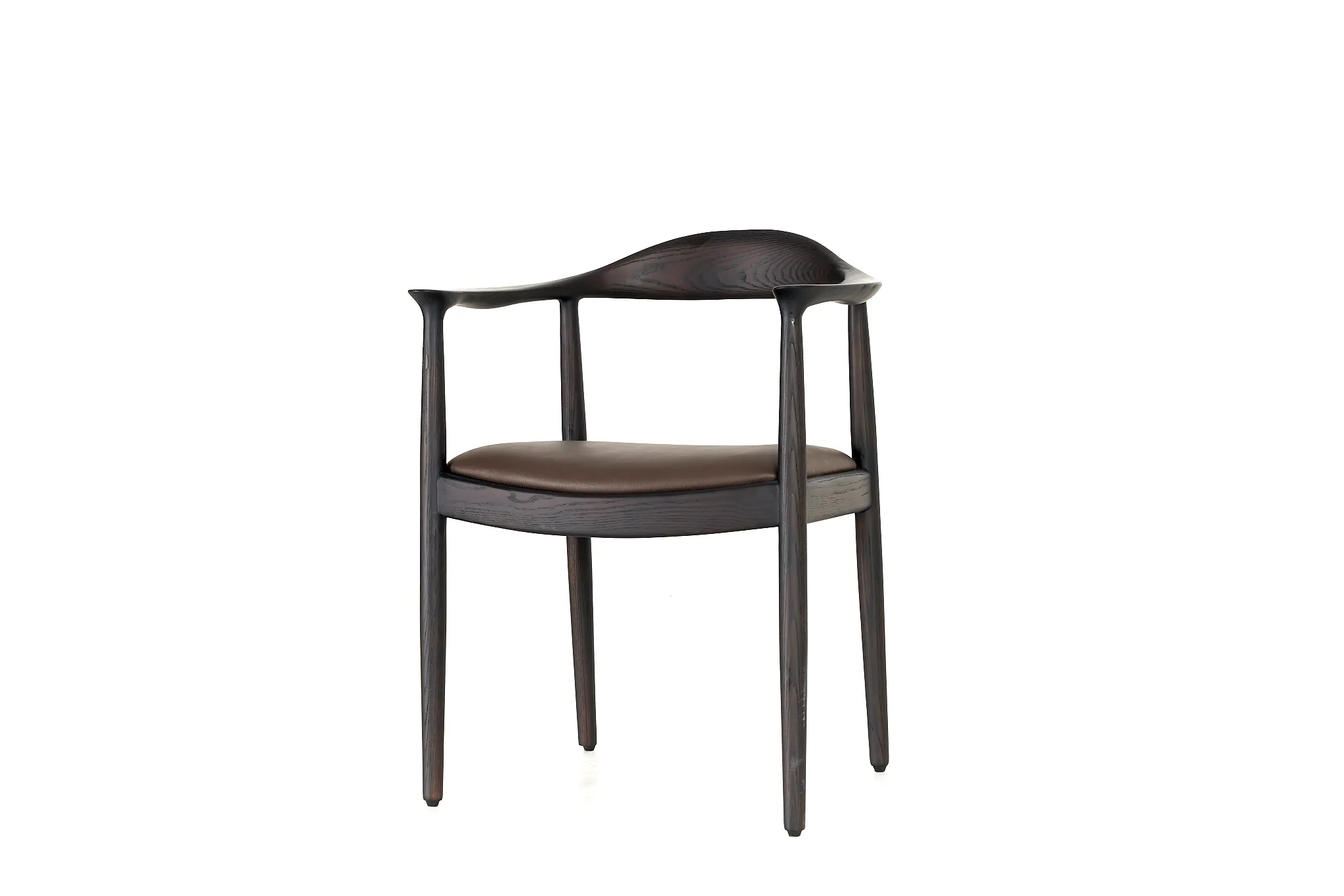
Read dining table and chair height from the same floor level
Draw one side elevation with the finished floor as its reference. Mark the tabletop, the lowest underside obstruction at the seating position, the chair seat and the highest point of any arm that approaches the table. Keep the chair back on the drawing, but do not confuse its height with the seat level.
There are two useful vertical comparisons. The first is the relationship between the seat and the top used for dining. The second is the available space between the seat and the table's underside. A thick edge, apron or support can reduce the second space without changing the first.
Confirm where each measurement is taken. A shaped seat can have different levels towards its front and back, while an upholstered seat can compress under use. An arm may also rise towards the back. One unqualified number can hide the part that actually touches the table.
The 75 cm marble table still needs an underside measurement
The Light Crystal Marble Round Dining Table with Lazy Susan is listed at 140 cm in diameter and 75 cm high. The listed overall height locates the top of the furniture, subject to confirmation of the supplied configuration. It does not give the clear space beneath the tabletop at a chair position.
Ask for the underside level and the shape of the base where the chair and diner will sit. The described rotating tray is a separate feature above the main surface; it should not become the reference for matching chair height. The relevant dining surface and under-table obstruction need to be identified clearly.
For a purchasing coordinator choosing this table with upholstered chairs, a simple annotated side photograph or dimensioned drawing is more useful than a second overall-height figure. It should show where the knees, arms and chair frame approach the supplied table.
Overall dining-chair height is mostly a different question
The highest point of a dining chair is usually on its back. That dimension helps explain the chair's presence in the room and its overall envelope, but it cannot be used as the seat height. Two chairs with similar overall heights may place their seats or arms differently.
| Chair being considered | Published overall envelope | Still needed for the height decision |
|---|---|---|
| Solid Wood Dining Chair | 50 × 55 × 90 cm | Seat level and the supplied arm configuration |
| Curved Back Dining Chair | 52 × 55 × 91 cm | Seat level and full arm profile towards the back |
| Lounge Dining Chair | 55 × 58 × 94 cm | Seat level and the sitting position with the offered upholstery |
Keep the unresolved fields visible when a purchasing team compares the options. A taller back may be desirable beside the 160 cm table for visual reasons, but that does not make the chair's sitting position more suitable. Someone approving the overall appearance and someone checking the dimensional fit may be reviewing different parts of the same chair. The order should bring those two decisions together before a preferred model is substituted across the set.
The 90 cm wooden chair does not have a 90 cm seat
The Italian Minimalist Solid Wood Dining Chair is listed at 50 × 55 × 90 cm and described with a solid wood frame and upholstered seat. Record those as overall dimensions. Request the seat-height measurement and relevant arm details for the offered version before matching it to the 75 cm table.
Its 50 cm listed width and 55 cm depth also belong in the pairing review. They help locate the chair relative to the table edge and base. A vertical match alone does not prove that the chair can move close enough to the dining surface.
The curved-back chair needs its own seat and arm figures
The Italian Minimalist Curved Back Dining Chair is listed at 52 × 55 × 91 cm. Its curved back and tailored upholstery describe a different seating option, but the extra centimetre of overall height does not establish a higher seat than the wooden chair.
When comparing the two, keep the seat-height fields separate and leave them unresolved until confirmed. Do the same for any arm that may pass beneath the table. It is better to have a clearly open dimension in the approval record than a plausible-looking number inferred from a photograph.
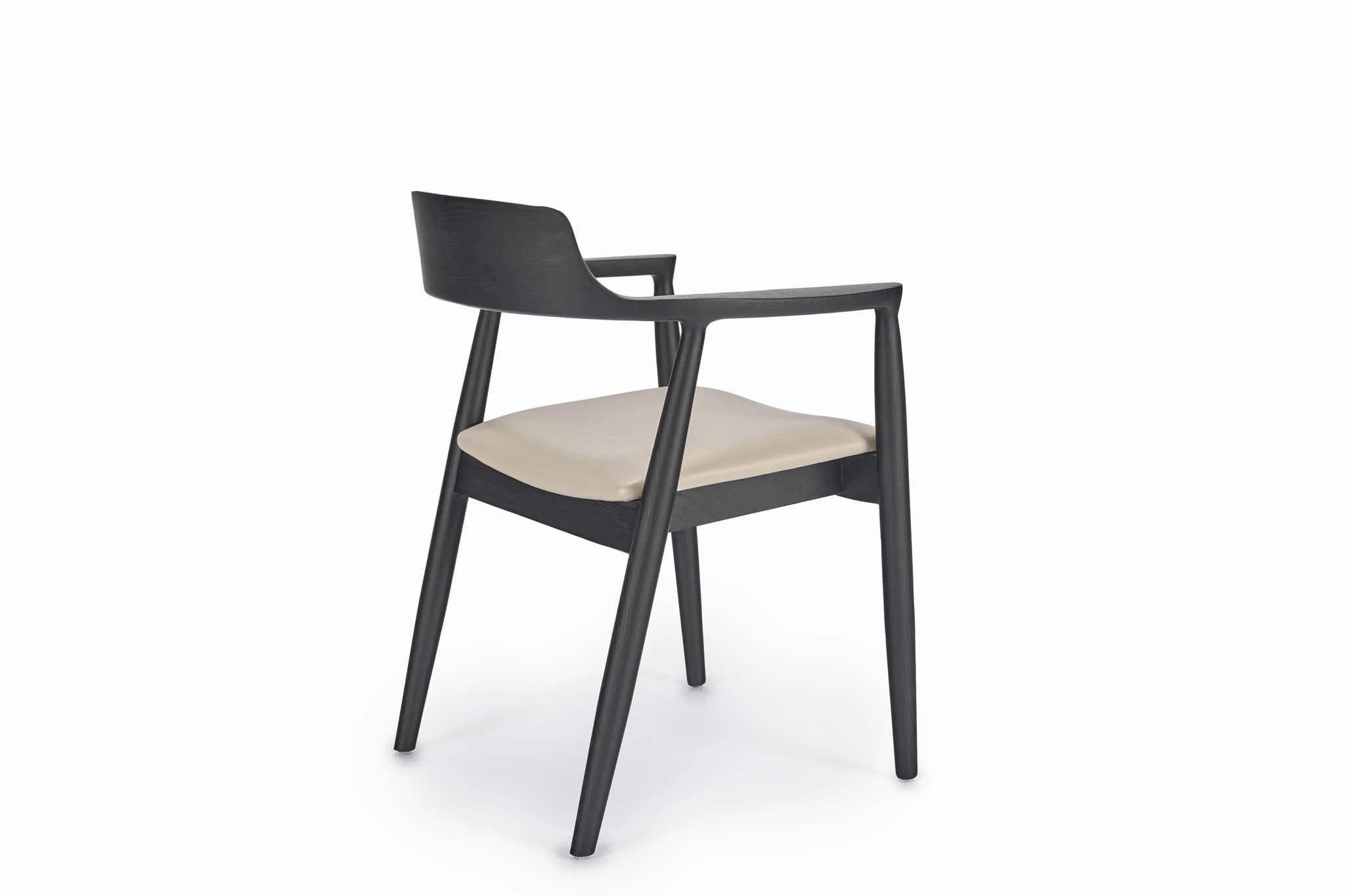
Separate tabletop height from usable space beneath the edge
Suppose, purely as an example, a table top is 75 cm above the floor, its lowest relevant underside is at 68 cm and a chair seat is at 46 cm. The difference to the tabletop is 29 cm, while the space to the underside is 22 cm. These hypothetical underside and seat figures are not HEZEN specifications or a statement that the combination will be comfortable.
The example shows why subtracting seat height from tabletop height is only part of the task. The underside determines where a person's legs may meet the table. The user's build, posture, seat shape and the actual base all affect the result.
For the 140 cm marble table, confirm whether an apron, edge build-up or support changes the clearance around different positions. If the offered construction varies from the image used during selection, review that change with the chair still included in the drawing.
A buyer replacing the chairs around an existing table can measure the actual underside rather than relying on the old table's sales description. Bring those measurements to the chair selection. Changing only the chair does not remove the need to check the complete pair.
The 160 cm table does not automatically offer more vertical clearance
The Round Dark Wood Frame Marble Dining Table is listed at 160 cm in diameter and 75 cm high. Its larger top and two-tier description distinguish it from the 140 cm option, but the same listed overall height does not prove equal underside space.
Obtain its own edge and support dimensions. A different frame construction can change where a chair arm or knee meets the table even when the main surfaces appear level. Do not carry the approved chair clearance from one table to the other without checking the offered base.
For a project using both round sizes in different dining areas, keep two pairing drawings. The chairs may ultimately be shared between the rooms, but that should follow confirmed fit with both tables. A common finish or matching style is not evidence of dimensional compatibility.
Check arm clearance through the whole movement of the chair
An arm can clear the table at its front tip and catch further back as the chair moves inward. Compare the complete arm profile with the table edge and underside. Establish whether the intended resting position is partly tucked in, fully tucked in or deliberately outside the top.
The curved-back chair's offered arm construction should be shown in a side view. The wooden chair also needs its actual configuration confirmed rather than an assumption based on the product name. If a sample is available, move the chair normally into position and observe where the first restriction occurs.
Do not solve a collision by forcing the chair under the edge. Repeated contact can affect the furniture surfaces and make the arrangement unpleasant to use. Choose an appropriate pairing or agree a different resting position, then include the resulting chair projection in the room plan.
For a compact dining area, a chair that remains further out may reduce the passage behind it. That is why arm clearance belongs in the purchasing decision rather than being left to the installer after delivery. The room needs to work with the chair in its actual usable position.
Try the lounge chair as a dining chair, not just as a comfortable seat
The Italian Minimalist Lounge Dining Chair is listed at 55 × 58 × 94 cm. Its generous upholstery and larger overall envelope make it worth considering for a more relaxed dining setting. They do not establish the seat height, loaded cushion position or suitability for every diner.
Try the offered chair at the intended table height where possible. Check whether the user can sit near the table without leaning forward awkwardly, whether feet rest comfortably and whether the tabletop suits the dining posture. A chair that feels inviting on its own may behave differently during a meal.
For a home where people spend a long time at the dining table, the sample trial should resemble ordinary use. For a distributor selecting a repeatable combination, record the exact chair version and the table construction used in the trial. Avoid transferring the result to an altered cushion, arm or base without another review.
Do not assume that adding a loose cushion will correct an unsuitable pairing. It changes the sitting position and may affect support or stability. Begin with furniture that suits the intended users and follow the actual product guidance for any accessories.
Keep the approved table-chair pairing together through purchasing
Room & Board's dining-room planning advice identifies seat height, arm height, table aprons and leg placement as related fit checks. Use that general principle with the confirmed measurements of the HEZEN items selected for the order.
Write the table and chair references together, including the confirmed underside, seat and arm measurements and any remaining questions. The furniture specification sheet guide provides a way to attach those details to the purchasing record. HEZEN CASA's furnishing service can help clarify the offered combination before it is fixed.
If a chair, cushion or table base changes later, revisit the pairing. Keep the approved drawing or sample record alongside the revision so that the effect is visible. The aim is a dining set that people can approach, sit at and leave easily, with no awkward surprise hidden below a well-matched tabletop.