A dining group with more than one chair
Build a Mixed Seating Arrangement With a Dining Chair Supplier in China
Mixing dining chairs can make a room feel considered, but a common fabric color is not enough to make the group work. Retailers, designers and project buyers should agree the purpose of each chair type, then review the actual sitting and movement around the table. A dining chair supplier in China needs the proposed arrangement, not just a request for several coordinating styles.
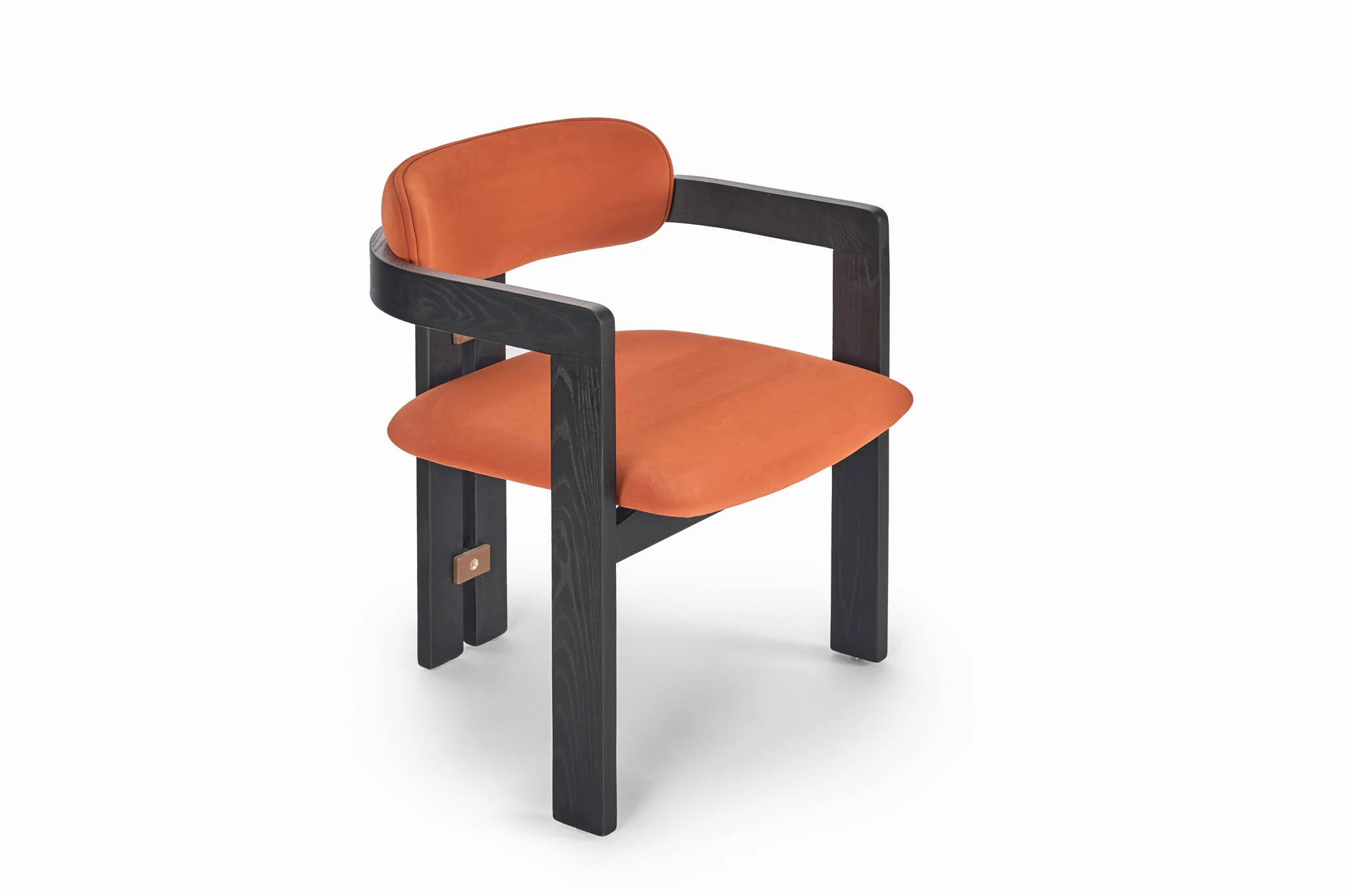
HEZEN CASA’s solid-wood dining chair, curved-back chair, contoured dining chair and upholstered dining chair provide four forms to compare. Use the Ø140 cm light crystal marble dining table as one actual table option when reviewing the group. The purpose is to approve a usable combination, not simply collect attractive individual chairs.
Tell the dining chair supplier in China why the group uses different forms
A designer might use two chair forms to create a deliberate visual rhythm. A retailer might present alternatives around one table so visitors can compare them. An operator might be adding seats to an existing group. These are different briefs. State which applies before the supplier proposes a material relationship or a quantity for each design.
For a permanent dining room, mixed chairs should feel intentional from the positions where the group is normally seen. For a showroom comparison, clarity may matter more than symmetry: visitors need to understand which chair they are trying and how it differs from the others. Do not let a temporary display arrangement become an accidental recommendation for every room.
The 50 cm solid-wood chair establishes one footprint
The solid-wood dining chair is listed at 50 × 55 × 90 cm with fabric upholstery. Use those overall dimensions to place it accurately, then obtain the sitting dimensions relevant to the order. Its 50 cm width helps describe the exterior, but it should not be interpreted as a seat width or a guarantee of the space a diner will require.
In a mixed group, this chair may sit beside a wider form. Review both occupied positions and their approaches. The comparison should include the actual table base and the room route, not just a row of empty chair outlines. A narrow-looking chair can still be awkwardly placed if the surrounding arrangement does not support its use.
The two 52 cm chairs should not be treated as the same seat
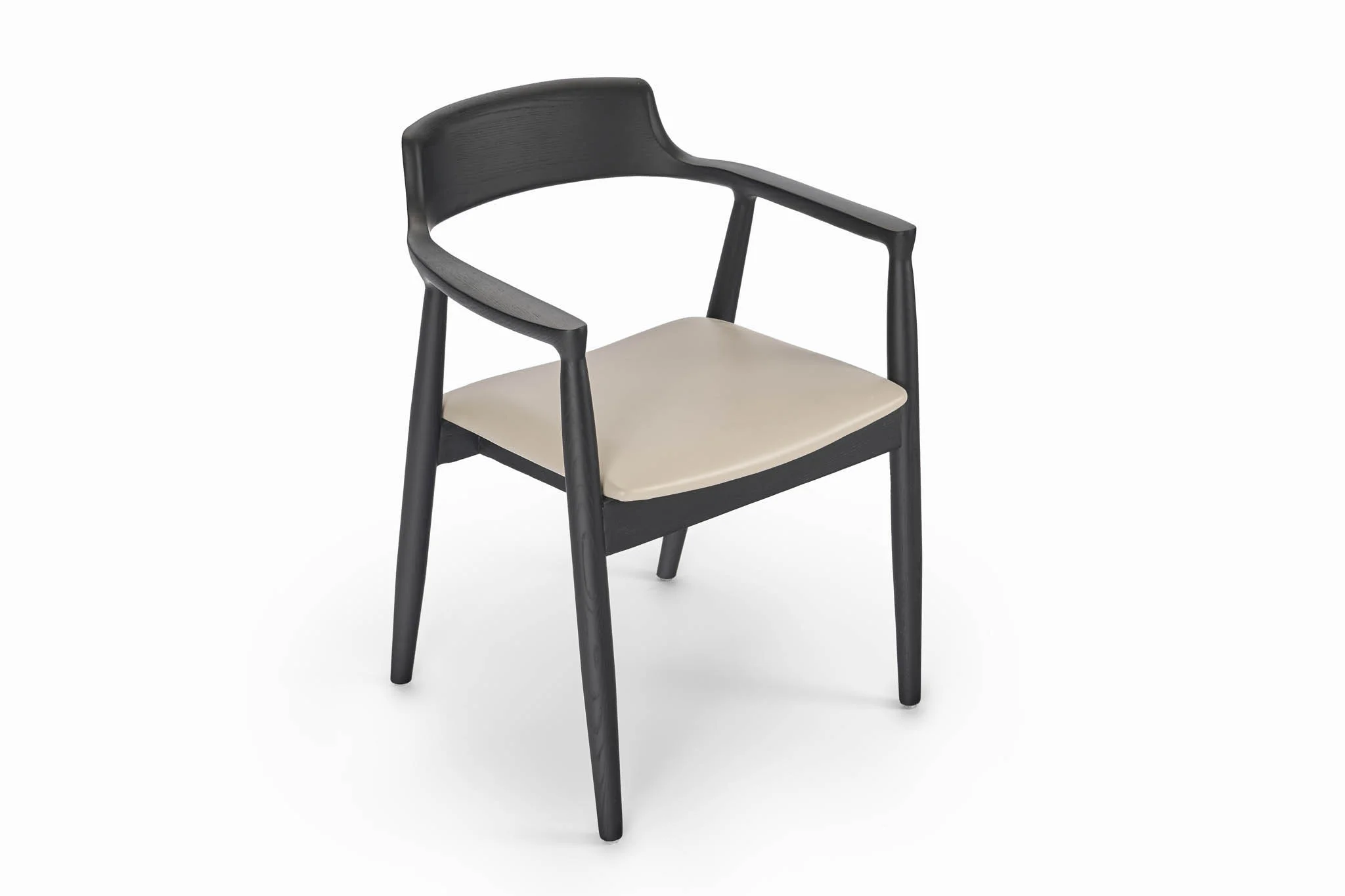
The curved-back chair is listed at 52 × 55 × 91 cm, while the contoured chair is listed at 52 × 55 × 92 cm. Both use fabric and solid wood in their public material descriptions. Their close overall measurements do not prove identical sitting dimensions, back support or construction. Review each actual form on its own terms.
A buyer replacing part of an existing set may be tempted to choose whichever 52 cm option is available. Confirm the actual appearance and use relationship instead. The change may be acceptable, but it should be an intentional selection. A matching width on a schedule is not enough to describe how the two chair backs will look or feel together.
Compare the dining chairs from the table’s center and from the doorway
The upholstered dining chair is listed at 54 × 56 × 93 cm with fabric and solid wood. It offers another exterior profile to consider alongside the 50 and 52 cm chairs. Look at the completed group from the entrance and from seated positions. A difference that appears minor in separate product images can become more noticeable when chairs stand side by side.
Overall height affects the visible line of chair backs, while overall width and depth affect the furniture envelope. Neither tells the whole story of the seated experience. Keep the appearance review and sitting review connected, but do not use one as a substitute for the other. The buyer should understand which difference is aesthetic and which needs further dimensional information.
A circular table does not create fixed head-chair positions
The light crystal marble table is listed at Ø140 × 75 cm with a lazy Susan and a gold-colored metal base. Around a circular surface, a mixed-chair arrangement needs its own visual logic. If the designer wants a distinct chair to occupy a particular position, show that orientation relative to the room rather than assuming the table supplies an obvious head position.
For a room entered from one side, the chair nearest the entrance may be seen mainly from behind. For a dining area open to a living room, several backs may remain visible throughout the day. Review the relevant rear views of the selected chairs. A front-facing product image cannot settle the entire composition.
Approve the dining chair fabrics as a relationship between actual samples
The four chair listings share a broad fabric-and-wood direction, but that does not establish identical upholstery or finishes. Ask which coverings and wood appearances are proposed for each selected chair. Review the actual samples together. If the intention is a close match, explain it; if contrast is intended, define which elements should differ.
A retailer can make a mixed display easier to understand by keeping each chair’s material reference beside its identity. Staff should not describe every chair as the same fabric unless that has been confirmed. A customer may choose one chair from the group, and its order still needs a complete, independent specification.
The same fabric can read differently across curved and contoured backs
Upholstery follows the form beneath it, so review the proposed covering on the relevant chair shape where practical. Do not assume a flat swatch communicates every seam, panel boundary or visual effect. Ask which details belong to the offered version, especially if a different material is proposed after the initial selection.
For a designer coordinating the curved-back and upholstered chairs, compare the visible joins and material placement as well as the color. The purpose is not to demand identical construction from different forms. It is to understand the relationship being approved and to avoid a later substitution that preserves the color while changing a detail central to the composition.
Cleaning expectations should be tied to the selected dining upholstery
A family dining room and a commercially operated dining space can have different maintenance routines. Describe the intended routine and request applicable care information for the actual coverings. Do not infer resistance to cleaning products, spills or repeated treatment from the word fabric or from the appearance of an upholstered sample.
ACT’s performance guidance distinguishes several textile performance considerations. It is general background, not proof that these particular chair coverings meet a project requirement. Where the buyer requires documented performance, obtain evidence tied to the proposed material and intended use.
Test the mixed dining group with every chair type occupied
A single chair trial cannot represent a group containing several forms. Review each chair type at its intended table position. Consider approaching, sitting, moving closer to the table and leaving. If the actual table or chair sample is unavailable, identify which dimensions and views are needed and which questions remain open.
For a villa dining room, the household may have strong preferences about the chairs used most often. For a project dining area, users may change from one occasion to another. The arrangement should reflect that difference. Do not assume the most visually prominent chair will necessarily be the preferred seat or that every user will experience the same form similarly.
| Proposed mixture | Decision that needs a real comparison | Record to retain |
|---|---|---|
| 50 cm and 54 cm wide chairs | Occupied spacing and approach around the actual base | Accepted placement of each chair type |
| Curved and contoured 52 cm chairs | Back shape, sitting dimensions and visible upholstery details | Separate product and material references |
| Several chair types for a display | Whether visitors can identify the option they tried | Clear correspondence between display and order |
The table’s published seating suggestion should not be treated as approval of every mixed arrangement. Review the chosen chairs, their positions and the surrounding room. If the group becomes crowded, adjust the composition before ordering instead of relying on a nominal seating count to justify an arrangement that has not been assessed.
A mixed-chair display should explain a choice without forcing a mixed order
A retailer may place the curved-back, contoured and upholstered designs around one table simply to let visitors compare them. Make that purpose clear. A visitor might prefer one form for every seat at home. The showroom arrangement should help the decision without implying that the displayed mixture is the only approved way to purchase the furniture.
Keep a separate record of any complete arrangement that has actually been reviewed. If a customer chooses all 54 cm wide chairs after trying a mixed display, assess that final group rather than carrying over the mixed group’s assumed spacing. The order has changed even though the chosen chair was already present in the showroom.
For a designer, a mixed arrangement may instead be the intended final result. Show how the different chair backs repeat around the table and how the group appears from the main approach. A material board alone cannot show that rhythm. Include the actual chair identities so the receiving team does not place the two forms randomly and alter the composition.
If an additional chair is kept elsewhere in the room, decide where it joins the table when needed. Its occasional use still deserves a fit review. Do not assume that a spare chair can occupy any remaining gap simply because its upholstery coordinates with the main group. The table base, occupied space and route remain relevant during that occasional arrangement.
Record whether the extra chair is part of the regular dining layout or a separately approved occasional option. That distinction gives both the buyer and supplier a clearer description of the actual group being ordered.
Keep mixed chair orders identifiable after the display is dismantled
An order containing two similar dining chairs needs more precise identification than a single-style order. Record the quantity, covering and intended destination of each form. The curved-back and contoured chairs should not be distinguished only by an informal description such as the softer-looking one. Use the actual product reference and approved image.
Ask how the supplied chairs will be packed and identified. Confirm the actual assembly and handling information rather than assuming the chairs arrive in a particular form. A receiving team handling multiple rooms should be able to assign the correct chair type before the entire shipment is unpacked and the identifying information is lost.
A later replacement chair needs the original version, not just its color
If the buyer wants to add or replace one chair later, retain the original specification and material references. Ask the supplier what can currently be supplied and whether differences need review. Do not promise permanent availability or an exact match to a used chair. A deliberate new combination may be more honest than describing an unverified replacement as identical.
The dining chair sample guide examines the individual chair-and-table trial. For a mixed group, take that review one step further: understand why each form is present and how the group works together. Approve the actual combinations, preserve their identities and let the room’s use determine whether the visual variety is worth keeping.