Brief a Custom Villa Furniture Supplier for Rooms With More Than One Role
A villa’s family lounge may need to support conversation every day and visiting relatives only occasionally. That does not mean every piece should perform both jobs. Owners and designers working with a custom villa furniture supplier should separate the activities that can share furniture from those that require a different room or a specifically designed product.
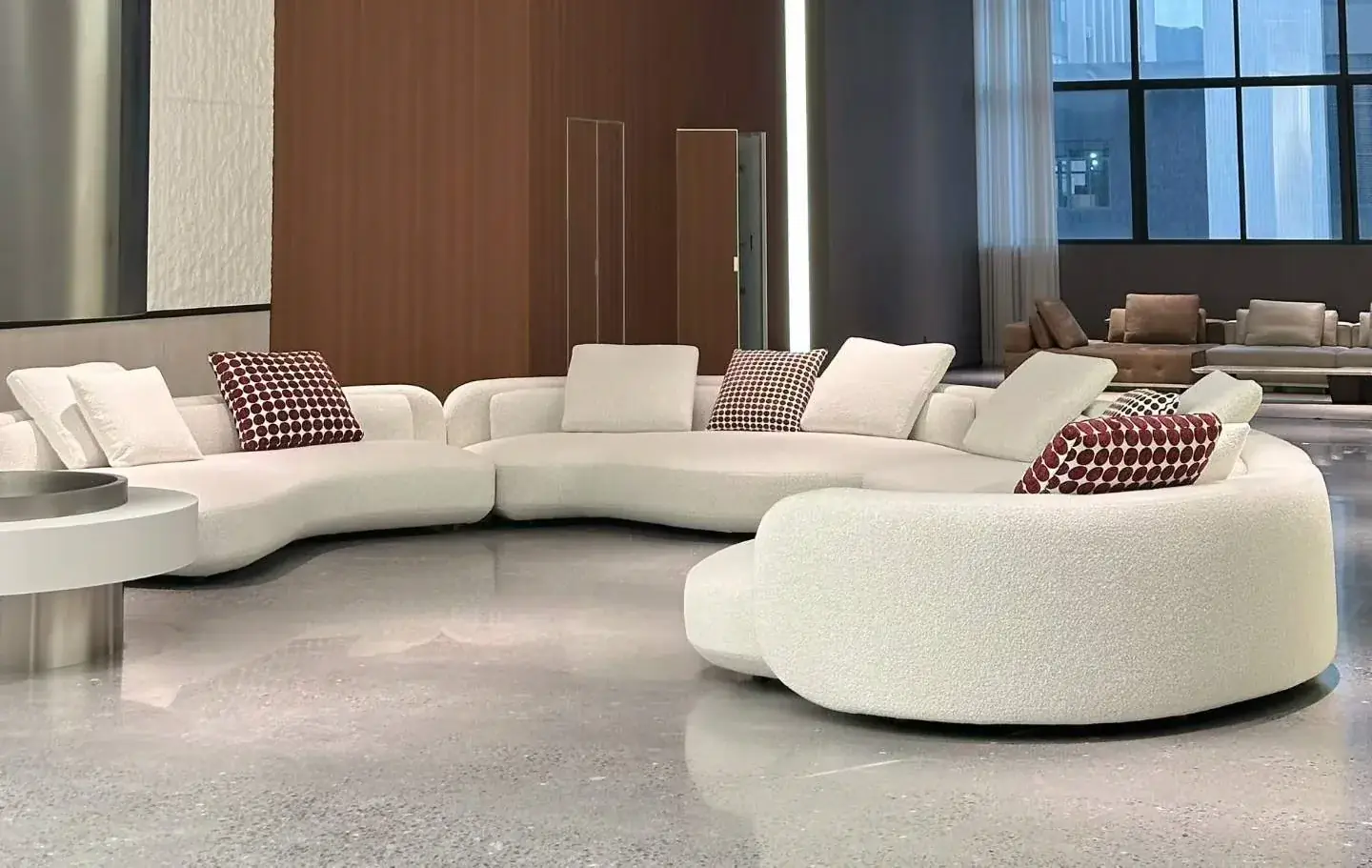
HEZEN CASA’s curved bouclé sectional, low Nappa upholstered bed, wood-and-fabric swivel chair and sliding-door wood sideboard provide distinct furniture roles to consider. Discuss a proposed adaptation through the custom furnishing service. None of these references should be given an unlisted conversion function simply because the room has several uses.
A custom villa furniture supplier needs the room’s ordinary day before its occasional event
Begin with what happens most often. If the room is a daily family lounge, describe how people sit, talk, read and use stored objects. Then describe the less frequent event, such as several guests gathering for an evening. This order helps the designer protect the room’s daily usefulness while deciding which occasional needs can be accommodated.
Consider a family that wants a relaxed conversation area and sometimes hosts relatives for a weekend. The living room needs suitable seating, but the overnight requirement may belong in a separate bedroom. A larger sofa does not automatically solve the sleeping task, and the public description of the curved sectional does not identify it as a sofa bed.
For another villa, the same lounge might be used by one or two people most days and a larger group during visits. That is primarily a seating arrangement question. The buyer can assess the sofa and independent chair together, while keeping the occasional need from forcing the entire room into a permanent crowded layout.
Explain which furniture can move in normal use and which should remain in its intended location. This is not an invitation to assume that substantial furniture can be relocated casually. The actual item, handling guidance and available space determine what is practical. A plan that depends on frequent rearrangement should be tested against those realities before ordering.
The curved sectional should be selected for seating, not an imagined bed conversion
The off-white bouclé sofa is listed at 300 × 180 × 80 cm with bouclé upholstery and solid wood. Its curved shape can be considered for a conversational arrangement, subject to the actual room and seating assessment. Those dimensions do not establish a sleeping surface, a conversion mechanism or a removable section.
If overnight use is essential, identify that as a separate product requirement and ask what confirmed solution is available. Do not relabel a lounging position as a guest bed. The buyer needs a product intended for the required role, with its actual dimensions and operation understood, rather than a visual compromise based on the sofa’s size.
For everyday seating, request the information needed to understand the curve, usable seat area and approach to the sofa. A family conversation setting may value a different arrangement from television viewing. The selected configuration should be assessed for the intended routine rather than described as universally flexible.
For example, a family may want people seated on the sofa to face the independent chair during conversation. During a larger gathering, that chair may need another position. Represent both arrangements using the actual proposed furniture, and check whether the sofa still supports the intended group. If the second arrangement requires a different sofa shape, ask whether that occasional event justifies changing the daily room.
Let the villa’s independent chair support a second activity without duplicating the sofa
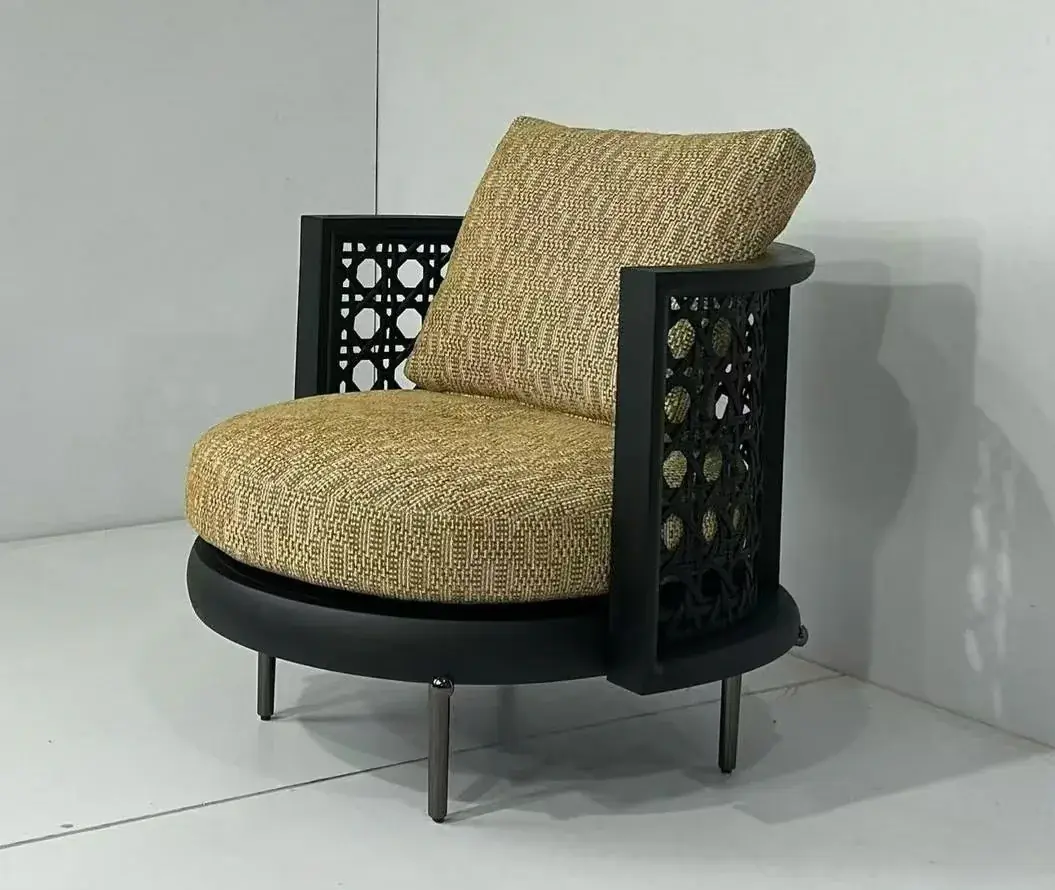
The carved wood and woven-fabric swivel chair is listed at 65 × 65 × 85 cm with wood, linen and metal. Its independent form can be considered as a separate conversation or occasional seat. Confirm the supplied swivel operation and seating information before relying on that feature in the room plan.
A chair placed near the family group might be used for conversation at one time and oriented toward a different part of the room at another. That is a potential use to evaluate, not a promise of a particular turning range. The buyer should see the actual operation and understand the space needed around the selected chair.
A swivel lounge chair is not automatically a desk chair
If the room occasionally accommodates laptop work, identify the expected duration, posture and work surface. A swivel feature alone does not establish suitability for sustained desk work. The chair’s public information does not provide the adjustment range or task-chair specifications that such a use may require.
BIFMA’s lounge-seating description distinguishes lounge use from standard desk-height seating. That general distinction helps frame the purchasing question; it is not a certification or performance claim for this HEZEN CASA chair. Ask for a suitable solution if regular work is an essential part of the room’s purpose.
For a villa where work is occasional and informal, the owner may accept a limited arrangement after evaluating it. For someone working daily, a separately planned workstation may be more appropriate. The furniture brief should make that distinction visible instead of describing every seat as suitable for every activity.
The chair and sofa should also be judged as different seating experiences. A matching fabric or related color does not make them identical in posture or support. If one household member expects a particular seating feel, make that a specific evaluation point rather than assuming the shared room style will satisfy the requirement.
Give storage a defined job when the villa lounge changes use
The dark wood sideboard is listed at 200 × 45 × 90 cm with two sliding doors and three drawers. In a family lounge, the buyer might want to conceal items used during ordinary evenings and access them differently when guests visit. Identify the actual objects and access routine before requesting a custom interior.
For example, a family may want frequently handled items in easy reach while reserving another compartment for objects used during gatherings. That division should be compared with the proposed usable interior, not inferred from the cabinet’s overall width. Ask for the dimensions and operation of the relevant compartments.
The sliding sideboard needs access in both lounge arrangements
A room can look workable with the sideboard closed and still make its storage difficult to use when chairs are occupied. Review the normal family arrangement and the occasional guest arrangement. The buyer should understand which doors and drawers can be reached in each, using the actual supplied operating information.
If an independent chair is moved during gatherings, consider whether its temporary position blocks the sideboard. The solution may be a different chair position rather than a custom cabinet. Resolve the furniture relationship before asking the supplier to redesign a piece that could already serve the intended storage role.
The objects needed during a gathering may also differ from those used on an ordinary evening. Show the supplier which compartments must remain accessible in each situation. A cabinet that holds the right quantity of belongings can still be inconvenient if the frequently used items sit behind a door that the occupied seating arrangement makes difficult to reach.
Where the contents genuinely require another internal arrangement, provide their measurements and explain how they are used. A custom proposal should answer that storage task. The supplier still needs to confirm what can be changed and how the resulting cabinet will operate; a broad request for flexible storage does not define it.
A separate low bed can give occasional guests a clear sleeping space
The beige Nappa bed is listed at 220 × 180 × 85 cm with solid wood and Queen and King options. If the villa has a room that can serve as a guest bedroom, this is a different starting point from trying to turn the family sofa into a sleeping product. Confirm the selected size, support and mattress interface for that room.
The low headboard may be relevant where the designer wants a restrained furniture profile, but the buyer should judge the actual room rather than assume that lower always means smaller or easier to accommodate. The bed still has an outside footprint that must be considered with the intended surrounding furniture.
A room that becomes a guest bedroom occasionally may also need storage and a daily purpose when unoccupied. Decide whether that purpose is compatible with a permanently installed bed. If the room must regularly serve another activity that conflicts with the bed’s footprint, the brief may require a different confirmed product solution.
Where the bed remains permanently in place, its low profile may allow the room to retain a restrained appearance without pretending that the sleeping function has disappeared. Evaluate the actual view and use. A furniture choice can make a guest room feel calmer, but it cannot remove the practical space occupied by the bed.
This is a useful point to stop adding custom details and reconsider the allocation of rooms. A villa can sometimes solve the conflict by assigning sleeping and family seating to separate spaces. Where that is not possible, ask the supplier for a product specifically suited to the required transformation, rather than assuming one of the listed pieces can perform it.
Describe the villa furniture changes in terms of the conflict they resolve
If the curved sofa needs a different configuration, explain which seating or space requirement the listed version misses. If the sideboard needs another interior, identify the objects and access that require it. If the bed needs a different size, provide the actual bedroom and mattress requirements. These are separate design requests.
Ask for each proposed change to be confirmed in a form that shows its effect on the furniture. A sofa revision should explain the resulting configuration. A cabinet revision should make the storage arrangement understandable. A bed revision should identify the supplied dimensions and components. The fact that one change is possible does not establish that all requested changes are available.
For a family that hosts frequently, compare the daily arrangement with the gathering arrangement using the same selected furniture references. For a villa used mainly for short visits, compare the arrival routine with the longer stay. These different scenarios may lead to different priorities even when the floor area is similar.
Furniture that remains suitable in both scenarios deserves consideration. Furniture that works only in an imagined configuration should remain provisional until that configuration is confirmed. The guide to planning an open living area can help assess how the sofa, chair and storage share their actual room.
Finish the villa brief by naming what each selected piece must do: the curved sofa provides the agreed family seating, the chair supports its verified secondary activity, the sideboard stores identified objects, and the bed serves a real sleeping room. Where those roles conflict, resolve the room plan or obtain a confirmed alternative. Customization is most valuable when it solves that specific problem.