One color name, several furniture decisions
Coordinate Leather Colors With a Custom Furniture Manufacturer in China
“Use the same beige throughout” sounds clear until it reaches a curved sofa, a padded bed and a leather-clad dresser. Buyers working with a custom furniture manufacturer in China should first decide whether they want an exact material relationship or a coordinated room with deliberate differences. A shared color word does not define the covering, surface finish or place where it will be used.
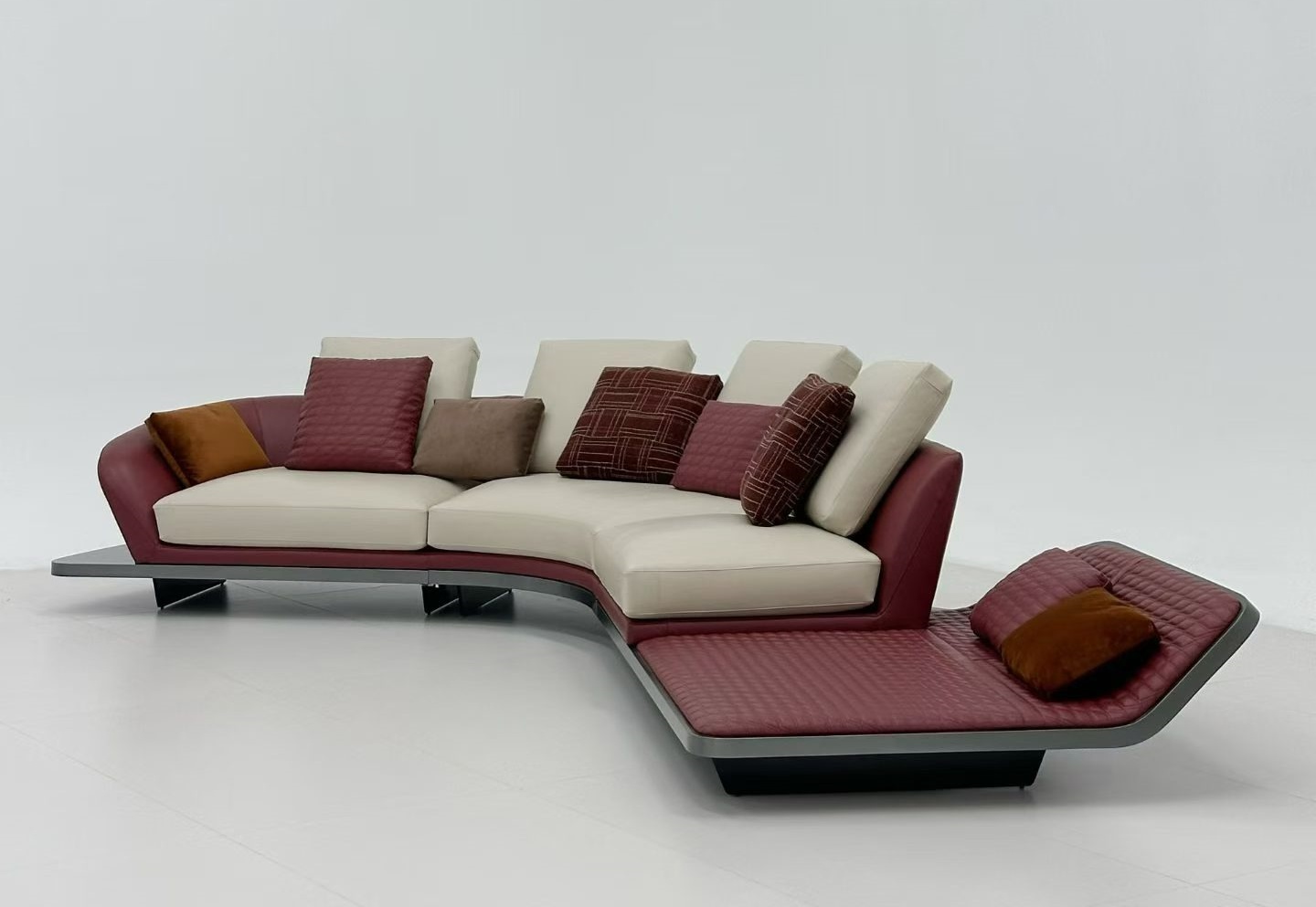
HEZEN CASA’s burgundy-and-white Nappa curved sectional, light grey Nappa dual-pillow bed, tall leather chest and wide leather dresser provide four distinct starting points. The custom furnishing service allows a buyer to discuss a proposed scheme, but the available materials and feasibility of each requested change require confirmation.
A custom furniture manufacturer in China needs more than a shared color name
A room may feel coordinated without every leather surface looking identical. The buyer might want a quiet bed beside a darker dresser, or a sofa with a contrasting band that connects to another element in the room. Define the intended relationship before choosing samples. Otherwise, the supplier may be asked to solve a matching problem that the design never needed.
For a distributor developing a collection, that decision affects how the furniture is presented to customers. A coordinated group should not be described as an exact matching set unless that claim has been established for the supplied pieces. The practical task is to identify which materials belong together and which differences are intentional.
The two-tone Nappa sofa has a color arrangement as well as a palette
The curved sectional is listed at 320 × 180 × 85 cm with Nappa leather and solid wood, using burgundy and white in the displayed composition. The location of those colors contributes to the design. Changing the pale area, the darker area or both produces different results even if all proposed samples belong to a restrained palette.
Ask the supplier to identify the surfaces associated with each requested covering. A sample selection without a surface arrangement leaves room for misunderstanding. The buyer should be able to point to the part of the sofa that remains contrasting and the part that changes, rather than relying on a message saying that the sofa will be made lighter.
If the project needs a quieter living area, consider whether the contrast should be reduced, redistributed or retained as a deliberate feature. Those are design choices requiring a confirmed proposal. Do not assume that the displayed furniture can accept every requested arrangement without affecting its appearance or the way its upholstery is executed.
The dual-pillow bed presents leather across a different shape
The light grey bed is listed at 220 × 180 × 105 cm with Nappa upholstery and a metal frame. Its padded headboard creates a different visual surface from the curved sectional. The buyer should compare the proposed leather on the bed’s actual form, not assume that a small flat sample fully communicates the finished headboard.
For a bedroom scheme, the light grey reference can be retained as a starting point while the adjacent dresser is considered separately. If both are to change, identify two approvals rather than one shared color instruction. The material available for the bed should not be assumed to be the same material offered for the cabinet.
Compare leather furniture samples under the conditions that matter to the room
Color comparisons need a reasonably consistent setting. Place the actual proposed samples together and identify the lighting conditions relevant to the intended space. A comparison made at one time and another made elsewhere may not answer the same question. Keep the approved references identifiable so that later discussions refer to the same materials.
Konica Minolta describes metamerism as a situation in which colors match under one light source but differ under another. For a furniture scheme, this supports checking important relationships under more than one relevant lighting condition. It does not establish any particular color-control equipment or process at HEZEN CASA.
Imagine a buyer selecting furniture for a bedroom with daylight during the morning and artificial lighting in the evening. The question is whether the bed and dresser remain an acceptable pair in the conditions the room will actually experience. It is not enough that two samples appear similar during a single remote presentation.
For a showroom, the buyer may control the display lighting more closely but still need to explain how the group could look in a customer’s home. Avoid promising a universal visual match. Present the accepted material combination accurately and make clear which furniture surfaces and finish references belong to it.
The tall leather chest and wide dresser are separate material proposals
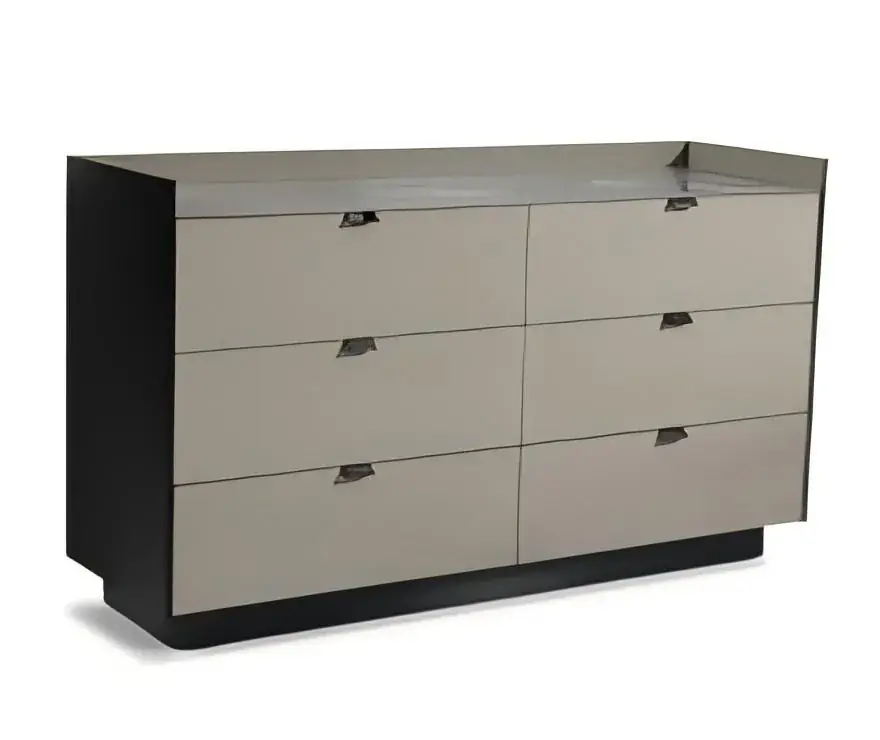
The tall chest is listed at 60 × 45 × 130 cm, while the wide dresser is 160 × 45 × 85 cm. Both list leather and solid wood and six drawers. Those shared words do not prove that the same leather, finish or construction detail is supplied on both pieces. Ask for the proposed material identification for each.
The curved tall form and the broad dresser also place their surfaces differently within a room. A tall chest might be viewed from near a doorway, while a wide dresser might sit along a longer bedroom wall. Compare the proposed combination in those roles. Matching a small sample is only one part of deciding whether the two objects belong in the same scheme.
A bedroom with both cabinets may benefit from treating one as the main horizontal storage element and the other as a distinct vertical accent. In that arrangement, a controlled difference can be intentional. If the buyer instead wants the two to read as a closely matched pair, say so before selecting the coverings. The supplier needs to know which relationship is essential and which is optional.
Compare the drawer fronts and visible sides in the proposed scheme, not just a convenient central area. The tall chest’s curved appearance and the wide dresser’s dark side frame distribute the visible colors differently. An approval should describe the complete object well enough that another person can understand why the chosen material combination was accepted.
Keep cabinet frames and upholstery junctions inside the color discussion
Leather is not the only visible material in this group. The wide dresser’s contrasting side treatment contributes to its outline. The buyer should decide whether that contrast is retained when the leather changes. A covering approval that ignores the surrounding frame can leave the most noticeable part of the composition unresolved.
For the curved sofa, the meeting of the burgundy and white areas is similarly important. Ask for an appropriate representation of the proposed arrangement at that junction. The purpose is to evaluate the actual design decision, not to infer stitching methods, hidden construction or a manufacturing tolerance from a photograph.
A quieter dresser can still need a visible edge or frame
A buyer may ask for a lighter dresser because the bedroom already has a large dark surface. That does not necessarily mean every part of the dresser should become the same tone. Retaining a contrasting side may help preserve the intended outline; removing it may create a different effect. Review both ideas only if the supplier can provide a suitable proposal.
For a retail collection, keep the selected contrast explicit in the product description and approved reference. Otherwise, a customer may expect a uniformly covered dresser when the supplied piece retains the darker side treatment. A clear presentation is more useful than a broad promise that every item can be made in any color.
If the dresser stands across from the bed, examine the two as separate visual masses rather than forcing every adjacent surface to match. The broad dresser front may dominate the view when entering the room, while the bed’s padded headboard becomes more prominent from another position. The buyer’s preferred balance should guide the requested combination, subject to the supplier confirming the actual finish options.
Keep a rejected sample out of the final set of approved references. A collection of attractive alternatives can be useful during design, but it becomes confusing when sent with a purchase instruction without clear status. For this bedroom, the final reference should identify one bed proposal and one dresser proposal, with any optional tall chest clearly separated.
The bed’s headboard and lower frame should not be merged into one vague instruction
If the bed is requested in a new covering arrangement, identify whether the change applies to the padded headboard, the visible lower upholstery or all proposed upholstered surfaces. Ask the supplier to confirm the feasible arrangement. A photograph of a headboard sample alone does not establish the appearance of the complete bed.
A bedroom buyer may intentionally keep the lower portion quieter while allowing the headboard to be the focal point. Another buyer may prefer a more continuous appearance. The correct choice depends on the room and the accepted design, not on an assumption that a shared material name automatically defines every visible surface.
Turn the accepted leather combination into an order that another person can read
Once the visual relationship is accepted, attach the actual material references to the corresponding furniture surfaces. The sofa should retain its two-tone arrangement; the bed should identify the agreed upholstered areas; the tall chest and wide dresser should each retain their own covering and adjacent finish information. One unlabelled photograph of four samples is not enough.
Keep proposed alternatives separate from the accepted combination. If a new sample is being considered for the dresser, label it as an alternative until the decision is made. A supplier or purchasing colleague should not have to guess whether the newest image automatically replaces the previous approval.
Allow for a later furniture addition without promising a permanent match
A buyer may plan to order the bed first and add a tall chest later. Retaining the approved references makes the later discussion more precise, but it does not guarantee future material availability or an indistinguishable appearance. Ask what can be confirmed at the time of the later order and compare the proposed addition with the existing room.
If visual continuity is essential, discuss the complete intended combination before releasing the first part. If a coordinated contrast is acceptable, record that preference too. The second approach can be a deliberate design choice rather than a compromise, provided the buyer understands how the new furniture will relate to the existing pieces.
The guide to coordinating luxury bedroom furniture places the bed and storage choices in their room context. Use it to test whether the proposed color relationship supports the furniture’s role instead of making color matching the only decision.
Approve the scheme when the specific relationships are clear: where the sofa contrasts, how the bed’s padded form is treated, what belongs on each cabinet, and which surrounding finishes remain visible. A well-defined combination gives the manufacturer a concrete proposal to confirm and gives the buyer a room to judge, rather than four objects connected only by the word beige.