Chandelier Size for Dining Room Plans: Test the Table and the Whole Silhouette
An 80 cm chandelier can be a plausible starting point above a round table between 140 and 160 cm in diameter, but width alone cannot approve the pairing. Choosing chandelier size for dining room plans means looking at the table, the fixture's full shape and the ceiling space together. An open branch design and a dense shade do not occupy the view in the same way.
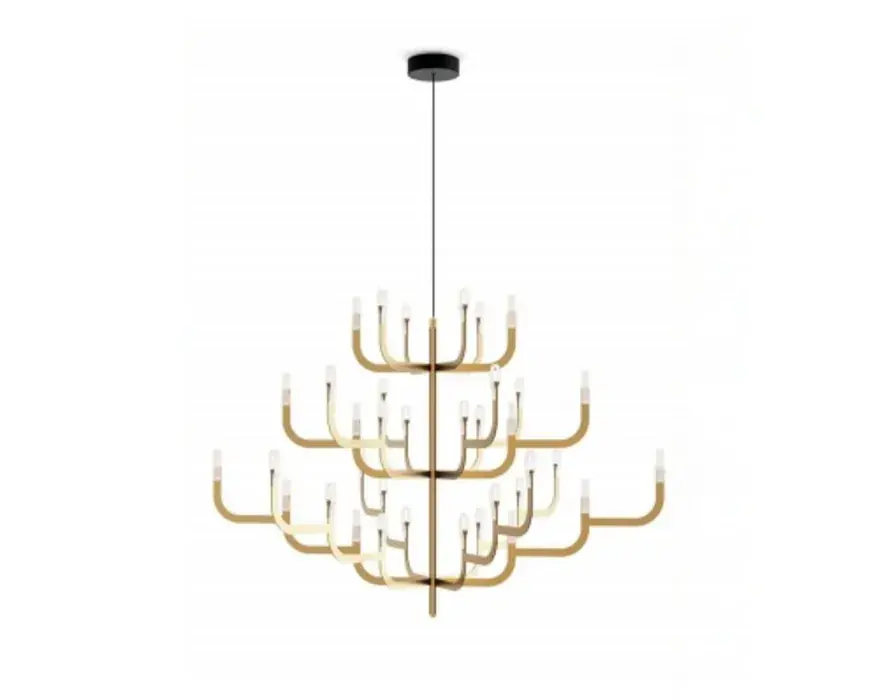
HEZEN CASA's multi-tier branch chandelier has a listed 80 cm width. Compare it with the actual round marble tables before choosing it for a dining area. If the room needs a more compact suspended form, the mini frosted pendant offers a different direction, subject to its installation arrangement and the required lighting performance.
Start chandelier size with the dining table it will sit above
The table gives the fixture a clear local reference. In a combined living-dining space, the dimensions of the entire room can suggest a much larger light than the dining group needs. Mark the dining table, occupied chairs and the fixture above that group before judging it against the whole open-plan volume.
Lumens' chandelier guide suggests roughly one-half to two-thirds of a dining table's width as a starting proportion. This is a design guideline, not a clearance standard or installation approval. Use it to narrow the comparison, then assess the actual fixture and room.
For a purchaser reviewing a round dining group, diameter is a useful comparison because the table has the same outside width in every direction. A rectangular or oval table would need its own assessment of length and width. The dining table size guide helps settle the furniture footprint before the lighting choice takes over.
The 80 cm branch chandelier needs more than a diameter circle
The Multi-tier Branch Gold Modern Chandelier is listed at 80 × 80 × 100 cm, with a metal branch frame, a gold finish and E14 LED compatibility. Draw the listed outside envelope first, then add the actual offered silhouette. An outline circle identifies the spread but says little about how its tiers fill the space above the diners.
The height listing also needs clarification for the final installation: it does not separate the body from the suspension and canopy. Keep that unresolved detail visible during selection. A fixture can have a convincing width above the table while its complete installed profile is unsuitable for the available ceiling arrangement.
Compare the branch chandelier with three real round-table sizes
The same chandelier changes its proportional role as the table grows. That does not mean one of the pairings is automatically correct and the others are wrong. It means the smaller table gives the light a stronger spread relative to its edge, while the larger table gives more visual space around it.
The 140 cm table gives the chandelier a stronger central presence
The Light Crystal Marble Round Dining Table with Lazy Susan is listed at 140 cm in diameter and 75 cm high. An 80 cm fixture is about 57% of that table diameter. When both are centred, their outside widths leave a nominal 30 cm difference on each side in plan.
That arithmetic describes the drawn outlines, not a guaranteed clearance for heads, serving or installation. The chandelier's hanging position and the seated view still need to be resolved. Include the table's rotating centre and the usual serving objects when checking how busy the middle of the dining group becomes.
The 150 cm table allows the fixture to read slightly smaller
The Round Natural Marble Dining Table with Lazy Susan is listed at 150 cm in diameter and 75 cm high, with a marble top and metal base. The same 80 cm chandelier is about 53% of its diameter. The nominal outline difference becomes 35 cm on each side when centred.
This can be a useful middle comparison when the room has enough space for the table and occupied seating. Review the marble pattern, base and chandelier together. If each has a strong visual character, a proportion that looks balanced in a line drawing may still feel crowded in the room presentation.
The 160 cm dark-wood table gives more room around an 80 cm spread
The Round Dark Wood Frame Marble Dining Table is listed at 160 cm in diameter and 75 cm high, with a two-tier design and a marble centre. Here the chandelier width is one-half of the table diameter, leaving a nominal 40 cm outline difference on each side in plan.
The table's wood frame and layered top add their own structure to the group. Compare that horizontal layering with the chandelier's vertical tiers. The result might feel well connected, or it might introduce more repeated detail than the dining area needs. A larger table is not a reason to select the most elaborate fixture available.
| Listed round-table diameter | 80 cm chandelier as a share of diameter | Nominal difference per side when centred |
|---|---|---|
| 140 cm | About 57% | 30 cm |
| 150 cm | About 53% | 35 cm |
| 160 cm | 50% | 40 cm |
These comparisons use the published outside dimensions. They are a way to understand proportion, not a substitute for a coordinated installation drawing or an assessment of the actual occupied dining room.
Judge chandelier scale from the doorway and from a dining chair
The doorway view tells you how the fixture belongs to the room. The seated view tells you whether it gets in the way of the meal. Check both. A light that looks restrained from a distant entrance can become a dense object when seen just above the centre of the table.
The branch chandelier's open structure may let parts of the background remain visible between its arms. That visual openness does not reduce its physical spread. It also does not establish how much glare the offered lamps produce. Keep the outline, the appearance and the light-source performance as separate parts of the decision.
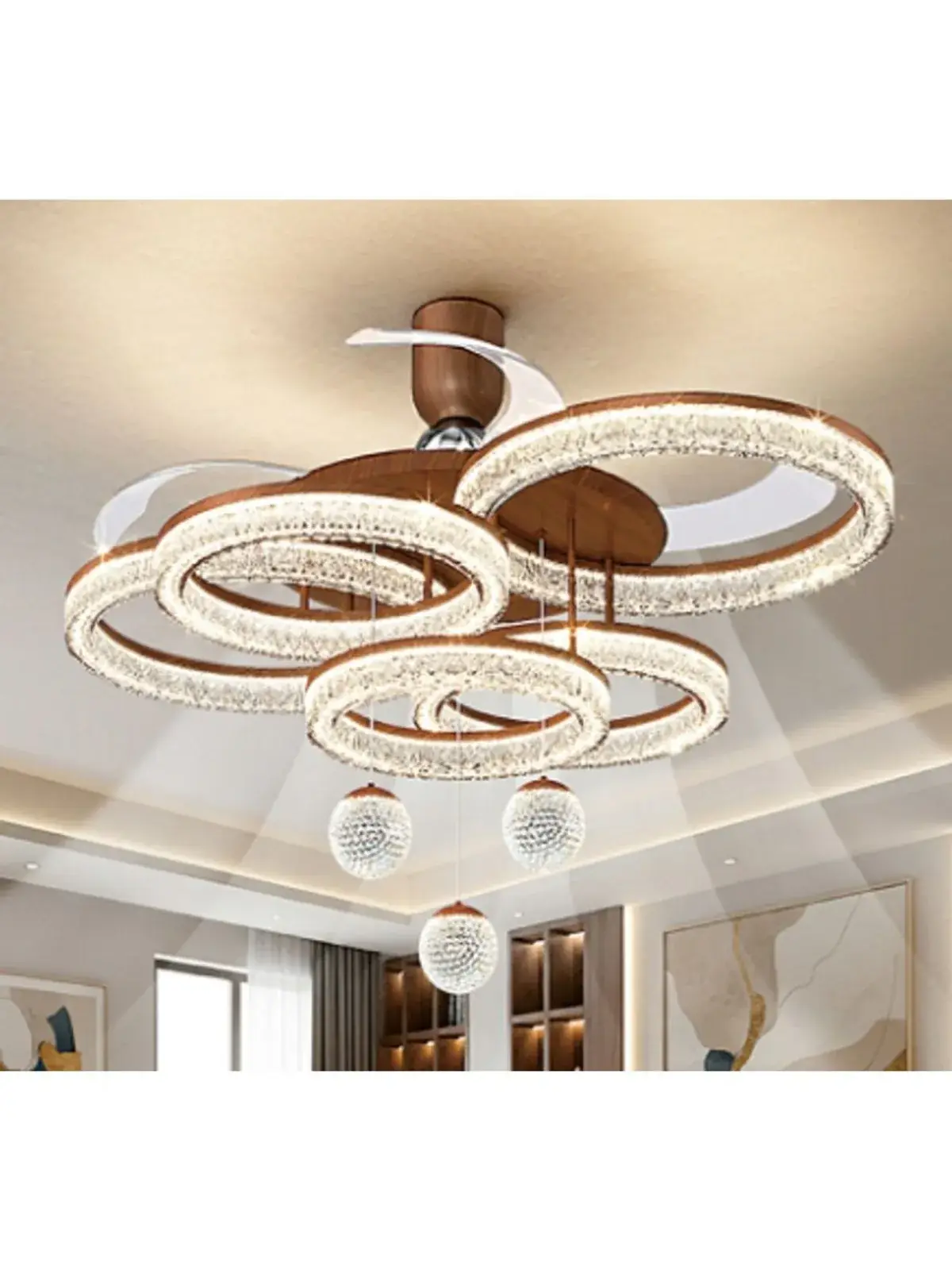
For a designer preparing two room proposals, show the same table and camera position in both. A dramatic close-up of one chandelier and a distant room view of the other do not make a fair comparison. Include a seated-height view if the fixture has several tiers or hanging elements below its main body.
Choose a smaller pendant when the dining area needs less suspended detail
A compact pendant can be worth investigating where a broad chandelier would compete with the architecture, nearby lighting or strongly patterned furniture. It is a different lighting proposal rather than a miniature version of the same result. Table coverage and the surrounding illumination need to be assessed for that alternative.
The 20 cm frosted pendant changes the composition as well as the size
The Frosted Bell Shade Mini Pendant Light is listed at 20 × 20 × 80 cm, with a frosted glass shade, metal components and E27 LED compatibility. A single compact shade will have a very different visual presence from the 80 cm branch chandelier. Whether one or several fixtures would suit the dining arrangement needs a separate layout and lighting decision.
Do not use the smaller outside size as proof that it can hang at any height or provide all the light needed on a large table. Confirm the offered suspension and source. If several pendants are proposed, show the group width and individual positions rather than comparing the width of one shade with the whole table.
For a buyer coordinating several rooms in a residence, this distinction can prevent an overly uniform lighting order. A compact dining corner and a generous enclosed dining room may need different suspended forms even when the furniture shares a common style.
Check the gold chandelier against the table finish, not only its edge
The 140 cm table is described with a golden metal base and glossy marble top. Paired with the gold-toned branch chandelier, that creates a relationship between metal above and below the tabletop. It may help connect the dining group, but the two uses of “gold” do not establish an identical finish.
Compare the offered finishes and the complete room view. A pale metallic base can look quiet beneath the marble while several tiers of brighter branches become much more noticeable above it. If the group feels too reflective, investigate the actual finish combination and fixture form before deciding that the width is the only problem.
The 160 cm dark-wood-frame table provides a different comparison. Its wood edge can give a more definite horizontal boundary beneath an open chandelier. The fixture does not need to repeat every material in the table to belong with it; the useful question is whether their shapes and visible finishes make a convincing dining group.
For a distributor presenting these alternatives, keep separate images and finish references for the two tables. Label the exact proposed chandelier version in each presentation. That lets the buyer compare a lighter metal-and-marble direction with a darker framed-table direction without an unrecorded fixture change influencing the choice. Any close metal-finish match that matters to the project should be settled through the actual offered references.
Keep ceiling volume and brightness separate from chandelier width
A tall room can make a fixture feel smaller in the wider view, but making the chandelier wider does not automatically solve that. Its body height, installed drop and relationship with the dining group all contribute. Conversely, a lower ceiling can make a tall tiered form difficult even when its width fits the table.
Show the branch chandelier's complete offered assembly against the finished ceiling and table elevation. Clarify which parts are included in the listed 100 cm height. Resolve the permitted arrangement with the installer rather than assuming the suspension can be altered to suit the drawing.
Brightness needs its own information. An E14 or E27 socket description does not provide a lumen output, beam pattern or suitable dimming combination. Establish those details for the actual supplied source. A wide fixture is not necessarily brighter than a smaller one, and a photograph of a lit room is not a measured lighting result.
Approve the dining chandelier as part of the furnished room
Keep the chosen table diameter, furniture position and ceiling information with the fixture selection. Review the outline from the entrance, check the seated view and confirm the installation arrangement. HEZEN CASA's furnishing service can help establish the offered item details before the room decision is closed.
If the 80 cm branch design sits comfortably above the selected round table and its installation can be resolved, the proportional comparison has done its job. If the room feels crowded, reconsider the fixture form as well as the width. Choose the chandelier that supports the dining group you actually intend to use.