Luxury Reading Chairs for Home Libraries, Chosen with a Book in Hand
Take the heaviest book you read regularly when you try a chair for your home library. Sit long enough to see what your elbows do. Luxury reading chairs for home libraries earn their floor space when they let you support the book, put it down easily and read under a lamp without tilting your head toward the light. For homeowners, interior designers and furniture buyers, start with HEZEN CASA's fabric lounge chair with armrests and its larger leather armchair. Compare the inside arm width, seat support and position of the light once a person is in the chair. The catalog dimensions help you place the pieces on a drawing before those more particular measurements are available.
A quiet library can hide the shortcomings of a chair on the day it is installed. A high back looks reassuring, the lamp turns on and the side table fits. At night, someone sits down with a large book and finds both wrists working to hold it up. The shade might illuminate the top half of the spread and leave the lower half in shadow. Put the furniture decision where it belongs, at the point where a reader, a page and the light have to work together.
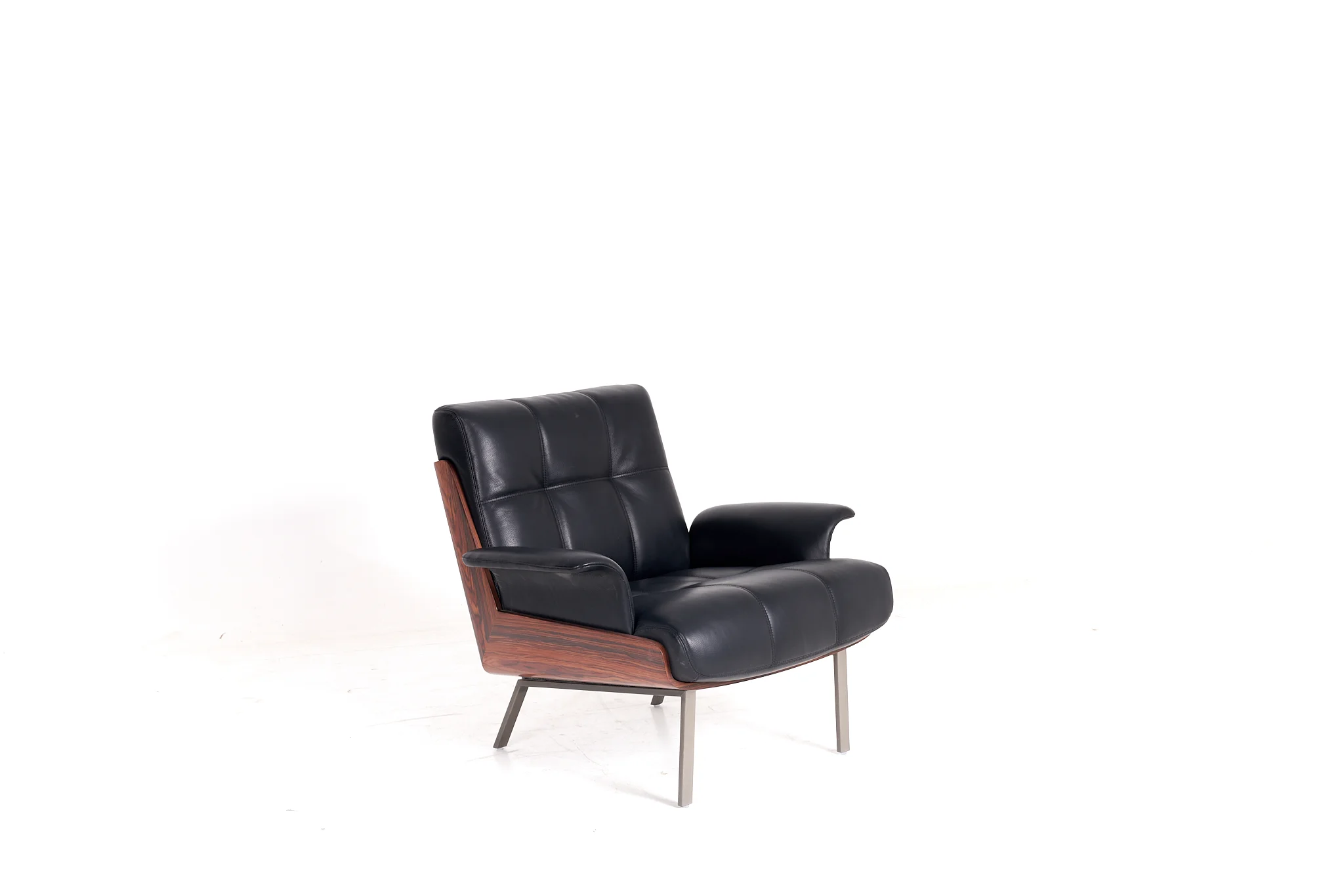
Read a few pages to find out what the chair's arms are doing
Pay attention to where you sit in the cushion, where your feet land and whether both elbows can drop naturally as you hold the book. A long cushion can encourage you to sit closer to the front to get both feet down. That position can take your back away from the support you liked during the first few seconds. A wide seat can give room to turn, though arms that sit far apart can leave you carrying the weight of the book yourself. There is no single reading posture to design around. Try the position you will actually return to for more than a brief visit.
Try the fabric armrest lounge chair with a book already open
The Italian Minimalist Armrest Lounge Chair is listed at 68 × 72 × 78 cm, with fabric upholstery and solid wood. Use that outline to set its starting position in the library. In the chair itself, look at how the arms meet the length of the seat and where your elbows sit as you take the book into your lap. The 78 cm height describes the product overall and cannot tell you whether there is support for your forearms. If the chair can only be reviewed remotely, ask how the manufacturer measures arm height from the seat and how the cushion is expected to sit in use.
Imagine a homeowner converting a small study into a reading library. An existing desk stays along one wall. The most inviting place for a chair is beside the bookcase, which leaves an outlet and floor lamp along the outside. Tape the chair outline there and sit to compare the angles. If the eye turns to the bookcase while the lamp comes from the opposite side, determine whether your head or hand casts a shadow over the page. Rotate the chair slightly and check whether the arms still support the finish of the exercise, setting the book on a table without standing.
Set the deeper caramel leather armchair against a shorter option
The Caramel Top Grain Leather Luxury Armchair is specified at 75 × 85 × 90 cm with leather and metal. Compared with the fabric armrest chair, it takes more room front to back and sits taller overall. It may suit a buyer who wants a substantial chair looking toward tall shelves as long as the seated position still works with the light. Look at the upholstery and base beside a real library floor sample. Ask whether the person who will use the chair likes how long reading sessions feel against its arms. An upholstered chair can be very comfortable for conversation while still putting a large book at an awkward angle.
The Italian Minimalist Curved Lounge Chair is an alternate at 65 × 72 × 80 cm, also listed with fabric and solid wood. It offers a narrower outside footprint than the caramel chair and gives a different approach to placing the reading surface close by. Look at the arm and inner seat on the specific iteration proposed, since total width does not establish usable width. In a room with taller shelving on one side, a narrower chair can leave enough floor to move the lamp. In a long room it may leave that floor available for a book trolley or library ladder if the building layout calls for one instead.
Try a hardback and a thinner paperback in both positions. With the hardback there may be an easy way to rest the bottom edge against your leg while one arm supports the open cover. The smaller book may need to be held closer to read. A deep chair might work well for the first and encourage a taller reader to slide forward for the second. Before the designer orders the 85 cm-deep leather chair, write down which of those habits it actually needs to suit. Ask for the height where the forearm touches, along with the width between the arms. The outside dimensions help compare the floor space but miss the places where the reader really feels the fit.
Put the reading light on the page and keep the base out of the way
The lamp has to work where the book is held. View it from head height when a person sits normally, then when they lean farther back. A bulb may be shielded in one position and visible in the other. Anglepoise's reading nook guidance shows how a directional light beside or behind a chair can illuminate a page while controlling glare. Use that principle in the room. Ask what the shade can actually do on your proposed HEZEN CASA lamp before planning where it must stand.
Try the tall woven floor lamp beside the reader's shoulder
The Woven Shade Conical Floor Lamp lists woven mesh and metal, a 35 × 35 × 160 cm outline and an E27 LED-compatible fitting. Its overall height gives you a starting point for how it will sit beside the chair. Before using it as the sole reading light, look at the lower opening of the shade or ask to see the light it casts on a real page. A woven shade may make the room look gently lit when the page itself needs more focused illumination. Check the source recommended by the supplier and the actual plug and electrical specification for the location.
Place a representative lamp just behind one shoulder and turn a page normally. If a hand repeatedly breaks the patch of light, try the other side. Some readers want the lamp opposite the hand they use to write in the margin. Other rooms have a single good location because the lamp base, books or trailing cord have to stay away from a passage. Use the whole 35 cm depth in the first plan and ask for a separate base dimension if the room fit depends on it. A useful light shouldn't force the reader to drag the chair away from its intended position every evening.
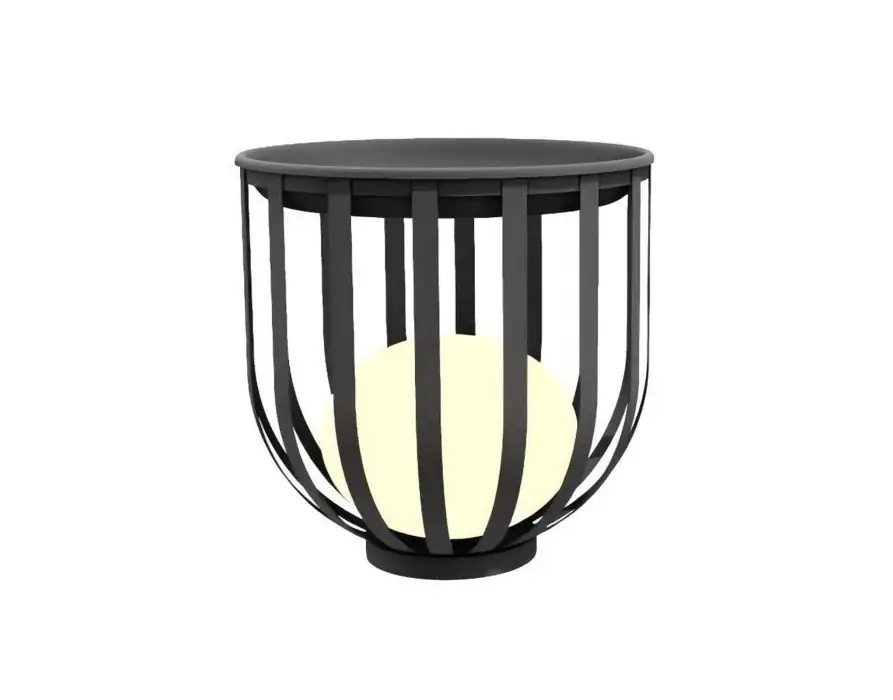
Mock up the cage table lamp on the actual side surface
HEZEN CASA's Cage Metal Frame Side Table Lamp is listed at 40 × 40 × 55 cm, with metal, glass and an E27 LED-compatible fitting. Let the listed size trigger a surface check. Try a piece of paper 40 cm across as the initial allowance and place a book, a drink and a switch location on the proposed table. The catalog's full width need not be the contact area of the lamp, so get the actual base measurement before you approve a tight fit. A shade can also overhang the top near the arm even when the base fits.
A designer can compare both lamps for a two-reader library where the chairs flank a table. One user likes to read in the afternoon near the tall window. The other uses the room just before bed and wants control over light shining across the second seat. Try the table lamp lower in the group and see whether it throws light toward both faces. Then test giving one reader a separate floor lamp. If the shared tabletop becomes free enough to place the large book down, the two details may make the table worth keeping.
A designer trying the cage lamp should take the shade into account when testing printed books against screens. Sit with a glossy page or an e-reader facing the lamp. Check for a reflection in the reading position instead of holding it upright for the person across the room. If a reflected light patch is distracting, move the sample first, then change the angle at which you hold the book only if it feels natural. Do another check from the lower chair when the room has two. A lamp that is comfortable from the higher armchair can still put a direct light into the neighboring reader's eyes.
Lay out the home library for the moment you finish reading
Look at the chair from the direction people enter the room as well as from the bookcase. Find a path the reader can take with a book in one hand. If the lamp is moved to make the reading better, test it again from the side where the reader stands. A good lighting position can squeeze the approach to the chair or put the lamp close to an arm just as a person pushes themselves up. Try the revised location with the heaviest book and the longest ordinary walk through the room.
Place a shared low table far enough from both armrests to get up
The Italian Minimalist Round Coffee Table has a 90 × 90 × 45 cm listing in solid wood. That is one example of a shared surface when a library is large enough for two chairs and an open middle. Draw the selected table from the viewpoint of each person inside the furniture group. An object placed at the center can seem close to an armrest in the plan but sit a long way from a seated reader’s hand. In a small study, a separate surface better matched to the actual arm height may make more sense than this wider table.
For the bigger room, set the wide furniture group up with two drawing templates. Search for a suitable place one reader could set down the book while the second passes to the shelves. Let the table move a little toward the reader who actually uses it most. Check that the other chair has kept its usable lap and light position. For more ideas about how lamp bases and seating relate across a larger room, see HEZEN CASA's floor lamp placement guide. Keep the home library order anchored to the real way the table will be used.
You may also have a low place beside the chair for books that stay in the room. Test that surface from the edge of the 68 cm-wide lounge chair before recommending a larger central table. The armrest should not make a reader lift a long book far above their lap to get over it. If the arm does set the reach, show that in the relative elevations: seat and arm on one side, table and open book on the other. The designer can keep a small landing surface at the required elevation and leave the clear area in front for someone to stand.
Ask HEZEN CASA, a furniture manufacturer and supplier in Foshan, for the current product drawings or samples that apply to the chair version you are considering. Collect the height reference, arm width and finish identity on one page. Give the people approving the lamp and installing the chair the same drawing so both know where they are expected to meet. If the site already has floor outlets or built-in shelving, include those exact dimensions in the furniture handoff.
Return to the proposed spot after dark if you can. Read long enough for your shoulders to settle. Then close the book, set it down and get up as you would on an ordinary night. The chair may turn out to be just right while the lamp needs to move to the other shoulder. Record both positions and the pieces that made them work. That gives the manufacturer a clearer order and the owner a reading spot they will be glad to come back to.