Luxury Mattresses for Furniture Showrooms Where Shoppers Can Compare for Themselves
Two mattresses on the floor are enough to make a good comparison, if each gives the shopper a distinct reason to try it. For a dealer opening a bedding corner inside a furniture showroom, start with two models that genuinely differ in feel or construction. Put them on comparable, manufacturer-appropriate bases and give people enough time to try both. The HEZEN CASA mattress collection offers a useful starting point because several published models share a 200 × 180 cm footprint while differing in depth, construction and the way their feel is described.
HEZEN CASA manufactures and supplies furniture from Foshan. For furniture stores that sell a bed as part of a room setting, the assortment gives buyers a way to discuss the frame and mattress together. Keep the display useful to the person who will eventually sleep on it. They need to know which model they tried, what was underneath it, and whether the sales order will reproduce that combination. Those questions are easy to answer if the comparison is built into the showroom before the first sale.
Build a showroom mattress trial around a difference a shopper can feel
A visitor comes in for a new frame and sits on the first dressed bed. The mattress feels fine for a minute, and the next bed looks more expensive because its mattress has a higher profile. Give the shopper a chance to reach a better decision. Explain what can be compared across the two samples, invite them to lie down in their usual sleeping position, and then let them try the other one under similar conditions. It is a more useful conversation than walking along a row of broad firmness labels.
Compare a medium-firm spring mattress with a softer label on the same footprint
The Pink White Check Tufted Luxury Pocket Spring Mattress lists pocket springs and foam, a 28 cm depth, and a medium-firm feel. The Solid Cream Fluffy Tufted Soft Mattress lists memory foam and velvet, also at a 28 cm depth, with a soft-medium label. They give a small store a useful contrast without introducing a taller mattress simply for the effect it creates on a display frame. Walk each visitor through what is recorded about the materials, then let the floor trial determine how each feels to that visitor.
Keep pillows as close as practical for the two trials, and note any unavoidable difference in base or bedding. The Better Sleep Council’s mattress shopping guide encourages testing typical sleep positions and trying a mattress together when it will be shared. That works on a busy showroom floor if staff give customers some space. When the shop is quiet, have someone take a turn using each display in the way a visitor would. Notice whether one side is easier to approach and whether a temporary dressing bench prevents two people from getting onto both samples.
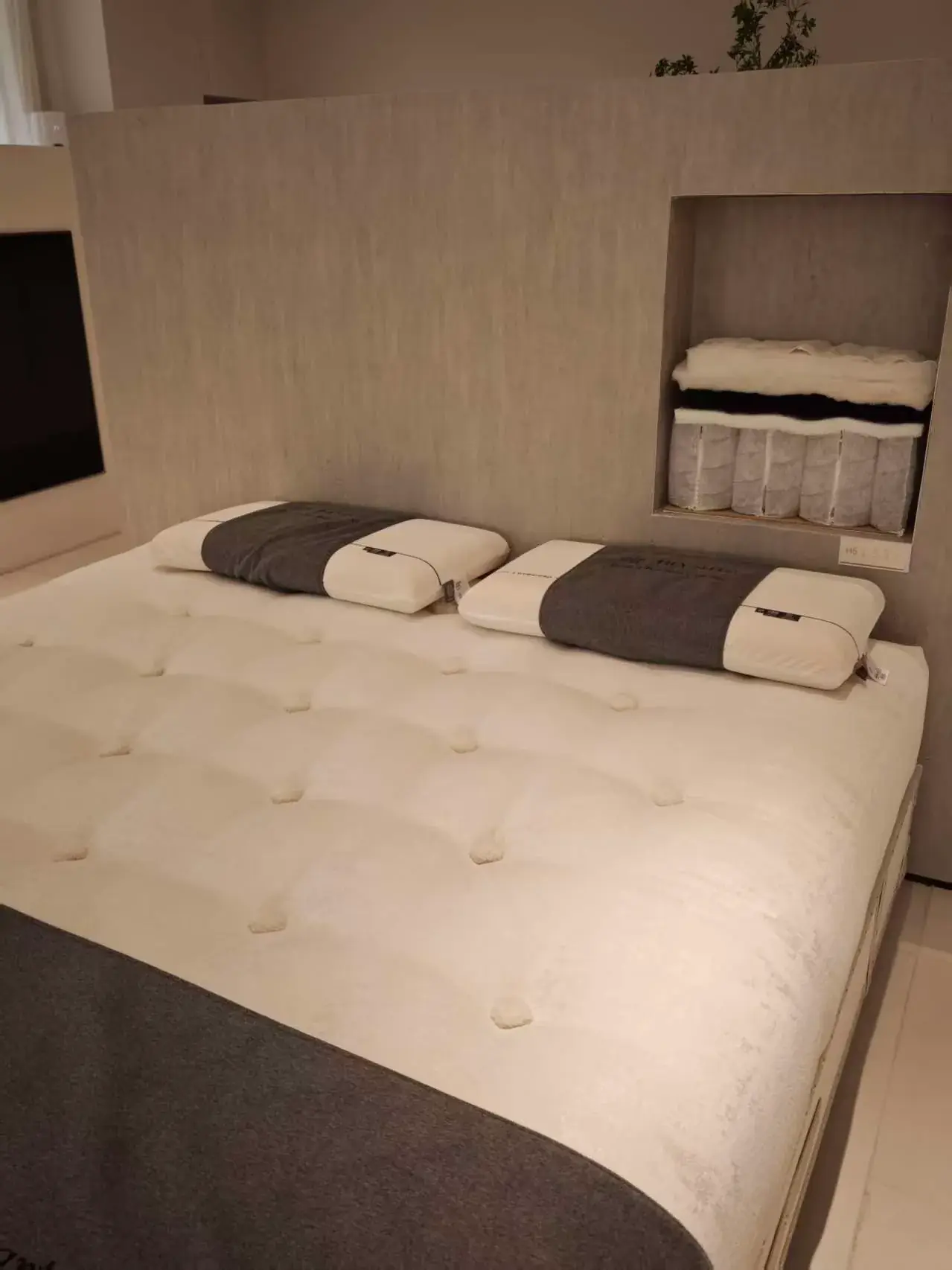
For a narrow independent shop, two fully accessible displays can be more valuable than three squeezed into the same bay. There has to be space to stand, to change position, and to test a mattress with a partner if needed. Give the two samples the same amount of room where the building allows it, or show visitors how to reach the less accessible one. Dress them simply enough for the actual surface to be seen when the display cover is moved. A mattress that sells because it happened to be easiest to approach is giving the dealer a poor picture of what customers prefer.
Set a few appointments before committing to a much larger display. Invite people who arrive with a specific job for the mattress, such as reusing an existing low frame or buying a bed for two adults. Put the paired 28 cm examples on the floor and listen to what they ask after trying them. If shoppers can describe the difference in their own terms, the pair has done its work. If they want to see a deeper mattress with a lower upholstered surround, you have learned why a third model might deserve a place. Add it for that decision, rather than assuming that a broader row will make the comparison stronger.
Put the extra mattress height to work in the display plan
One fully dressed bed should show what the chosen mattress does to a headboard and to the top line of a nightstand. Pick the exact frame that will carry the display, then measure from the floor to the top of the mattress after it is installed. Use our upholstered bed size guide to keep the installed height separate from the mattress opening and external frame size. If shoppers find one mattress easier to get on or off, note what was different between the displays. They may be reacting to a higher surface as much as to the mattress.
Put the shallower pocket-spring model beside a deeper tufted option
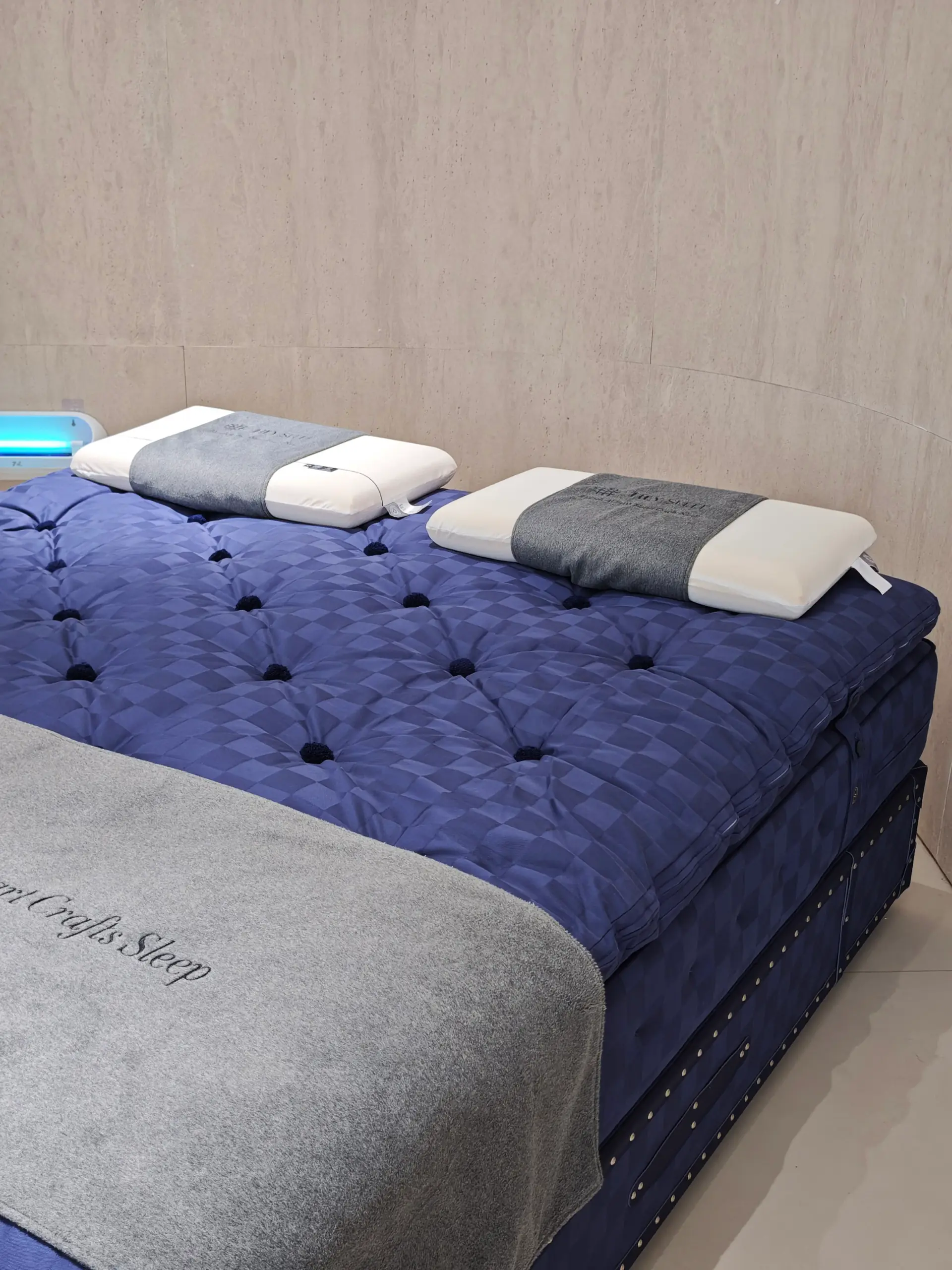
The Off-White Thin Stripe Hand Tufted Bed Mattress has a listed 26 cm depth and medium feel, with foam and pocket springs in the material field. The Dark Blue Diamond Tufted Premium Mattress is listed at 30 cm deep, also medium, with foam and innerspring construction. Put these two descriptions on the same showroom card without implying that the word medium makes the construction or comfort identical. The four centimetres of listed depth is enough to change the visible upholstery line or the reach to a table in some displays. Actual comfort still needs to be tried.
A larger furniture retailer may sell the same bed silhouette with different mattress and bedside combinations. Use two similar bases, then trial the 26 and 30 cm options in the intended height relationship. If the buyer asks which looks closest to a display from home, show the installed heights and the side elevation. One display can make the pressure of an elbow and the position of the pillows easier to judge. The other can show how much headboard remains visible. It is useful to let aesthetics and comfort be two observations on the same order rather than asking the customer to choose based on height alone.
Use the thickest sample when the shop has a clear reason to show it
The Cream Check Plush Thick Comfort Mattress lists foam and natural fiber, a 32 cm depth and a medium-firm feel. This is worth putting on the floor if customers regularly ask about a higher, deeper-looking setup or you need to demonstrate how the mattress relates to a particular frame. It is less useful as a second example when the first display is already high and customers are asking for something that looks lower. Confirm the support requirement for the exact model and use an approved display base so a trial can be repeated on the same kind of assembly.
| Question often heard in the showroom | Two actual display references to consider | What to explain during the trial |
|---|---|---|
| Can I feel the difference if the bed heights are similar? | Check-tufted pocket spring and soft cream tufted models | Both list 28 cm depth. Show each construction description and allow an equivalent trial. |
| Will a taller mattress take over the look of the bed? | 26 cm stripe-tufted and 32 cm cream check | Measure the finished mattress top and visible headboard on a suitable frame. |
| Does medium feel the same in these designs? | 26 cm hand-tufted and 30 cm diamond-tufted models | The listed feel is shared. Compare how each actual model feels on its approved base. |
Write the mattress order someone can recognize at delivery
A good trial can still lead to the wrong order. A shopper remembers the blue display, a sales colleague remembers that both models were called medium, and the receiving team sees only a generic bed size on the carton. Make sure the product name and its order identifier appear on the floor card, order and receiving paperwork. Show the approved catalogue dimensions with units and the actual orientation required by the buyer's frame. If your market gives the same everyday size label to different dimensions, use the confirmed dimensions on the order instead of relying on the label.
Tell staff whether the mattress was sold with the frame shown beside it, as its own item or with a separately selected base. That detail matters to the person who expects the result at home. If the customer selects the mattress but keeps their existing base, check compatibility for the exact model with its documentation. A display setup can demonstrate the comparison you provide in store. It cannot establish how that same mattress will sit or feel on every bed the customer already owns. Write down any support question still waiting for an answer before the order is finalized.
A retailer opening another showroom may want to make the slate-blue foam and innerspring example the same recognisable display at both locations. Ship the display variant to each store with its label and allocated base or frame, then have staff measure the mattress top after setup. If the branches use different frames, list that difference where the customer can see it. The stock held for sale should have the same product identifier as the sample it represents. A different model with a similar cover deserves a different card and a separate trial.
Leave space in the order note for what the shopper actually liked. They may have settled on the lower pocket-spring model because it fits an upholstered bed they are keeping. Someone else may prefer the softer-labelled cream version after sharing the trial with a partner. That observation can help the next person answer a call about the order. Avoid suggesting the same feel for every body type or promising a particular mattress construction from a remembered color. Show the approved identification and the documented options.
Ask the manufacturer for the packed dimensions and handling information for the model on the signed order. Keep those measurements separate from the open mattress size the shopper tried. In a small shop with a turn between the loading door and bedding bay, confirm which packaged piece must make that turn and where it can be opened. For a customer who also bought a bed frame, check whether the mattress and frame are due to arrive together and how they will be matched at delivery. Grouping the furniture purchase is useful if the receiving records preserve the relationship.
Run that handoff with the deep cream check sample before a promotion brings in several orders at once. Put its 32 cm profile, its written material description and a marked view of the color beside the display. Ask the receiving colleague what they would need to identify it without the photograph. They may need a carton label or a clearer model line from the supplier. Have the colleague check the same for the blue diamond-tufted sample. The color on the shop floor is useful to a visitor, but identifying the correct construction on an order needs a reference that survives the trip from warehouse to showroom or home.
Review the display again when you have heard the same question several times. If buyers keep asking whether they can have the 26 cm depth with the blue model's documented configuration, bring that question back to the supplier before implying it is an option. It may make more sense to keep a third model as an orderable comparison, with current information, than fill a crowded bay with it. The floor is there to make one or two useful choices tangible. The range sheet can cover the remaining options for a buyer who understands how the samples differ.
Stand at the bay with a colleague who did not choose the display. Let them try the two models, explain which is which, and write an order from the floor cards. If you would both deliver the same mattress to the same frame, those two pieces have earned their space.