Villa interiors · Manufacturing scope
Choosing a Luxury Furniture Manufacturer in China for a Coordinated Villa Interior
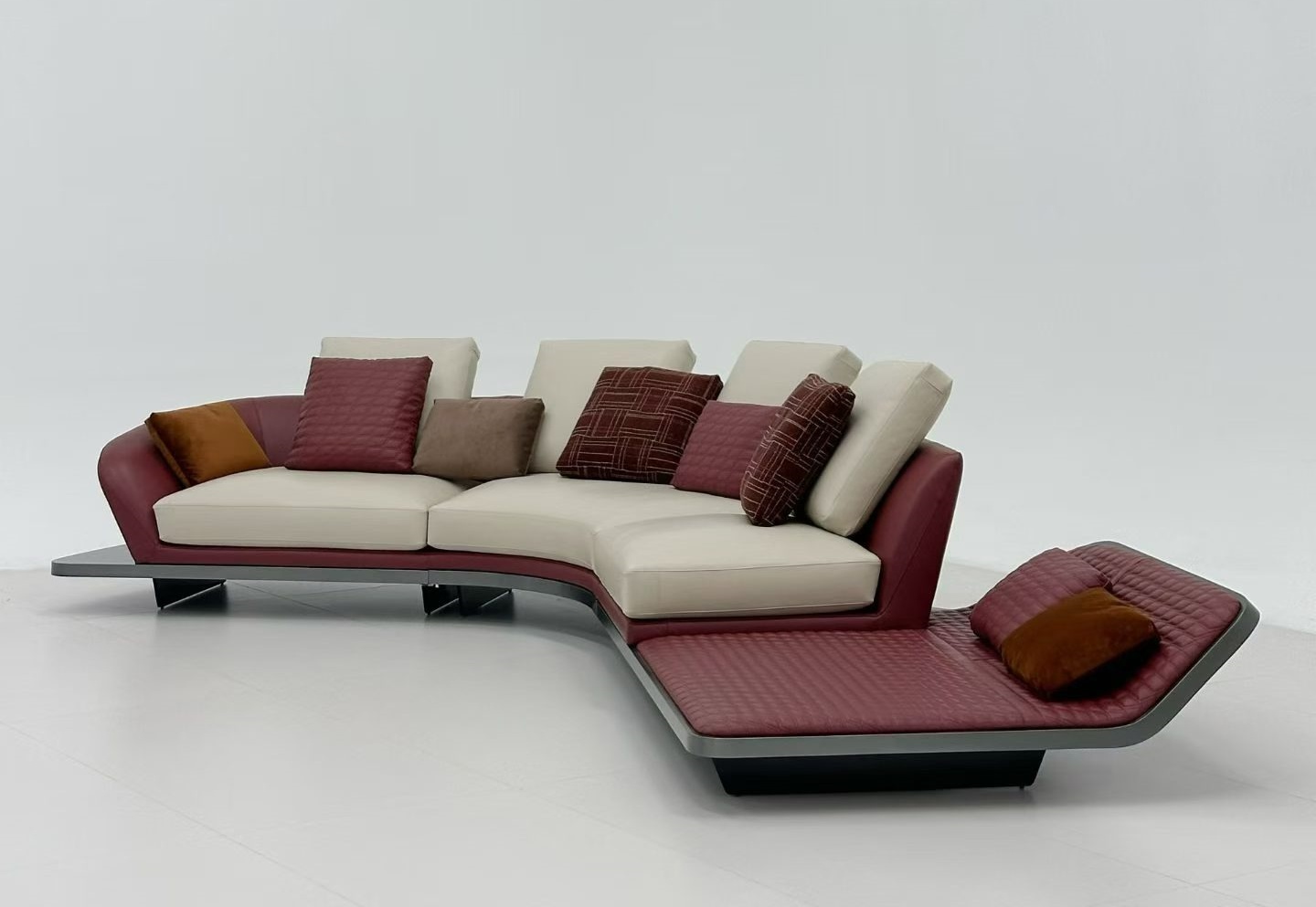
A villa furniture package can look coordinated while the purchase behind it remains fragmented. The sofa, upholstered bed, stone dining table and storage furniture each need different approvals. For designers, developers and importers choosing a luxury furniture manufacturer in China, the useful starting point is to connect those approvals to named products and clear supply responsibilities. HEZEN CASA’s two-tone Nappa leather sectional, boucle platform bed, round natural marble dining table and wide leather dresser provide a practical group around which to develop that brief.
Separate villa furniture manufacturing from the complete purchasing list
The ability to coordinate a room package and the manufacture of every item in that package are not the same capability. A buyer should understand both. This becomes particularly important when a furniture order expands beyond upholstered pieces to stone, storage furniture and other interior requirements.
HEZEN CASA’s design and sourcing services describe whole-house furnishing, custom work developed from ideas and dimensions, and purchasing through a partner network beyond its own collections. The order should identify which route applies to each item. Do not assume that one brand on the quotation means every component follows the same production process.
For the Burgundy & White Nappa Leather Curved Sectional Sofa, the purchase needs an approved upholstery arrangement and configuration. For the natural marble dining table, it needs an approved stone and table assembly. For the dresser, it needs a defined finish and drawer arrangement. The buyer benefits when one coordinating party connects those decisions, but each decision still requires its own evidence.
A villa designer may begin with the sectional as the visual anchor and add the table and dresser later. If those later items are handled through a different supply route, establish who confirms materials, receives inspection results and resolves a proposed substitution. That division should be visible before the package is treated as one fixed order.
A luxury furniture manufacturer’s samples should answer different questions for each material
A single showroom photograph cannot approve leather tailoring, a tufted bed surface, natural stone and drawer operation. Build the sample review around the material and structure that make each selected piece important to the project. The aim is to define what will be repeated or customized, rather than collect a general impression of quality.
The two-tone Nappa sectional needs a color-and-panel approval
The sectional is listed at 320 × 180 × 85 cm, with Nappa leather and solid wood. Its description includes dual-color upholstery, a quilted chaise area and a curved frame. The two-color arrangement is part of the design: changing which panels carry the darker tone can alter the piece as much as changing the colors themselves.
Ask for a drawing or clearly annotated image showing the material assigned to the seats, backs, arms and chaise. If the buyer wants a more restrained combination for the villa, approve the revised arrangement rather than refer to “the same sofa in neutral colors.” That phrase leaves too much room for interpretation.
The chaise also gives the sectional a directional role in the room. Confirm the configuration in relation to the entrance, view and neighboring seating. The published overall dimensions do not provide every individual module size or prove that the displayed arrangement can be reversed without a design change.
The photographed sectional also combines lighter seating surfaces with darker surrounding elements. For a villa where the back of the sofa is visible from the dining area, review that rear elevation explicitly. The approval should include the surfaces seen in the completed room, not only the attractive front angle used to select the design. If the chaise position changes, check how that change affects the color arrangement visible from the dining room.
The boucle platform bed needs approval over its tufted surfaces
The Cream Tufted Boucle Fabric Low Profile Platform Bed is listed at 210 × 180 × 100 cm, with boucle and solid wood. Its segmented tufting and low profile create a different material problem from the sofa’s broad leather panels. Review the textile across the padded divisions and corners, not only as a loose swatch.
A designer may want the bedroom to feel related to the living room without repeating leather everywhere. This bed provides a textured contrast to the sectional. Confirm the chosen color under the bedroom lighting and beside the intended timber or wall finish. Matching an online color name across different materials does not establish a coordinated result.
The bed’s Queen/King availability should be translated into actual mattress and frame dimensions for the project. A whole-house order can include mattresses sourced elsewhere; the bed approval must identify that interface. A coordinated appearance has little value if the supplied mattress does not fit the approved frame.
The tufted bed should also be assessed beside the intended bedding. A deep mattress and large pillows may conceal part of its segmented headboard, while a thinner bedding arrangement exposes more upholstery. Include that relationship in the room rendering, then keep the mattress dimensions consistent with the production drawing. This connects the visual approval to the object the bedroom will actually contain, and helps the designer judge whether the soft headboard still has the intended presence.
The marble table and leather dresser require different finish records
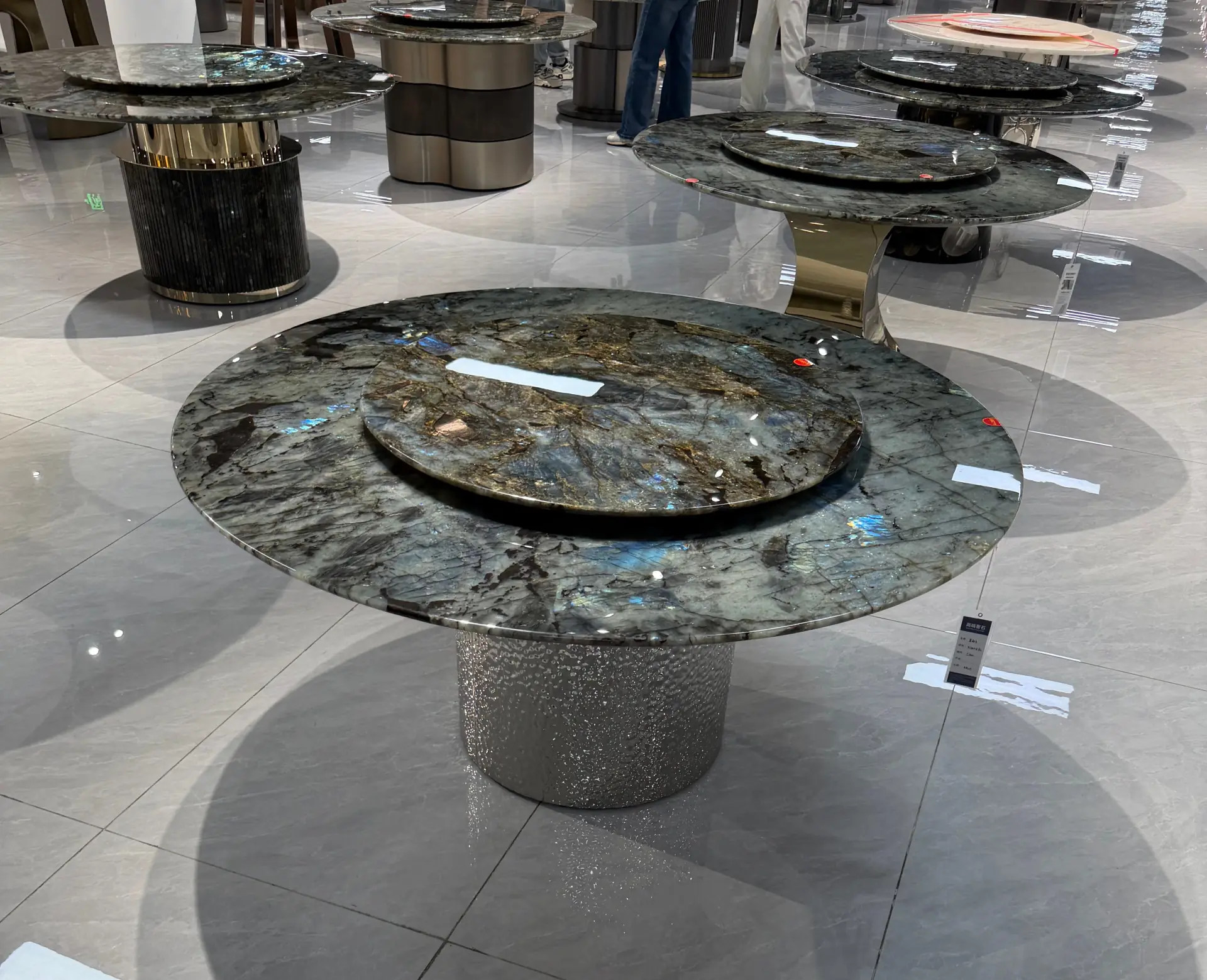
The Round Natural Marble Dining Table with Lazy Susan is listed at diameter 150 × 75 cm, with natural marble and a metal base. Approve the proposed stone appearance, edge and rotating serving element as parts of one table. A showroom top is a reference for the design, not a promise that another natural slab will repeat its exact pattern.
The Minimalist 6 Drawer Leather Wide Dresser is listed at 160 × 45 × 85 cm, with leather and solid wood. Here the approval should cover the drawer-front material, exposed frame finish and operation of the six drawers. A close photograph of the surface cannot establish internal drawer dimensions or movement.
These two pieces can contribute to a common interior palette without being judged by the same standard of visual repetition. Natural stone variation should have an agreed acceptable range. The dresser’s repeated fronts should be reviewed as an assembled composition. Put the relevant reference beside each item in the order, rather than attach one undifferentiated folder of inspiration images.
Use the villa drawings to define what must be customized
Whole-house customization should solve identified room constraints. For the two-tone sectional, that might be the overall arrangement or the relation of the chaise to a doorway. For the low-profile bed, it may be mattress compatibility or headboard width. For the dresser, it may be the available wall length and drawer access.
HEZEN CASA describes floor plans, material selection, 3D renderings and production drawings among its services. Use those outputs for different purposes. A rendering helps judge the room’s appearance; a dimensioned production drawing defines the piece to be made. One should not silently substitute for the other when an order is approved.
Assign the approvals to named roles in the project team. The designer might approve the sectional’s colors while procurement approves its price and the delivery coordinator confirms access. For the stone table, the actual top may require a separate material sign-off. A supplier receiving a color message should not have to infer that every part of the furniture order has been released for production.
Consider a developer furnishing several villas with related interiors but different living-room layouts. Repeating the sectional’s material palette can preserve a common identity. Repeating the same 320 × 180 cm arrangement in every room may not. Identify which properties can use the reference configuration and which need a separately approved version.
For the marble table, changing diameter also changes its relation to chairs and circulation. For the six-drawer dresser, changing width may require reconsidering the drawers and structure. Do not treat customization as a simple scale operation. Ask the manufacturer to show the consequences of the proposed change before retaining the rest of the original specification.
Evaluate the manufacturer against the selected villa products
A useful supplier review follows the order’s real manufacturing questions. For the sectional, ask how the specified upholstery and panel arrangement will be confirmed. For the bed, ask how the padded exterior and mattress opening will be measured. For the table, ask how the approved stone is identified. For the dresser, ask how its finish and drawer operation are checked before packing.
The evidence should be relevant to the proposed versions. A report for a different chair does not establish the performance of the sectional, and a material sample does not demonstrate the construction of a finished bed. Where a project requires testing, identify the requirement and the applicable product documentation with the responsible designer or technical adviser.
For upholstery, the Association for Contract Textiles cautions against treating abrasion results as a direct prediction of fabric lifespan. Apply that distinction to the boucle bed selection: cleaning, application and the full textile specification deserve attention alongside any available abrasion result. Do not turn one number into an unsupported durability promise.
An importer developing a repeatable villa collection should retain a record of the approved sectional panels, bed textile, stone range and dresser finish. The next order may need a fresh material review, particularly where natural variation or supply changes are involved. The purpose is to make a change visible, not to pretend that every material can be identical indefinitely.
HEZEN CASA’s factory verification article addresses broader checks on a manufacturing partner. Once those checks are complete, the stronger question is whether the proposed furniture package can be defined, demonstrated and delivered as the particular set the villa requires.
Agree how the sofa, bed, stone top and dresser will reach the villa
The four pieces create different handling tasks. The sectional may travel in a defined configuration or as separate components; confirm which. The bed may have a broad upholstered headboard and separate rails. The marble table needs a documented component and handling arrangement. The dresser’s projecting details and drawers need protection appropriate to its construction.
Request packed dimensions and weights for the agreed versions, not only the published furniture dimensions. Then assess the villa’s access route and the receiving sequence. A large headboard needed upstairs should not be discovered behind an already positioned stone table that obstructs the only workable path.
For an overseas package, establish how the pieces and their hardware will be identified by room. If the table top and base are packed separately, their relationship should remain clear. If the sectional has multiple pieces, their labels should match the approved arrangement. These simple connections prevent a consolidated shipment from becoming a collection of unidentified components.
The IPPC’s ISPM 15 guidance distinguishes raw-wood packaging from certain processed-wood packaging. Where wooden crates or supports are proposed, have the logistics provider confirm the applicable treatment and marking requirements. Do not assume that every wooden-looking package has the same status.
Approve the villa package when the individual furniture decisions and the shared delivery plan agree. The sectional should have its confirmed configuration and upholstery map; the bed its mattress interface; the table its stone approval; and the dresser its finish and operating details. That is a more useful basis for choosing a manufacturing partner than a beautiful room image with an undefined order behind it.